

Artificial intelligence (AI) is rapidly changing how consumer packaged goods (CPG) brands market their products, offering new ways to engage consumers and boost business performance across the board.
The CPG industry is fast-paced by nature, where businesses need to be agile and react quickly to shifting shopper behaviors. This is one of the biggest reasons why the smart use of AI is not only recommended, but essential for any CPG business that’s going to survive and thrive in today’s market.
There are so many different use cases for AI within CPG marketing. And new functions are popping up all the time.
For today’s article, I’ve put together a straightforward breakdown of how AI is transforming CPG marketing. So you can get up to speed without having to hop between a gazillion different sites and sources. You’ll also pick up some actionable tips to help you make the most of AI in your team.
Here are six key ways that CPG marketing is evolving in the age of AI:
- Greater consumer understanding
- Hyper-personalized content
- More accurate trend predictions
- Data-driven ad spending
- Faster idea generation
- Boosted efficiency in marketing workflows
Let’s take a closer look.
1. Greater consumer understanding
For the longest time, CPG brands have struggled to interact directly with consumers due to the simple fact that their products are most often sold via other stores and retailers. This disconnect led to a gap in valuable consumer insights (which we know are key for building effective online and offline marketing strategies).
But as AI continues to advance, it opens up more opportunities for CPG marketers to push past old limitations and get a deeper understanding of their target audience. AI-driven data analytics and listening tools, for example, make it possible to pull out valuable information like purchasing patterns, preferences, interests, and other consumer behavior. This allows for more accurate customer segments as you zone in on different demographics and geographical locations too.
Creating more detailed customer profiles gives CPG brands the upper hand from product development all the way through to choosing the right marketing channels for their next campaign. It also makes it easier for marketing teams to craft more compelling messages that truly connect with the target audience. A big win as far as brand loyalty is concerned!
Supercharge your content marketing reviews
Share, review, and approve all your content in one place with Filestage.
2. Hyper-personalized content
Modern audiences are constantly bombarded with marketing messages, both online and IRL. And they’ve gotten pretty good at blocking them out as a result. This makes it harder than ever to catch and hold your audience’s attention. Generic, cookie-cutter content simply won’t work anymore.
Personalized content helps CPG brands live up to consumer expectations and stand out in a crowded market, with a more engaging experience for each potential purchase. The data gathered through analytics makes it easier to create more tailored messaging to begin with. But AI’s skills go even further than that.
Here are a few other ways AI can help you create a hyper-personalized consumer journey:
- Personalized recommendations – AI tools can make product suggestions based on browsing habits and past purchases
- Customized messaging – Machine learning tools can generate personalized marketing messages and content that speaks directly to each customer
- Ad targeting – AI enhances digital ad targeting to reach relevant audiences at the right place and time
- Dynamic pricing – You can even instruct AI to adjust prices in real time based on market and demand
- Customer support – Chatbots can offer 24/7 personalized support and product recommendations for a more seamless experience
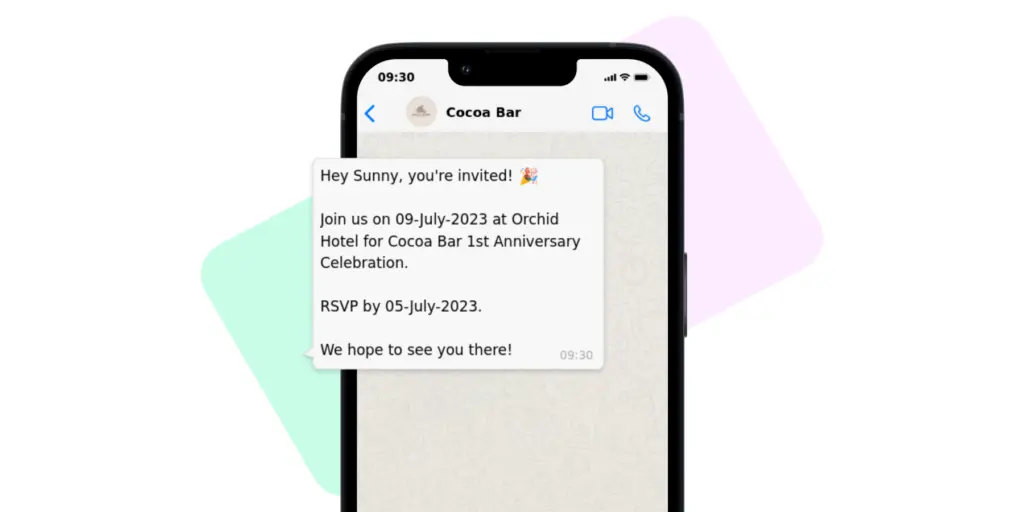
Source: wati.io
3. More accurate trend predictions
Consumer preferences and interests shift at a mile a minute these days. And being able to predict these changes can be a life saver for any brand trying to navigate the often unruly CPG market.
AI is the closest thing we’ve got to a crystal ball as far as CPG marketing is concerned, and it can help your team stay ahead in a few different ways.
For starters, AI can be used to perform time-consuming tasks like creating charts and graphs, and summarizing large batches of data into concise little bites. Ideal for busy teams that want a clear overview of what audiences are thinking and talking about.
AI tools can also analyze data from multiple different sources including text, images, and video, spotting upcoming trends that might otherwise have gone under the radar.
What’s more, predictive analytics can be used to forecast retailer demand and respond to consumer needs with perfectly-timed product deals and other marketing messages.
Altogether, these features can help future-proof your CPG marketing strategies and (hopefully) sell more consumer packaged goods as a result.
4. Data-driven ad spending
You’ve probably noticed by now that one of the biggest advantages AI brings to CPG marketing is the way it can collect and analyze data. In fact, studies show that those who do data-driven marketing at scale can increase net sales value by three to five percent.
Teams can now get access to the insights they need for fast, effective decision-making. And less guesswork can create a more profitable marketing strategy in the long run.
Social media marketing and digital marketing makes up a core part of most CPG strategies, and this is where the use of data can be a real game changer. For example, one popular use case of AI within CPG marketing is to analyze consumer behavior (clicks, impressions, mentions) across different platforms.
This empowers brands to focus on the platforms and channels that get the most traction among their ideal audience. Resulting in greater return on investment (ROI).
5. Faster idea generation
AI is fast becoming a trusty creative sidekick for marketers who need to ideate and develop a constant flow of compelling CPG marketing concepts. A recent study from McKinsey even estimates that generative AI could enhance the productivity of marketing by 5-15% of total marketing spend, which could add up to a whopping $463 billion per year.
Marketers can now use AI to quickly analyze competitor actions and test the waters with new products and campaign concepts. This in turn means teams can generate more targeted ideas from the get-go. And they can do it at scale, so teams can gather inspiration before developing the ideas that work best.

Source: ChatGPT
6. Boosted efficiency in marketing workflows
Automation has taken the marketing world by storm, streamlining workflows from start to finish. And if you’ve not yet tapped into this use case yet, it’s time to get moving.
From campaign creation and performance optimization to your design review process, AI-powered tools can handle a tonne of different tasks with impressive speed and accuracy. This means less time spent on repetitive tasks and more time focused on strategic and creative thinking. Music to any CPG marketer’s ears!

Three tips for getting ahead with the help of AI
With all this hype around AI and its impact on the way we work, you might be keen to figure out how you can make the most of it in your team. Whether you’re just dipping your toes into this clever piece of tech or you’re looking to scale your existing AI efforts, here are three tips to help you succeed.
1. Get flexible with your workflows
While there’s a time and place for set processes, CPG companies need to be prepared to move away from traditional ways of working to make the most of AI. Rigid workflows will only hold you back, as AI thrives on rapid experimentation. Plus, it will take some trial and error to find out how you can best use AI for your team (more on that in tip three).
AI itself is also constantly changing, which means what works today might not necessarily be the best solution a few months down the line. Try to remain agile and ready to adapt as new AI tools and features emerge. By staying flexible both as a team and a wider business, you’ll set yourself up to stay ahead of the curve as AI continues to evolve within CPG marketing.
Supercharge your content marketing reviews
Share, review, and approve all your content in one place with Filestage.
2. Invest in your team
At the end of the day, AI is only as good as the people operating it. So while it’s essential to invest in the right AI tools, it’s just as important to have skilled talent who can manage and interpret these technologies.
Lots of agencies and marketing teams are now looking to hire and train teammates to be experts in all things AI. Initiatives like reverse mentoring are also becoming popular, where junior tech experts share their skills with senior leaders. This can help bridge the knowledge gap and grow an innovative and collaborative work culture.
3. Align AI with your CPG marketing strategy
It can be easy to get carried away with all the possibilities of AI. But for these tools to really work their magic in your CPG marketing campaigns, you need to think about how they support your existing marketing goals.
If you’re just getting started, you’ll want to identify the specific areas where AI can add the most value for your team. For example, you might want to build a more intuitive CPG packaging design process or streamline your paid social media marketing content. Or maybe you want to align your branding across everything from socials to ads to POS marketing.
Once you’ve pinpointed those areas, make sure your AI-driven initiatives support your larger marketing objectives – whether that’s increasing brand awareness, boosting customer loyalty, or driving sales.
It’s also important to regularly review how AI is impacting your marketing campaigns. Set clear KPIs and performance metrics so you can clearly measure the effectiveness of AI tools. Then you can fine-tune your approach and hit your key marketing targets out of the park!
Final thoughts
AI is revolutionizing the way CPG marketing teams work. Some of the key highlights of the moment include its ability to deliver more personalized content, predict upcoming consumer trends, and speed up workflows through automation. Looking forward to what comes next!