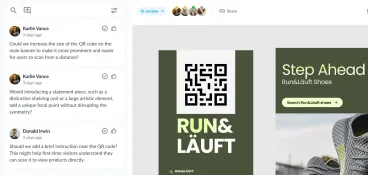

If your review process still runs on email, the symptoms are familiar: feedback scattered across inboxes and chat threads, comments on outdated versions, and campaigns stalling because no one knows who still needs to sign off. Approval software fixes this by putting file sharing, feedback, and approval decisions in one place.
But approval software spans very different tools. Some are built for creative assets like video, design, and packaging artwork; others for e-signatures, form-based processes, or invoice approvals. Pick the wrong category, and you waste budget and time.
To help you choose, we compared 12 tools across five criteria. For each, you’ll find why we picked it, current pricing, and at least one honest drawback, including for our own product.
To help you choose the right fit, let’s dive into our comparison of the 12 best approval software tools for 2026.
How we evaluated these tools
We selected tools that represent the main categories of approval software:
- Creative review
- Project management with proofing
- Business process automation
- Document e-signatures
- Finance approvals
We assessed each marketing approval software on use-case fit, review features, automation, pricing, and external reviewer experience, using hands-on testing where possible and verified vendor pricing pages, G2 reviews, and product documentation for the rest.
Filestage is our product. We’ve included it in this list because it genuinely fits the use cases described, and we’ve positioned it accordingly. Where a competitor is the better choice for your use case, we say so.
All pricing was verified in July 2026 and may change, so check the vendor’s pricing page before you buy.
Quick comparison of the best approval software
| Tool | Best for | Free plan | Key differentiator | Starting price |
|---|---|---|---|---|
| Filestage | Creative review & approval workflows | Yes | Multi-format review + structured approval steps and compliance features | $199/month (10 seats included) |
| ProofHub | Project management with built-in proofing | No (14-day trial) | Flat pricing – no per-user fees | $45/month flat, unlimited users |
| Approval Studio | Artwork and label proofing | No (trial) | Print-focused version comparison modes | $60/month (5 seats included) |
| WebProof | Publishing and editorial workflows | No | Built for newspaper/magazine production | $10/user/month |
| Nutrient Workflow (Formerly Integrity) | Cross-department process approvals | No | Low-code process builder with audit history | Custom quote |
| Kissflow | Enterprise process standardization | No | 45+ pre-built process apps | Reported from $1,500/month |
| onPhase (Formerly Frevvo) | Form-driven approval workflows | No | Visual form + workflow wizard | Custom quote |
| Process Street | Recurring checklist approvals | No (14-day trial) | One-click approvals inside recurring workflows | Custom quote |
| PandaDoc | Proposals and sales documents | Yes | Document creation + approval + e-signature in one flow | $19/seat/month (approvals need Business, $49/seat/month) |
| DocuSign | Legally binding e-signatures | No (trial) | Market-standard signature audit trail | $11/user/month |
| Approval Donkey | Simple internal request approvals | Yes | Lightweight email/form-based approvals | $19/user/month |
| ApprovalMax | Finance approvals (bills, POs) | No (14-day trial) | Deep Xero/QuickBooks AP automation | Per accounting integration. $45/organisation/month |
The 12 best approval software tools to streamline your review process
Below are some of the best approval software tools available today, covering everything from creative review platforms to document approval and e-signature solutions.
1. Filestage – best for creative review and approval workflows
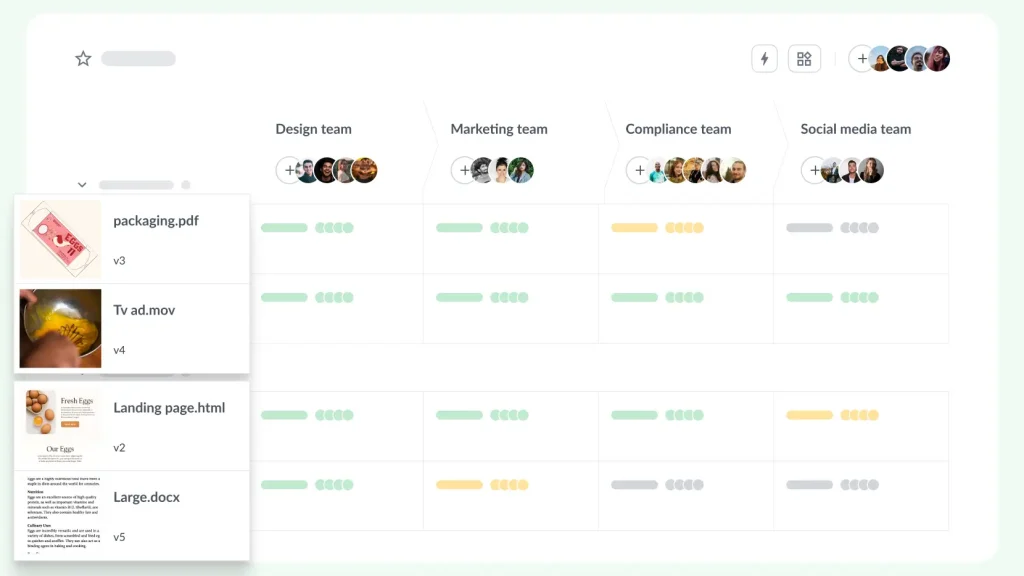
Filestage centralizes the whole review and approval process. Upload your videos, designs, documents, live websites, or audio files. Then set up a reviewer group for each approval stage and invite your stakeholders to collect comments and annotations directly on the file. Reviewers don’t need an account.
Why we chose it
Filestage is our product, so we know it best. But it earns its place here as the only tool on this list built specifically for multi-format creative review with structured approval steps.
Two things separate it from the project management and BPM tools below: reviewer groups that move files through a defined approval path (internal → brand → legal → client) with status tracking and automated reminders.
It also features compliance needs that creative tools rarely offer. Verified approvals (“approve and sign”) support FDA 21 CFR Part 11 and EU Annex 11, and audit logs document every decision.
Pros:
- All major file formats can be reviewed in one platform, including interactive HTML and live websites. Also ideal for contextual feedback on visual content
- Unlimited reviewers on every plan, no reviewer accounts needed
- Automations, review agents, and version comparison reduce manual review work
- GDPR-compliant, ISO 27001 certification
Cons:
- Built for content review, not forms-based business processes – for purchase orders, expenses, or invoices, ApprovalMax or Kissflow is a better fit
- Plans include 10 seats, which can be more than small teams need
Pricing: Free plan (1 active project, 5 files/month). Starter $199/month, Business $329/month (each includes unlimited projects and files). Enterprise custom.

“Filestage has reduced our team’s daily email inbox by roughly 25-30% [so now] we can focus on other important tasks for the day.”
See how Filestage can speed up your approvals
Enjoy a free, 30 minute consultation with our experts, tailored to your team and use cases.
2. ProofHub – best for project management with built-in proofing

ProofHub combines task management (boards, Gantt, calendar) with a proofing tool where reviewers can mark up files and approve them – tasks, chat, and file approvals in one place.
Why we chose it
ProofHub made the list for its pricing model: both plans are flat-rate with unlimited users – $45/month total on Essential, not per user – which makes it one of the most economical options here for large teams with many occasional reviewers.
What we enjoyed most was how complete it feels: ProofHub pulls off being a real project management tool and a proofing tool at once, so tasks, discussions, and file markups all live in one place instead of across two subscriptions.
That said, it’s the natural pick if you want approvals inside your creative project management tool rather than a dedicated review platform.
Pros:
- Flat pricing with unlimited users
- Tasks, chat, discussions, time tracking, and proofing in one tool
- Custom roles and white labeling on Ultimate Control
Cons:
- No free plan; Essential caps storage at 15GB and 40 projects
- Proofing is not the core product – annotation and versioning are more basic than dedicated review tools
Pricing: Essential $45/month (billed annually); Ultimate Control $89/month billed annually as a limited-time offer, $135/month thereafter.
3. Approval Studio – best for artwork and label proofing
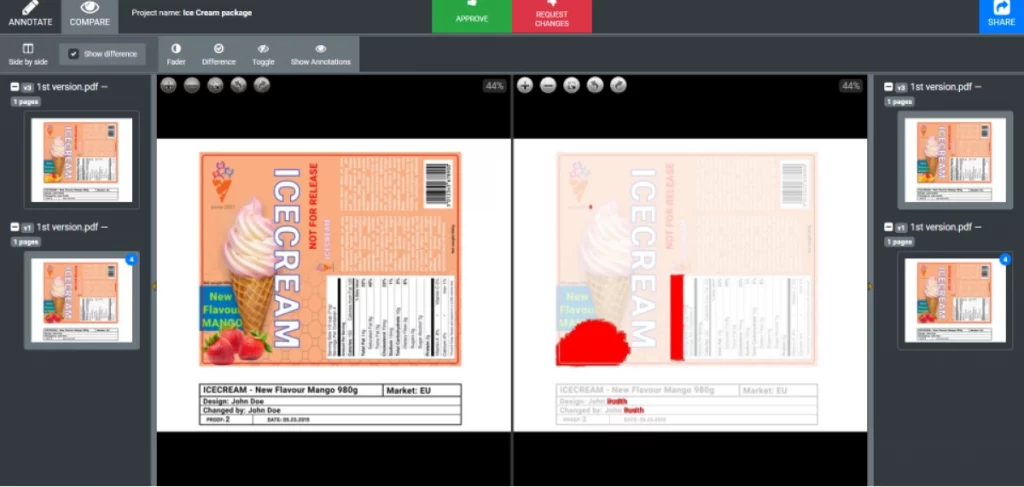
Approval Studio is an artwork review and approval tool focused on annotating, discussing in real time, and tracking who has approved which artwork version.
Why we chose it
We included Approval Studio for one capability that matters enormously in packaging and print: version comparison.
Its side-by-side, difference, and overlay compare modes are genuinely useful for spotting small changes in dense print files – the kind of detail that gets missed in email review and costs a reprint.
We found the color separation feature genuinely impressive: toggling individual CMYK channels and simulating overprints directly in the review tool catches exactly the kind of issue that usually only surfaces at the printer.
If your output is artwork and labels rather than mixed media, this focus is a strength. See how Filestage compares to Approval Studio.
Pros:
- Four version-compare modes suited to print production
- External review links for clients
Cons:
- Graphics-first: weak fit for video, document, or website review
Pricing: Lite $60/month (billed annually, 5 users incl.); Pro $160/month (billed annually, 5 users incl.); Pro XL $300/month (billed annually, 15 users included). Enterprise custom.
4. WebProof – best for publishing and editorial production
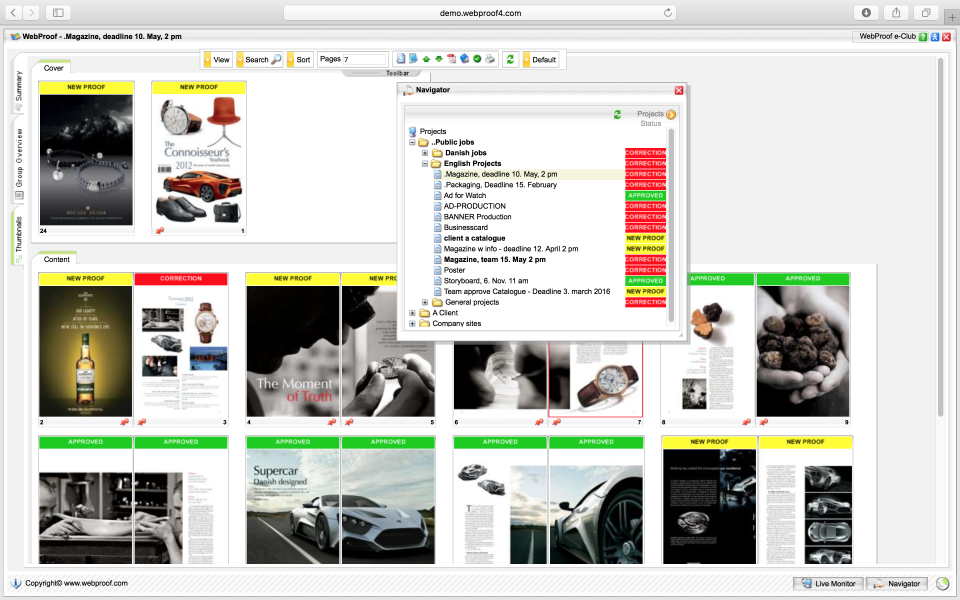
WebProof is built for production-line proofing: contributors upload pages, reviewers drag and drop comments, and status boards show where every page sits in the flow.
Why we chose it
Most review tools assume campaign-style projects; WebProof assumes a production line.
We picked it for teams with recurring, deadline-driven approval processes – newspapers, magazines, catalog and retail marketing – where hundreds of pages move through the same flow every week and a status-board view of the whole issue matters more than rich annotation.
The Adobe InDesign integration is particularly useful: clients can correct texts directly in the WebProof interface, and those changes flow straight back into InDesign as a new version.
Pros:
- Purpose-built for high-volume editorial workflows
- Status overview across hundreds of pages
Cons:
- Niche focus; heavyweight for one-off campaign reviews
Pricing: Pageflip Plan $10/month per user (incl. 250 projects).
5. Nutrient Workflow – best for cross-department business process approvals

Nutrient Workflow (formerly Integrify) is a low-code platform for building approval workflows around forms and requests like purchase requests, IT access, HR onboarding – with a full history for every workflow.
Why we chose it
The tool represents the process-automation and workflow management category done thoroughly: it’s the pick for operations teams that need every request documented for auditors.
The tool offers a template library: 60+ ready-made processes, from invoice approval to employee onboarding, so ops teams don’t start from a blank canvas.
It’s built for operations and finance teams in regulated industries, not for creative content review – and it doesn’t pretend to be.
Pros:
- Drag-and-drop process builder and form designer — no code required
- Automatic audit history for every request
Cons:
- Quote-based pricing makes costs hard to estimate upfront
- No creative proofing features
Pricing: Custom quote
6. Kissflow – best for enterprise process standardization

Kissflow is a no-code/low-code platform with 45+ pre-built process apps (leave requests, expense claims, vendor approvals) that teams customize instead of building from scratch.
Why we chose it
Kissflow is here for organizations standardizing approvals across many departments at once.
The template library means an ops team can roll out ten different approval processes without starting any of them from zero, and its cycle-time reporting shows where approvals get stuck – the metric that actually justifies the investment.
The entry price puts it firmly in enterprise territory, which is why it’s not our pick for anyone smaller.
Pros:
- Large template library and linked multi-workflow processes
- Cycle-time reporting on approval bottlenecks
Cons:
- High minimum spend; no free plan
- Process-first: not designed for creative file review
Pricing: Reported from $1,500/month.
7. onPhase – best for form-driven approvals

onPhase (formerly Frevvo) combines a visual form builder with point-and-click workflow routing, so a form submission automatically travels through the right approvers.
Why we chose it
We picked onPhase as the fastest route from “we approve this on paper” to “this routes itself”: the form wizard plus pre-made workflow designs means finance and admin teams can digitize an expense or requisition sign-off without IT involvement.
This includes expense management, invoice and travel requests and sales orders.
It’s the lighter-weight alternative to Nutrient Workflow and Kissflow when the process always starts with a form.
Pros:
- Fast visual setup for form + approval flows
Cons:
- Pricing not public
- Form-first architecture limits use cases
Pricing: Custom quote.
8. Process Street – best for recurring checklist approvals
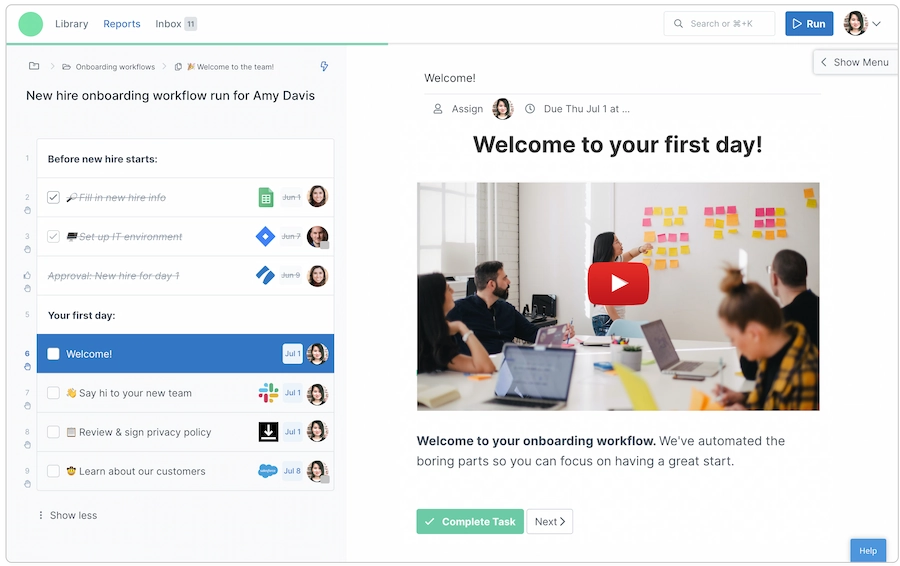
Process Street turns recurring processes into checklist templates with embedded one-click approval steps, and lets you run many instances of the same workflow in parallel.
Why we chose it
We chose Process Street for one specific job: processes you run over and over again with an approval step in the middle. Think client onboarding, content publishing checklists, or employee offboarding.
You can run the same checklist 30 times at once and see every pending approval in a single view – something neither the creative tools nor the big BPM platforms on this list handle as neatly.
Pros:
- Approvals embedded in repeatable checklists
- Simple one-click approve/reject
Cons:
- Not built for annotating or discussing creative files
Pricing: Custom quote
9. PandaDoc – best for proposals and sales document approvals

PandaDoc covers the whole document lifecycle: build documents from templates, route them through internal approval, then collect legally binding e-signatures – with tracking that shows when a recipient opens or signs.
Why we chose it
PandaDoc is the pick when the asset being approved is also the asset being signed. For sales teams, combining internal sign-off and customer e-signature in one flow removes an entire handoff.
One detail worth knowing before you buy: internal approval workflows are only included from the Business plan ($49/seat/month) – the free and Starter tiers are essentially e-signature plans.
Its G2 rating (4.7/5 across 3,300+ reviews) backs up the ease-of-use claims.
Pros:
- Document creation, approval, and e-signature in one flow
- Free plan available for basic e-signing
- Strong ease-of-use ratings
Cons:
- Approval workflows locked behind the Business tier
- Document-only: no review of video, design, or web content
Pricing: Free plan; Starter $19/seat/month; Business $49/seat/month (billed annually).
10. DocuSign – best for legally binding signature workflows
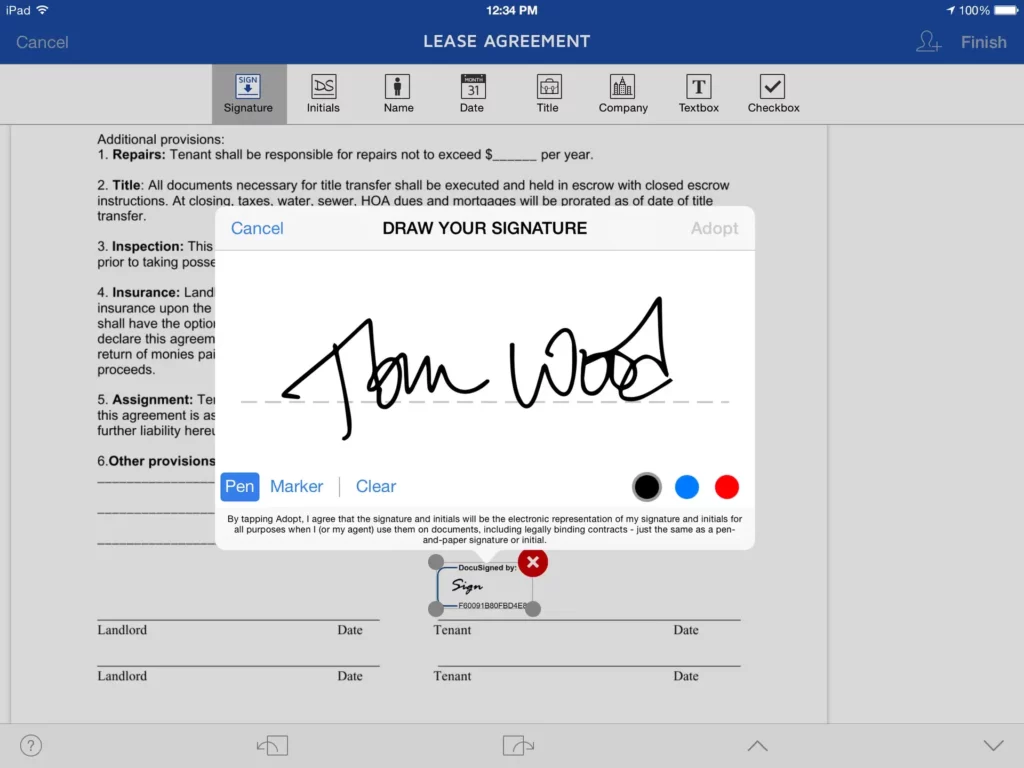
DocuSign is the market standard for e-signatures: send contracts, sales agreements, NDAs, offer letters, and vendor forms; define signing order, track status, and keep a court-ready audit trail of who reviewed and signed what.
Why we chose it
DocuSign is here because ubiquity is a feature: external signers rarely need instructions, legal teams already trust its audit trail, and virtually every CRM and contract tool integrates with it.
When the approval that matters is a legally binding signature, it’s the lowest-friction choice. It’s a signature tool, though, not a review tool – there’s no structured way to iterate on versions before signing, so content teams typically pair it with a review platform.
Pros:
- Recognized, legally robust signature standard with detailed audit trails
- Huge integration ecosystem
Cons:
- Costs climb at volume for every document sender and envelopes
- No content review or annotation capability
Pricing: From ~$11/month (Personal) to ~$80/user/month (IAM Professional).
11. Approval Donkey – best for simple internal request approvals

Approval Donkey collects requests submitted by email, form, or app and turns them into simple approval workflows with a clear decision trail.
Why we chose it
Every list needs the minimal option, and this is it. We chose Approval Donkey for small teams that need yes/no sign-offs with a record – nothing more.
Setup takes minutes, it works with the email and forms you already use, and it costs a fraction of a full platform. The moment you need to discuss the content of a file, you’ve outgrown it.
Pros:
- Very low setup effort
- Works with email and existing forms
Cons:
- No file annotation, versioning, or proofing
Pricing: Free to approve workflows or ~$19/user/month (Plus) to set up workflows and approval requests.
12. ApprovalMax – best for finance approvals (bills and purchase orders)
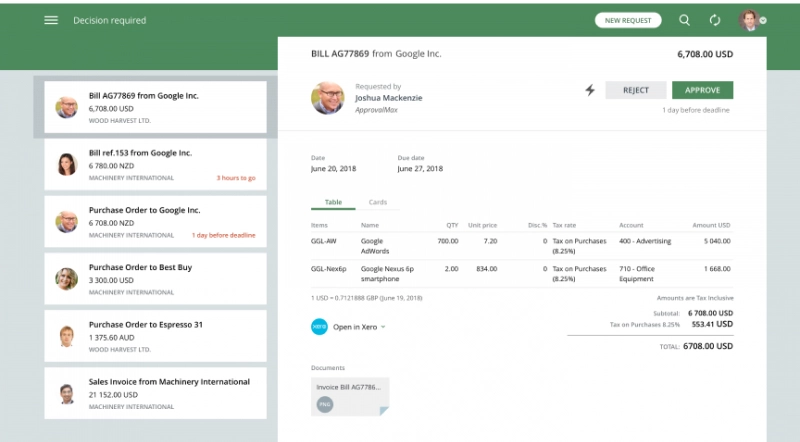
ApprovalMax adds multi-level approval workflows to your accounting system: bills, purchase orders, vendor approvals, and expenses route to the right approvers with automated audit trails.
Why we chose it
ApprovalMax is the finance-approvals specialist on this list.
We chose it because approving spend inside the accounting system beats approving it beside the accounting system: bill-to-PO matching, budget checks, and segregation-of-duties controls happen where the numbers live (Xero, QuickBooks Online, or NetSuite), and the audit trail is ready when auditors ask.
Note that pricing is structured per accounting integration rather than one flat plan.
Pros:
- Deep AP automation with bill-to-PO matching and budget checks
- Audit-ready reporting; ISO 27001 certified
Cons:
- Only useful if you run one of the supported accounting systems
- Not designed for marketing or creative teams
Pricing: Per integration (Xero/ QuickBooks Online/NetSuite plans). $45/organisation/month (Standard) to $100/organisation/month (Premium).
How to choose the right approval software
Here are three tips on how to choose the right software for your team and use case:
Start with what you’re approving. If it’s creative content in many formats – videos, designs, documents, websites – you need a review platform with annotation, versioning, and reviewer groups (Filestage, Approval Studio, WebProof). If it’s business requests like expenses or purchase orders, you need process automation (Kissflow, Integrify, ApprovalMax). If the end goal is a signed contract, you need e-signatures (DocuSign, PandaDoc).
Then look at who’s involved. External clients and stakeholders resist creating accounts, so tools with account-free review links remove real friction. If legal or regulatory teams sign off on your content, check for audit trails and verified approvals – in regulated industries this is the difference between a nice-to-have and a requirement.
Finally, sanity-check the pricing model. Per-user pricing suits small fixed teams; flat or seat-bundle pricing wins when many occasional reviewers take part. And watch for feature gating: several tools on this list only include approval workflows on higher tiers.
Common challenges in approval processes
Approval workflows often look simple on paper. In reality, they can become messy fast once multiple stakeholders are involved.
Some of the most common approval challenges include:
Scattered feedback across tools
Comments often arrive through email, chat messages, shared documents, and meetings. Teams then spend time consolidating feedback manually before they can act on it, creating unnecessary manual work
Version confusion
When multiple file versions circulate, reviewers may comment on outdated drafts, which increases the risk of human error. This leads to duplicate work and unnecessary revision cycles.
Slow stakeholder responses
Approvals can stall when decision-makers don’t see files quickly or lose track of review requests.
Unclear approval status
Without a central place to track decisions, teams struggle to see whether an asset is approved, still in review, or stuck in pending approvals.
Manual document approvals
Many organizations still approve contracts, proposals, and internal documents through email attachments or shared folders. This makes tracking signatures, edits, and final versions difficult.
Example of custom approval workflows managed with approval software
Once you implement approval process software into your workflow, you will see an almost immediate uptake in efficiency.
This process works well for a wide variety of marketing materials, including automating the social media approval process and improving the approval processes of artwork and design.
To give you an idea, here’s an example of an online approval workflow.
1. Share your assets with the reviewers
Once the creator of the asset has finished the first draft, it can be uploaded to the software platform. Then, reviewers can be provided with access to the asset.
With Filestage, users can upload the asset in a specific project folder and then invite reviewers to the new project via an online invitation.
Top tip: Once you have invited reviewers, set a deadline for their feedback. This helps minimize hold-ups in the process.

2. Reviewers leave and discuss feedback
With Filestage, reviewers can leave their comments directly on the file, whether it’s a text document, video, image or audio file. Additionally, reviewers can discuss their feedback with each other in real-time in the comment section.
Top tip: Annotation features help reviewers to make their feedback even clearer, e.g. by framing the section where the logo should be added.

3. Editor adapts the asset and uploads the new version
After the first review round, the content editor usually implements the requested changes.
With Filestage, the editor can easily upload the new version of the asset to the platform, ready for a second review.
Top tip: Automatic versioning features in content approval software ensure that everyone has a clear overview of the progress of the asset.
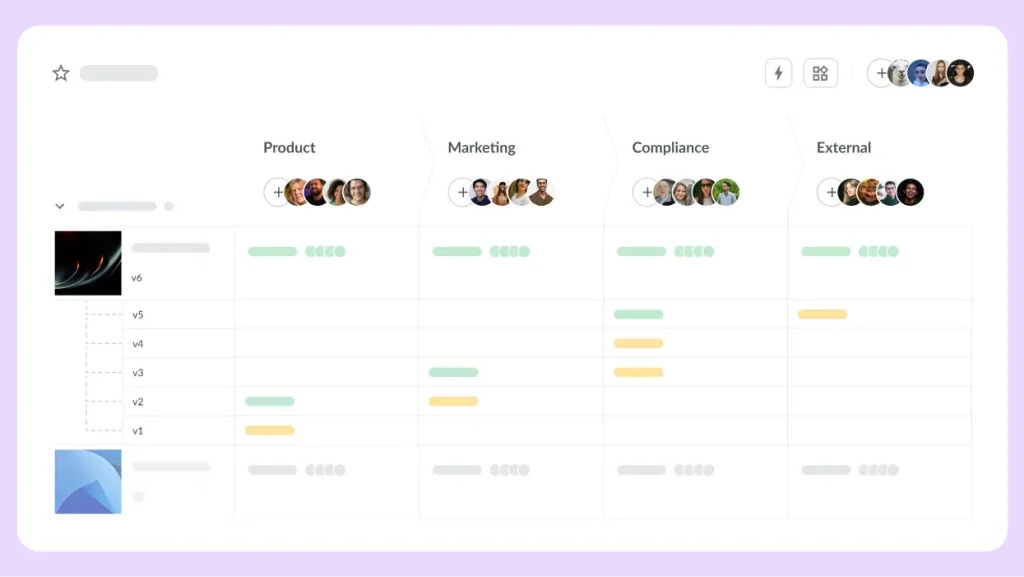
4. Reviewers leave additional feedback or approve the asset
With Filestage, reviewers will automatically be notified that there is a new version ready for review. Then, they can either leave comments and request additional changes or, if they are satisfied with the second version, give their approval to the file with just one click.
Top tip: If you are the editor, add a comment to the new version that summarizes the changes that have been made. This will make it easier for the reviewers to make their approval decision.
5. The approved asset can be moved to the next step in the review process
With Filestage, if your approval process consists of multiple review steps for different stakeholders, you can use the drag-and-drop function to move the approved asset to the next review step. The next round of reviewers will be notified automatically once they are invited to the review step.
Top tip: Plan who should review and approve your asset in advance. That way, you will have a structured approval process in place and ready for the asset.

6. Final approval and publication
After the asset has received final approvals from all stakeholders, the approval process is finished. The asset can now be published or shared.
Some parts of this workflow may be familiar as you may be using written forms or emails to achieve something similar. However, the use of online approval software is essential for any business strategy that requires collaborative work.
As you can see in the example above, an automated, online system makes it infinitely easier to not only provide feedback but take action on it too. These highly efficient approval processes save teams considerable time while also enabling them to improve content.
Need more help in standardizing your artwork approval process? Check out how to create an artwork approval form in six steps!
See how Filestage can speed up your approvals
Enjoy a free, 30 minute consultation with our experts, tailored to your team and use cases.
5 tips for creating efficient digital approval workflows
According to a recent survey by FlexJobs, 51% of professionals reported that they worked more productively when using digital platforms to work remotely. But with so many of us working remotely, we need digital approval workflows more than ever.
Here are my top five tips for setting up your approval workflow:
1. Give reviewers clear instructions
Ensure that every reviewer knows exactly what is expected of them. It also helps to share background information about the content if reviewers were not involved in the creation process. But most importantly, you need to give reviewers details about the type, extent, and nature of the feedback that they should provide.
2. Assign clear deadlines for each file
According to a piece by Psychology it Better, the benefits of assigning deadlines include encouraging a team to rely more on intuition, improving the outcomes of negotiation, and keeping a team more organized across the board.
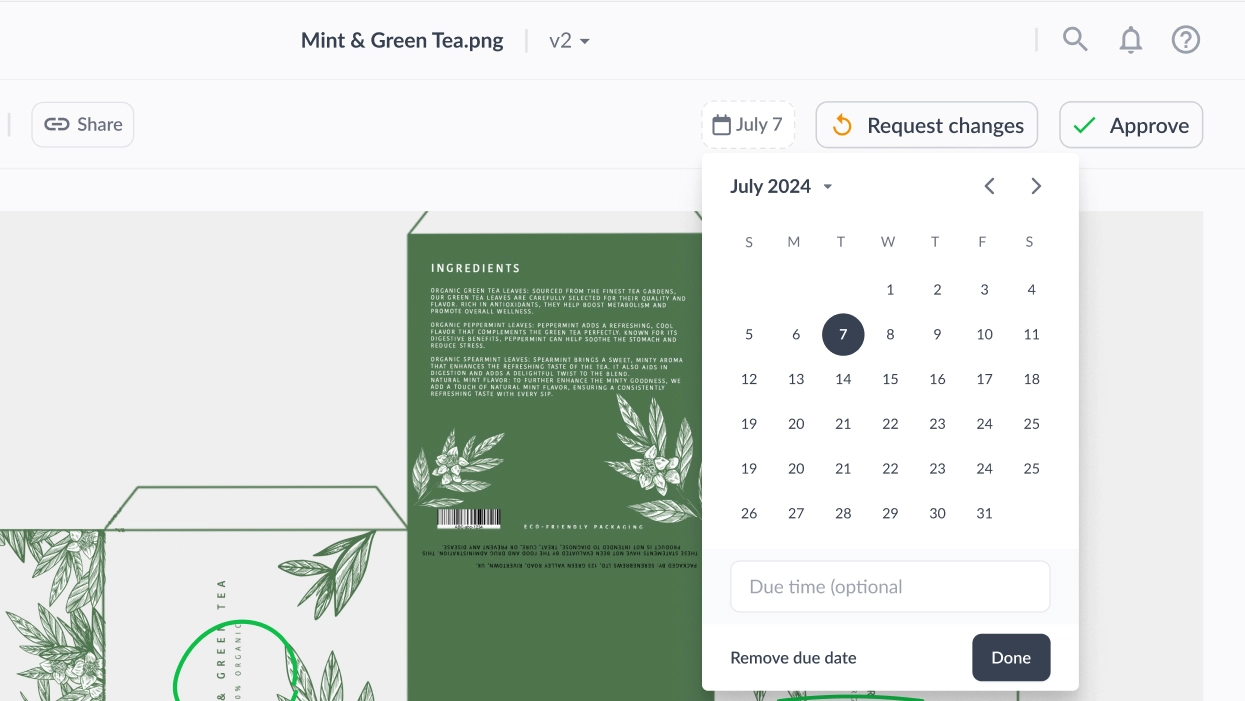
In Filestage, you can add a due date for each file in each review step. Reviewers will automatically receive reminders from the tool as each due date approaches. That way, everyone is clear when feedback is due and whose feedback is missing.
3. Set up review steps for different stakeholder groups
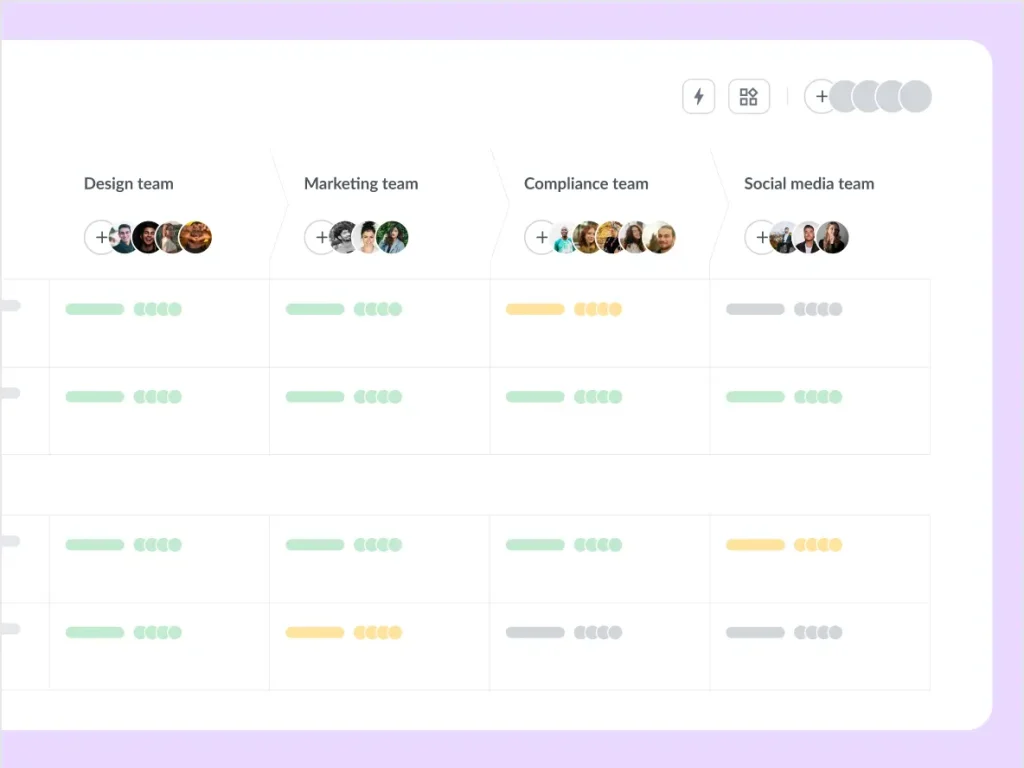
Creating separate review steps for different stakeholder groups helps you structure your approval workflow and makes it easier to manage. Plus, each reviewer group can focus on specific criteria based on their expertise, making feedback clearer and more precise.
But the biggest advantage? Having only the essential people in each review round will drastically speed up the approval process.
For example, if you are creating a visual asset to promote a product, the different stakeholder groups could include:
- The design team (to check the slogan and design aligns with the brand)
- The marketing team (to check for messaging alignment)
- The compliance team (to check if the content passes regulatory standards)
- The social media team (to check for brand consistency across different channels)
4. Think about the right timing
Will you need certain reviewers to leave their feedback before others? It’s important to think of the order in which you want your reviewer groups to check your content. For example, before sending the work to a client, you may wish to have your internal team review and edit the document first.
5. Automate manual tasks
In a SmartSheet study, 60% of participants estimated that they could save six or more hours a week by automating repetitive work tasks.
Enter approval workflow tools.
Here are some examples of how you can use Filestage’s approval workflow automation features to save your team time:
- Remind reviewers to give feedback – When you share a file for feedback, add a due date. This will trigger an approval workflow automation as the due date creeps closer. Your reviewers will then get a quick reminder to add feedback, helping to keep your project moving forward.
- Change the status of a file – Set up automated approval workflows based on your stakeholders’ review or approval decision. If everyone requests changes, you can automatically change the file’s status to “Needs changes”, “Approve with changes”, or “Reject” the file. Or, if everyone is happy in your internal or marketing review step, you can automatically start the next step in your approval process.
To learn more about how to create the most efficient approval process, check out this video:
Ready to improve your approval process?
Hopefully this outline of approval software helps you get started with updating any time-wasting email-based processes. By using an automated approval workflow, you can finally start maximizing your team’s talents and creative contributions to thrive your company’s marketing strategy.
If you want to see how Filestage can help you set up an effective approval process, make sure to start a free trial →
FAQ
1. What is approval software?
Approval software is a type of online proofing tool that helps managers and creative teams oversee and automate this final step in content creation workflows.
Before a new marketing asset can be released to your audience, it needs a green light from different stakeholders, such as managers, colleagues, or client approval.
By making approval requests a standardized step in the asset creation workflow, you can ensure that every text, design, or video you publish is on-brand and mistake-free.
Approval workflow software simplifies the review and approval processes for new content by establishing a more efficient and organized workflow.
2. What is an approval process?
An approval process covers everything that may be created in an organization – from multimedia assets to written content or even elements that have been redesigned. When using approval workflow software, creators can upload a finished asset and submit it to all stakeholders for approval.
Stakeholders access the file using the same cloud-based approval software and either suggest changes or give their approval online. You can also adapt these steps for document review, multimedia content, marketing resources, and redesign materials.
3. What are the main features of approval software?
Approval software is designed to make teams’ approval processes simpler and more efficient. The tool makes it easier for creators to submit their work as it only requires you to upload a file to the cloud-based platform.
Review and approval tools make collaborative work seamless with features like:
– A centralized platform to upload and access files
– A clear structure for housing files in projects and folders
– Multiple review steps for different reviewer groups
– The ability for users to leave and discuss comments and annotations directly on files
– A formal way for the reviewer to submit their decision
– An integrated to-do list
– A tool to assign due dates
– Automatic reminders for reviewers
– Clear file versioning
4. What are the benefits of using approval software?
According to some fascinating research by The McKinsey Global Institute, workers spend around 13 hours checking their inbox and communicating via email every single week, on average. This represents almost a third (around 28%) of the time that they spend at work.
Wondering why your current email-based approval processes should be shifted to online workflow software? Check out these seven benefits of approval management software:
1. You can improve your quality control and ensure consistent and high-quality content
2. It saves a lot of time as each asset will require fewer review rounds
3. You can reduce misunderstandings as everyone’s comments are clear and transparent
4. No feedback will get lost or overlooked
5. It provides teams with more transparency – not just at the final approval stage, but throughout the entire review and approval process
6. If an individual is off work, colleagues can easily jump in
7. You can make sure any false advertising claims are removed from your content before it goes to print
With the right approval workflow software, you can simplify and speed up even the most complicated approval processes. And you can avoid embarrassment for your brand like these shocking cosmetics advertising examples.
5. Which tool should you use to request approvals?
You can create an approval request through a simple use of email, or via a specialized approval platform. By requesting approval through a specialized approval platform like Filestage, you can gather all your stakeholders and file versions in one place and create an efficient approval workflow. Say goodbye to confusing long email chains, and make sure all your files get approval on time.
6. What are the most common review steps?
Here are the five key steps you need to include in your approval workflow:
1. Request feedback on your work
2. Process and filter the feedback
3. Implement feedback into your work
4. Request further feedback
5. Reflect on feedback for future projects
7. Is there free approval software?
Yes. Filestage and PandaDoc offer free plans with usage limits, and most other tools offer free trials. Free plans work for individuals or very light usage; teams with regular review cycles typically outgrow them quickly.
8. What’s the difference between approval software and e-signature software?
Approval software manages the review and feedback process before a piece of content is final – comments, versions, and reviewer decisions. E-signature software (like DocuSign) captures a legally binding signature on the finished document. Many teams use both: review and approve in one tool, sign in the other.