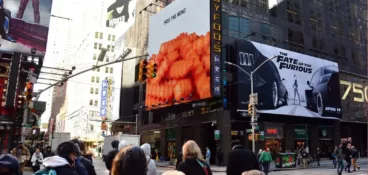
Digital out-of-home advertising (DOOH) has become pretty popular in recent years. And it’s showing no signs of slowing down either, with global DOOH ad spend expected to reach a whopping 30 billion U.S. dollars by 2029.
Whether you’re just dipping your toes into DOOH or you’re looking for new ways to maximize its potential, you’ve come to the right place.
In this article, we’ll explore what makes DOOH advertising so effective. I’ll also take you through the key DOOH formats you can use to engage your audience, with some brilliant examples of each to get you inspired.
Lots to cover, so let’s get to it.
What is DOOH advertising?
DOOH advertising refers to the use of digital screens to display dynamic advertisements in public spaces.
Unlike traditional out-of-home ads (OOH), which use static billboards and posters, DOOH can show changing content and target specific audiences. They can even update in real time based on factors like the time of day or even the weather.
Digital out-of-home advertising made its first appearance in the USA in the early 2000s, but it’s become much more accessible for brands around the world in recent years.
Supercharge your marketing reviews
Share, review, and approve all your content in one place with Filestage.
Why is DOOH so effective?
DOOH advertising is a bit like online advertising and traditional outdoor marketing rolled into one. By this, I mean it gives brands the visibility and reach of an outdoor billboard, combined with the flexibility, targeting, and storytelling capabilities of digital marketing content.
With that in mind, here are four reasons why brands big and small are choosing to invest in DOOH advertising (and why you probably should too).
1. Targeted marketing
Digital outdoor ads can be tailored based on factors like location, time of day, and which demographics of the audience are most likely to see them. So rather than sticking up a static poster and hoping for the best, you can use data-powered precision to help your message reach the right people at the right time.
As an example, one digital screen in a city centre could advertise healthy lunch options during the lunchtime rush. Then, in the evening, it might promote special events that appeal to a different kind of audience (or the same audience at a different time).
2. Boosted visibility
There are a couple of factors at play when we talk about DOOH and ad visibility.
First of all, DOOH screens are often placed in prime, high-traffic areas where lots of people pass by every day. Places like city centers, shopping malls, airports, and busy streets. This means your ad can get instant exposure to a large audience.
DOOH ads are also more attention-grabbing than traditional posters and billboards. They’re bright, dynamic, and sometimes even animated. The human eye is naturally drawn to colors and movement, helping your marketing message stand out even in a crowded environment.
3. More memorability
Getting noticed is one thing. But staying top of mind for your target audience is what really determines campaign performance.
DOOH campaigns combine scale and technology to create that wow factor for people passing by. Take 3D billboards, for example. They have the power to pull us in, spark our imagination, and create a unique brand experience.
The bigger the impact, the better chance you have of making a lasting impression. You want people to talk about your ad, share it, and hopefully take action. And when done right, DOOH can help you achieve just that.
4. Flexibility
I’m sure you don’t need me to tell you how fast things change in the marketing world. Thankfully, DOOH makes it easier for us to pause, update, and adjust our advertising without the need for extra materials or manual work.
This hassle-free flexibility is an important thing to consider when looking at your marketing budget. Because while digital advertising placement usually costs more than traditional ads, you can make the most of your spend by tailoring your ads throughout the marketing campaign.
Which DOOH formats work best for your brand?
If you’re considering DOOH advertising, you need to start by choosing the right format for your brand and campaign goals.
The types of DOOH ads will continue to grow as new technologies become available, but here are five of the most popular formats right now:
- Digital billboards
- 3D and immersive ads
- Retail displays
- Street furniture
- Transit screens
Each type of DOOH advertising comes with its own unique benefits, and there are so many ways to get creative with them all. You’ll see what I mean in the next part of this article, where we’ll take a closer look at each format as well as some of my favorite real-world examples.
1. Digital billboards
Digital billboards are large digital screens usually seen in high-traffic areas like highways, city centers, and sports stadiums. They’re big, bold, and able to display static ads, animated content, videos, or even live streams.
Most of the time, the ads on a digital billboard will rotate throughout the day or week to make sure they reach the relevant audience.
Thanks to their size and strategic location, digital billboards are especially effective for brand awareness campaigns, or promoting new product launches and events. Basically, if you want to get noticed by a wide audience ASAP, this could be the DOOH format for you.
Let’s check out a couple of examples of brilliant digital billboards.
British Airways
This campaign, called “Look Up”, initially shows a young boy gazing up at the London sky. But the real magic happens whenever a British Airways plane flies overhead, as we see the boy on the billboard point up at the plane in the sky and follow it out of the shot.
If you’re wondering how it works, the ad used real-time flight tracking technology to identify British Airways flight numbers and destinations. This information was then used to animate the billboard at the exact right time.
The use of DOOH allowed the airline to capture that sense of wonder so beautifully. One of the best billboard ads, for sure.
Tesco
Tesco’s “Together This Ramadan” campaign used DOOH to celebrate this sacred time for Muslim communities.
This simple yet striking idea shows a dining table with empty plates displayed throughout the day. Then, as the sun sets, signifying Iftar, the plates begin to fill up with lots of mouth-watering meals. It shows the dishes being shared across the table as a sign of togetherness.
2. 3D and immersive ads
Immersive ads are all the rage at the moment. They use 3D effects, augmented reality (AR), or interactive technology to create playful, engaging brand experiences. You’ll often see this type of advertising design on large LED billboards in big cities or within event spaces.
Not only do immersive ads bring brands to life in front of our eyes, but they’re also highly shareable. People love capturing these unique experiences on their phones and posting them on social media, which extends the ad’s impact far beyond its physical location.
These ads work especially well for product demonstrations as they do a brilliant job of showing (rather than telling) individual benefits and features. Their sleek, futuristic nature also makes 3D ads a popular choice for tech and entertainment brands.
Coca-Cola
The best 3D billboards are able to bridge the gap between virtual worlds and reality. Like this example that used Coca-Cola’s “Masterpiece” campaign concept to share a real, refreshing bottle of Coke with passersby at Guarulhos Airport in São Paulo.
The example uses playful billboard design and interactive elements to pull us in (even when watching it online). And best of all, it embodies the feel-good spirit of the brand.
Subway
Subway used DOOH to bring its “build your own sub” experience out onto the streets of London.
People could interact with the billboard through their own phones, virtually creating their dream Subway sandwich, which then appeared above their heads.
The best bit? Lucky members of the audience got to enjoy Subway in real life, too, as hidden brand ambassadors would surprise them with their chosen Sub.
3. Retail displays
As the name suggests, retail displays use digital signage in stores, shopping malls, and supermarkets.
They can come in different forms, including free-standing kiosks, shelf displays, and checkout screens. And their main aim is to promote specific brands, products, deals, and special discounts. Essentially anything that influences potential customers close to the point of sale.
Because these ads appear right where people shop, they can have a direct impact on sales. Not to mention how competitive the crowded retail space can be, this tactic is great for giving customers that extra nudge to make a purchase.
Another perk of digital retail displays is that they can further enhance the overall shopping experience. They give customers added information about a product before they commit to making a purchase – excellent for building trust and brand loyalty!
Be sure to read our guide on POS marketing if you work in retail advertising.
Supercharge your marketing reviews
Share, review, and approve all your content in one place with Filestage.
Superdry
Superdry wanted to do something extra special to promote the launch of its new Winter collection. The outcome? An in-store smart mirror allowing customers to digitally try out their clothing.
Customers could browse and select items on the screen. Then, the item was displayed on the mirror, providing a real-time, interactive experience that showcased the clothing in action.
Cadbury

Image source: PML Group
This is a nice little retail display for Cadbury, advertising its Match and Win competition in association with the Premier League in the UK.
The campaign aimed to encourage shoppers to enter the competition by buying packs in nearby stores. The DOOH uses eye-catching visuals, and a live timer ticks down to the Match and Win entry deadline to build anticipation. Match fixtures and live score updates also appear on game days.
4. Street furniture
Street furniture is a form of digital outdoor advertising in public spaces like bus stops, benches, and kiosks.
Because they’re located in areas with high foot traffic, they’re great for grabbing (and holding) attention while people wait or pass by. Some screens even offer interactive features, allowing users to scan QR codes, touch the screen, or play mini-games for a more engaging experience.
These displays are often used for local business promotions and public service advertisements. They work well for targeting specific neighborhoods or commuter routes, making them a smart choice for brands looking to connect with a localized audience.
Oatly
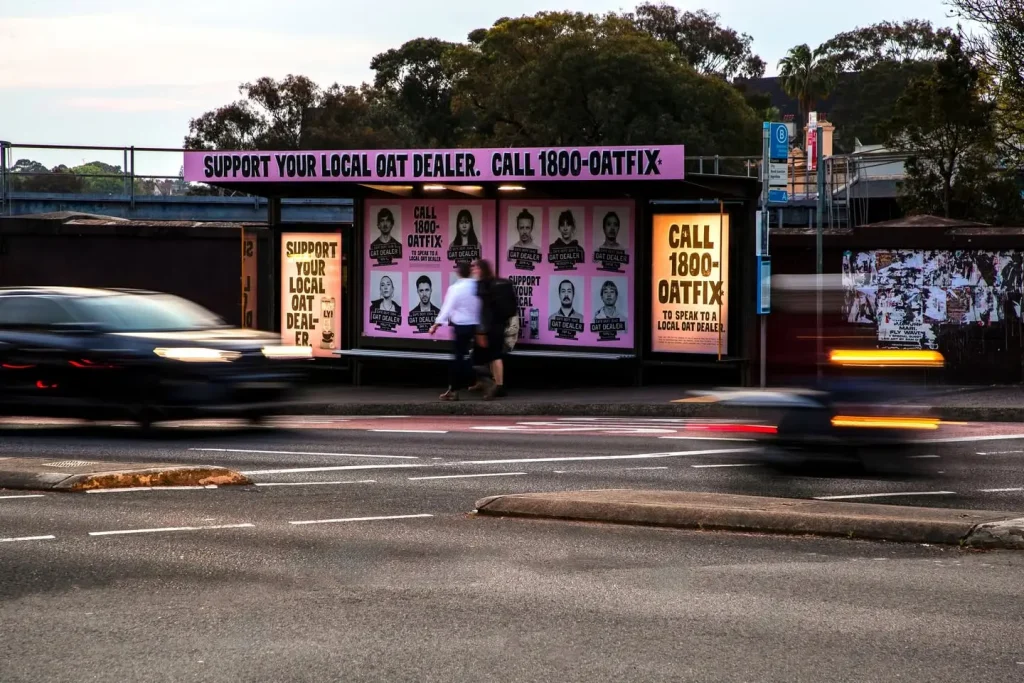
Image source: oOh! Media
This bus shelter is an example of how a global brand can use DOOH to create some stellar local advertising.
Oatly’s recent DOOH campaign pointed passersby to the nearest “oat dealer” (also known as baristas) using its oat milk. The style and tone work really well with the ad’s urban surroundings, while the bright colors and grungy mugshots instantly grab attention. Nicely done, indeed.
Beconase

Image source: JCDecaux
This might look like a simple hayfever ad at first glance, but the digital OOH advertising used live data to highlight the local pollen count for an ultra-targeted and relevant campaign message.
I chose this example because it shows how digital technology can be used to simplify creative output. This ad isn’t about striking 3D visuals or animation, it’s about using DOOH to provide real added value for the audience.
5. Transit displays
Last but not least, we’ve got transit displays. These are DOOH ads found on or in buses, trains, taxis, and rideshare vehicles, as well as in transit terminals and stations.
Small but mighty, transit displays are able to target a more engaged audience who are generally looking for something to do or read while they’re commuting.
Transit display ads are great for promoting local businesses, upcoming events, or attractions along a specific route. But their versatility allows for all sorts of advertising for products and services, too.
By the way, if you’re interested in transit displays, we have some great examples in our outdoor marketing trends guide.
Heineken
Digital taxi displays are a relatively new digital advertising media, which makes them stand out from their traditional static counterparts. I love how this crisp DOOH from Heineken captures the refreshing vibe of the brand, keeping it top of mind.
Animated transit displays like this are great for bringing a brand to life in a novel way. The key is making sure your message is clear so people can understand it from far away.
Optus

Image source: oOh! Media
What a clever placement idea, making the most of that 30-second window people have while standing on the escalator.
This example is beautifully on brand, with a compelling headline and a product showcase all in one. I’m expecting to see more of these DOOH formats in the future!
Final thoughts
DOOH is a super effective way to catch and hold the attention of a large audience.
Whether you’re looking to increase brand awareness or promote a new product, I hope this article inspires you to add some DOOH magic to your next campaign.