If you think digital marketing is the only way to win over today’s consumers, I’m here to change your mind. Let’s start with a stat: 85% of customers are more likely to buy from a brand after participating in events and experiences, highlighting that experiential marketing matters.
Experiential marketing packs a punch that can’t be matched by most online advertising. And with more brands putting all their eggs in one virtual basket, experiential marketing could be the thing that sets you apart from the competition.
As you’ll see in these examples, your budget doesn’t have to determine how much impact you make. What matters most is that you use your marketing activation to grab attention, spark emotion, and create a moment that sticks in people’s minds.
Below, you’ll find eleven of the best experiential marketing campaigns of all time and why they worked.
1. Heineken Fantenders (2025)

Image source: D&AD
For many footie (soccer) fans, half the joy of watching a match comes from the shared excitement of heading out to your favorite bar to enjoy the occasion with friends. But with UEFA matches airing in the middle of the night in China, supporters were forced to watch the games at home due to early (I mean, before 2am) bar closures across the country. “This is not good enough!”, said Heineken.
To tackle the problem head-on, Heineken gave hardcore football fans the chance to get behind the bar during late-night European matches, keeping them open without costing bar owners a fortune in server salaries.
The activation generated a huge buzz. We’re talking 890M impressions, 14.9M engagements, and 250% average sales growth per bar. Such a simple, creative idea that focused on adding real value for its audience. Experiential marketing at its finest.
Supercharge your marketing reviews
Share content, get feedback, and manage approvals with Filestage.
2. Refinery29 – 29Rooms (2015-)
Refinery29 is a digital media and entertainment platform known for content that explores fashion, beauty, wellness, identity, and pop culture through a progressive lens. Back in 2015, the brand wanted to do something special to connect with its experience-loving target audience. And so, 29Rooms was born.
Starting at New York Fashion Week, the interactive marketing event brought together 29 distinct, multi-sensory spaces all designed to evoke emotion, spark conversation, and fuel social media engagement.
From rooms about self-love and gender identity to political activism and surreal dreamscapes, each experience was deeply personal. And shareable. That’s the secret sauce for successful experiential marketing events.
Since then, 29Rooms has held sold-out events in other major cities like LA, Chicago, and Singapore. It also secured partnerships with brands like Dyson, Revlon, and Facebook that integrated seamlessly into the experience.
3. Heinz Tattoo Ink (2023)
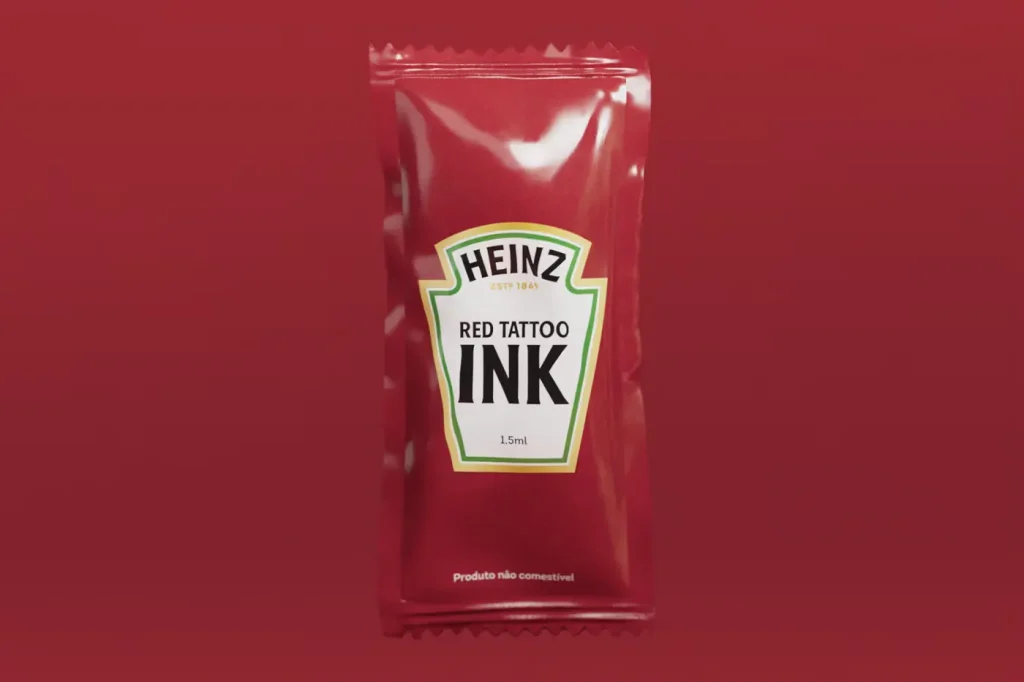
Image source: Hypebeast
Heinz is one of the most tattooed brands in the world, with public figures like Ed Sheeran branding themselves as lovers of the iconic red condiment. The problem is, red ink is notorious for being the most problematic color, using harmful chemicals and causing the most allergic reactions.
To put a stop to these risky tattoos, Heinz created its very own (safe, non toxic) red ink that matched its exact Pantone color. Celebrating fan devotion, Heinz also released 57 custom stencils by top Brazilian artists, which quickly went viral online.
While it might be a bit niche, this experiential marketing campaign is a brilliant example of how to fuse branding with pop culture in a way that leaves a lasting impression (quite literally).
4. Neutrogena’s Sunscreen Backpacks (2024)
Neutrogena has popped up at more than a few event marketing stunts over the years, reminding festival-goers to stay protected with an SPF. But I love this example from Carnaval na Cidade in Sao Paulo, Brazil, because of its simplicity. No flashy installations. No expensive special builds. Just a simple, engaging way to keep people protected while having fun in the sun.
This experiential advertising example garnered widespread attention on platforms like TikTok, where it reached over 900,000 likes and more than 12 million views.
5. Airbnb x Barbie (2023)

Remember the Barbie Movie takeover back in 2023? How could we forget! Especially since it led to one of the most impactful experiential marketing campaigns in recent history, which brought the iconic Barbie Malibu Dreamhouse to life as part of a brand collaboration with Airbnb..
As part of the marketing strategy for the Barbie movie, Airbnb joined in the fun and offered fans the chance to stay in a real-life Barbie mansion in Malibu, with Ken taking over as host while Barbie was “away.” The campaign was a viral sensation, becoming Airbnb’s most popular listing ever and attracting over 13,000 media mentions and 250 million social media impressions. This strategic partnership between Airbnb and Warner Bros. demonstrated the power of co-marketing.
It combined cultural relevance with immersive, Instagram-worthy experiences. By inviting target audiences to engage firsthand and share their stays, the campaign was hands down one of the best viral marketing campaigns, maximizing organic reach and audience participation. And it was super impactful, with fans booking a combined 115 million nights in the Malibu mansion.
6. IKEA’s Good Ship (2019)

Image source: Campaign
IKEA’s “Good Ship IKEA” campaign is a great example of how brands can make a real, positive impact while still keeping things fun and family-friendly. To celebrate the opening of its Greenwich store, IKEA launched two giant, remote-controlled boats designed to look like the brand’s classic bath toy. The boats cruised through the Thames collecting rubbish from the water.
In partnership with Creekside Education Trust, IKEA turned the experience into an educational marketing event for families, letting kids (and grown-ups) captain the boats and learn about environmental stewardship in a playful way.
Each boat was able to collect up to 20kg of waste per trip, and all the rubbish gathered was later turned into a sculpture displayed at the Greenwich store. Once the campaign wrapped up, the boats were donated to the sustainability charity Hubbub to continue their mission.
7. 7Up’s Concert For The Deaf (2016)
7UP’s “Concert for the Deaf” is another example of top-tier engagement marketing. Teaming up with superstar DJ Martin Garrix, 7UP hosted a private concert designed specifically for deaf and hard-of-hearing individuals, proving that music isn’t just something you hear, but something you can feel.
The event used a range of sensory tech to bring the music to life:
- Vibrating floors and walls pulsed with the beat
- Water experiments
- Visually illustrated sound waves
- Wearable gear like Subpac-style backpacks
This allowed attendees to physically experience the bass through their bodies. The result was an immersive, multi-sensory celebration of music that engaged participants in a totally new way.
Though filmed as a private event, the concert became the centerpiece of a broader 7UP campaign that resonated globally, earning both emotional responses and industry recognition. Including a Gold Clio award.
It’s a standout example of how a thoughtful, inclusive activation can elevate brand storytelling while making a meaningful impact.
8. McDonald’s McDonnell’s pop up (2022)

Image source: Fast Company
To launch its Chicken Big Mac, McDonald’s took an unexpected approach by opening a pop-up restaurant in L.A. What’s unexpected about that? Well, their pop-up went under a totally different name: McDonnell’s.
For one day only, the mystery restaurant served up what it simply called “The Chicken Sandwich”, which was in fact a twist on the classic Big Mac, swapping the beef patties for crispy, tempura-battered chicken.
With its own unique branding and logo, McDonnell’s felt like a gourmet spin on fast food. Alongside the star sandwich, the menu featured McDonald’s favorites like fries, apple pies, and soft serve. Needless to say, some sharp-eyed diners quickly picked up on the familiar flavors.
But this campaign wasn’t just about a new burger. It was about introducing the Big Mac legacy to a new generation. As part of the rollout, McDonald’s teamed up with popular streamer (and self-proclaimed Big Mac superfan) Kai Cenat to livestream real-time reactions, adding an extra layer of energy and authenticity.
You can see more stellar examples of fast food advertising in our roundup of the best McDonald’s marketing campaigns!
Supercharge your marketing reviews
Share content, get feedback, and manage approvals with Filestage.
9. KitKat’s Free No WiFi Zone (2013)

Image source: Ads of the World
Who said experiential marketing campaigns need to break the bank? This example from KitKat was bang on brand and offered passersby a refreshing break (wink wink) from the need to be “always on”.
In the bustling city of Amsterdam, KitKat set up free WiFi zones, in the form of red seating areas created in spaces with no internet connection. The idea was to encourage its audience to sit down, take a break, and enjoy a moment of real-world connection.
This experiential ad proves that great experiential marketing doesn’t need to be high tech or high cost. Sometimes, the best ideas are the simplest, especially when they meet people where they are, and show that they really understand what’s important to that audience.
10. Donation Dollar (2024)

Image source: D&AD
Most experiential marketing campaigns are about creating memorable moments that increase brand recall and loyalty. This example from the Australian government did things a little differently.
The idea came from the insight that the digitization of money has led to fewer physical coins in people’s pockets. Which, in turn, has caused a drop in spontaneous donations. To try and tackle this problem, the Donation Dollar was created as the world’s first legal currency designed to be donated. One was minted for every Australian, creating over 25 million individual daily reminders to give, creating a generosity loop that will last a lifetime.
The important takeaway isn’t the sheer scale of the idea. It’s the fact that experiential marketing can be used to drive positive change that supports your brand’s values beyond simply increasing sales. This kind of authenticity is a game-changer for long-term brand loyalty.
11. Coors Light Lights Out (2024)

Image source: Packaging Digest
Coors Light’s Lights Out campaign is a brilliant example of reactive, experiential marketing. In case you don’t know the backstory, during a live MLB game, baseball superstar Shohei Ohtani hit a home run that accidentally damaged one of Coors Light’s digital billboards at Citi Field, knocking out a section of LED lights. Rather than fixing it quietly, Coors turned the mishap into a campaign within 48 hours.
The beer brand released a set of limited-edition cans featuring a blacked-out pixel design and replicating the visual across ads and stadium placements. And they were a massive hit, selling out in under 24 hours. The damaged LED panel was also auctioned for over $7,000, and the campaign went viral, outperforming official sponsors despite Coors spending nothing on sponsorship rights.
Its clever timing and authentic engagement earned massive global attention, especially in Japan, Ohtani’s home country, prompting Coors Light’s expansion into that market. The campaign also won major creative awards. For us marketers, it shows how seizing an unplanned moment with speed, humor, and brand consistency can turn it into a commercial jackpot. One of the best experiential marketing strategies!
Review your experiential campaigns with Filestage
Filestage is a collaborative content review and approval platform that streamlines how teams give and receive feedback on creative projects.
From videos and images to documents and web content, Filestage brings all your file reviews together in one place. In short, it can help take the hassle out of sharing and approving all the moving parts of your next marketing campaign.
Here are a few of our most popular features:
- Version control – Keep track of every update and easily compare versions to make sure changes are made correctly
- Automated workflows – Set up review steps for internal teams, clients, and legal, so everyone signs off in the right order
- Real-time collaboration – Collaborate live with stakeholders across departments or locations for faster and more efficienct approvals
- Deadline tracking – Stay on top of feedback cycles with built-in due dates and reminders to keep projects moving forward
- Integrations – Speed up your entire workflow by integrating with Slack, Asana, Zapier, Google Drive and more
Final thoughts
In a world overloaded with digital noise, real-world experiences can help you stand out and build emotional equity that drives loyalty. They also spark pure joy, which is what great marketing is all about.
I hope you enjoyed checking out these examples of experiential marketing campaigns with me. If you’d like to see for yourself how Filestage can speed up your review workflows, start your free trial here.