
With the rise of digital marketing, you’d be forgiven for thinking that flyers are a thing of the past. But the truth is, they’re still incredibly effective.
Research from the Data & Marketing Association shows that 89% of people remember receiving a flyer – more than any other form of marketing collateral. What’s more, 45% keep hold of them for future reference. That’s a pretty impressive level of engagement, especially for such a humble, old-school marketing tool.
But like any marketing method, it’s got to be done right.
In this guide, I’ll walk you through how to create a killer flyer that grabs attention, resonates with your audience, and drives real results.
But first, let’s take a closer look at exactly what flyer marketing is and why it still works.
Supercharge your marketing reviews
Share, review, and approve all your content in one place with Filestage.
What is flyer marketing?
Flyer marketing involves creating and distributing printed flyers to promote your products and services. It’s a print marketing strategy most commonly used by brick-and-mortar businesses – particularly those that rely on local customers.
Examples of these businesses include:
- Retail stores
- Restaurants and cafes
- Gyms
- Real estate agencies
- Salons
- Trade businesses (like plumbers and electricians)
Businesses like these use flyer marketing to target a local audience. This helps them build brand awareness and (hopefully) convert that audience into paying customers.
These flyers might be handed out in person or displayed in key locations. Either way, their main aim is to grab attention and deliver a clear message in a matter of seconds.
Is flyer marketing still effective?
Even in the age of digital marketing, flyer marketing is still effective. As you saw earlier, 89% of people remember receiving them and 45% keep hold of them to refer back to.
According to the DMA, as a direct result of receiving flyers through the mailbox:
- 92% have been driven to online activity
- 87% have been influenced to make online purchases
- 86% have connected with a business online
- 54% have engaged in social media
- 43% have downloaded something
That goes to show that a) people do still read flyers and b) flyering still works.
Why does flyer marketing still work?
The odds might be against it, but research clearly shows that it’s still effective. So why is that?
Well, the beauty of flyer marketing is that:
- It’s affordable – Compared to digital ads or large-scale campaigns, flyers are a low-cost marketing tool that provides high visibility without breaking the bank
- It’s highly targeted – Businesses can distribute flyers exactly where their target audience is most likely to see them, no guesswork needed
- It’s fast – High-quality flyers can be designed, printed, and distributed in a matter of days, so they’re perfect for last-minute promotions or urgent messages
- It’s tangible – A physical flyer stays in people’s hands, homes, or offices longer than a fleeting digital ad, increasing the chances of engagement
Seven steps to create a killer flyer
Now that we know what flyer marketing is and why it still works, it’s time to get to work! Let’s explore how to create an effective flyer in seven simple steps.
1. Define the purpose of your flyer
Before you get stuck into the creative process, the first step is to define the main objective of the flyer. Is it to promote a product? Advertise an upcoming event? Announce a special offer?
The key is to keep it simple – don’t try to do too much with one flyer.
Setting a single, clear goal helps keep your flyer focused and impactful. It will keep things on track from a design perspective, and make it easier for your audience to understand the key takeaway at a glance.
2. Understand your audience
The next step is to identify your target audience and get to know them better. You probably already have a good idea of who your main audience base is, but spend some time deep-diving into their preferences, behaviors, and needs.
This insight will guide every aspect of your flyer marketing strategy – from design and messaging to distribution methods.
For example, if you’re targeting a professional audience, a sleek and minimalist design will usually work best, and you might want to distribute flyers at trade shows and networking events.
If your audience is families, a friendly, colorful approach might be more effective. And you may choose to distribute your promotional flyers door to door, at schools, or in local community centers.
The better you understand your audience, the more impact your flyer will have.
3. Craft an eye-catching design
Now for the fun part – bringing your flyer to life! First up, consider the size of your flyer. Most flyers are printed on one sheet of paper, either single or double-sided.
Popular sizes include:
- A5 (148 x 210mm) – A good balance of space and portability
- A6 (105 x 148mm) – Compact and cost-effective, ideal for mass distribution
- DL (99 x 210mm) – Tall and narrow, perfect for letterbox drops or event programs
The size you choose will influence everything from font size to layout, so getting this right from the start makes designing much easier.
Paper size chosen? It’s time to get creative.
How to design your flyer for maximum impact
Here are some tips:
- Use bold headlines so that important information stands out
- Choose eye-catching colors to catch the attention of your target audience
- Select high-quality images for a professional look and feel
- Leave plenty of blank space around text and images to improve readability
- Use your distinctive brand colors, fonts, and logos to reinforce your brand identity – this is your time to shine as a brand!
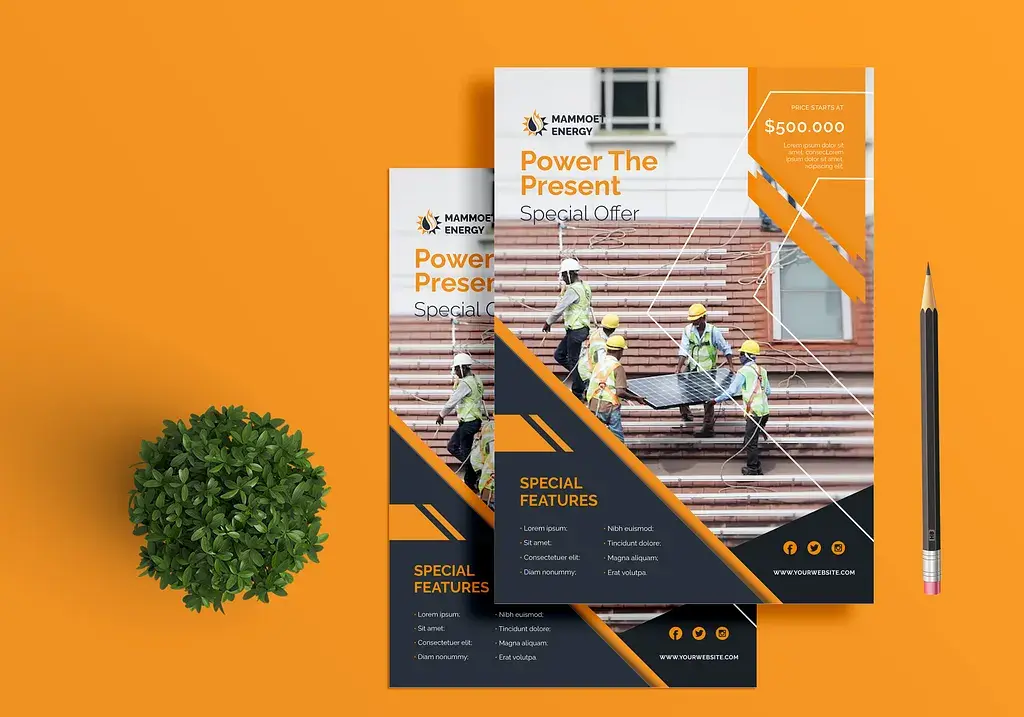
I particularly like the example below. It uses a coherent color scheme, bold headlines, and creative shapes to divide information, improving readability.
Source: Dribbble
Supercharge your marketing reviews
Share, review, and approve all your content in one place with Filestage.
4. Keep copy concise
Copy is another key part of the design process, and when it comes to flyer copy, less is always more. You only have a couple of seconds to capture the attention of your potential customers, so keep copy concise and make every word count.
Here’s how:
- Get straight to the point – Clearly describe what you’re offering, why it matters, and what the reader should do next
- Use short, punchy sentences– Break up information for quick scanning and consider using subheadings and bullet points to make your flyer easy to read
- Address the reader directly – use “you” when and where you can to make your flyer feel more personal
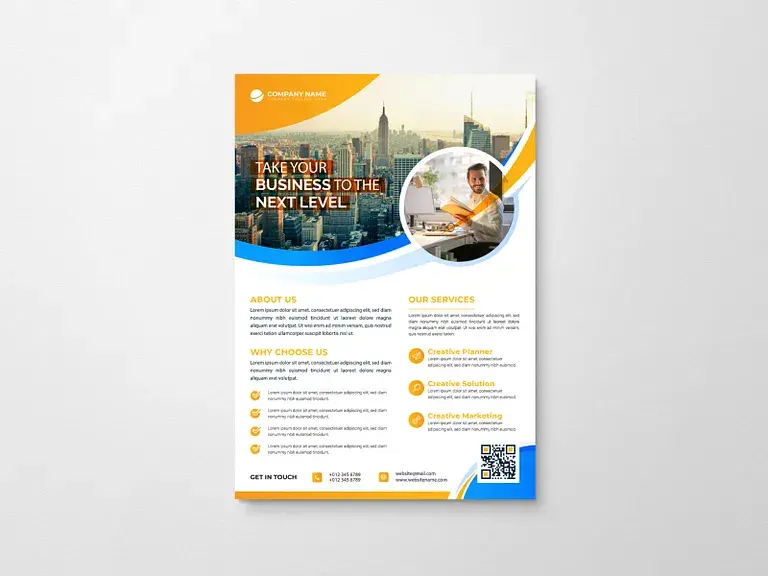
The flyer below is a great example, ticking all the boxes by a) keeping copy concise, b) dividing it up with subheadings and bullet points, and c) directly addressing the audience.
Source: Dribbble
5. Include a strong call to action
After getting across your message, use a clear call to action (CTA) to tell readers exactly what to do next. That might be to “visit our website”, “get in touch”, or “order now”. Place your CTA prominently on the flyer so it stands out.
Don’t forget to include important information like your website, phone number, social handles, and business location to make it as easy as possible for readers to take action. QR codes are a great idea too!
6. Gather feedback and refine your flyer
Once the first draft of your flyer is ready, you’ll need to share it with your team and/or stakeholders for review. This is an important step as it helps you catch and correct any mistakes. And by getting input from others, you also make sure the finished design is the best it can possibly be.
The downside? Collecting feedback on flyer designs can be time-consuming and stressful if not managed properly – especially when there are lots of stakeholders involved.
That’s where Filestage comes in.
Filestage is a review and approval tool that makes it easy to gather feedback by giving you a single space to share, review, and approve your designs.
Here are some of the ways that Filestage helps streamline your flyer review process:
- Centralized feedback – Keep all comments and suggestions in one place, eliminating lengthy back-and-forth emails and scattered feedback
- Real-time collaboration – Review designs with your team and stakeholders in real time, so that everyone stays on the same page
- Easy annotation tools – Highlight text and draw directly on top of the flyer to make feedback crystal clear
- Version control – Easily compare design versions to check previous comments and see what’s changed
- One-click approval – Once you’re happy with the final flyer design, mark it as approved and save or download as needed
Image suggestion: Filestage image showcasing flyer review
How to review flyers with Filestage
- Sign up to Filestage for free
- Create a project folder, give it a name, and upload files in any format
- Invite reviewers and collaborators, or send them a link to the project
- Let collaborators add feedback and suggestions in the comments
- Upload new file versions as needed, and mark approved when ready
It’s that simple!
7. Choose the right distribution method
After you’ve got approval on your flyer designs, decided how many flyers you need, and sent them to print (I recommend using a professional printing service for the highest quality results), it’s time to think about your flyer distribution strategy.
How do you want to get your flyers into the hands of potential customers?
Here are some of the most popular methods:
- Handing out flyers in high-footfall areas like shopping malls, train stations, or events
- Delivering flyers door to door in targeted neighborhoods
- Sending flyers via post to specific customer segments
- Displaying flyers in relevant stores (learn more about in-store advertising and POS marketing)
- Pinning flyers on noticeboards in public areas and community centers
- Including flyers inside local newspapers or industry-specific magazines
- Handing out business flyers at trade shows, conferences, and industry gatherings
Final thoughts
Creating flyers is a great way to target a local audience, grab their attention, and convert them into paying customers. And I hope this article has inspired you to create your best flyers yet!
If you’d like to see for yourself how Filestage can help you review all your marketing materials – not just your flyers, start your free trial today.