

Content marketing has become so popular in the last couple of years that almost every company uses it to promote its brand.
A recent report from Hubspot showed that 82% of marketers from all industries invest in content! And 81% claim that content marketing helps them grow brand awareness.
How does the travel industry fit into this trend? Well, let’s just say that there’s no better way to attract new travelers than by showing them the beauties of a specific destination.
So, let’s examine the most important tips for developing a content strategy for your travel brand.
1. Get to know your target audience
Nothing in marketing works without a good understanding of the audience you’re trying to reach. And the same goes for content marketing in the travel industry. Depending on the type of travelers you’re looking to attract to your destination, you’ll tailor your messages, use different platforms, and even emphasize different aspects of your business.
If your visitors travel business, your content should focus on the convenience and efficiency of your services. These travelers care about easy check-ins, direct flights, and quick access to transportation, so it’s important to emphasize just that in your marketing communications.
On the other hand, family travelers are more likely to care about safety, comfort, and entertainment at their destination. This opens doors for creating content that showcases kids’ clubs, playgrounds, pools, or nearby attractions.
After researching your audience, you may conclude that you’re looking to attract a broader audience to whom you can communicate more diverse messages. Whatever your audience research concludes, it’s important to adjust all the next steps in your content marketing accordingly.
Supercharge your content marketing reviews
Share, review, and approve all your content in one place with Filestage.
2. Create engaging visual content
Did you know that 87% of marketers say that video has increased traffic to their website? This statistic alone should be enough to motivate you to invest in producing engaging visual content.
Especially if you’re in the travel industry. Travel is a visually driven industry. So high-quality images, drone footage, time-lapse videos, and stunning photography will help you transport your audience to the destination.
When traveling, people also want to know how to get to a certain destination, what type of transportation is the most convenient, and the level of English that most locals have.
Brochures are an often overlooked tool in the travel industry. They are visually appealing and spark more trust than other formats. Our guide on how to make a travel brochure offers more tips on how to leverage them for your business.
You can also create engaging content for a dedicated travel blog to help your travelers get the most information before visiting a country.
But, even there, you should make each blog post as visual as possible. Here’s what elements you can add to your blog to spice it up:
- Images from the exact location – for example, showing the road to your destination
- Infographics – visualizing all exciting information about a specific destination
- Detailed map of micro-location – add a detailed map showing nearby localities
- Exciting videos – a video showcasing previous visitors enjoying a specific attraction can go a long way in helping your future visitors visualize your destination
Want to see how AI can help you create more engaging visual content? Check out these seven AI content marketing tips for humans!
3. Publish user-generated content
Going to a completely new destination can be equally exciting and nerve-wracking. People often don’t know what to expect from the location, the locals, and even the weather they’re going to encounter. And ads or other promotional materials can sometimes feel less true or authentic than seeing others’ experiences first-hand.
That’s where user-generated content (UGC) comes in! UGC helps you tell the story of your destination through the most authentic lens possible – the real travelers who have already experienced what future travelers are about to.
It can also highlight things that are important to travelers that you overlooked. You can showcase a less polished picture of the destination and share practical tips with fellow travelers. At the end of the day, this helps you increase authenticity and makes your content more trustworthy.
4. Focus on local expertise
Another powerful thing in travel content marketing is letting the local experts take the main stage. You can provide insider tips, hidden gems, and recommendations from locals. By highlighting authentic experiences and lesser-known attractions, you’ll make your content stand out from the mainstream and attract adventurous travelers.
There are numerous ways in which you can achieve this. Here are some ideas:
- Create a series of YouTube videos highlighting different local experts and location gems
- Share interviews with locals discussing lesser-known facts about the destination
- Pitch your location to international TV stations and attract their travel journalists to create content featuring your destination together with local experts
- Create quiz like content where local experts and potential travelers can engage and learn from each other
5. Create destination-specific content
Creating destination-specific content in travel marketing is essential for several reasons. Firstly, it allows you to connect more deeply with all potential travelers by addressing their specific interests and questions.
By providing interesting information about activities, cultural highlights, or local attractions, your content will resonate more with people planning to visit that destination.
Also, search engines love relevant, localized content! When you produce content focused on a specific destination, it’s more likely to appear at the top of the search results, helping position your brand as the “expert” for that location.
This improves organic traffic and helps capture travelers at various planning stages.
Here are some examples of destination-specific content you can create:
- Blog posts featuring travel tips
- Itineraries and guides containing relevant information
- Social media content showcasing top attractions
- Cultural insights to help travelers plan their trip
6. Commit to search engine optimization (SEO)
As the titles mentioned, investing your time and money into SEO is a real commitment – but one worth considering!
By making sure your content follows all relevant SEO guidelines, you’ll be able to get it in front of more eyes, which will, in turn, bring more visitors to your destination.
But for SEO to work, you’ll need patience and attention to detail. Every title, description, link, and keyword matters in this game.
And just a few simple edits can turn your content from a third-page ranking on Google into a real first-page star.
Here are a few tips to help you make your content rank well on search engines:
- Use travel-related keywords, long-tail phrases, and location-specific terms
- Optimize your blogs, meta descriptions, and alt texts to improve visibility and drive organic traffic
- Refine your content with visual elements like images, videos, or infographics
- Use specialized SEO tools like Ahrefs, Semrush, or Surfer SEO to make sure your content checks all boxes
7. Make use of social media and influencers
By this point, there’s hardly any industry from which companies don’t see the benefits of using social media as part of their content marketing strategy. The same goes for influencer marketing. And, if there’s anything that influencers are famous for, it’s their traveling.
The travel industry was one of the first industries to see the real benefits of influencer partnerships, and the trend doesn’t seem to be slowing down. Recent research from National Geographic found that 35% of people find new travel destinations on Instagram.
By partnering with travel influencers to promote your brand, you’ll benefit from their followers’ trust in their recommendations and increase visibility for your brand.
Plus, you’ll maintain an active social media presence with an engaged community by offering your followers travel tips, promotions, and inspiring content.
8. Offer interactive tools and content
One slightly different approach to your travel content marketing strategy can be developing interactive tools and content. No matter what demographic you’re looking to attract, most of your audience will love interacting with your content.
Interactive content helps keep users engaged, which in turn increases the chances they’ll return to your site for more resources.
Here are some interactive tools and content you can create:
- Travel calculators – create an interactive calculator that takes different expenses into account and estimates the overall cost of their trip
- Packing checklists – create an editable spreadsheet where the traveler can enter all the items they should bring and check them as they get packed
- Custom itinerary builders – make an editable document with various custom fields for people to fill in as they build their itineraries
Here’s an example of an itinerary builder that you could use for inspiration:

9. Create seasonal and event-specific campaigns
Traveling is mainly related to specific seasons. People take summer or winter vacations and around some national holidays. So, depending on the season, you can create seasonal campaigns emphasizing the benefits of spending a specific type of holiday at your property or destination.
For example, if you offer accommodation, then your New Year’s Eve campaign could promote a theme party with discounted cocktail prices, including the possibility of an extra late check-out on January 1st.
This way, you’ll create a unique offering relevant to people who are already planning a trip for this occasion. Plus, you’ll stand out from the competition and win over more visitors.
Special promotions, themed itineraries, and timely content will help you attract travelers who are already searching for some content around a specific event.
10. Invest in personalized email marketing
Email communication is an amazing platform for engaging your audience and building stronger and more personalized relationships. Mailchimp reports that the average email open rate is 33.25% in the travel and tourism industry.
That means every third person who receives an email from your travel company will see your special offer. Talk about an opportunity!
There are two main ways you can use email marketing to boost your travel content marketing efforts:
- Personalization based on past behavior – Gather valuable insights from your audience’s past behavior and offer personalized travel recommendations.
- Segment your audience base – By splitting your audience base into smaller segments, you’ll be able to send targeted offers, curated travel guides, or destination suggestions tailored to individual interests.
Five outstanding examples of travel content marketing
Here are five great examples of travel content marketing that have successfully captivated audiences worldwide:
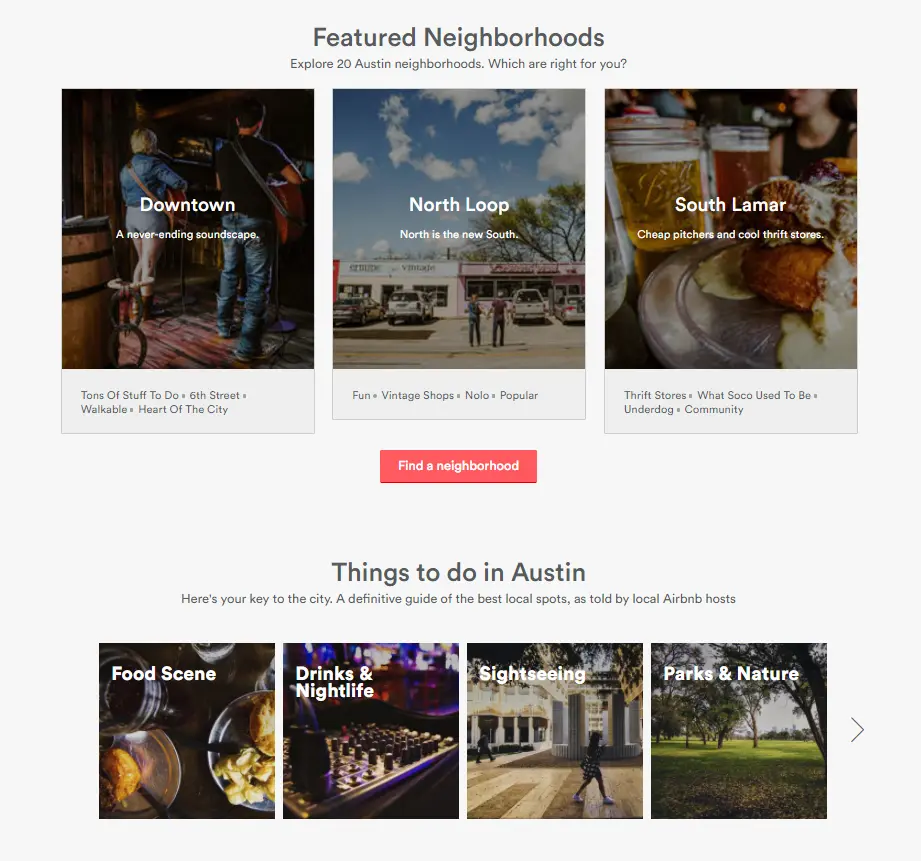
1. Airbnb Neighborhood Guides – interactive guides, articles, and maps
Airbnb never disappoints when it comes to delivering unique and engaging travel content to its audience. In 2012, Airbnb developed highly-engaging, in-depth “Neighborhood Guides” for major cities worldwide.
These guides helped users discover local experiences in specific neighborhoods, highlighting restaurants, activities, and the overall vibe.
Why it works
Airbnb’s guides were visually appealing and gave travelers a deeper, more authentic understanding of the cities they’re visiting. They built trust by focusing on local insights and experiences while seamlessly tying into their brand as a platform for local accommodations. Just brilliant!
Supercharge your content marketing reviews
Share, review, and approve all your content in one place with Filestage.
2. GoPro Adventure Stories – user-generated videos and social media posts
It’s no news that GoPro’s marketing relies heavily on user-generated content (UGC) showcasing adventurous travel experiences captured by their cameras. Travelers share videos of everything from hiking mountains to diving with sharks, all filmed using GoPro products.
And this approach to content marketing helped build GoPro as one of the largest travel brands on earth.
Why it works
The campaigns tap into the adventure traveler’s desire to capture and share extraordinary moments. GoPro makes its customers the stars of its content, fostering an engaged community and showing how its product enhances the travel experience.

3. Visit Iceland’s Let it Out Campaign – interactive social media campaign with user-generated content
In 2020, Visit Iceland created an innovative and humorous campaign called “Let it Out.” The campaign encouraged people to record themselves screaming in frustration over the challenges of lockdown and travel restrictions. The screams were then broadcast in Iceland’s wide, serene landscapes.
This simple yet extremely powerful concept depicted everything that period was about – frustration, union, and hope for better tomorrow.
Why it works
The campaign created an emotional connection with the people feeling the stress of the pandemic. It cleverly positioned Iceland as a place of escape and freedom. Plus, it offered a playful way to engage with future travelers when they couldn’t actually visit the destination.
4. Expedia’s Travel Yourself Interesting Campaign – video ads and social media stories
The famous travel technology company Expedia launched a creative marketing campaign called “Travel Yourself Interesting” that emphasizes that travel can make you a more interesting person.
The ads humorously portrayed how traveling can give you great stories and enrich your life in ways staying at home can’t.
Why it works
The campaign taps into the emotional benefit of travel by highlighting the one thing most of us care about – personal enrichment. It also used humor to make travel aspirational but accessible, positioning Expedia as a key to these transformative experiences. Ultimately, this helped the brand increase awareness and boost website traffic.
5. JetBlue’s Stories from the Seat Podcast – podcast and social media campaign
JetBlue is a major US airline that aimed to create a better bond with its passengers by launching a podcast series called “Stories from the Seat.” The podcast featured real passengers sharing their travel experiences and stories. From emotional reunions to once-in-a-lifetime adventures, the series gave voice to JetBlue travelers’ diverse experiences.
Why it works
The podcast gives the brand a human touch and emphasizes the connection between travel and personal stories. It also profits from the growing popularity of audio content, connecting with listeners in an intimate and engaging format.

Final thoughts
The travel industry is such a visual and fun industry to market that it would be a shame to miss out on numerous creative opportunities. That’s why I hope this guide inspires you and helps you get your creative juices flowing.
If you’re looking for a way to simplify your content reviews and reach your audience faster,, try Filestage.
This dedicated content review platform brings all your files and feedback together in one place, making it easy to get sign-off on creative assets.
But instead of believing my word, try it yourself. Get a 7-day free trial and excel in your content marketing efforts today!