
The pressure is on. The C-suite wants to see growth, your sales team is asking for more qualified leads, and you’re staring at a blank calendar, wondering which marketing strategy will actually move the needle this quarter. Sound familiar? Welcome to marketing.
Choosing the right types of marketing campaigns can feel overwhelming, but it’s the single most important decision you’ll make to engage your target audience and drive real business results. So let’s get into it. Here are 10 powerful marketing campaign examples you can use to inspire your next big push.
1. Brand awareness campaign
A brand awareness campaign is designed to increase your company’s visibility and brand recognition among your target audience. The goal isn’t immediate sales but to make your brand a familiar and trusted name
Ideal use case
New companies entering the market, or established brands looking to reach a broader audience or reinforce their market position. If you haven’t yet cemented product-market fit, established your brand foundations, or developed a nurturing strategy, brand awareness campaigns may not be the best use of resources at this time.
Example: Spotify’s “Wrapped” campaign
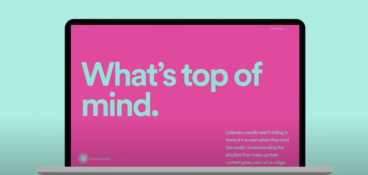
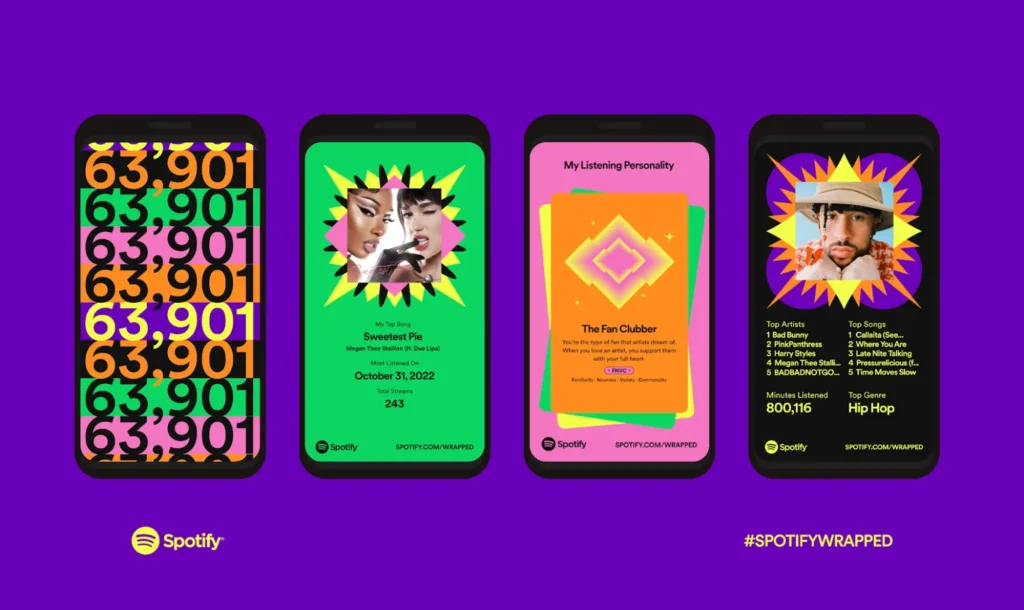
Every year, Spotify gives users a personalized, shareable summary of their listening habits. This brilliant campaign generates massive amounts of user-generated content on social media platforms, turning millions of users into brand advocates and reminding everyone why they love Spotify.
Ready to have your mind blown? Almost 60 million Spotify Wrapped stories and graphics were shared across social media in 2021. No wonder so many brands use Spotify for campaign inspiration – it’s proof that data storytelling works.
2. Product launch campaign
A product launch campaign is a coordinated effort to introduce a new product or a major feature update to the market. It’s all about building hype, educating potential customers, and driving initial sales or adoption.
Ideal use case
Product launch campaigns are a great idea when you’re launching something new and need to capture market attention quickly. But the timing has to be right. If your product isn’t ready, you lack market validation, or you struggle to sustain post-launch momentum, it may not be the right time.
Example: Apple’s “Shot on iPhone” campaign
This brand campaign was launched in 2015 to promote the iPhone 6s, which featured a powerful 12-megapixel camera. But instead of just listing technical specs, Apple showcased the power of its new camera by featuring stunning photos and videos taken by real users.
The campaign featured a social media contest with a dedicated microsite, an influencer marketing campaign, in-store displays, a TV commercial, and a series of beautiful print ads.
This campaign was a masterclass in showing product value, and it garnered over 70 million interactions on Instagram alone. It also increased sales of the iPhone 6s and strengthened Apple’s brand perception.

3. Content marketing campaign
This type of marketing focuses on creating and distributing valuable, relevant, and consistent content to attract and retain a clearly defined audience. It’s about providing value first, and selling second.
Ideal use case
Content marketing campaigns are ideal for B2B companies with longer sales cycles because they help build trust and position your brand as a thought leader. That said, your team may not be ready to launch this kind of campaign if you don’t have a content strategy in place, a clear distribution plan, or a solid idea of who your audience is.
Example: HubSpot’s blog and the HubSpot Academy
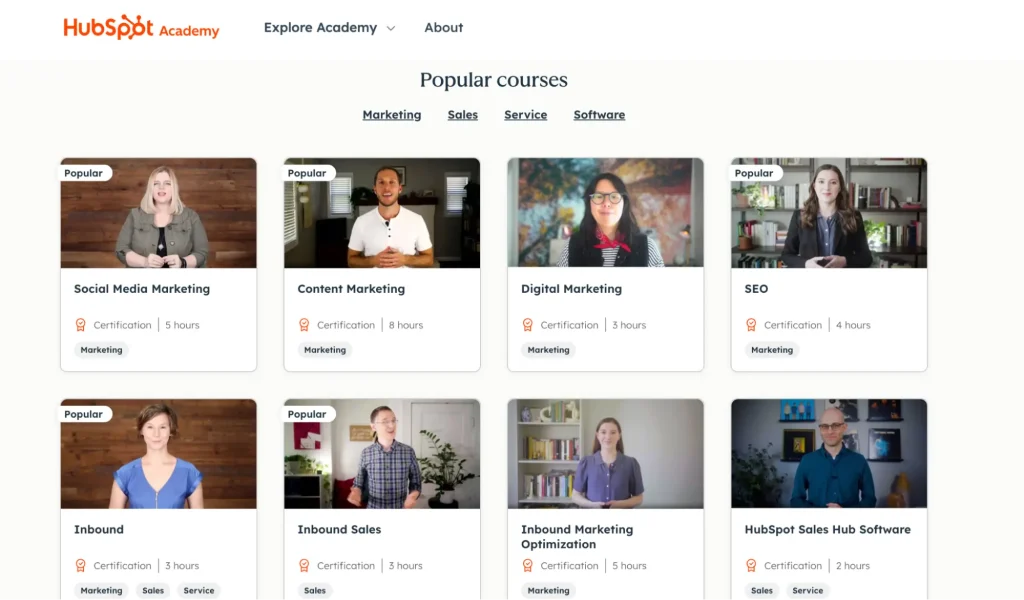
HubSpot built its entire empire on content marketing, and if you’re going to position your brand as the leader in inbound marketing, you’d better practice what you preach. And Hubspot has certainly delivered.
It started by identifying its target audience, and then it came up with a diverse, multi-channel content marketing strategy that offers a massive library of free blog posts, ebooks, and certification courses. Thanks to this long-term campaign, HubSpot has become the go-to resource for anyone in the marketing industry. And it has generated millions of leads for its software.
And if you’re interested in content strategy, don’t miss our exclusive interview with Content Strategist and agency owner, Tyler Hakes.
4. SEO campaign
A Search Engine Optimization (SEO) campaign is a strategic effort to improve your website’s visibility in search engine results for specific keywords. The goal is to drive more organic (non-paid) traffic to your site.
Ideal use case
An SEO campaign is a long-term play for sustainable growth. It’s essential if your target audience is actively searching for solutions like yours on search engines like Google. But, if you can’t invest long-term or your audience doesn’t search for your solution, it may not be the wisest use of your campaign budget.
Example: Ahrefs’ blog strategy
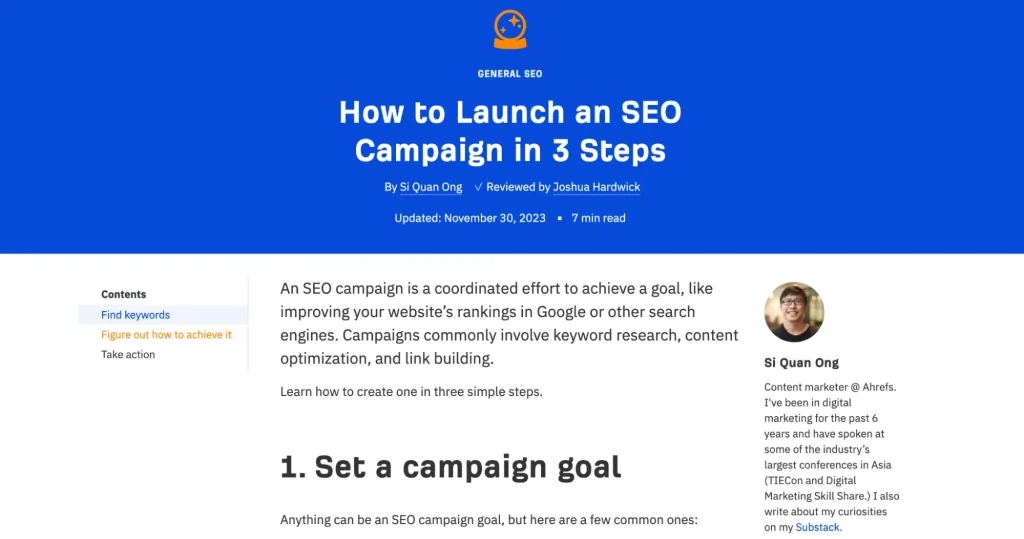
SEO software company Ahrefs is another example of a brand that practices what it preaches. The Ahrefs blog has become a leading resource for SEOs, consistently publishing in-depth, data-driven articles that target high-value keywords. As a result, the blog ranks for thousands of terms and is a primary driver of new customers. Mixed with webinars, courses, collaborations, and campaigns, it’s a masterclass in marketing.
Another thing I love about the Ahrefs blog is how well it incorporates the product into genuinely helpful articles.
5. Social media marketing campaign
A social media marketing campaign uses one or more social media platforms to connect with your audience, build your brand, increase sales, and drive website traffic. These can be organic, paid, or a mix of both.
Ideal use case
A social media campaign is great for brands with a strong visual identity or those targeting younger demographics. It’s perfect for building community and driving customer engagement. However, if your audience isn’t active on socials or if you don’t have a proper content engine in place (with a way to measure impact), it may be best to start with an organic social campaign and invest budget elsewhere.
Example: Planet Fitness “Judgement Free Zone” campaign
Back in 1997, Planet Fitness introduced its “Judgement Free Zone” philosophy and it has stuck with it ever since. Over the years, the brand has launched multiple social media campaigns to promote this message of inclusivity and body positivity. The campaigns feature real members, funny memes, and supportive content that resonates deeply with their target audience, creating a strong sense of brand loyalty.
6. Email marketing campaign
An email marketing campaign is a series of emails you send to a list of subscribers to nurture leads, promote products, or share updates. It’s one of the most effective marketing channels for ROI because you’re communicating with an audience that has already opted in.
Ideal use case
With the right list and segmentation, email marketing campaigns are perfect for nurturing leads through the sales funnel, announcing promotions to existing customers, or re-engaging inactive users. A word of warning, though: Without a clean, opted-in list and proper segmentation and tracking, email campaigns won’t deliver the impact you’re expecting.
Example: Netflix email marketing campaign
In recent years, the demand for streaming services has skyrocketed, meaning that Netflix now has some stiff competition. This could explain why the brand has opted for more targeted email campaigns to engage its audience and retain customers.
The emails are super visual, giving subscribers a readable digest of new releases. I also like how it mimics the look-and-feel of the platform, to recreate that scrolling sensation we all know and love.

7. Influencer marketing campaign
This involves partnering with individuals who have a dedicated social following, known as influencers, to promote your product or service. It leverages the trust and credibility the influencer has built with their audience. You can choose from micro to macro influencers, depending on your strategy, budget, and audience.
Ideal use case
Influencer campaigns are effective for reaching niche audiences or for brands in visually driven industries like beauty, fashion, or travel. Although less common in B2B than B2C, there are plenty of great examples from both industries. Influencer marketing can feel more authentic than traditional paid advertising. That said, it’s important to vet influencers wisely to make sure they align with your brand and will resonate with your audience. There’s always some level of risk involved when you ask someone to represent your brand in a public forum.
Example: Crumbl Cookies x Benson Boone collaboration
Crumbl Cookies is killing it with its marketing strategy. It dominated the “TikTok made me try it” trend, and now the brand has found the perfect influencer collaboration with Benson Boone to release the new Moonbean Ice Cream. It’s a limited-edition cookie inspired by the singer’s hit “Mystical Magical”, complete with exclusive packaging and plenty of TikTok content from the influencer. It targets the brand’s core audience and has created incredible reach for the brand on social media.

8. User-generated content (UGC) campaign
A UGC campaign encourages your audience to create and share content related to your brand (like photos, videos, or reviews). It’s a powerful form of social proof.
Ideal use case
UGC campaigns are excellent for building community and generating authentic marketing assets at scale. It works best for consumer brands with a passionate user base, like GoPro and RedBull.
Example: The ALS Ice Bucket Challenge
This is perhaps the most famous UGC campaign of all time. People were challenged to pour a bucks of ice over their heads to raise awareness about ALS, and then they had to nominate their friends to keep the chain going.
The campaign went viral globally, raising unprecedented awareness and over $115 million for ALS research. And it was all driven by people sharing their own videos – more than 17 million people took part in the challenge, including Bill Gates.
9. Rebranding campaign
A rebranding campaign is a major undertaking to change a company’s corporate image. This can include a new name, logo, brand messaging, or a shift in market position.
Ideal use case
Rebranding campaigns are necessary when a company has outgrown its original brand, is merging with another company, or needs to overcome a negative brand reputation. But before you start planning your campaign, make sure you can fully execute it at every touchpoint. After all, a rebranding strategy isn’t the right move for every company.
Example: Jaguar’s “Copy Nothing” rebranding campaign
Some people said Jaguar’s 2025 rebrand was a disaster. Others said it was genius. The truth is, it’s still too soon to tell. One thing we can all agree on though, is that the campaign successfully generated huge buzz around the rebrand. Jaguar’s rebrand was one of the most talked-about of the year.
We recently asked Nneka Etoniru, EVP of Global Brand Strategy at Avenue Z, how long it takes to know if your rebranding is actually a success. Here’s her take.

“It’ll take six to 12 months of tracking sentiment, engagement, and revenue to know if it’s truly a success. Early signals like positive media coverage, strong social media buzz, or increased brand searches can hint that it’s resonating. On the flip side, customer confusion, negative sentiment, or flat sales are red flags.”
Nneka Etoniru, EVP of Global Brand Strategy at Avenue Z
10. Public relations (PR) campaign
A PR campaign aims to shape public perception of your brand through earned media coverage (i.e., not paid advertising). This can involve sending out press releases, pitching stories to journalists, and securing positive mentions in the media.
Ideal use case
PR campaigns are crucial for building credibility and trust. It’s especially important for B2B companies looking to establish themselves as industry leaders. However, not every brand is ready to launch a PR campaign. This type of marketing campaign works best when you have a clear brand positioning and the budget to sustain long-term PR efforts.
Example: Carlsberg’s Honesty campaign
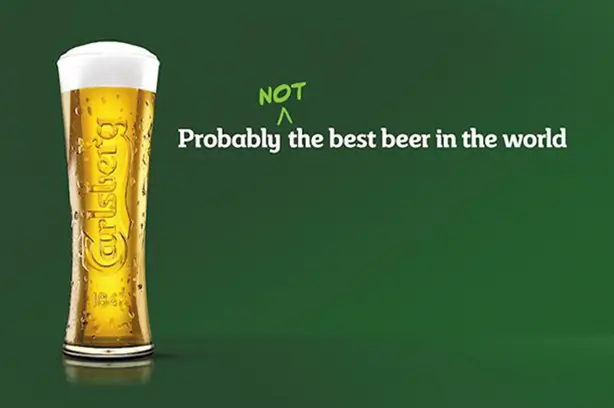
After years of using their famous slogan, “Probably the best beer in the world”, Carlsberg launched a PR campaign admitting their standard lager was “probably not” the best. And that it was going to do something about it.
The brand promoted tweets from consumers criticizing their beer, then announced a new, improved recipe. This brutally honest approach generated massive positive press coverage. The honesty was refreshing (more refreshing than the beer, by the sounds of it).
Four ways to make your campaigns stand out
We’ve seen ten examples from the greats, but how can you compete? Especially without the Netflix budget? Here are four actionable steps you can take today to improve the impact of your campaigns.
- Tell a compelling story – People don’t connect with data, they connect with stories. Whether it’s a customer success story or a narrative about your brand’s mission, storytelling is what makes a campaign memorable. Think Spotify.
- Integrate your channels – Your campaign should feel cohesive everywhere. The messaging on your social media advertising should match the landing page it links to, which should match the follow-up email campaigns. HubSpot does this well.
- Personalize for your audience – Don’t just blast the same message to everyone. Use the data you have to segment your audience and tailor your messaging to their specific interests and needs. Netflix is a great example of this.
- Make it human – The best way to cut through the noise and stand out is to add an element of surprise. Those human touches, like unexpected twists or a funny play on words, make your campaign memorable. That’s exactly what Carsberg did.
How to create a successful marketing campaign in five steps
A successful marketing campaign doesn’t happen by accident. It’s the result of a clear, repeatable process that turns a great idea into a measurable outcome. Follow this five-step process to make your next marketing campaign a hit.
Step 1: Define your goal and KPIs
What, exactly, are you trying to achieve? Your goal must be specific and measurable. Are you aiming to increase website traffic by 20%? Generate 500 new leads? Boost brand loyalty among existing customers? Once you have your goal, define the Key Performance Indicators (KPIs) you’ll use to track progress.
Step 2: Know your target audience
You can’t create a message that resonates if you don’t know who you’re talking to. Use market research and customer feedback to build a detailed profile of your brand’s target audience. Understand their challenges, motivations, and where they spend their time online.
Step 3: Choose your channels and craft your message
Based on your audience, select the right marketing channels. Will this be a social media campaign? An email marketing campaign? A content marketing push? Once your channels are set, develop your core brand messaging and the creative assets you’ll need.
Step 4: Review and approve your campaign content
This is where most campaigns stall. Your project manager is trying to juggle multiple campaign assets, feedback gets lost in endless email chains, and stakeholders give conflicting notes. Pretty soon, the whole process descends into chaos. To keep things moving, you need a centralized review and approval process.
Using online proofing software like Filestage allows your marketing teams to share all creative assets, from social media graphics to video ads, in one platform. With Filestage, everyone involved in the campaign can:
- Access the latest version of the asset from the dashboard
- Leave contextual feedback directly on the creative file
- See who has reviewed assets and when
- Have a clear overview of the approval process
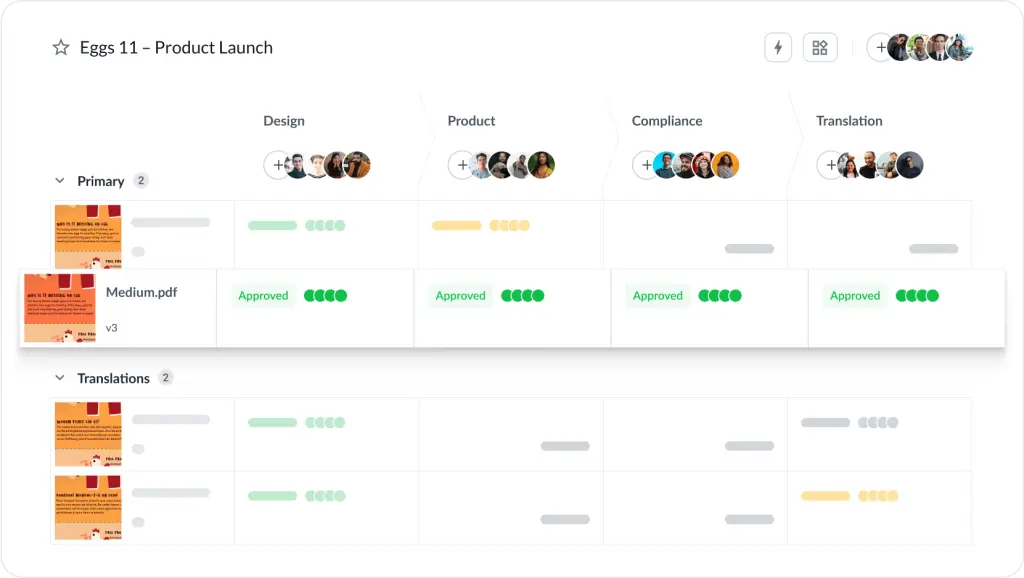
Having that clarity can save your team (whether you’re an in-house marketing team or an agency) hundreds of hours on campaign reviews. And a lot of headaches.

“Since rolling out Filestage, we’ve saved hundreds of hours on our artwork reviews. The tool allows multiple stakeholders to simultaneously review multiple projects in the most transparent way.”
Johannes Morath, Manager Marketing Projects Home & Garden at Kärcher
Step 5: Launch, monitor, and analyze your campaign
Once everything is approved, it’s time to launch. But the work isn’t over. You now need to continuously monitor your campaign’s performance against your KPIs in real-time. Use analytics to see what’s working and what isn’t, and don’t be afraid to optimize your campaign strategy mid-flight to improve results.
Your go-to marketing campaign checklist
Use this checklist to ensure you’ve covered all your bases before launching your next campaign.
Strategy & Planning
- [ ] Have we defined a single, clear goal for this campaign?
- [ ] Have we set specific, measurable KPIs?
- [ ] Is our target audience clearly defined?
- [ ] Have we established a realistic budget and timeline?
- [ ] Is our core messaging clear, concise, and compelling?
Execution
- [ ] Have all creative assets (copy, visuals, videos) been created?
- [ ] Have all assets gone through a formal review and approval process?
- [ ] Are all marketing channels (social, email, ads) set up and ready to go?
- [ ] Is our tracking and analytics system (e.g., Google Analytics) properly configured?
Post-Launch
- [ ] Are we monitoring performance against KPIs in real-time?
- [ ] Do we have a plan to optimize the campaign based on initial results?
- [ ] Have we scheduled a post-campaign review to analyze results and gather learnings for future campaigns?
FAQ
What is a marketing campaign?
A marketing campaign is a coordinated series of strategic activities designed to promote a specific company goal. Think of it as an organized, tactical push to achieve something specific, like building brand awareness, launching a new product, or driving sales for a particular service. Unlike your day-to-day marketing, a campaign has a defined start and end date, a clear objective, and a way to measure its success.
Why is it important to choose the right type of your marketing campaign?
Running focused marketing campaigns is the difference between making noise and making an impact. A well-planned campaign does more than just promote a product; it aligns your marketing efforts and creates momentum.
The key benefits include:
- Increased brand awareness: A concentrated effort across multiple marketing channels makes your brand more memorable and recognizable to potential customers.
- Lead generation and sales: Campaigns are designed to drive action, whether it’s signing up for a trial, downloading a resource, or making a purchase.
- Targeted audience engagement: Campaigns allow you to speak directly to a specific segment of your target market, addressing their unique pain points and needs with a tailored message.
- Measurable ROI: With clear goals and KPIs, you can accurately track the campaign’s success and justify your marketing efforts to stakeholders.
What is the best way to manage content for marketing campaigns?
Most marketing campaigns involve creating and repurposing high volumes of creative assets like videos, documents, and images. Reviewing all of this content to keep it aligned with your brand can quickly become a full-time job, slowing down your campaign.
The best way to manage feedback on marketing campaign content is with an online proofing tool like Filestage. It allows you to centralize every campaign asset, feedback comment, and approval to make sure every campaign is on-brand and on time.
Final thoughts
Choosing the right type of marketing campaign is about matching your strategy to your specific business goal. By understanding these core campaign types and following a structured process, you can move beyond random acts of marketing and start creating coordinated, impactful campaigns that drive real, measurable growth for your business.
And if you need a tool to manage feedback on your campaign assets, start a Filestage free trial.