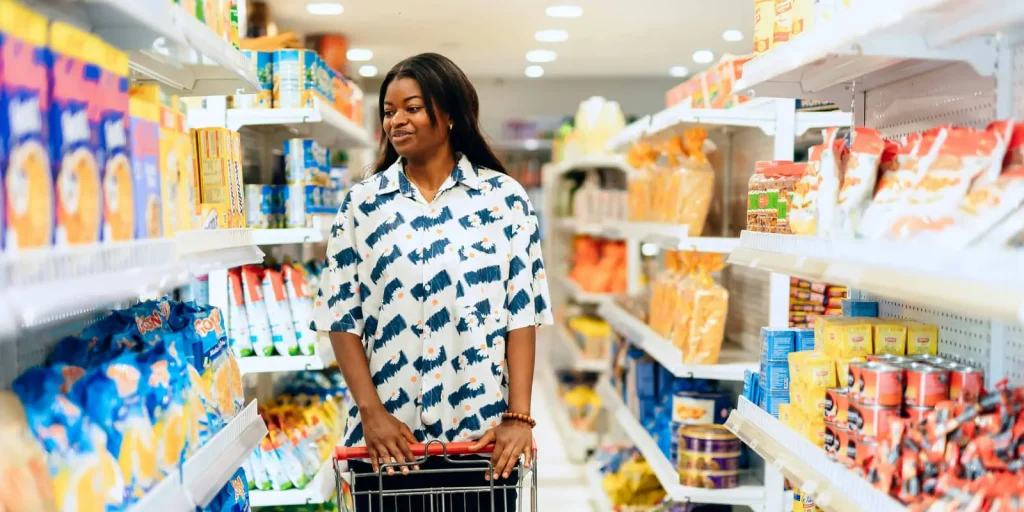

Even in today’s digital world, 74% of grocery shopping still happens in physical stores. Most people still prefer to pick their own produce, browse new products, and (if you’re lucky) make a few impulse purchases along the way.
That’s what makes the supermarket a prime spot for advertising. It gives brands a chance to connect with customers right near the point of sale. But of course, the competition is high, so you need to pull out all the stops to get real results.
In this article, we’re going to dive into grocery store advertising, with 12 creative ways to make your brand stand out. We’ll look at some real examples and actionable strategies to help you capture attention.
Lots in store, so let’s get to it!
Key materials for grocery store advertising
There are so many different ways to connect with new and existing customers in and around grocery stores. And each advertising tactic offers its own unique opportunity to make an impact.
Whether you want to be one step ahead and grab attention at the entrance, entice potential new customers as they browse, or create a lasting impression with an interactive experience, you can.
Here are some of the key materials for grocery store advertising:
- Digital displays – Engaging, dynamic content inside or outside the store.
- In-store signage – This includes POS materials like shelf talkers, end caps, posters, and floor stickers, all strategically placed to guide and engage shoppers as they navigate the store.
- Trolley ads – Ad space on or in shopping carts that reach consumers at a critical point in their purchasing journey.
- Stunt and experiential marketing – Interactive or unexpected in-store experiences that leave an impact and boost brand loyalty.
Now, let’s see how to make the most of these materials for maximum impact!
Digital displays
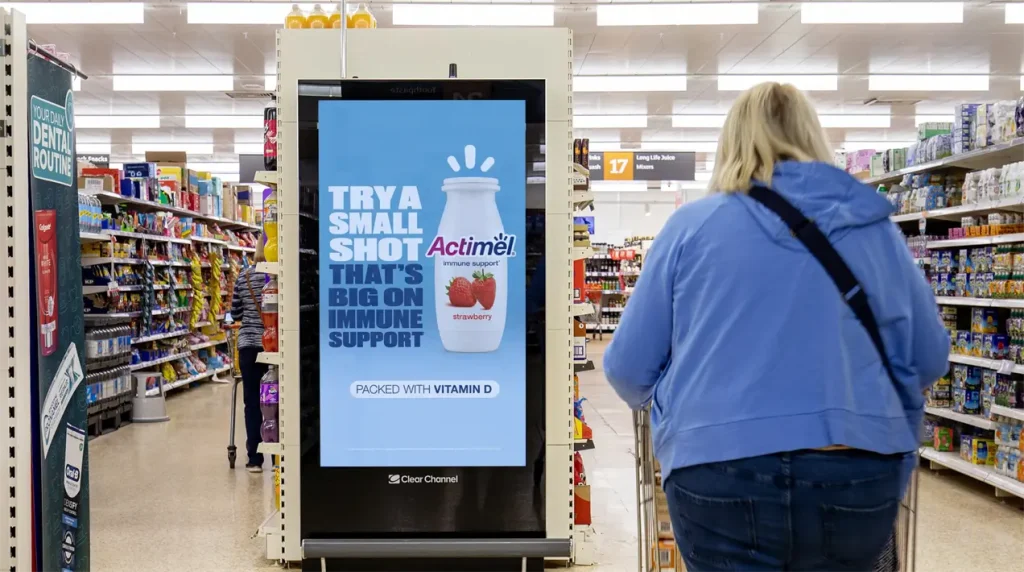
Image source: Performance
A lot of grocery stores offer a space for digital display ads, particularly at the store entrance or at the beginning of a new section. Their location often helps businesses reach customers before the competition, offering a prime opportunity to connect and create a lasting impression.
Positioned away from the chaos of crowded aisles and packed shelves, these displays have the advantage of standing out in a (slightly) more relaxed environment.
Tip one – Keep it simple
Okay, so this applies to every piece of marketing you make, but simple, striking ads are especially important for digital displays.
Shoppers have limited time to engage when they’re walking into a supermarket, maybe they’re thinking about dinner plans or fishing out their shopping list. Either way, they’re not going to stop and look at any old ad.
With all this in mind, you’ll want to keep your ad concise, visually striking, and easy to understand even at a glance.
Tip two – Use motion to catch the eye
Movement naturally draws attention, especially in a busy retail setting. That’s why even subtle animations on digital displays can make a huge difference. Whether it’s a gently pulsing call-to-action, a product spinning into frame, or a short looping video, a little motion goes a long way.
Just make sure it’s not overwhelming or distracting. The goal is to enhance your message, not compete with it. When done right, motion creates a sense of energy and helps your brand stand out in a sea of static signage.
Tip three – Show well-timed content
One of the biggest advantages of digital displays is the flexibility to make your ads more relevant for a specific audience at local grocery stores.
By tapping into local insights like weather, regional events, or real-time store activity, you can tailor your messaging to what matters most in that moment. Think hot drinks on cold days, or BBQ gear when the sun’s out.
Good timing can work wonders. The more your ad aligns with what shoppers are already thinking about, the more likely they are to notice, connect, and act.
Personalized, in-the-moment content can create stronger brand experiences that keep you top of mind.
In-store signage

Image source: Reddit.com
Once shoppers are inside the store, in-store advertising becomes your advertising ally. From shelf talkers to floor stickers and posters, these materials guide customers, highlight key products, and just generally elevate the customer experience.
In-store signage puts your brand right in the shopper’s path, often just as they’re making a purchase decision. But to break through the noise of other brands and products, your in-store signs need to be eye-catching and strategically placed, with the customers’ experience top of mind.
Tip one – Be genuinely helpful
In-store signage just shouldn’t be shouting “Buy me!” Think of this as your chance to be genuinely helpful and create a better in-person shopping experience. Instead of simply promoting a product, focus your in-store advertising techniques on what it can do for the shopper. Can it save them time? Make dinner easier? Keep the kids happy?
For example, try highlighting a benefit or sharing a quick use case. Or maybe encourage customers with some free recipe ideas. When you shift from pushy to practical, your message feels less like a sales pitch and more likely a friendly conversation with your brand. Really, you should incorporate this approach into all your grocery store marketing strategies, both to attract customers and grow customer loyalty.
Tip two – Use signage to tell a story
In-store signage is an opportunity to educate shoppers, guiding them toward making a confident, informed buying decision.
Highlight the backstory of your brand or product, where your ingredients come from, how the product is made, or the values behind your brand.
Story-driven signage helps new customers see the value in your product beyond the price tag, setting it apart from others on the shelf. It taps into their emotions, builds trust, and creates a richer shopping experience that resonates long after they’ve left the store.
Tip three – Position your ad strategically
The best-designed signage won’t do much good if it’s not in the right place at the right time.
In-store signage has the advantage of targeting customers while they’re in a buying mood. So, make use of this by tapping into the power of context. Think about the consumer journey and thought process, then meet shoppers right where they might want or need you.
Rather than simply placing a sign near your product, it can pay off to think outside the box. Think about how you can pair signage with related items to spark cross-sells. For example, try advertising your pasta sauce near the pasta aisle.
Trolley ads
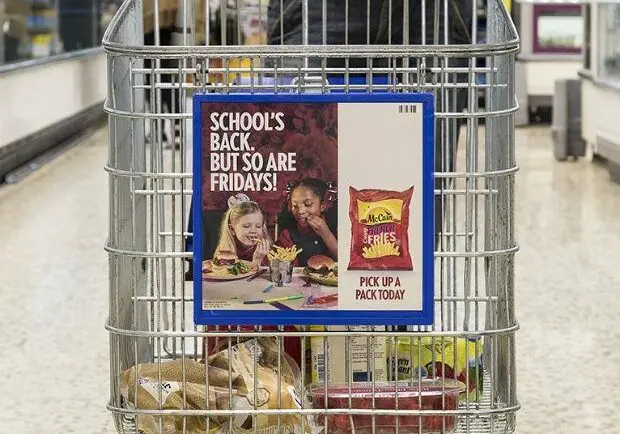
Image source: RETAIL ADVERTS
Trolley ads (sometimes referred to as shopping cart advertising) do exactly what they say on the tin. Whether it’s a handle wrap, side panel, or even a full cart takeover, trolley ads are designed to keep your brand in shoppers’ line of sight from the moment they walk in until they check out.
Unlike digital displays or in-store signage, trolley ads move with the customer, and this long-term exposure can do wonders for brand recall. What’s more, since these ads are with shoppers at every decision point, they can influence buying behavior in a subtle but powerful way.
Here are some tips to get your trolley ads rolling in the right direction.
Tip one – Design with each surface in mind
Every part of the trolley offers a different type of engagement. It also offers a different level of legibility. So a one-size-fits-all trolley advertising design won’t really cut it. Instead, think about how the shopper interacts with each surface and tailor your design accordingly.
Here are some pointers for making the most of each part of the shopping cart:
- Handlebars are seen constantly and up-close. But it’s not a big space, so keep things short and sweet. Use concise, punchy copy, a clear call to action, or even a playful hook to spark curiosity.
- Side panels are visible to passersby, making them perfect for big, bold branding, product visuals, and promotional messages that can turn heads from across the aisle.
- Basket interiors and child seats are generally going to be covered up through much of the customer journey. But these spaces can still have an impact when shoppers first grab a cart or unload their items at the checkout. Use them for bite-sized storytelling, QR codes, or a quick value proposition.
Tip two – Match your message to the shopper’s mindset
Think about it, shoppers will check out your ad only when they’re not looking at the shelves. Maybe they’re pondering over this week’s meal prep, or wondering if they forgot something. Your messaging should make the most of this moment of pause.
Keep it light, positive, and solution-focused. This isn’t the place for hard-sell copy or overly complex concepts. Instead, tap into the everyday shopper mindset: “What’s for dinner?” “What snacks will keep the kids happy?” “Is there a good deal I shouldn’t miss?”
If your ad trolley answers a question they’re already asking, it’s far more likely that your product will end up in their trolley.
Tip three – Create a connection for lasting brand recall
Trolley ads are a one-to-one interaction between your brand and the customer. If you’re looking to create a connection that wins some loyal customers, use this opportunity to engage shoppers in a meaningful way.
Think of your ad as a conversation. Use friendly, engaging language that resonates with the shopper while including subtle brand elements like your signature colors, logo, or tone of voice. These familiar cues show your brand’s personality and can create a connection that goes beyond the shopping trip.
Stunt and experiential marketing
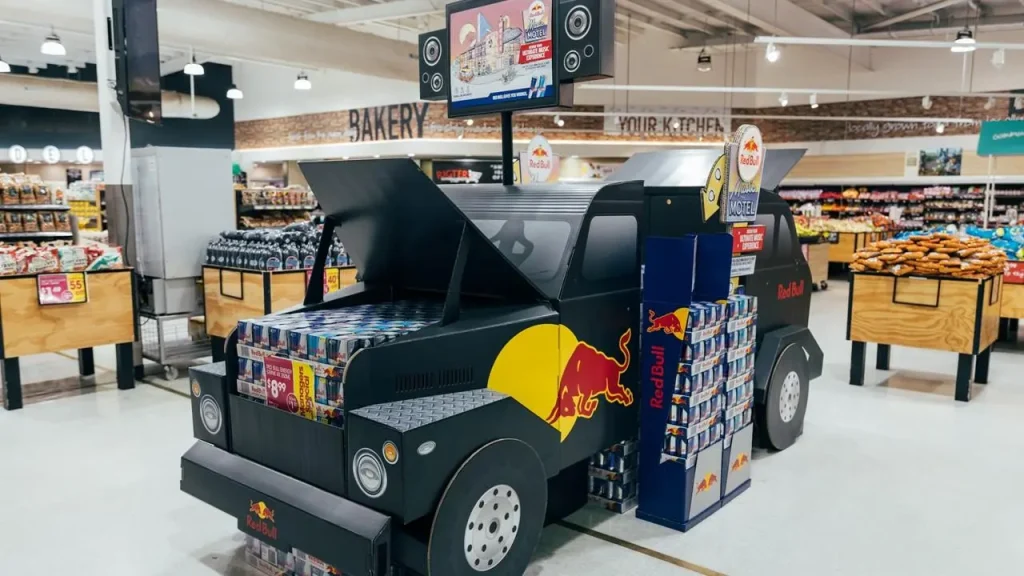
Image source: shop!
Experiential marketing and stunt marketing is all about surprising and delighting customers in ways that break the norm. It creates an experience that draws people in, generates buzz, and leaves a lasting impression.
And it doesn’t just work in busy city streets. It can be a great way to stop shoppers in their tracks in grocery stores, too.
Here are three key tips to make the most of stunt and experiential marketing in grocery stores:
Tip one – Create unexpected moments
The goal of stunt marketing is to surprise shoppers in ways they didn’t see coming. Whether it’s a unique product demo, an unexpected display cart, or even an interactive experience, make sure your activation stands out and breaks the norm. Your core idea is key here.
Tip two – Align with your brand values
For experiential marketing to be effective, it needs to align with your brand’s identity and values. Make sure that your stunt or experience speaks authentically to your brand and resonates with your target audience. This will help your stunt drive brand recall and just generally feel more real.
Tip three – Make it shareable
The beauty of stunt advertising is that it has the power to take off and create an influence that reaches beyond the aisles.
Consider how you can make something visually engaging, whether it’s a unique product demo or an interactive installation. The more visually interesting it is, the more likely people will take photos and share them online, expanding your reach beyond the physical store.
And of course, use QR codes, hashtags, and other incentives to carry your physical experience into the digital world.
Make great grocery store ads with Filestage
No matter what kind of grocery store ads you make, you only have a few seconds to grab people’s attention. So every detail counts. But chances are, you don’t have unlimited time to spend perfecting your supermarket advertising … I know the struggle!
That’s why you need fast, accurate feedback to make sure your creative hits the mark ASAP. And this is where Filestage comes in.
Filestage is an online proofing tool designed to speed up the way you review and approve your grocery store ads and POS materials. Once you’re set up, its automations practically run the review process for you. Plus, you can use it for all the usual file types like images, PDFs, documents, video files, photos, and the list goes on.
Here’s how to review your grocery store ads in six quick steps:
- Sign up for free and create a project
- Upload your file and set due dates
- Invite reviewers via email or URL (they don’t need an account)
- Gather feedback and upload a new file version
- Repeat the process until everyone’s feedback has been addressed
- Approve with a (literal) single click
And voila! You’re good to go.
Final thoughts
Grocery store ads are an effective way to meet your audience when they’re already in a buying state of mind. And while you won’t be the only brand vying for customers’ attention, you can give yourself that edge by using the tips you’ve found in this article to create some irresistible grocery store marketing strategies.
I wish you the best of luck in all your grocery store marketing efforts! And if you need a helping hand to speed collaboration across your creative projects (aka Filestage’s review tool), you can start your free trial today.