
If you want to get more eyes on your brand (and let’s be honest, who doesn’t? 👀), a press release is your shiny, golden ticket. In fact, 68% of businesses reported increased brand or product visibility after publishing a press release.
In this article, I’m going to make sure you get your piece of the PR pie by showing you how to write a press release that gets noticed. We’ll break down the key components of a press release and walk through the writing process, with a few examples and best practices along the way.
Lots to cover, so let’s get to it!
The five Ws of a press release
A press release, like any other piece of marketing, requires some strategic thinking. So before you write a single word, it’s a good idea to answer a few questions to help you create a cracking press release that gets noticed.
This approach will help you write a press release that’s clear, focused, and impactful. Something that’s especially important for grabbing the attention of busy journalists. It’ll also make the writing process a whole lot easier. Work smart, as they say!
Here are five questions (aka the five Ws) that’ll help you deliver the best PR campaign from the get-go:
- What – What is the announcement?
- Who – Who is the press release for?
- When – When is “the thing” happening?
- Where – Where will it take place?
- Why – Why is this newsworthy?
Keen to learn how to put this framework into action? Say no more!
1. What is the announcement?

Image source: Brafton
Your press release needs to get to the point in the very first sentence. So let’s start with that.
What’s the big news you’re sharing? Are you announcing a major company milestone? Hosting an event? Launching a new range of edible mittens?
Whatever it is, you need to tell people what your press release is about in the first couple of seconds. Journalists, news media, and general audiences should know what your press release is about at first glance. Otherwise, it’s game over.
Your “what” is the heart and soul of your press release. It should be clear, concise, and unmissable. Check out these press release kit examples for inspo.
Here’s an example:
“TastyKnits.inc is unveiling the world’s first pair of edible mittens, designed to keep your hands warm and your hunger satisfied during long walks.”
2. Who is the press release for?
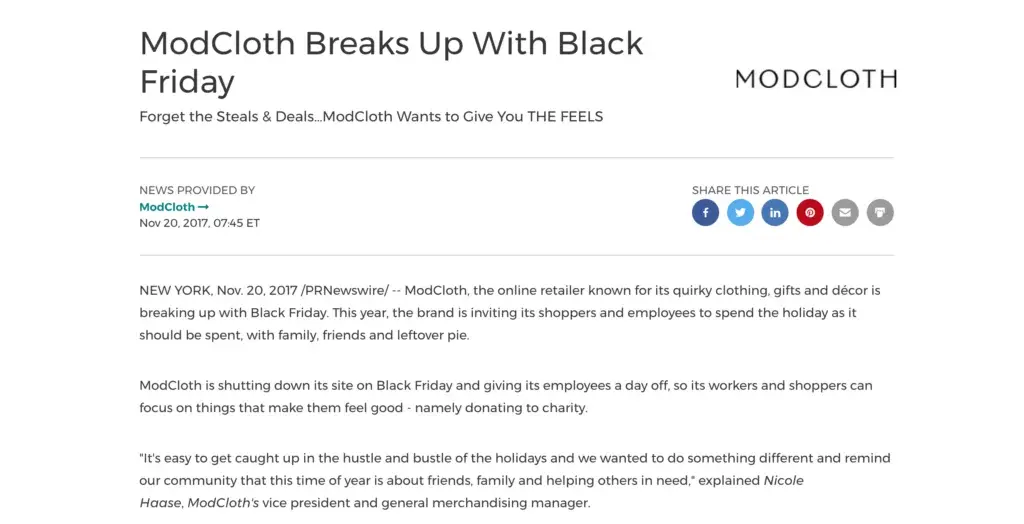
Image source: Prowly
Next up, who are you talking to? Who is the intended audience (aside from journalists and media outlets, obvs)? Who will be affected by your big news? Is it for business owners, football fans, or the general public?
Knowing who you’re talking to will shape how you write your press release. For example, techy audiences might appreciate industry jargon, while a general audience will need a more straightforward explanation.
Here’s an example:
“This groundbreaking innovation is a must-have accessory for snack lovers, nature enthusiasts, and anyone who’s ever wished they could eat their mittens.”
3. When is “the thing” happening?
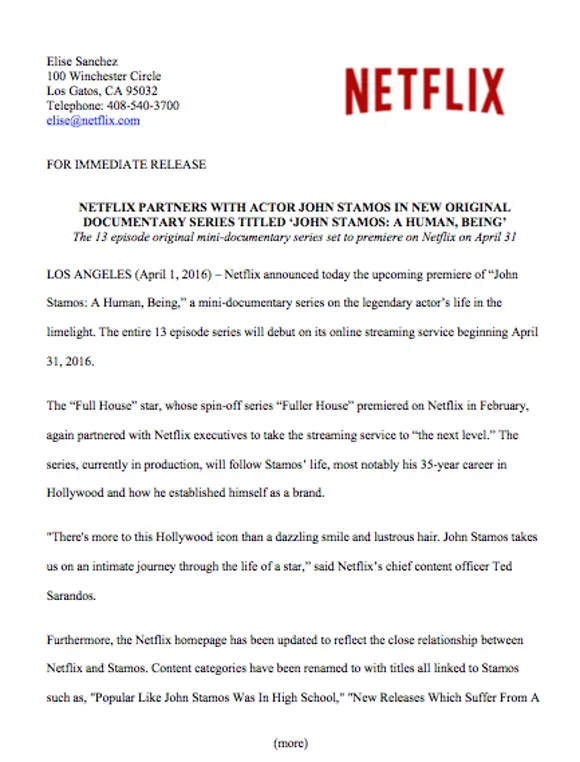
Image source: pressfarm
Timing is crucial. If you’re announcing an event, include the date and time. If you’re launching a product, specify the release date. If your news is tied to a trend or timely topic, emphasize why now is the right moment to share it. You can see how it’s done by checking out these effective press release examples.
Needless to say, this information is crucial if you want your target audiences to take action.
Important tip: If there’s an embargo (a date before which news can’t be published), be sure to clearly specify that your news isn’t for immediate release.
Here’s an example:
“The world’s first wearable, edible mittens will be available for pre-order starting November 1, 2025, with an official launch just in time for the holidays on December 1, 2025.”
4. Where will it take place?

Image source: smallbizgenius
Is your news release tied to a physical location? If it’s an event, where is it happening? If it’s a product launch, where can people buy it? If there’s no specific location, make sure to provide information on where people can find out more. This can be a specific set of stores, a physical event space, or a simple URL.
Here’s an example:
“The edible mittens will be available for purchase on the TastyKnits.inc website, major online retailers like Amazon, and select edible apparel stores near you.”
5. Why is this newsworthy?

Image source: Marketers Media
This is probably the most important question of all. Why should people care? Why is your announcement significant? How does it impact your industry, customers, or the even world?
This part of your press release is all about ramping up the excitement and interest in your news. It connects the announcement to a larger issue and highlights its potential impact for your audience, making it far more compelling. Plus, never underestimate the power of FOMO.
To nail your “why”, think beyond what you’re announcing and focus on why it matters. Is it solving a problem? Filling a gap in the market? Creating a social impact?
Here’s an example:
“These delicious accessories blend comfort and convenience like never before. Enjoy the warmth of traditional winter gear paired with the nutrition to keep you fueled all winter long.”
Why the five Ws = one winning press release
The five Ws is a simple, effective practice that you can apply to all your advertising materials. But it works especially well for press releases, where time is tight.
These questions are the building blocks that make sure you hit the ground running with your press release intro, making sure it’s informative, engaging, and newsworthy. That’s how to catch journalists’ attention, stand out in a crowded inbox, and make sure your announcement gets the attention it deserves.
There’s no hard and fast rule for how to order your five Ws. It depends on your brand and announcement. For example, you might decide to include why your announcement is important before you talk about the when and where. Think about the structure that helps deliver your story in the most impactful way.
Now that we’ve looked at how to write an eye-catching intro, let’s get a clear idea of the general structure to help your press release shine from start to finish.
Eight key parts of an effective press release
A successful press release can help you gain visibility, generate media interest, and effectively communicate your message to a wide audience.
Below you’ll find the formula for PR success, with a foolproof press release template you can use to write press releases.
1. The headline
Your headline should grab attention and summarize the key message in a compelling way.
Here are four things to keep in mind when crafting a headline:
- Keep it short (usually 8-12 words, max)
- Make it clear, informative, and newsworthy
- Use an active voice and present tense for more impact
- Include key terms to help make the news easy to find online
2. Subheadline (optional)
Not all press releases include a subheadline, but it can be handy to provide additional detail or context for media outlets to work with.
You can use this line to expand on a point raised in the headline or provide a more specific angle. It should clarify the story’s angle and add intrigue. Just make sure it’s not simply rephrasing your headline.
3. Dateline
As the name suggests, this element simply outlines the city and the date of the press release.
It comes right under the headline and typically includes the city where the press release is being issued and the date (e.g., LOS ANGELES, Apr. 5, 2025).
The idea is to give journalists a quick reference for when and where the story originates, helping them determine the newsworthiness and timeliness of your announcement. It also adds a layer of professionalism and helps maintain the standard journalistic format.
4. Introduction
Here’s where you should answer the five W’s we covered in the first section of this article (Who, What, When, Where, Why) and establish the significance of the announcement.
Here are three tips to help you craft an engaging lead paragraph:
- The first paragraph should provide all of the crucial information ASAP
- It should be written in a straightforward manner, concise, and easy to understand
- Avoid fluff – journalists value clarity and brevity
5. Body paragraphs
After the lead paragraph introduces the core news, the body paragraphs are where you build out the story. Think of this section as the meat and potatoes of the press release. Use it to answer any follow-up questions a reader or journalist might have.
As a rule of thumb, you should aim for two to three body paragraphs. Each paragraph should be 3–5 sentences long, keeping each one focused on a single aspect of the news. And the total word count for the body section is typically around 150–250 words.
Every word matters, so take the time to refine your press release before sending it out.
6. Quote(s)
Press release quotes add a human element to your press release, offering emotion, credibility, and insight.
Typically, your quotes should come from key figures like executives or experts to provide context and perspective, not just repeat facts.
Keep your quotes brief, relevant, and meaningful to reinforce your message and connect with the reader.
7. Call to action (CTA)
Your CTA should guide readers on what to do next, whether it’s visiting a website, signing up for an event, or exploring a product.
Make your CTA clear, direct, and aligned with the goal of your press release. While not always necessary, a strong CTA can boost engagement and drive real, measurable results.
8. A quick bit about you
At the very end of your press release, it’s a good idea to share a short, factual paragraph that gives background on the company issuing the press release.
This typically includes your mission, key offerings, and contact details. Keep it concise and professional to help readers understand who you are and why you matter.
Don’t forget to include the name, phone number, and email address of your media contact here too. You might also choose to add links to your social media profiles or website for further information.
Review and refine your press releases with Filestage
Even the most exciting announcements can fall flat if the press release is rushed out without a proper review. A vague sentence or single typo can chip away at your credibility and kill your chances of getting media coverage.
The thing is, timing is everything with PR. So you need a review process that’s fast, organized, and efficient. No time for feedback chaos or endless email chains!
That’s where Filestage comes in.
Filestage is an online proofing tool that helps busy teams share and review files in a flash. It works for documents, PDFs, graphics, photos, and more. Plus, it keeps all your file versions safe and sound, so you can track progress as you go.
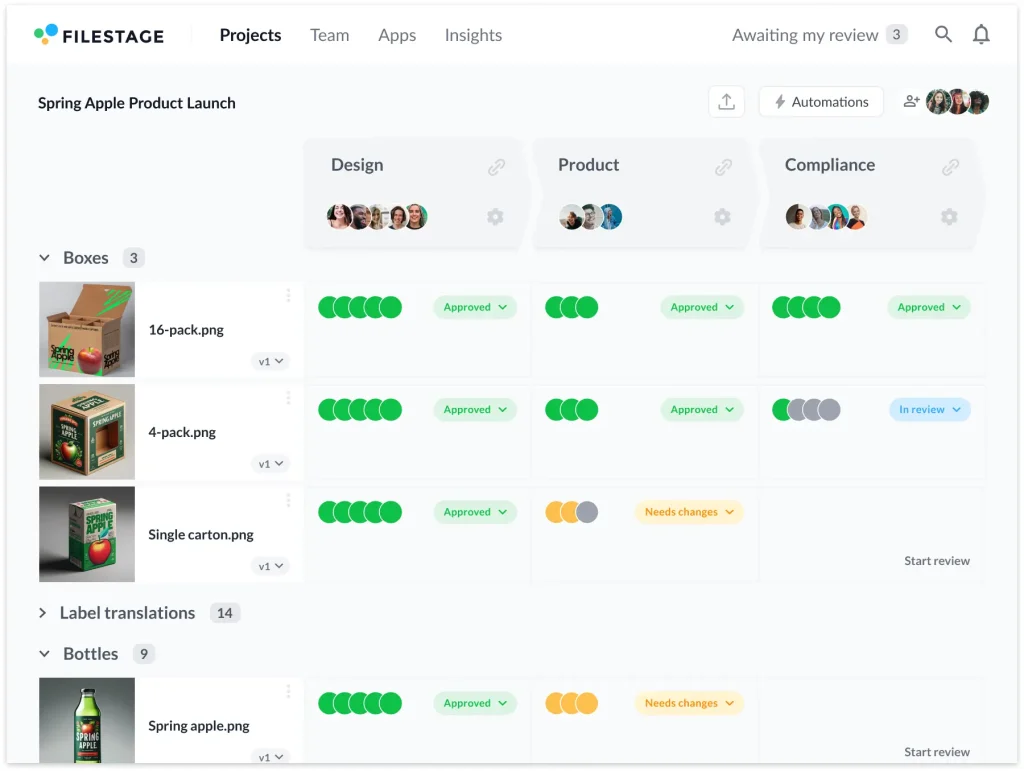
The best bit? Filestage automates tedious steps so your team can save time and focus on creating the best work. And don’t worry, all reviewers get notified whenever there’s a due date looming, so you can collect all your approvals and share the press release directly with your press release distribution service on time.
How to review your press release in six steps
Setting up a review workflow for your press releases is easy. Just follow these six simple steps and let Filestage take care of the rest!
- Sign up for free and create your first project.
- Set up review steps and invite reviewers
- Upload files and set due dates
- Collect feedback from reviewers
- Collaborate until you get approval
- Repeat for remaining review steps
Next steps
PR is an excellent way to generate buzz around your brand. But to stand a chance, you need to take the time to craft a well-structured, engaging press release.
I hope you’ve found this article useful. And if you’d like to make sure your press releases hit the mark every time with the help of Filestage, start your free trial today.