

Did you know that, on average, it takes journalists up to 6 hours to complete each article?
For businesses, this means one thing – if you want media coverage, you’ll have to make key information as accessible as possible to journalists.
And creating an informative press kit can make all the difference. A press kit allows you to display all the relevant details about your business in one place. It also plays an important role in brand governance.
To help you create a comprehensive press kit that impresses every journalist who lands on your site, I created this guide. I’ll walk you through everything you need to know when building a media kit and showcase some exciting press kit examples to spark your inspiration.
Let’s dive in!
Supercharge your PR campaign reviews
Share content, get feedback, and manage approvals with Filestage.
What is a press kit?
A press kit (or media kit) is a collection of key information and visual assets about your company designed for journalists and media professionals. The idea behind creating a press kit is to provide a central resource for everything the media needs to cover your business quickly and easily.
That’s why a press kit should include:
- Essential company facts
- Product details
- Downloadable assets like logos and images
- Any other relevant information about your business that you wish to control the narrative around
You can also use an online press kit to provide extra information to investors and potential partners. This will help them get a better idea of your business, and you’ll make sure only people who are the right match end up contacting you.
The importance of press kits
If you’re looking to score some media coverage, creating a press kit will be extremely helpful. Firstly, a press kit provides journalists with instant access to accurate, up-to-date information, saving them time and reducing the risk of errors.
With tight deadlines, journalists are more likely to cover a brand that makes their job easier. That means your press kit could be the difference between being featured or overlooked.
Plus, a press kit allows you to create consistency around your brand since you’re the one controlling the narrative. This way, journalists can take your word when writing about your business – instead of consulting other, less reliable sources.
Eight key elements of a press kit
Every press kit can be a little different and inspired by your brand. But, there are some elements that no press kit should miss.
Here’s everything you need to have in an online press kit:
- Mission statement or a company boilerplate – Tell your readers what makes your business stand out and why you’re doing what you’re doing.
- Important company facts – Include information like when your company was founded, where the headquarters is, the number of customers and employees, and the motivation behind starting the company.
- Products or services – Explain what kind of business you are, from the products and services you offer to who you cater to the most.
- Areas of expertise – Showcase the part of the business that makes you shine. Highlighting what you’re the best at will help establish a brand authority in the area.
- Contact information – Share an email address, a phone number, and even the physical address of your offices to make it easier for journalists to reach you.
- Leadership team – Help people put a face to the brand by spotlighting your leadership team.
- Photo library – Every article needs an image. Offering a photo library containing photos of your offices, employees, leadership team, or products gives journalists everything they need to publish a piece about your business.
- Logos – There’s no better way to maintain brand consistency than by making all the different versions of your logo accessible to the public.
Top seven press kit examples
Here are the top seven press kit examples to help you build your own!
1. Uber press kit example

Uber is an excellent example of a company that’s successfully controlling the narrative around their brand. Their press kit is an entire dedicated website containing everything from the logos, instructions on how to use all brand information, co-marketing guidelines and assets, and other valuable information.
The intuitive website makes journalists’ jobs much easier whenever they need to report about Uber.
2. Lyft press kit example
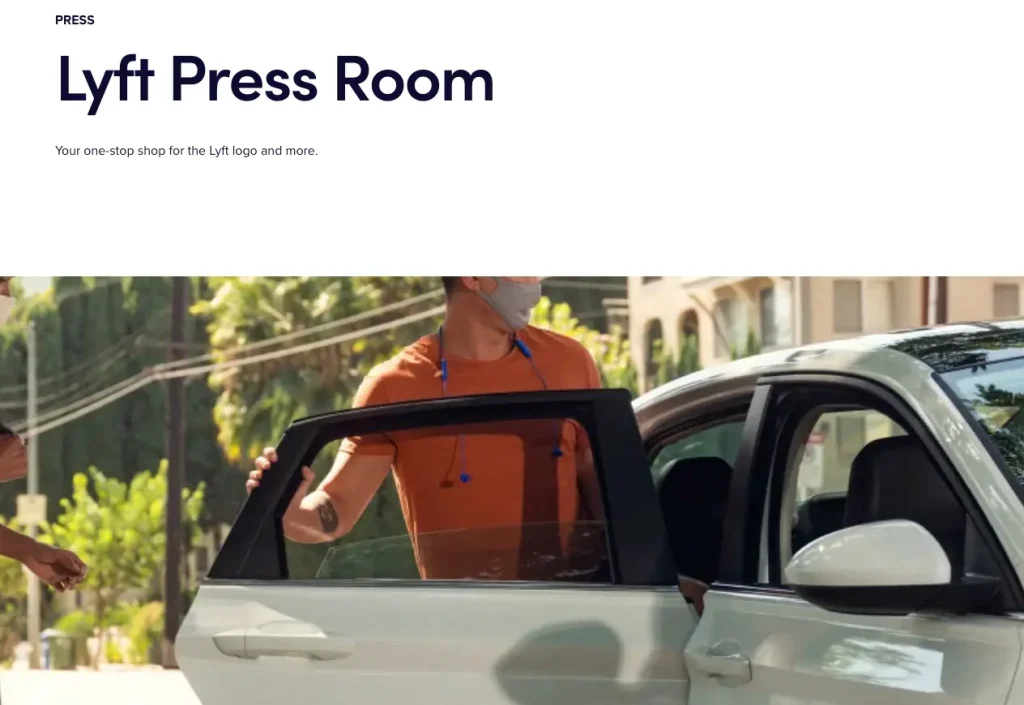
Lyft is another mobility company that takes their media kit seriously. Their press room website holds all important information about the company while prioritizing its recent media coverage.
This sends one powerful message to anyone visiting the page – this company is worth talking about.
Besides media coverage, you can find logos, images of the leadership team, information about the company, brand guidelines, and everything else you might need to cover the company.
Are you working on new brand guidelines and could use some inspiration? Check out our roundup of the 13 best brand guidelines examples.
3. Slack press kit example
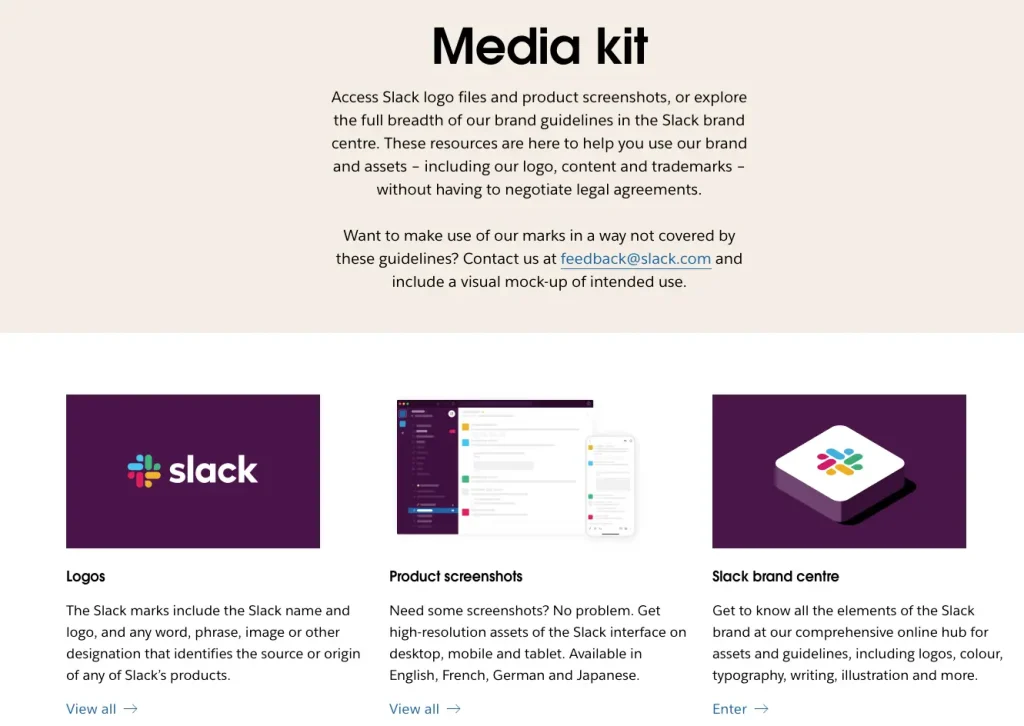
You’ll notice that a big chunk of Slack’s media landing page is occupied by their product guidelines. It mostly contains a sea of product mock-ups, showing different sizes, versions, and various logo formats.
If you think about it, this is a sensible thing to include if your business has reached a certain magnitude. After all, you want to make sure your brand always looks consistent.
4. Kickstarter press kit example
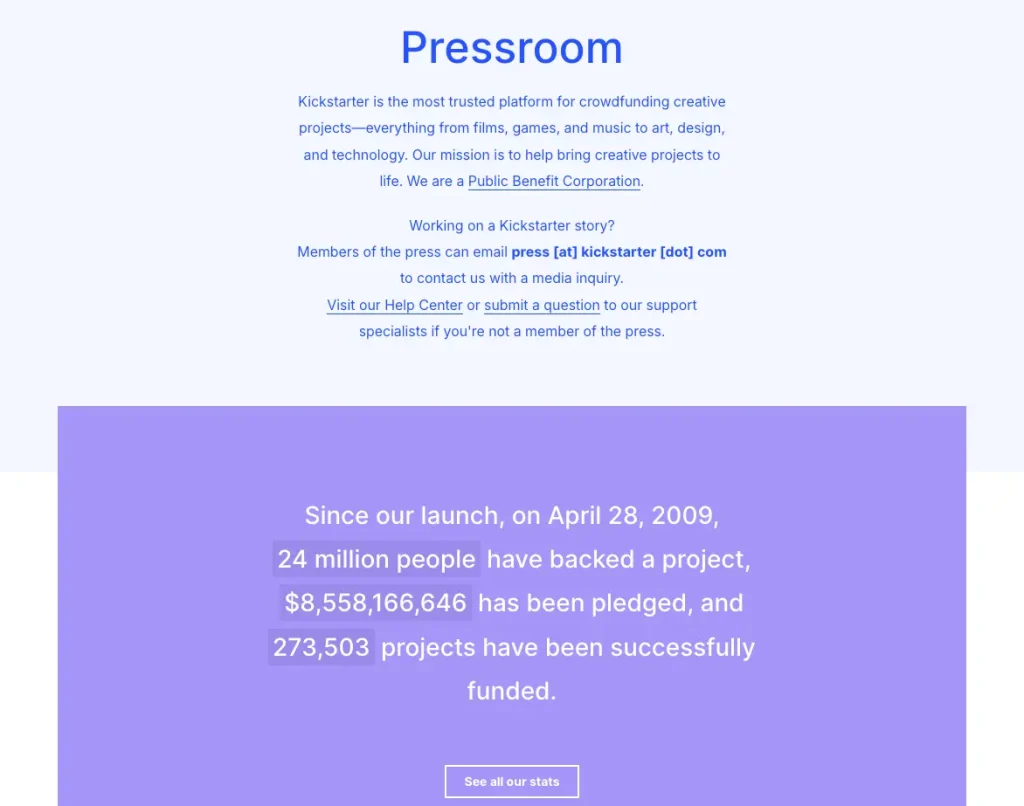
Kickstarter offers a unique product – you can post your project and invite people to fund it. And since the platform was launched in 2009, 272,507 projects have been successfully funded.
How do I know this? It says so in their press kit.
To help the media get a better understanding of their unique story, Kickstarter offers a well-organized and user-friendly press kit. Kickstarter also highlights its human side, showcasing team members and success stories instead of going for a more corporate facade.
5. Airbnb press kit example

Rather than a traditional online media kit, Airbnb has built a website to use as a hub for its brand. It’s super simple to navigate, and all the essential information is at your fingertips. The result? Journalists can easily find out about the different areas of the business without getting overwhelmed.
6. TransferWise press kit example

TransferWise kept things simple with their digital media kit. Their page visitors are presented with logos of previous earned media and two shortcuts inviting them to either contact the company or download their brand assets.
I like their “short and sweet” approach. That said, I’d recommend a more detailed press kit containing some information about the company.
7. Balsamiq press kit example

If you’re looking for a textbook example of a press kit, then look no further. Balsamiq, an effortless wireframing tool, uses its press kit to guide journalists through the story of their business in a transparent and informative way.
Their press kit contains different pages, including:
- The history of the company
- A playbook with their mission and vision
- Their approach to giving back to the community
- A news section containing the latest media coverage
Three tips for building your own press kit
Having a well-crafted press kit represents a window to your brand, product, or service. But your press kit is a living document that needs to be constantly updated to remain relevant.
Here are a few tips for building and maintaining a well-prepared press kit.
Involve important stakeholders in the creation process
Creating a press kit that truly represents your brand requires input from key stakeholders, including the marketing team, design team, leadership, and even legal. And bringing all these stakeholders together in one platform will help you deliver a more informative press kit without the risk of publishing misinformation.
You can do just that with Filestage. The tool allows you to invite all relevant teams to review and refine the press kit by leaving feedback directly on assets. Whether it’s a fact sheet, a logo, or a press release, you can pinpoint a specific area of the file and leave your comment on it.
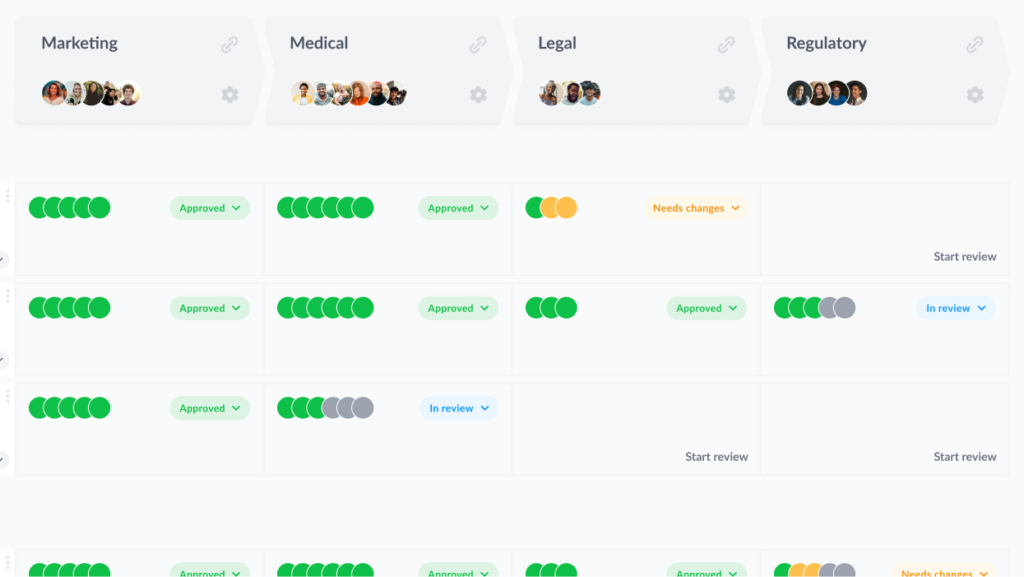
This eliminates the need for long email threads and makes sure that all feedback is merged and actionable.
Plus, Filestage helps you maintain a clear approval trail. The result? You can be confident that the press kit aligns with your brand’s tone, messaging, and visual identity before you share it with the media.
Make it easy to find and access
The whole idea of having a press kit is to make information about your business as reachable as possible. That means making your press kit easy to find and access.
Here’s how you can do that:
- Host your electronic press kit online – By hosting it online, you provide journalists with instant access to your materials anytime, anywhere. Whether it’s a fact sheet, high-resolution images, or company logos, making your digital press kit easily downloadable makes sure no one gets stuck waiting for email attachments.
- Place it on your company’s website – Ideally, your press materials will live within an online newsroom or dedicated media center. Journalists often expect to find a “Media” or “Press” link in the header or footer of a brand’s homepage, so make sure it’s there for easy navigation.
Keep it up-to-date
There’s no point in having a company press kit if you’re not going to maintain it. Things change quickly in most organizations.
Keeping your press kit up to date will make sure no misinformation ever gets to print, so your brand looks more professional.
Here’s how to keep your press kit up to date:
- Regularly refresh your press kit content – Journalists rely on accurate and up-to-date information, so make it a habit to review your press kit regularly. Update your fact sheets, replace old press releases with recent ones, and refresh visual assets like photos and videos.
- Integrate updates into your PR workflow – Treat your press kit as a living document. Embed updates into your team’s workflow by assigning responsibility for maintenance and setting review schedules.
- Include it in all communications – Maximize the reach of your press kit by including links to it in press outreach, newsletters, and influencer collaborations. This makes it easier for recipients to access information and assets without having to ask for more clarification.
Final thoughts
If you’re looking to attract media attention and maintain a consistent brand narrative, a well-crafted press kit can be a game-changer for your business.
By following these tips and drawing inspiration from successful examples, you can create a press kit that not only simplifies journalists’ work but also highlights what makes your brand unique.
If you’d like to see firsthand how Filestage can help you create and maintain an outstanding press kit, try it for free →