In 2020, a pair of second-hand sneakers were sold for $615,000. They were an original pair of 1985 Nike Air Jordans worn by basketball legend Michael Jordan.
This story is proof that when you add a brand, an iconic influencer, and belief in the product, people will pay big bucks.
Research says if you swing a putter on the green and you’re told it’s made by Nike, you’ll use 20% fewer strokes to land the golf ball.
But how did Nike build that belief?
The short answer is that it created a brand that makes people feel. The longer answer is that emotional branding combined with a killer strategy can break barriers.
Keep reading as I unbox the secrets behind the Nike marketing strategy and how you can apply it to your brand.
The Nike origin story you probably didn’t know
We know Nike as one of the biggest brands in the world. And maybe one of the best storytellers out there. In 2024, the brand value sat at $30 billion.
But it hasn’t always been plain sailing for Nike.
Catching a whale
In 1984, megabrands like Adidas, Reebok, and Converse were dominating basketball. They signed every top player while Nike was betting on mid-tier players, hoping to strike gold.
It wasn’t working. So, they decided to take a risk and try catching a whale. The whale in question was Michael Jordan.
Nike placed all its bets on Jordan becoming a star. This was a big move at a time when it was more common for brands to hedge their bets, signing multiple rookies in the hopes of one becoming a star.
Jordan had shown signs of his greatness, but one bad injury (or season) could have killed Nike’s basketball division.
That wasn’t the only issue.
Jordan was already in talks with other brands. And his mind was set on Adidas. You see, Adidas was his favorite sneaker and had already made the leap from shoe brand to cultural icon.
Heck, RUN DMC even had a song about its sneakers.
By contrast, Nike was still a runner’s shoe back then.
To sweeten the deal even more, Adidas also offered him a red Mercedes 380SL.
Nike knew it had to swing big to land Jordan, so it offered him:
- $250K upfront (a MAMMOTH amount at the time)
- His own brand and product line
- 5% royalty on every piece of his merchandise sold
The deal was huge. Some might even say it changed the face of basketball.
Supercharge your marketing reviews
Share content, get feedback, and manage approvals with Filestage.
I recently had the honor of interviewing Peter Friedman, Nike’s first head of global TV production. He shared some behind-the-scenes snippets from life on huge spots like “Failure” and what it was like working with the best talent in the world.
The biggest challenge? Timeframes.

“Nike was very difficult in many cases because of the timeframes. The athletes were not available. And when you can finally lock an athlete in, you have two hours. What do you mean we have two hours? We have 22 shots with Kobe, we can’t do that in two hours! But you make it work. You get a double, you shoot from the back, you figure it out.”
Peter Friedman, Author & Former Head of Global TV Production at Nike
You can watch the full interview over on our YouTube channel.
Breaking the rules
A short time later, Nike launched the Air Jordan sneakers. They immediately stood out in a sea of plain white sneakers because they used black and red colorways to match the Chicago Bulls kit.
This doesn’t seem too rebellious by today’s standards. But back then, it was a risky move.
The rules clearly stated that NBA players must wear shoes that matched their uniforms and the shoes worn by their teammates. All shoes also had to be at least 51% white.
Nike told Jordan to wear the shoes anyway, promising to cover any fines issued by the league. In my humble opinion, this was an absolutely genius move.
Nike had a reputation as being a practical shoe for runners. This move instantly turned it into a rebellious brand that went against “the Man”. In this case, the NBA establishment.
Nike suddenly had a stake in the game.
If you’re as obsessed with these ads as I am, you’re going to love this roundup of the best Nike commercials of all time.
The “Just Do It” boom
In 1987, Nike was losing market share to Reebok. This was thanks to a cultural shift – athletic footwear was becoming more lifestyle-focused.
A year later, Nike hit back with a battle cry.
The “Just Do It” campaign launched and shifted the focus from the shoes to what you can achieve in the shoes.
The brand turned its customers into heroes. And started to tell us stories of the hero’s journey.
Nike has signed some of the best athletes in the world. But rather than celebrating their athletic ability, it celebrates the obstacles they overcame to reach greatness.
One of the best examples of this is Michael Jordan’s 1997 “Failure” commercial.
Are you a Jordan fan? Then you’re going to love this!
I asked Friedman what it was like to produce the “Failure” spot with Michael Jordan. Here’s a snippet from the interview.
Where did Nike’s “Just do it” slogan come from?
In 1988, Nike partnered with an ad agency called Wieden+Kennedy, a relatively small business located in Oregon.
Dan Wieden, the agency’s co-founder, famously said, “Let’s do it”. A small copy tweak later and history was made.
What is Nike’s main marketing message?
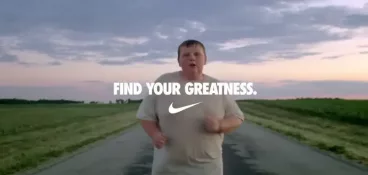
Nike’s main marketing message is simple: “Greatness is for everyone”. It includes the average person in the brand story.
It builds you up and tells you to “just do it” even if you’re not an athlete. And it humanizes top-tier athletes by showing the stories behind their success.
Making a global brand feel deeply personal is the key to its messaging success. Brand strategists, take note.
P.S. If you’re a brand enthusiast, be sure to read our breakdown of Disney’s marketing strategy.
What are the four P’s of Nike’s marketing strategy?
Nike’s marketing strategy revolves around the four P’s: Product, Price, Place, and Promotion. Here’s a breakdown of each pillar.
1. Product
Nike has a diverse range of top-quality products, including athletic shoes, apparel, and sports equipment. Its products are known for being innovative (like its Flyknit technology) and built with performance in mind.
This feels authentic for the brand and never forced because it has embedded itself in sporting culture.
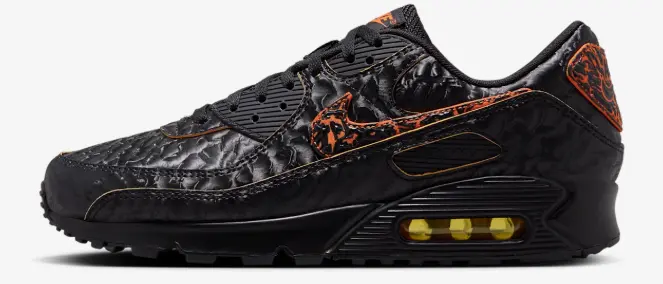
A great example is the Nike Air Max collection.
It has the performance-led technology to appeal to athletes and the cultural relevance to attract sneaker fans.
Source: Nike
2. Price
Nike positions itself as a premium brand, and its pricing strategy reflects this. It uses value-based pricing that’s based on consumers’ perception of the product value.
For me, the genius is in how Nike creates lower entry points while maintaining its position as a top-tier brand.
You can get your hands on basic Nike sneakers for an affordable price and still feel part of the tribe. But it pairs that with limited-edition (expensive) collaborations to keep a sense of exclusivity and cultural cachet.
A great example is the 2012 collab with Tom Sachs to create the NikeCraft Mars Yard 1.0.
These unexpected partnerships keep the Nike brand elevated. The prices too.

Source: GQ
Supercharge your marketing reviews
Share content, get feedback, and manage approvals with Filestage.
3. Place
The third P is all about the distribution strategy. You can buy Nike products anywhere, whether you live in a city or a rural village.
Nike’s distribution strategy includes flagship stores, a solid e-commerce presence, and partnerships with third-party retailers.
With that said, it maintains its direct-to-consumer (DTC) channels to keep control over the brand experience.
It’s worth mentioning the Nike target market segmentation here.
Nike cleverly uses demographic, psychographic, and geographic segmentation. It focuses on different distribution channels for various segments.
I’m also a massive fan of the Nike apps because they’re a masterclass in community engagement.
The Nike Training Club builds a community for people of all skill levels looking for guided workouts. As the name suggests, the Nike Run Club creates a space for runners of all levels.
4. Promotion
Nike’s promotional strategy hinges on partnering with athletes who share their core values – grit and greatness. With Nike’s resources, it could easily rest on its laurels and expect the names of the athletes alone to be enough. Not Nike.
Every social media campaign, experiential marketing activation, and ad tells a story. And it’s always inspiring, authentic, and culturally relevant.
One of my personal favorite marketing campaigns is the “Dream Crazier” ad with Serena Williams.
I love it because it uses both the Nike platform and Williams’ voice to call out inherent bias in the sporting world. The message is clear, and it’s one of empowerment.
Five lessons from Nike’s marketing strategy
At the core of Nike’s marketing strategy, you’ll find two main principles: emotional branding and storytelling.
Sure, quality items have skin in the game, but Nike has built a brand that transcends its products. It did this by turning marketing into a cultural moment.
Here are five lessons you can steal from Nike to make your brand unforgettable.
Lesson one – know your tribe
Nike knows its target audience. It knows that they are fueled by a much larger desire than just wanting a new pair of shoes.
Nike’s target audience wants to achieve greatness.
How to steal Nike’s marketing strategy
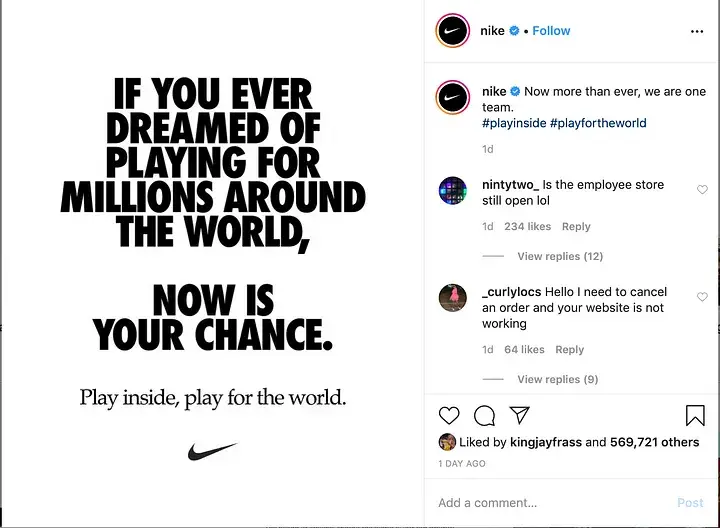
You need to treat your audience like you’re on a first date. Ask them questions, mine data, and really get to know:
- Who they are
- What motivates them
- What’s holding them back
Once you understand this, refine your messaging to speak directly to them.
Source: Medium
Lesson two – tap into emotions
We all know that Nike is one of the best storytellers out there. It knows how to use emotional branding to make us feel something. But why is this so effective?
When consumers see an ad that moves them emotionally, 70% are highly likely to buy the product. For context, those who have an average emotional response are only 30% likely to buy.
Getting the feels opens our hearts and our wallets.
If you have any doubts, let me just remind you of Nike’s “Winner Stays” ad. The commercial shows kids imitating their favorite footballers before turning into those players. It immediately brings back the feeling of being a child.
The ad has racked up over 107 million views. This is the top comment on the video (with 23,000 likes).
“This is basically how football made you feel as a kid when you were playing with your friends. Imitating your favorite player, imagining to play in front of 80,000 people in a stadium and playing it like it was the World Cup final. I’d gladly give away 10 years of my life to feel that freedom once again.”
Through storytelling, staying true to its brand archetype (the Hero, naturally), and emotional-based marketing, Nike has built a collective understanding of what the brand is all about. Even if you don’t wear Nike sneakers, you “get” the brand.
How to steal Nike’s marketing strategy
Emotional branding builds loyalty. But it has to feel authentic to your brand and values. This is how Nike’s marketing strategy achieved it in four steps:
- Show the real people behind the athletes and the real struggles they face
- Use ads not just to sell products but to showcase your brand values and message
- Embed your brand in conversations around social issues close to your heart
- Don’t be afraid to break the rules
Lesson three – build a movement with your message
Do you remember in the intro when I said that when you add a brand, an iconic influencer, and belief in the product, people will pay big bucks? Well, I meant it.
That starts by creating a message that’s bigger than your product. Nike isn’t about shoes – it’s about pushing the limits.
How to steal Nike’s marketing strategy
If your message is just about your product, take this as your sign to go back to the drawing board. Your message should be:
- Simple
- Emotional
- Bigger than you
Then, make sure your influencer marketing strategy aligns with this message.
A great example is when Nike chose Colin Kaepernick as the face of the brand. It did this despite controversy surrounding the ex-NFL player’s decision to protest social injustice.
Lesson four – make brand consistency a top priority
What do the best brands in the world have in common? I’m talking McDonald’s, Heinz, Apple, and Nike.
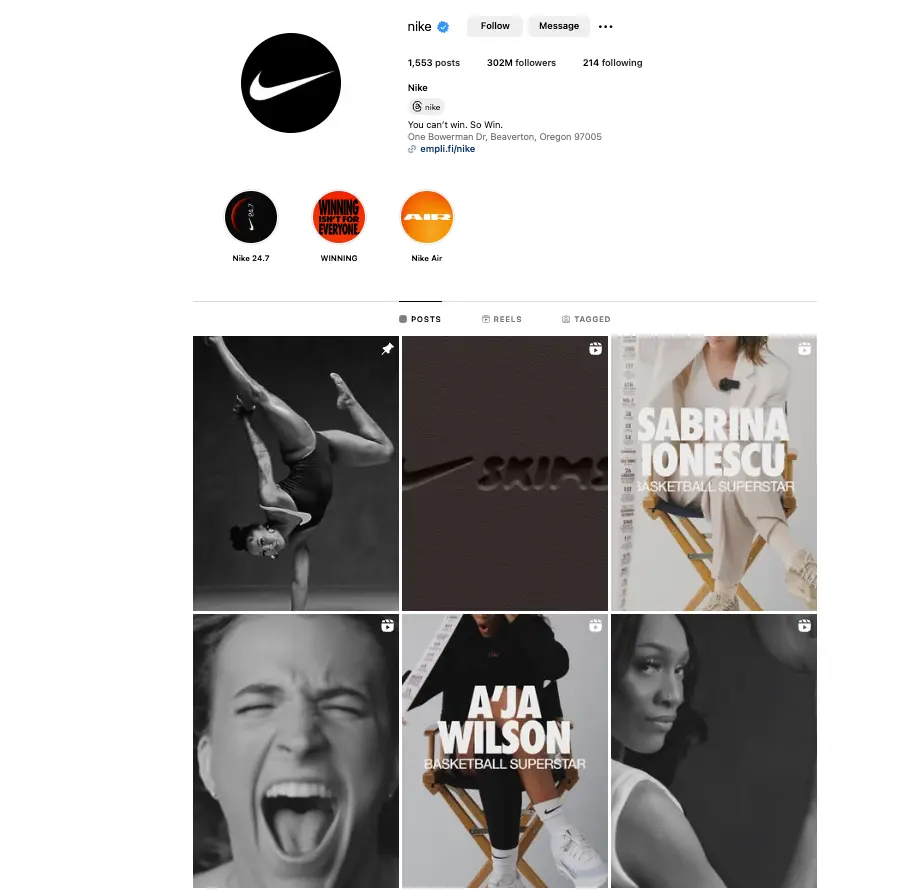
The message is cohesive across every TV spot, billboard, social media campaign, and experiential marketing activation. So is the brand identity. The in-store experience is consistent. There’s one central idea.
And when you repeat the same messages in different ways, they get embedded in your audience’s minds.
Take Nike.
You always know a Nike ad. Every asset is branded. Every marketing campaign reinforces the “Just do it” message. And over time, Nike has become more than a brand – it’s part of culture.
Source: Instagram
How to steal Nike’s marketing strategy
You need Nike-level brand governance to make sure every asset aligns with your messaging and visual identity.
The easiest way to achieve cohesion and consistency across all brand assets is by using an online proofing tool.
Here’s how Filestage can benefit your business:
- Create a central hub to manage all creative assets, feedback, and versions
- Make sure every asset goes through a rigorous, standardized process so no stakeholders are left out of the process
- Streamline repetitive project management tasks to speed up approvals by 30%
- Use AI-assisted reviews to check content against brand guidelines and industry regulations to maintain quality standards
For more lessons from the world’s biggest brands, discover the secrets behind Pepsi’s marketing strategy and Disney’s marketing strategy.

Supercharge your marketing reviews
Share content, get feedback, and manage approvals with Filestage.
Four mistakes in Nike’s overall business strategy
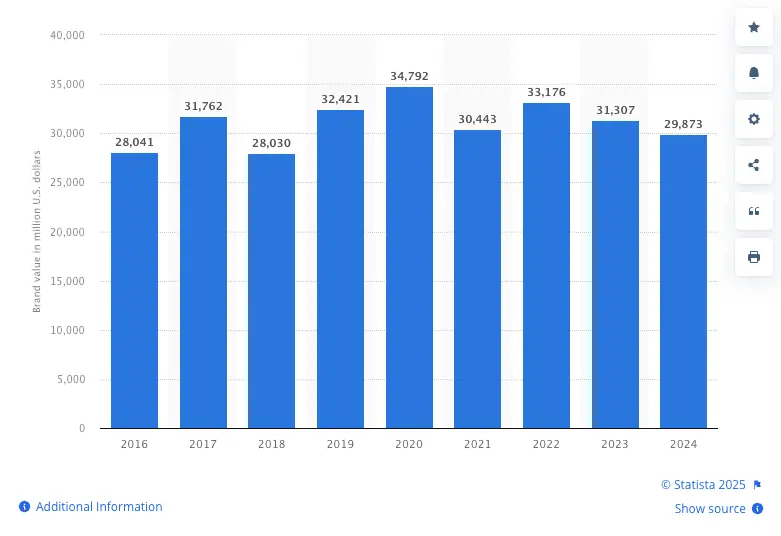
In June 2024, Nike hit its lowest share price since 2018. We’re talking $70 billion of market cap lost in nine months.
This graph by Statista shows the evolution of Nike’s global brand value from 2016 to 2024
Source: Statista
Massimo Giunco attributes several big decisions to Nike’s drop in brand value. Here’s an overview of what he thinks went wrong in Nike’s marketing efforts.
Decision one – eliminating categories
When new CEO John Donahoe took the helm in 2020, Nike decided to remove categories from the brand. Why? Because leadership felt that there was too much operational duplication.
The idea was to streamline processes to optimize costs and replace category-led expertise with a data-driven “flywheel”.
That meant moving to a gender-based product engine (lines for women, men, and kids) like other clothing retailers. More importantly, it also meant firing hundreds of experienced employees.
And what happens when you get rid of seasoned staff? You also get rid of hundreds of years of industry experience and expertise.
As a result of this move, innovation and product development started to decline.
Fortunately, Nike has reversed this decision and reintroduced categories. These categories are now called “Fields of Play”. A nostalgic name that adeptly covers up a potential mistake by leadership. 🤫
Decision two – too much emphasis on DTC marketing
It made a strategic decision to lead with Nike Direct, reducing wholesale to the second source of revenue. In other words, make Nike Direct the primary revenue source by 2025.
This move was a mistake because Nike underestimated the significance of wholesale partners and being present in physical retail stores. The decision also created more issues:
- Nike struggled to accurately predict inventory needs without wholesale partners to take on excess stock
- Terminating agreements with long-term local business partners damaged wholesaler relationships
- Nike ended up running more promotions and discounts because of this overemphasis on online sales (which led to a drop in gross margins)
Decision three – neglecting brand building
Nike moved away from its tried-and-true brand-building approach. Instead, it adopted a digital-first, sales-driven model. Here’s how that looked for the brand:
- Prioritizing customer retention over demand creation
- Heavily investing in performance marketing and programmatic advertising
- Focusing on brand design (rather than brand communication)
- Centralizing content production and reducing local marketing activities
And here were some of the consequences:
- Inefficient allocation of resources to digital marketing
- Emotionally-driven brand storytelling sank lower on the priority list
- Less local market engagement
- Fewer brand-building activities
- Not enough emphasis on attracting new customers
Decision four – misunderstanding consumer behavior
For a brand that knows its audience so well, this misstep came as a surprise. Nike thought its customers would follow it to its direct channels, but many didn’t. Instead they continued to shop at their local retailers, even if Nike products were no longer there.
Build a content engine like Nike’s with Filestage
The Nike marketing strategy may have a few chinks in its armor, but there’s no denying it’s one of the GOAT. When we peel away all the extra layers, the strategy is actually pretty simple:
- Stand for something bigger than the brand
- Build relationships with your community using emotional branding and storytelling
- Deliver consistently high-quality products and creatives
It may be simple, but it isn’t easy. If you need help nailing the brand consistency part, Filestage can help.
Ready to start saving one day per week on content approvals? Start a free Filestage trial today.