People don’t buy into products as much as they buy into brands. In fact, having consistent branding across all platforms has been shown to increase revenue by up to 23%.
But while brand consistency has never been so important, it’s also never been so difficult to maintain. A growing list of consumer touchpoints and the need for more and more content means you need to put some real consideration into how you manage corporate brand consistency these days.
In this article, I’m going to take you through all the things you need to know about building a consistent brand. But first, let’s look at what brand consistency is and how it helps businesses thrive.
What is brand consistency?
Brand consistency is about making sure your brand sounds, looks, and feels the same across every consumer touchpoint – from POS marketing to big-budget OOH campaigns. It’s about reinforcing your brand’s core values in everything from products and services through to your daily social posts.
Staying consistent with elements like logos, colors, and tone of voice makes it easier for people to recognize your brand across different channels (and maybe even different parts of the world). But the benefits of brand consistency go way beyond mere recognition.
Let’s look at why having a consistent brand is so important for business.
Supercharge your marketing reviews
Share, review, and approve all your content in one place with Filestage.
Why is brand consistency important?
While first impressions are important, staying consistent with your brand over time is what builds a loyal customer base that keeps coming back for more.
Here are just a few of the benefits of brand consistency.
1. Brand consistency makes you memorable
There’s a reason why most of us use repetition when we need to learn something new.
When we see, hear, or experience something over and over again, it eventually makes its way into our memory. So, it makes sense that if consumers encounter your consistent branding across various channels and touchpoints, there’s a much greater chance that your product or service will be top of mind the next time they want to make a purchase.
And there’s plenty of evidence to support this, like the recent report by System 1 and IPA.

2. Brand consistency builds trust and credibility
Imagine if every time you went into your local coffee shop, you were met with a different experience. One day, the drinks are great and the staff are friendly. But the next time you go there, the coffee is cold, the prices have jumped, and your server is rude. You likely wouldn’t have a very good impression of the business. And eventually, you’d look for somewhere more reliable, even if that meant traveling further to get there.
This logic applies to the experiences people have with your brand too. If your brand is unpredictable, you’ll leave consumers feeling confused and questioning your integrity. On the flip side, when your brand consistently delivers the same level of service, product quality, and messaging, customers will develop positive emotions and a sense of confidence in your ability to deliver on your brand promise.
Being trustworthy is key to running a successful brand. And being consistent is the best way to build that trust.

And check out these 10 cosmetics advertising fails to see what happens when you lose credibility.
3. Brand consistency boosts brand awareness
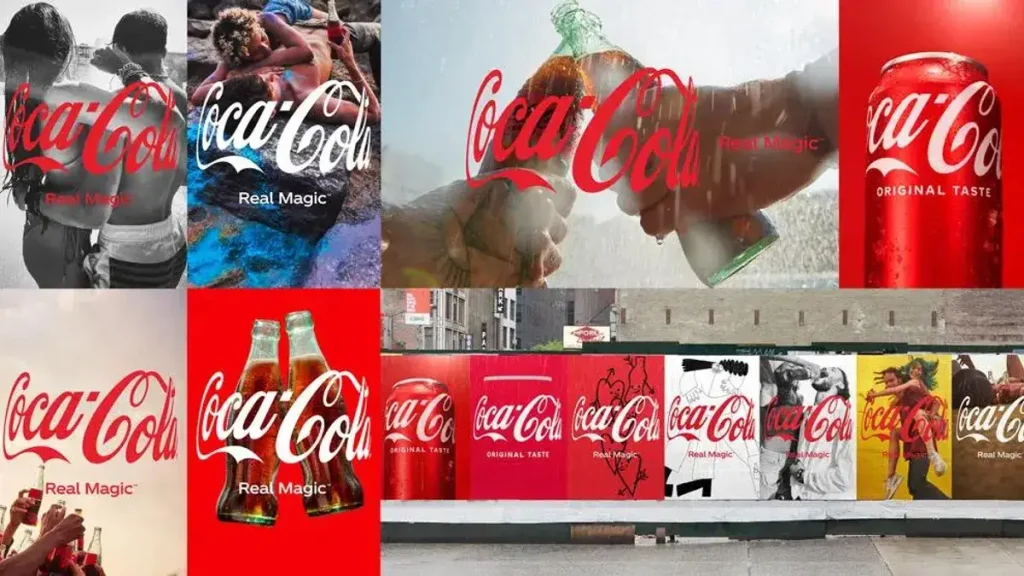
The most beloved products in the world (think Coca-Cola, the iPhone, and Starbucks’ coffee) reached and remain at the top largely because of their consistent branding.
When customers recognize, remember, and trust in your brand, it comes as no surprise that this will lead to a steady increase in brand awareness over time. This growth in brand awareness is then further fueled by satisfied customers who share their experiences and promote your products or services to friends and family through word of mouth or on social media platforms.
4. Brand consistency sets you apart from the competition
In today’s competitive marketplaces, consistent brand governance can be the thing that gives you an edge over your competitors.
By building a unique and recognizable identity, brand consistency ensures your brand stands out on shopping sites and in-store shelves.
Familiarity is also comforting and people want to know what they’re paying for. So, if you can give your target audience that peace of mind, you’ll be better equipped to win their business every time.
5. Brand consistency increases profits
At the pinnacle of all these benefits of brand consistency is an increase in sales and a better bottom line overall. Woop whoop!
There are a few factors that come into play here, so let’s take a closer look at how your branding efforts can increase your profit margins.
- Increased customer loyalty and retention – When consumers have positive and consistent experiences with your brand, they’re more likely to become loyal customers who return again and again.
- Higher brand value and equity – Consistent branding and customer experiences hold brands to a certain standard in the mind of the consumer. Why else would we pay three times more than we need to for a can of Heinz beans?
- Efficiency in marketing and operations – When your brand has clear brand guidelines and standards that your team can follow, it can cut down the amount of time and resources needed to create marketing materials and execute campaigns. This can translate into some serious cost savings!
The building blocks of a consistent brand
So, you know about all the many marvelous benefits of keeping your brand consistent. But how do you actually create a cohesive brand experience for your audience?
Let’s look at the different components of a consistent brand.
Company values
Brand consistency starts from within your business. That’s why it’s important to define your core values and make sure your team knows what your brand stands for before you start thinking about brand identity elements.
Of course, maintaining brand compliance isn’t a one-and-done job. After you’ve outlined your mission as a business, you need to incorporate this into the workings of your business by onboarding and training new employees.
When everyone on your team is aware of the bigger picture of your brand, it’s going to be a whole lot easier to create consistent content and customer journeys.

Content workflows
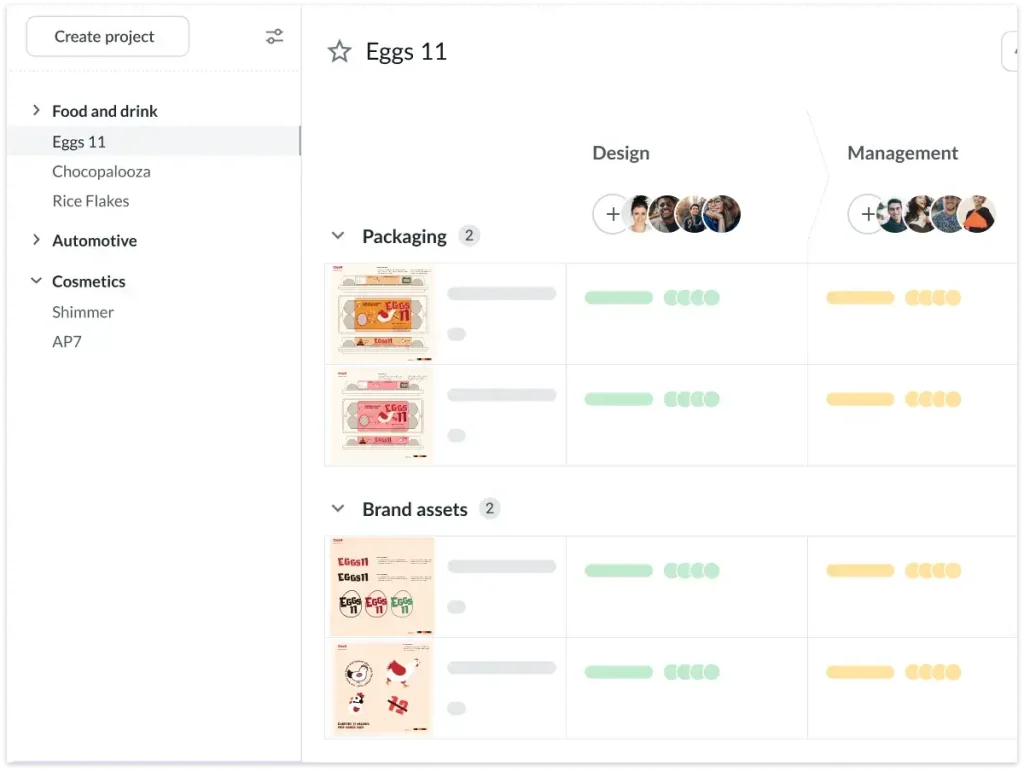
Without a reliable content workflow in place, keeping your brand’s content consistent can feel a lot like herding cats. No matter the project, you need to make sure everyone in the team knows their role, as well as the specific timelines and who they’re collaborating with.
By following a defined process from conception to completion, your creative teams can make sure that all aspects of a project, from design elements to messaging, are aligned with the company’s identity, values, and brand guidelines.
Brand voice
Once you’ve got your brand values and creative workflow down, it’s time to look at the different creative components that come together to make a consistent brand.
Brand voice is the way a company talks to its audience. This includes everything from style and personality to the different ways you communicate your brand values.
Finding your brand’s voice is crucial for consistency and building strong connections with your consumers. A good place to start is to imagine your brand as a person:
- How would they connect with your existing and potential customers?
- What kind of language would they use?
- What sets them apart from everyone else?
Whether it’s friendly and conversational, professional and authoritative, or playful and whimsical, try to maintain a consistent voice and the same brand messaging across every touchpoint.
And remember, brand voice and tone are not the same. Just look at Wendy’s. It has a snarky and sassy brand voice, but the tone changes slightly depending on the platform. So while social media is a free-for-all, the closer you get to the product (for example, on the website), the tone becomes less about snark and more about clarity.
It’s still a consistent and distinctive voice, but the tone shifts depending on the context. Just like us humans in real life.

Typography
Next on the list, we have typography. This refers to the style and appearance of text in your written content. It involves choosing the right combination of typographic to convey a message effectively and aesthetically. That includes:
- Fonts
- Font sizes
- Line spacing
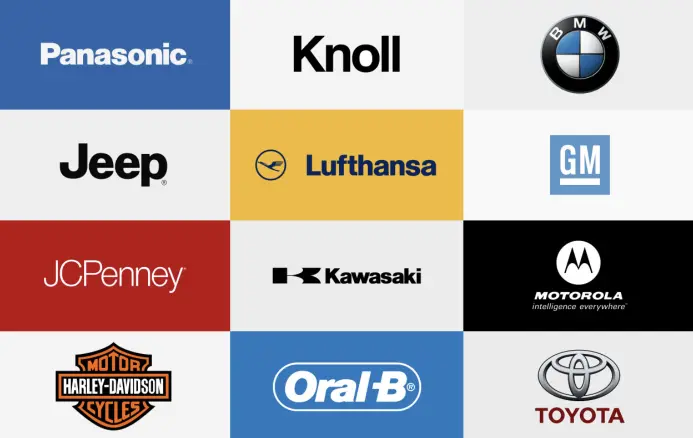
Consistent typography across all your brand assets, like websites, advertisements, and packaging, will help boost brand recognition over time.
When choosing typography for a brand, it’s important to consider things like readability, legibility, and how it aligns with your brand’s overall style and aesthetic.
And when you’ve made your choice, codify it in your brand guidelines and press kit.
Here’s how BMW, Jeep, and other big brands do it.
Brand colors
Brand colors are crucial for creating a unified and cohesive brand identity.
When consumers consistently see the same color palette, they develop strong associations between those colors and the brand itself. Like Coca-Cola branding’s use of red and white, or McDonald’s bold red and yellow.
This billboard below shows just how powerful a memorable color palette can be:

Of course, you don’t need to be limited to a few primary colors when creating your brand content. But incorporating them into your brand logos, typography, and visual elements will help create a clean, coordinated visual identity for your brand.
Brand templates
You’ll be happy to hear that you don’t need to start from scratch every time you create a piece of content for your brand. Instead, you can save your team a whole lot of time and energy by having a series of templates and assets on hand that you can tweak and customize each time.
You can create templates for everything from your internal presentation decks to social media frames and layouts. This not only streamlines your day-to-day design process, it also makes sure that every piece of content your team makes ties in with your brand guidelines.
Check out these examples of brand consistency for inspiration.
So now you know the building blocks of a consistent brand identity, the next step is making sure those pieces hold together once you start sharing content across different platforms. Here’s how to ensure brand consistency across the board.
How to maintain brand consistency across multiple formats and channels
Here are three practical ways to make sure your brand stays consistent, no matter the format or channel.
1. Create comprehensive brand guidelines
All those important brand elements I just mentioned? The first step is to package them up into a set of clear brand guidelines. A brand style guide gives your team everything they need for creating a consistent brand image.
That way, whether someone is creating a TikTok, a trade show banner, or a customer email, they know exactly how to bring your brand’s personality to life.
Here’s a standout example of brand guidelines from Slack:

2. Store all your brand assets in one place
Logos, templates, product photos, videos … if your team can’t find them, they’ll improvise. And that’s where inconsistency creeps in.
The best way to prevent this from happening is by storing all your brand assets and other marketing materials in a central hub – whether that’s a digital asset management (DAM) tool, an online proofing tool, or just a shared drive with a clear folder structure. That way, you make it easy for everyone to use the right files, in the right format, every time.
3. Set up a proper content review process
Marketing teams have to move fast if they want to jump on new trends or react to current affairs in real-time. That can make it tough to maintain brand consistency. Tough, but not impossible.
Setting up a structured review process may initially seem like extra work, but it can save you a lot of time in the long run. The trick is to use an online proofing tool to make sure every branded asset goes through a proper review process before it goes live.
Centralizing the process in a dedicated platform (because let’s face it, reviewing marketing assets over email is a nightmare) saves a lot of time and confusion. You can set up custom review steps based on your team’s current workflows, and keep a clear record of who approved each asset. Plus, you’ll never have to go digging through long email chains to find the latest version of your content.
Now let’s get into how that works in Filestage.
How Filestage can help you maintain brand consistency
Filestage is a review and approval tool that helps marketing teams share, review, and give feedback on files. Because it supports everything from documents and photos to design and video files, it’s the perfect tool to review and manage all your content to make sure it’s in line with your brand brief.
Here are just a few ways that Filestage can help you maintain brand consistency across all formats and channels.
Seamless collaboration
You can’t create brand consistency without collaboration, and Filestage gives you one centralized platform where all your teams and stakeholders can review and approve your content.
You can invite collaborators to review a project by either sending them an automated email invitation or simply sharing the URL link to the project. They won’t even need to create an account!
Keeping everyone on the same page in this way puts an end to the endless back-and-forth email chains and time-consuming meetings, since you can manage entire projects right there on the platform.
Version control
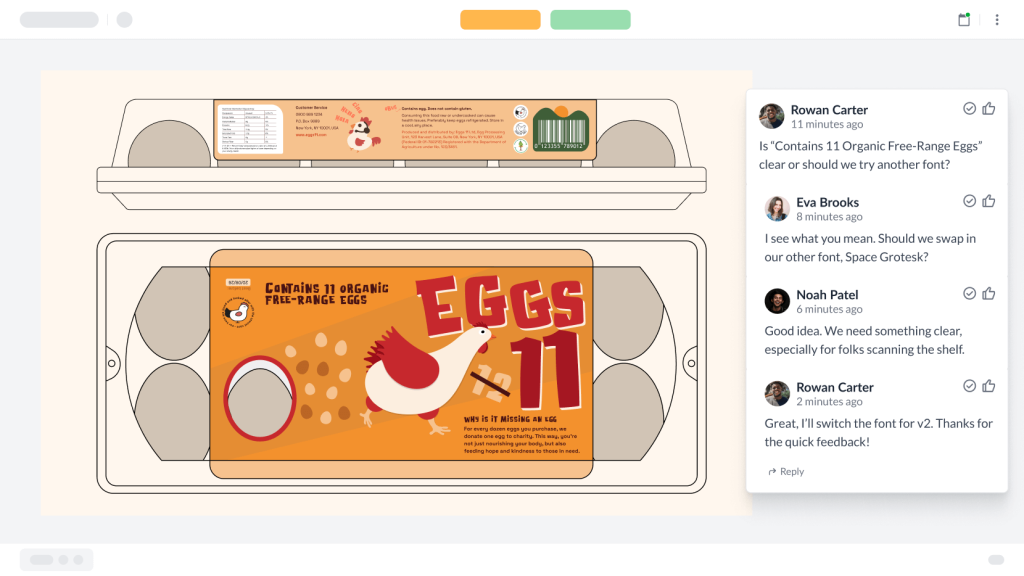
With Filestage, you can track comments, changes, and past versions of each project, making it much easier to spot any inconsistencies before they get in front of your audience. Phew!
Being able to look back on past projects is also a great way to streamline your workflow moving forward. Every file version is safely secured right there on the platform unless you manually delete it.

Customized workflows
Filestage also helps you maintain brand consistency by letting you create and manage your content workflow with custom reviewer groups and permissions.
When everyone knows their role in the content creation process, it’s much easier to maintain high standards in each project from beginning to end. Plus, when the right people are set up to give feedback at each stage, it hugely reduces the risk of brand consistency slip-ups.

AI-assisted reviews
You can now also use AI-assisted reviews to check that branding is consistent in your content. Our new AI reviewers act as an extra pair of eyes, checking your content against:
- Brand guidelines – flagging inconsistencies in messaging, tone, visual style, and word choice
- Visual best practices – highlighting incorrect placement of logos, incorrect barcodes, or other issues with visual hierarchy
- Industry regulations – identifying potential compliance issues in your content based on standards like FDA

Final thoughts
Whether you’re a founder, a brand manager, or a creative director, I hope this article has given you the tools you need to establish brand consistency and show up consistently with your brand materials across all touchpoints. And if you’d like to see how Filestage can help you review and approve the best on-brand content, start your free trial today.