
Looking for effective ways to promote your brand? Swanky new digital marketing methods may well be your first port of call, but don’t underestimate the power of the humble brochure.
In fact, brochure marketing is still one of the best ways to showcase your products and services and get them in front of your target audience.
In this article, I’ll deep-dive into brochure marketing – exploring why it works, how to do it, and how to measure its success.
But first, let’s take a closer look at what brochure marketing is all about.
What is brochure marketing?
Brochure marketing pretty much does what it says on the tin. It involves using printed or digital brochures to promote your products, services, or business as a whole.
These lightweight and portable marketing materials are designed to give customers a quick and compelling snapshot of what your brand has to offer – usually via a combination of text, images, and graphics.
Whether handed out at events, mailed directly to prospects, or displayed in-store, marketing brochures are designed to deliver key messages to potential customers. They should be visually appealing, informative, and easy to read. And they should ultimately drive customers to take action!
Learn how to make a standout brochure in 7 steps
And discover the differences between tri-, bi-, and z-fold and why they matter.
Why brochure marketing works
Brochure marketing is effective for a whole host of reasons. Here’s a look at why it works and why you should incorporate it into your broader marketing strategies.
Creates a tangible connection
Brochures offer something digital campaigns can’t: a physical connection.
Unlike digital ads that can be easily scrolled past and forgotten, a printed brochure gives customers something to hold, flip through, and revisit. That hands-on experience helps make your brand more memorable and leaves a lasting impression.
Delivers targeted messaging
Whether you’re launching a new product or announcing a special offer, a marketing brochure allows you to get straight to the point and communicate exactly what your audience needs to know. Think of it as a dedicated space to cut through the noise and communicate your message effectively.
Provides a lasting impact
The physical nature of print brochures means they’re often kept hold of for future reference, giving them a longer lifespan than many digital marketing materials. This not only keeps your brand front of mind for longer, but also makes brochures a pretty cost-effective option too.
Offers versatility across marketing channels
Brochures work across a range of channels. You can mail them directly to customers, hand them out at events or trade shows, or display them in-store.
You can also host a digital version on your website and include it in newsletters, giving you the flexibility to reach your audience both online and offline.

Source: pexels.com
How to create an effective brochure in five steps
Now that you know what brochure marketing is and why it’s an effective marketing tactic, it’s time to get to grips with how to run a brochure project. In this section we’ll look at how to create a compelling marketing brochure in five simple steps.
1. Understand your audience
First things first, make sure you have a good understanding of your target audience. Not just surface-level details like their age and gender, but deeper insights regarding their preferences, behaviors, and needs.
Having a clear picture of your audience means you’ll be better equipped to create a brochure that resonates with them – from the design and the messaging to the overall tone.
2. Outline your key points
This step is all about identifying the key messages you want to communicate with your brochure. Start by outlining the most important points you want to get across – whether it’s promoting a product, explaining a service, or highlighting a special offer.
Once you’ve nailed down your key points, you’ll be in a better position to structure the content in an impactful, easy-to-digest way. Don’t forget the basics, like your contact info and call to action.

Source: pexels.com
3. Create the design and copy
Once you’ve outlined your key points, it’s time to think about your brochure design and crafting the copy. After all, the design for a medical brochure will look very different than one for a travel brochure.
Your audience should be at the forefront of every design decision. The aim is to catch the attention of potential customers and encourage them to find out more about your products, services, or brand as a whole.
Here are some important components to focus on:
- Choose the layout – Decide whether a bi-fold, tri-fold, or Z-fold brochure format best suits your content and purpose. Chances are you’ll want your marketing brochure to include multiple pages, so think about how many and what information should be displayed on each.
- Design an eye-catching cover – The cover is your chance to make a great first impression, so make sure it grabs your reader’s attention and invites them to explore further.
- Pick relevant images – Select high-quality images and engaging visuals that resonate with your audience and support the message you’re conveying.
- Write concise copy – Keep your text clear, direct, and easy to read, focusing on those key points that matter the most. And of course, draw attention to your brochure with a compelling headline.
- Stay aligned with brand guidelines – Make sure the design, colors, fonts, and tone of voice reflect your brand’s identity throughout.
- End with a strong call to action – Motivate readers to take the next step, whether it’s visiting your website, contacting you, or making a purchase.
If you don’t have a graphic designer, I’d recommend using a template. Here’s a list of the best brochure design software to help you create yours.
4. Review every detail
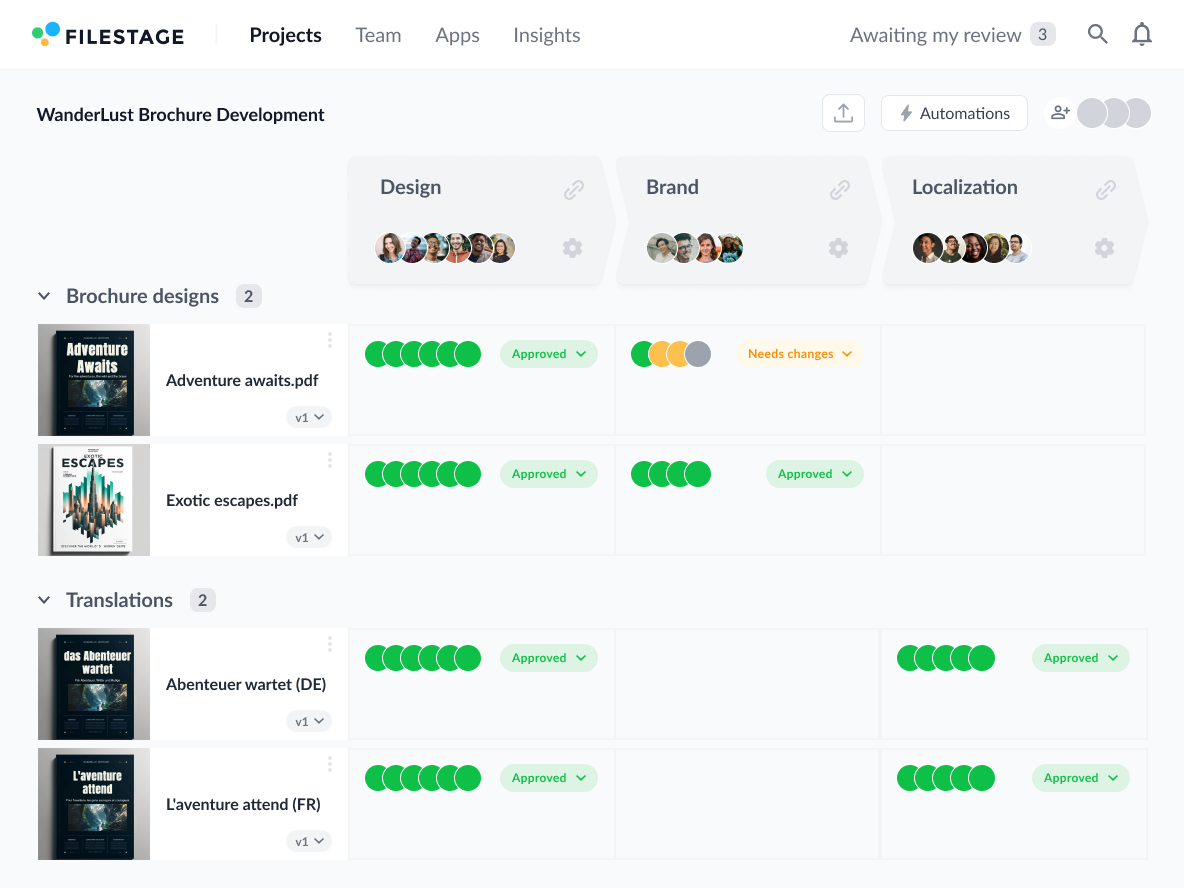
Now you have a well designed brochure, it’s time to review. The last thing you want to do is send your brochure for printing, only to discover a major (or even minor) mistake has slipped through the cracks. Attention to detail is what makes a brochure look polished and professional, so it’s extremely important to check that all information is accurate and error-free.
That’s why a final review is absolutely essential.
Using a review and approval tool like Filestage streamlines the process, allowing your team to collaborate efficiently and spot mistakes. This helps you make sure everything is 100% correct before sending your design to print.ently, spot mistakes, and make sure everything is 100% correct before sending your design to print.
5. Print
Once your brochure designs are approved, it’s time for printing! While you can print brochures in-house if budgets are tight, I’d strongly recommend going down the professional printing route.
Choose a service that specializes in brochures, flyers, and pamphlets for the highest quality results. This will allow you to choose from a variety of paper options, and help you guarantee that all the prints are going to be clean and vibrant.
Discover more useful tips in our step-by-step guide on how to make a brochure. And if you’re in the travel industry, don’t miss our specialized guide on how to create a travel brochure.
Learn how to make a standout brochure in 7 steps
And discover the differences between tri-, bi-, and z-fold and why they matter.
Five ways to distribute your marketing brochure
Marketing brochure ready to go? It’s time to think about how to get it into the hands of your audience.
Here are the most effective ways to distribute your brochure.
1. Direct mail
Sending brochures directly to your target audience via mail can be a highly effective way to engage potential customers. It’s super-personal, tangible, and makes sure your message gets delivered straight to their door.
And the results speak for themselves! According to the Data & Marketing Association, as a direct result of receiving brochures in the mail:
- 92% have taken some form of online or digital action
- 87% have made online purchases
- 86% have connected with a business online
- 54% have engaged on social media
- 43% have downloaded something
2. In-store placement
Displaying brochures at strategic points in your store or office can catch customers’ attention when they’re already engaged with your brand.
Consider placing brochures in high-traffic areas, such as:
- Checkout counters
- Waiting areas
- Near product displays where customers are likely to pause and browse
You can also use in-store brochures to cross-promote related products or services. For example, if a customer is shopping for a camera, placing brochures that highlight accessories or photography classes can encourage them to explore more of what you offer.
3. Events and trade shows
Handing out brochures at trade shows, conferences, or industry events helps you connect with a targeted, relevant audience who are actively looking for solutions like yours. Brochures serve as valuable conversation starters during these networking opportunities.
And even if attendees don’t have time to engage with you or your marketing brochure in the moment, this take-home marketing material provides them with something tangible to refer back to, keeping your brand in their mind even after the event has finished.
4. Partnerships
Collaborating with other businesses is a great way to enhance your brochure distribution strategy. By including your brochures in the spaces or newsletters of partner companies, you tap into new customer bases that are already aligned with your target audience.
This not only increases your reach but also builds credibility by associating your brand with other established businesses.
5. Digital distribution
Don’t forget to digitize your brochure! Host it on your website, share it through email campaigns, or provide it as a downloadable PDF for easy access.
This helps extend its reach beyond physical copies, making your brochure accessible to a much wider audience.
Four ways to measure the success of your brochure marketing efforts
Measuring the success of your brochure marketing efforts can be more challenging than tracking digital campaigns. But it’s important to understand how well your brochures are performing. You need to know if they’re pulling their weight and making an impact.
Understanding their performance will not only highlight what’s working but also guide you on what to tweak or completely change for future brochure campaigns.
Here are four effective ways to measure success:
1. Track response rates
Add QR codes or personalized URLs to your brochures to help you monitor how many people engage with your content and to measure return on investment (ROI).
By analyzing the data generated from these codes, you can see how many recipients took action after receiving your brochure.
2. Collect customer feedback
Ask customers what they think about your brochure’s design and messaging – either via surveys or informal conversations. You can use these valuable insights to refine your brochure design in future iterations.
3. Check conversion rates
Link your brochure distribution to specific sales or inquiries to assess performance. For example, by tracking how many customers go on to make a purchase or reach out for more information, you can directly measure how effective your brochures are in driving conversions.
4. Analyze digital engagement metrics
For digital versions of your brochure, use analytics tools to monitor engagement metrics, such as downloads or time spent on the page. This can help you understand how interesting and valuable your brochures are to readers.
How Filestage streamlines your review process
A crucial step in the brochure design process is review and approval. Before you print or publish your materials for distribution, it’s essential to have the right eyes on your work to make sure everything is accurate, on-brand, and error-free.
One of the most effective ways to optimize the review process, especially when multiple stakeholders are involved, is by using an artwork review tool like Filestage.
Filestage has been designed to prevent stress and confusion during your brochure review process by giving you a single space to share, review, and approve your designs. And because the platform supports a wide range of file formats (video, audio, live websites, PDFs, and more), you can use it to review all your other projects too!
Here are several ways Filestage can enhance and streamline your brochure review process:
- Invite unlimited teammates and clients to provide feedback right on top of your brochure designs
- Gather and discuss feedback in one place so your stakeholders are always on the same page
- Get fast and accurate feedback on your brochure designs with point-and-click comments and annotations
- Zoom in and rotate your brochure designs to give feedback on every detail
- Turn every comment into a to-do list to keep things moving efficiently
- Set due dates to keep your brochure project on track and running smoothly
- Track approvals and change requests at a glance from your dashboard
- Keep a record of every version and comment, so you can check that all feedback is covered
Final thoughts
I hope you’ve enjoyed learning how to run a successful brochure project – from creation and distribution through to measuring impact. With the right strategies in place, you’ll be well on your way to achieving impressive results!
If you’d like to see how Filestage can streamline the review process for your brochure designs and other marketing materials, start your free trial today.