Your product’s packaging is the first thing consumers notice when they see it on a shelf or listed on an online store. And when your consumer packaged goods (CPG) are stacked alongside a load of competitors, your packaging needs to instantly stand out and compel shoppers to pick your product over the rest.
So how do you make that happen?
In this article, I’ll walk you through the CPG packaging design process and share best practices to elevate your designs.Plus, I’ll showcase inspiring examples of CPG packaging from a range of well-known brands.
Let’s start by looking at the CPG packaging design process.
The 10-step CPG packaging design process
The CPG packaging design process covers everything from briefing and researching to review and approval. Below, I’ll briefly walk you through the 10 key steps involved in the packaging design process – but check out this detailed article on the packaging design process for a deeper dive into each of these steps.
1. Briefing
The first step in any design process is to create a brief. This brief should set out the goals and strategy for your CPG package design so that everyone involved knows the plan.
There are five key things to think about when it comes to your design brief:
- The purpose of the packaging
- Your target market
- Brand guidelines
- Specific content that needs to be included
- Budget and deadline
The more thorough your brief, the smoother the rest of the process will be.
The fast way to get feedback on packaging
Get clear and collaborative comments right on top of your packaging artwork.
2. Researching
Next up, it’s time to conduct market research to find out more about your target audience, your competitors, and trends in the packaging industry.
Having a good understanding of what’s already out there, what works and what doesn’t, and what your audience likes will help you design packaging that’s unique, effective, and appealing to those that matter. This step is equally essential in all your CPG marketing activities – not just when developing a packaging design!
3. Brainstorming
Research complete, now the real fun begins!
Now’s your chance to get creative and come up with as many ideas as possible.
Here are some key things to consider as part of your brainstorm:
- Colors
- Materials
- Typography
- Graphics
- Imagery
- Shapes
- Narratives
- Emotions
4. Refining
Once the brainstorming is done, you can take all those amazing ideas and turn them into something spectacular! This is where your design team can really show off their skills and create a CPG packaging design that’s both eye-catching and functional.
5. Reviewing
This step involves presenting your ideas and getting feedback from the necessary stakeholders. One of the best ways to optimize the review process is by using design review software like Filestage.
It’ll help you collect and organize everyone’s feedback, saving you time and making it easier to improve your design.
6. Iterating
Once you’ve collected all that valuable feedback, work your way through it and improve your designs. Then when you’re ready, collect more feedback.
With Filestage, you can tick off feedback as you work on the next version to make sure every comment has been considered. And you can even compare two versions of your design side by side to see what’s changed.
To avoid making bad packaging design choices, your CPG packaging design will likely need to go through multiple review stages and iterations before it can be sent for production. It might seem like a lengthy process, but your design will ultimately end up better for it.
7. Prototyping
Creating and testing prototypes of your CPG packaging is a crucial step in the process. By bringing your design concept to life and seeing it in 3D, you’ll be able to evaluate how it looks, feels, and functions in real life.
8. Iterating (again)
Take what you’ve learned from the prototyping phase and use it to make your final design even better. The end is almost in sight, you just need to make those final tweaks to make your design the best it can possibly be.
9. Approval
The last step before your design can be sent for mass production is approval. This stage involves getting sign-off from all your stakeholders so that you know everyone is happy with the finished product. In this step you’ll also probably include your marketing department to check whether the packaging is in line with the latest CPG marketing campaign.
With Filestage, reviewers can give one-click approval, and you can track approvals and change requests at a glance from your dashboard. As the deadline gets closer, we’ll send automated reminders to any reviewers who still need to sign off the design.
Once everyone’s given the green light, it’s time to send your design for mass production.
10. User testing
Your shiny new CPG packaging is ready to hit the shelves.
Roll out your packaging to retailers and online platforms and find out what your target audience thinks by sending out surveys or hosting focus groups. Over time you can use their feedback to refine your CPG packaging design so that it meets the needs and expectations of consumers.
Soon enough your products will be flying off the shelves!
Six packaging design best practices for consumer packaged goods
That’s the step-by-step process covered. Now let’s take a look at some best practices to help you create the best CPG packaging design possible.
1. Keep things clear and simple
Consumers make decisions in a matter of seconds. That’s why you want to make it immediately obvious why they should choose your product over the competition.
Keep your CPG packaging clean and uncluttered, highlighting only the key details on the front, such as the product name, brand, and main benefits. Important secondary info like ingredients or instructions can go on the back.
You want to avoid overwhelming potential customers with too much information – so strip everything back and only include what’s essential.
Make sure all text is easy to read, using a clear font and contrasting colors for visibility. Also, use high-quality images that reflect the quality of your product.
2. Understand your target audience
To create CPG packaging that resonates, you need to know exactly who you’re speaking to. Conduct market research to understand your target audience’s preferences and consumer behavior.
What is it that drives them to pick one product over another?
You can then use these handy insights to tailor your design.
Choose fonts, colors, imagery, and materials that appeal to your specific market segment . For example, you can choose bright and playful designs for kids, sleek styles for luxury shoppers, or sustainable materials for eco-friendly customers.
That way, your product will connect with the right people.
The fast way to get feedback on packaging
Get clear and collaborative comments right on top of your packaging artwork.
3. Stay true to your brand
Consistency is key when it comes to building brand recognition. It’s how you help customers trust your brand and become familiar with it..
Your packaging should consistently reflect your brand identity by using the same color palette, fonts, and design elements on repeat.
Make sure your logo is prominently displayed and easy to spot too, as this helps reinforce brand awareness.
4. Keep compliant
Ah, compliance. It’s not glamorous. It’s not exciting. But it’s absolutely essential.
Your CPG packaging and labels need to align with certain laws and standards, depending on your industry and the regions where you’re selling consumer products.
For example, food labeling requirements in the US require packaging for food products to include things like an ingredients list and nutrition labeling, and text has to be at least one-sixteenth of an inch in height (based on the lowercase letter ‘o’).
Make sure you read up on the latest laws and standards to avoid getting into any trouble.
5. Balance creativity and functionality
Striking the perfect balance between creativity and functionality is an ongoing challenge for any designer. You want your packaging to stand out, but it also has to be practical. That means easy to use, easy to store, and easy to transport. And durable too!
Don’t be afraid to push creative boundaries with shapes, colors, and materials – just make sure your packaging enhances the user experience, rather than complicating it. And when in doubt, ask yourself these four questions:
- Does the packaging clearly communicate what the product is, the benefits, and all essential information?
- Is the packaging design unique and eye-catching enough to stand out on the shelf?
- Does the design maintain a cohesive visual identity across all products? Is it easy for users to recognize and trust?
- Is the packaging designed with the consumer’s needs and preferences in mind?
Need some inspiration? Check out our guide on how to use AI packaging design for unique and creative packaging solutions.
6. Use eco-friendly materials
Sustainability is a growing priority for consumers. In fact, 82% of consumers are willing to pay more for eco-friendly packaging. So whenever possible, opt for sustainable packaging solutions made from recyclable, biodegradable, or reusable materials – and try to minimize waste too.
Not only does this help reduce your environmental footprint, it also positions your brand as forward-thinking and socially responsible, appealing to eco-conscious shoppers and giving you a competitive edge.
Want to go green? These sustainable packaging ideas will leave you green with envy.
Seven inspiring CPG packaging design ideas
Let’s take a look at some examples of CPG packaging design that have put these best practices into, well, practice!
1. This playful and planet-friendly packaging design from Who Gives a Crap

Who Gives A Crap has transformed plain old toilet paper into a work of art – who knew loo roll could be a design statement?!
Their bright and playful packaging brings a splash of fun to any bathroom. But it’s not just about looks. Their packaging is also planet-friendly as it’s made entirely from recycled materials and completely plastic-free.
By combining creativity with sustainability, Who Gives A Crap has created packaging that stands out from the competition. And, on top of that, it appeals to the growing number of eco-conscious consumers who want to reduce their environmental impact.
2. This interactive packaging design from Trident
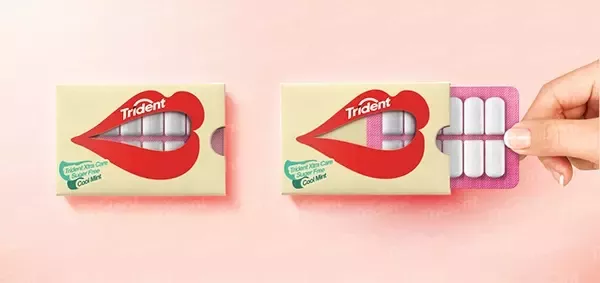
This interactive packaging design is a fantastic example of balancing creativity with functionality. It’s fun and playful, and it ties directly into the product’s purpose – freshening breath and maintaining dental health.
The uncluttered design clearly communicates the product’s benefits at a glance. Plus, the sideways pull-out feature makes the packaging functional and easy to use. And let’s face it, it definitely stands out against competitors’ packaging!
3. This luxurious packaging design from Chanel

Chanel is a great example of a luxury brand that knows what its target audience wants: timeless sophistication. Chanel’s packaging nails this brief.
With its iconic black-and-white palette and sleek, uncluttered design, Chanel keeps things simple yet elegant – and consumers know it’s Chanel from a mile away!
Plus, the packaging isn’t just pretty. It’s also practical, protecting products while offering a premium unboxing experience.
4. This bold packaging design from Tony’s Chocolonely

Tony’s Chocolonely packaging is impossible to miss. With bold, vibrant colors and unique typography, the eye-catching design mirrors the brand’s message of standing out and speaking up against exploitation in the chocolate industry.
The quirky design choices are also intended to capture attention from a younger, more socially aware demographic. And the use of sustainable packaging materials appeals to this eco-conscious audience too.
5. This unboxing experience from Apple

Apple knows its design-conscious audience, and the iPhone’s packaging is pretty much the crème de la crème of minimalism. The clean and simple design screams premium, making you feel like you’re getting something truly special. But it’s the unboxing that really steals the show.
Opening the box feels like unlocking a mini treasure chest, starting with that signature smooth slide. Inside, everything is perfectly placed – from the snug fit of the phone to the neatly arranged accessories below.
Thanks to this clever packaging design, Apple has turned the functional process of getting a new phone into a pretty exciting experience.
6. This sustainable packaging from Reformation
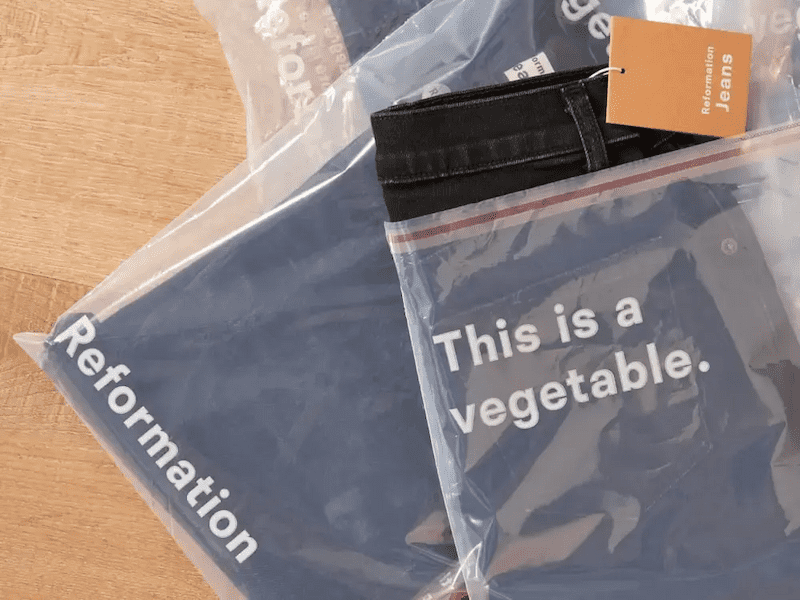
Environmentally conscious consumers believe compostable packaging is the most sustainable option. That’s why big names like Reformation are turning their attention to compostable shopping bags.
Fashion brand Reformation is sustainable through and through. Its packaging, which can be tossed in organic waste when consumers are done with it, reflects the brand’s commitment to championing sustainable practices.
The brand logo helps build brand recognition with shoppers, and the tagline “This is a vegetable” gets the cogs turning.
The fast way to get feedback on packaging
Get clear and collaborative comments right on top of your packaging artwork.
7. This consistent packaging from Lily’s Kitchen
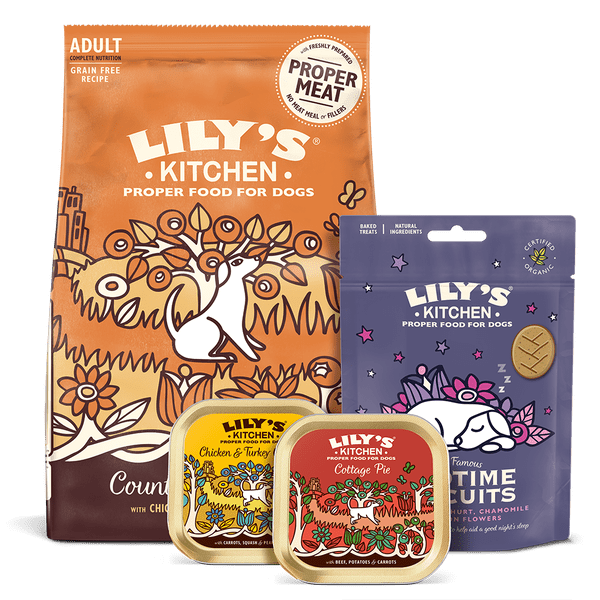
Lily’s Kitchen nails brand consistency. As you can see from this selection of packaging, the brand sticks to a coherent color palette and uses the same illustrated characters and graphic design elements across its products to help build recognition.
And with the bold Lily’s Kitchen logo front and center of every product, their branding is unmistakable. Overall, the packaging is fun, friendly, and instantly recognizable on any shelf!
CPG packaging FAQs
Here are some common CPG packaging questions and answers that will clarify any misconceptions.
What is CPG packaging design?
Consumer Packaged Goods (CPG) packaging design refers to the process of creating packaging for products that are sold quickly and at relatively low cost, such as food, beverages, toiletries, and other consumables. Effective CPG packaging not only protects the product but also attracts consumers and communicates the brand’s message
What are the four C’s of packaging?
The “Four C’s” of packaging are essential principles you should consider during the design process:
- Content: Clearly display product information to inform and attract consumers.
- Convenience: Ensure the packaging is user-friendly and easy to handle.
- Communication: Convey the brand’s message and values effectively.
- Cost: Balance design quality with production expenses to maintain profitability
Final thoughts
And there you have it – one comprehensive guide to CPG packaging. I hope this guide has left you feeling much more knowledgeable about the CPG packaging design process and how to make your designs as eye-catching and effective as possible.
If you’d like to see how Filestage could help you to collect feedback and get approval on your CPG packaging designs, start a free trial here.