38% of people hang on to print collateral like brochures for at least a few days, and 13% keep them for longer than a week. These stats illustrate just how effective brochures are at engaging your audience.
But it’s not a “one-size-fits-all” kind of a thing. Choosing the right types of brochures for different content pieces is key if you want to reap the benefits.
That’s what I’ll be getting into below. Keep reading to learn:
- Eight of the most common types of brochures (with best-practice examples)
- How to choose the right brochure format for your audience
1. Bifold (or half fold) brochure
Bifold brochures have a single fold, dividing the paper into two panels. This is a popular choice for businesses looking to present a small amount of information in a clean and visual way. They are particularly effective for product comparison charts (as you can show products side-by-side) and other quick reference guides.
While they don’t have as much real estate as a trifold brochure, bifold designs make it easy for your potential customers to quickly find information.
Example
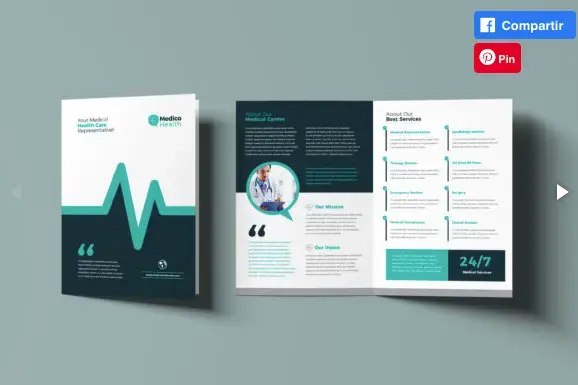
I love this bifold medical brochure template because it’s graphic and visually pleasing. The use of negative space gives it a really clean finish, and the copy is well-organized in readable chunks.
Learn how to make a standout brochure in 7 steps
And discover the differences between tri-, bi-, and z-fold and why they matter.
2. Trifold brochures
Trifold brochures have three foldable panels and two bends (creating six equal-sized sections for your content). That means you can include more information without overwhelming readers. It’s one of the most popular types of brochures because it’s versatile enough for almost any use case (and mass distribution).
Example
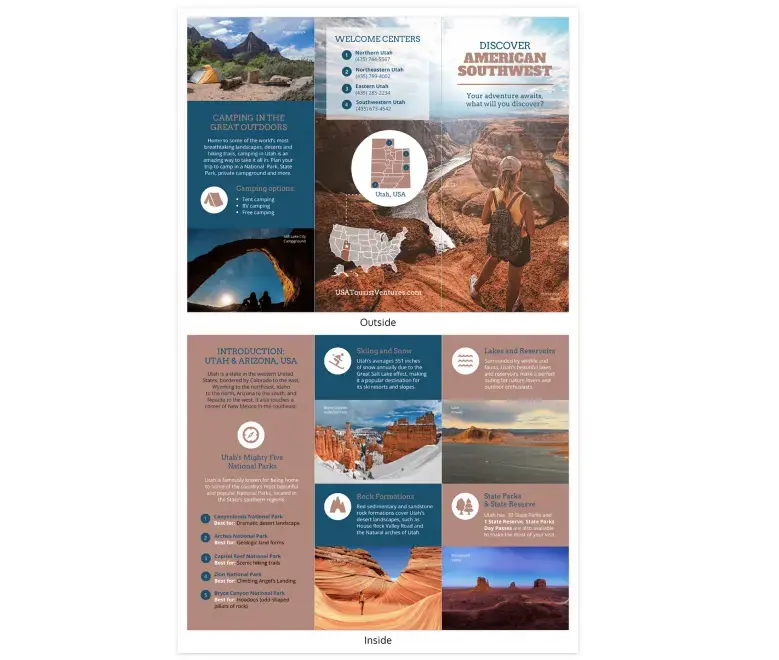
I featured this trifold travel brochure design in my recent travel brochure guide. The cohesive color palette, use of high-res images, and clean copy make it super engaging for your target audience. Plus, the use of sections helps to break the content down into logical sections for an easier read.
3. Accordion fold
The accordion brochure gets its name from the famous musical instrument. It’s similar to a Z fold brochure, but it typically has four panels on each side. Thanks to all that space, accordion brochures are an excellent choice if you have a lot of information to share.
They’re also one of the best types of brochures for telling customer stories.
Example
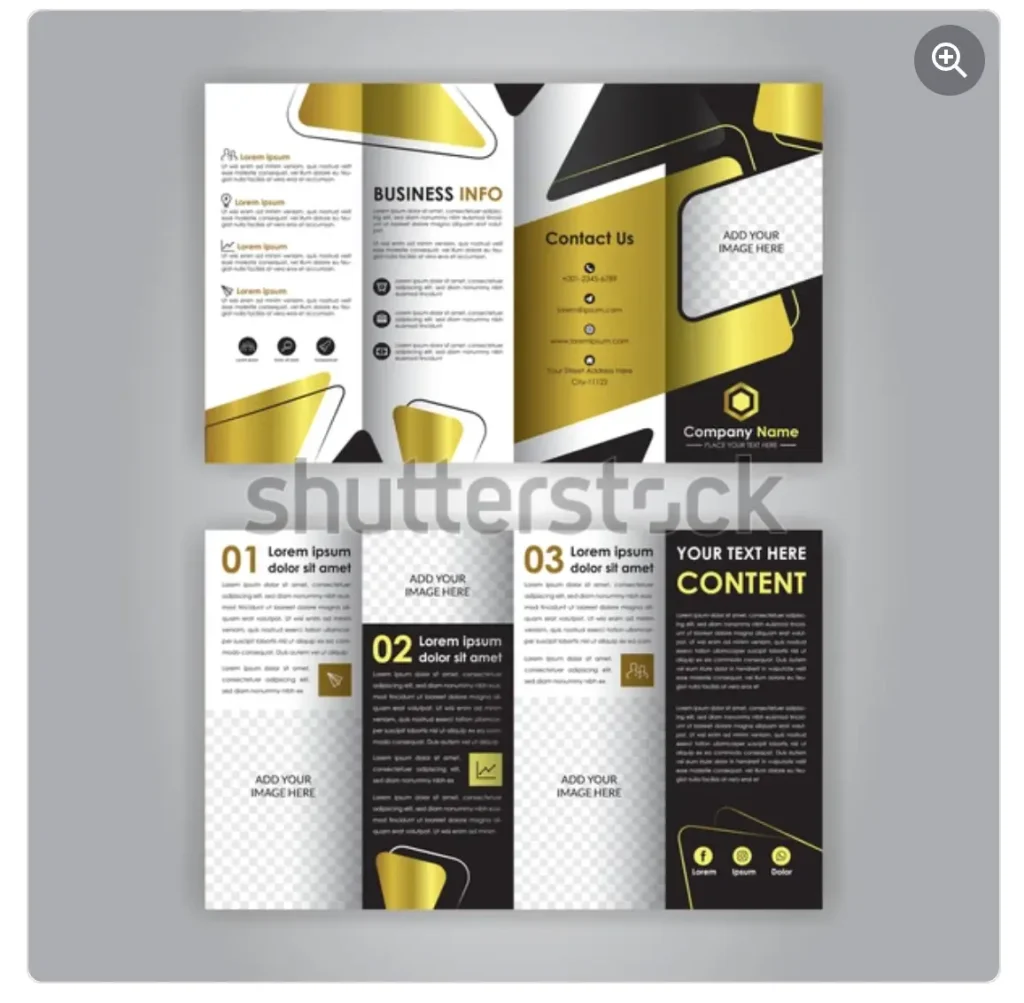
I’m a big fan of this sleek eight-page accordion brochure template from Shutterstock. Each side of the leaflet has four panels where you can add images and business information. The graphic imagery works throughout the entire brochure design for a creative and cohesive finish.
Be sure to browse our brochure design ideas guide for more inspiration.
4. Gate fold
Single gate fold brochures (also known as window fold leaflets) are similar to trifold designs. But there’s one key difference. The three panels in a gate fold aren’t the same size. Instead, the central panel is double the size of the two outer panels.
The larger central panel makes this a great option for promoting a single product or feature. You have plenty of space for a large product image, with the outer panels offering context or additional information.
Example
This colorful single gate fold brochure template is absolutely beautiful. The two outside panels open to reveal a larger inner panel with a high-res image. It’s one of the best travel brochure designs I’ve seen.

5. Double gate fold
The double gate fold is one of the most popular types of brochure design because it looks cool (and expensive). The fold divides the sheet of paper into eight sections, so you have enough room to go deep into the details.
It’s a great choice for educational brochures where you have to include comprehensive details about a topic.
Example
This double gate fold brochure is a work of art. The interesting fold, premium paper choice, and sleek design give it a high-end feel. Plus, the double bending gives it an interesting shape that catches the eye and makes you want to open it.

Learn how to make a standout brochure in 7 steps
And discover the differences between tri-, bi-, and z-fold and why they matter.
6. Z fold brochures
Z fold brochures have a zig-zag shape thanks to a double bend in the paper. This creates six panels of equal size, giving you enough space to promote anything from product details to event programs. They’re also a great option if you want to add interactive elements (like pull-outs) to your brochure.
Z fold brochures look very similar to trifold ones, but the difference is in the fold. Trifold brochures are folded into three equal panels, rather than a zig-zag.
Example
I love this sleek Z fold brochure design from Canva. Images break up the copy for a clean look, and each of the internal panels has enough room to showcase essential product information. I also like how the rich brown color palette and minimalist design elements add a touch of sophistication.

7. French fold
French folds are one of my favorite types of brochures because they offer something a little different.
The design is a sheet of paper folded in a Z shape to make three separate panels. They work well for premium promotional materials like real estate brochures, travel brochures, and menus.
Example
I love this French fold brochure template because it’s bold and bright with a high-end finish. The small size makes it easy to distribute, but it opens out to reveal a full-sized map.

8. Double parallel fold
Double parallel fold brochures work well for product catalogs, event guides, or other educational materials. The design allows you to include a significant amount of information while still being visually appealing. As an added bonus, the folded design makes it easy to distribute.
Example
This brochure template from Behance is the perfect choice if you need to include a lot of information without the clutter. Notice how the text is broken up with images and visual aids to enhance readability.

How to choose the right brochure format for your audience
Choosing the right brochure is about more than just getting the best format for your content. The intent behind the brochure also matters. For instance, a company that’s looking to raise brand awareness may opt for a different style than one that wants its audience to take action.
Here are some common use cases and the best brochure style for each one.
1. Promotional
This type of brochure is your go-to marketing tool for advertising your products or services. As a result, they should grab attention with eye-catching graphics and languages.
The main goal is to compel readers to take action.
Common distribution methods include:
- Direct mail
- Handing them out in high-traffic areas like trade shows and networking events
- Sharing a digital version on your website or social media
Ideal brochure format
Single panel, trifold, or gate fold brochures.
2. Informational
Informational brochures give your readers easy access to the key details about your product, service, or event. That could include anything from educational information to essential brand messages.
The goal here is to be laser-precise. You want to showcase the big stuff in as little time and space as possible. As a result, your calls to action should be well-placed to grab attention grab.
Ideal brochure format
Trifold, gate fold, and roll fold brochures work well if you need to present a lot of information.
3. Event brochures
Brochures and flyers are effective tools for promoting an upcoming event like a fundraiser, charity, or networking event.
Ideally, you’ll opt for a clean and simple design to avoid distracting readers. You want to make sure the key information about your event takes center stage. For instance,
- Date and time
- Location
- Value proposition – Why should people attend your event?
- Call to action – Do they need to reserve a seat?
Ideal brochure format
No fold or Z folds work well for event brochures because you can include plenty of event information and still have a sleek finish.
4. Menus
Print collateral works phenomenally well for promoting your restaurant or local business. A brochure design can easily double up as a menu for casual restaurants (or as takeout menus).
Ideal brochure format
No fold brochures work best for in-store menus, while a trifold design is great for takeout.
In the hospitality biz? Take a look at my breakdown of the biggest restaurant advertising trends.
5. Mailers
Mailers give your brand a chance to get in front of a new audience. But that often means the person receiving your brochure has no idea who you are.
As a result, you need a format that perfectly sums up who your brand is and what you stand for.
Ideal brochure format
Think outside the box. Your big goal here is to stand out from the competition, so opt for a format that can help you achieve this. For example, an accordion or French fold.
And if you’re handling the creation process in-house, take a look at our guide on how to make a brochure.
Review your brochures 30% faster with Filestage
Different types of brochure folds work best with specific content formats, audiences, and intentions. Now you know your double parallel fold from your trifold brochures, the next step is the creation process.
If you plan to create brochures in-house, you’ll need brochure design software. This ranges from easy-to-use graphic design tools like Canva to more advanced options like Adobe. Working off a customizable template is the best bet (unless you have a pro graphic designer on hand).
Once your brochure design is ready, it’s time to start the creative review process. It’s best to set up a robust approval workflow before printing to make sure your brochure is accurate and aligns with brand guidelines.
That’s where online proofing software comes in. With Filestage, you can quickly set up custom reviewer groups and have stakeholders annotate brochure assets with their feedback.
If you’re ready to simplify complex brochure design reviews and get signoff 30% faster, start a free seven-day Filestage trial today.