

The average creative review process takes eight days and three versions to get each content piece signed off. But in regulated industries like pharma, it can take up to 40 days.
Structured workflows, automated tasks, and a centralized platform can help you streamline your current processes to speed up approval without sacrificing accuracy. That way, all your stakeholders are on the same page and you meet core compliance standards.
I’ve asked seven experts from different industries to share the biggest roadblocks they face in the creative review process and how they overcome them. I’ve also rounded up best practices to optimize your creative workflows today.
Blocker one – Stringent verification processes
Regulated industries like financial services need to make sure every piece of content presents accurate information. Especially when linking to specific data.
We spoke to Shawn Plummer, CEO of The Annuity Expert, who provides valuable financial advice to clients.
Here’s what he had to say about the biggest challenges in the industry and the importance of building an efficient review process.

“The biggest blocker we’ve encountered is ensuring the accuracy of data, especially when linking out to specific vendors. It is crucial to double-check their features, riders, and other details to ensure the accuracy of our recommendations. This thorough verification process adds to the delays.”
Like many players in regulated industries, The Annuity Expert’s articles include visual content like infographics and videos, which requires more time to produce and review.
This can lead to big delays.
Shawn gives a great example, “I recall a detailed guide on annuities that was delayed for weeks due to the extensive back-and-forth with our team and the added layers of content verification and multimedia production, affecting our content schedule and user engagement.”
Supercharge your review process
Share content, get feedback, and manage approvals with Filestage.
How to deal with stringent verification processes
Shawn suggests establishing a predefined checklist that includes all vendor details and specific content requirements. He also recommends reviewing it at the initial drafting stage to minimize revisions later in the process.
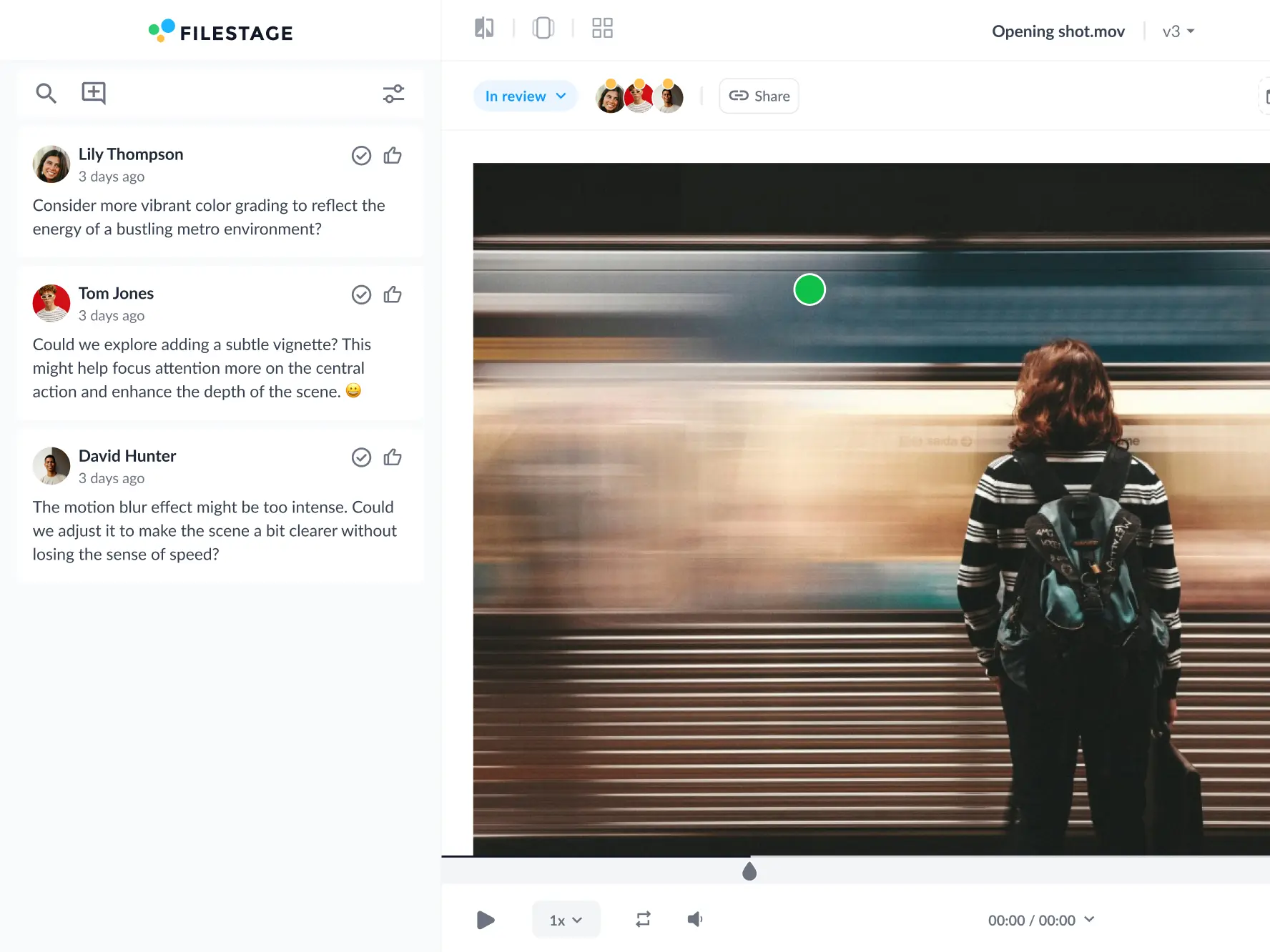
Using a visual feedback tool with annotation features is another great solution. You can annotate videos and images directly in one centralized platform, so feedback is connected to visuals and doesn’t get lost in your email inbox.
This makes managing feedback throughout the creative review process much easier.
Blocker two – Scattered feedback
No matter the industry, one of the biggest roadblocks in the content review process is scattered feedback.
If you’re still using email to collect creative feedback in 2026, I have some bad news for you. It’s killing your process.
Don’t get me wrong, email is great. But it’s not an efficient way to gather feedback on creative assets for a number of reasons. These include:
- Collating feedback from your emails is time-consuming and leaves you open to distractions
- Some creative feedback is tricky to explain or pinpoint – you need more context
- It’s easy for essential feedback replies to get lost in a neverending email thread
I asked Axel Lavergne, founder of Review Flowz, for his insights. Review Flowz is software that aggregates reviews and testimonials, so building an efficient content review process is crucial for Axel and his team’s success.

“A significant blocker for us is the scattered nature of feedback, especially when involving multiple departments like marketing, product development, and customer service. This disjointed feedback process often results in miscommunication and delays.”
Axel has seen firsthand how scattered feedback can impact content production, “I remember a case where a major testimonial campaign was delayed because feedback was received sporadically from different teams, causing a lack of cohesion in the final content.”
How to deal with scattered feedback
Axel recommends using a centralized platform to unify feedback and make it easily accessible. This has significantly reduced delays and improved content workflows in his creative team.
Online proofing software is a great solution here.
With platforms like Filestage, you can:
- Centralize feedback in one unified platform
- Leave real-time feedback directly on creative content like artwork or packaging designs
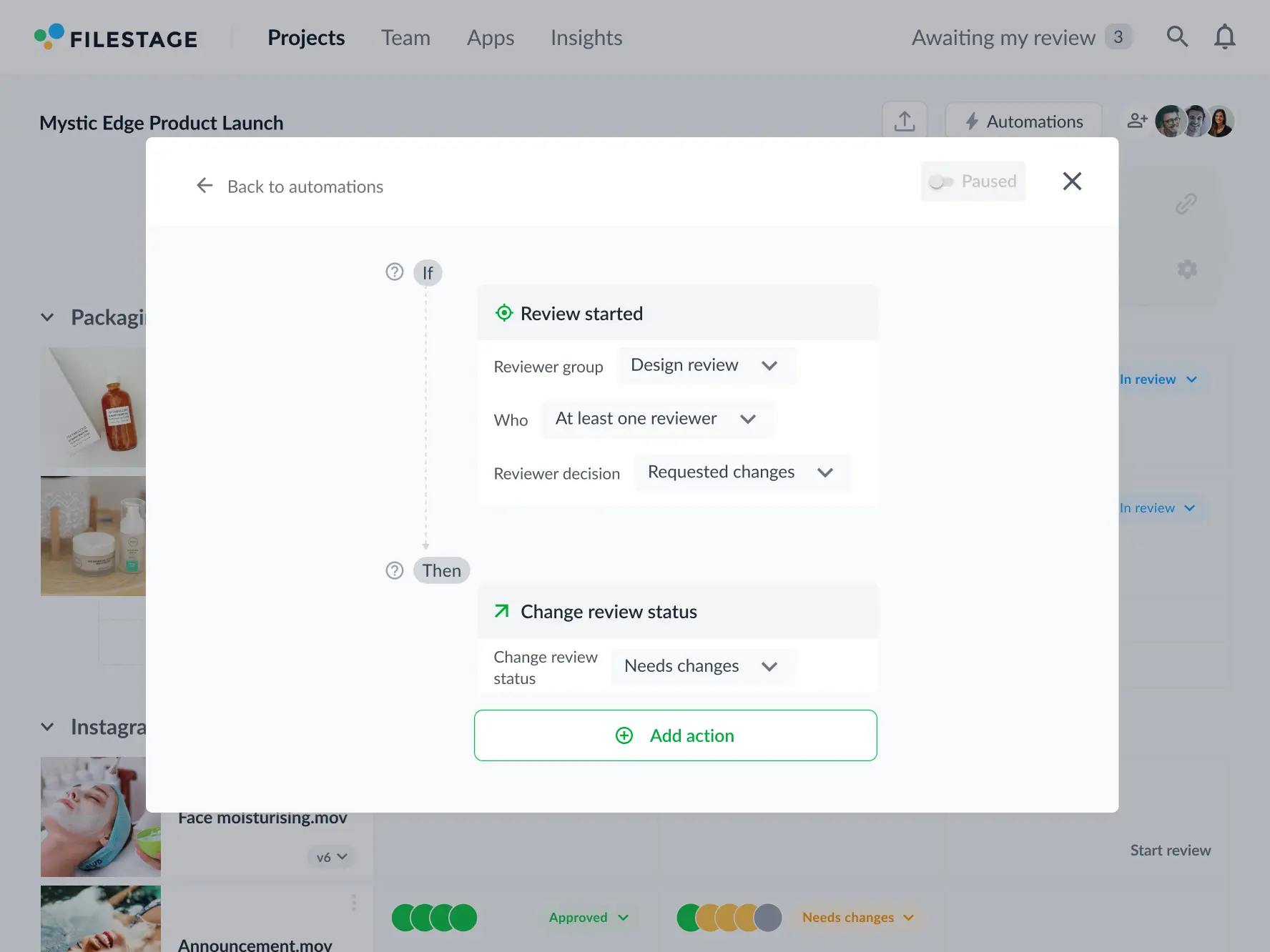
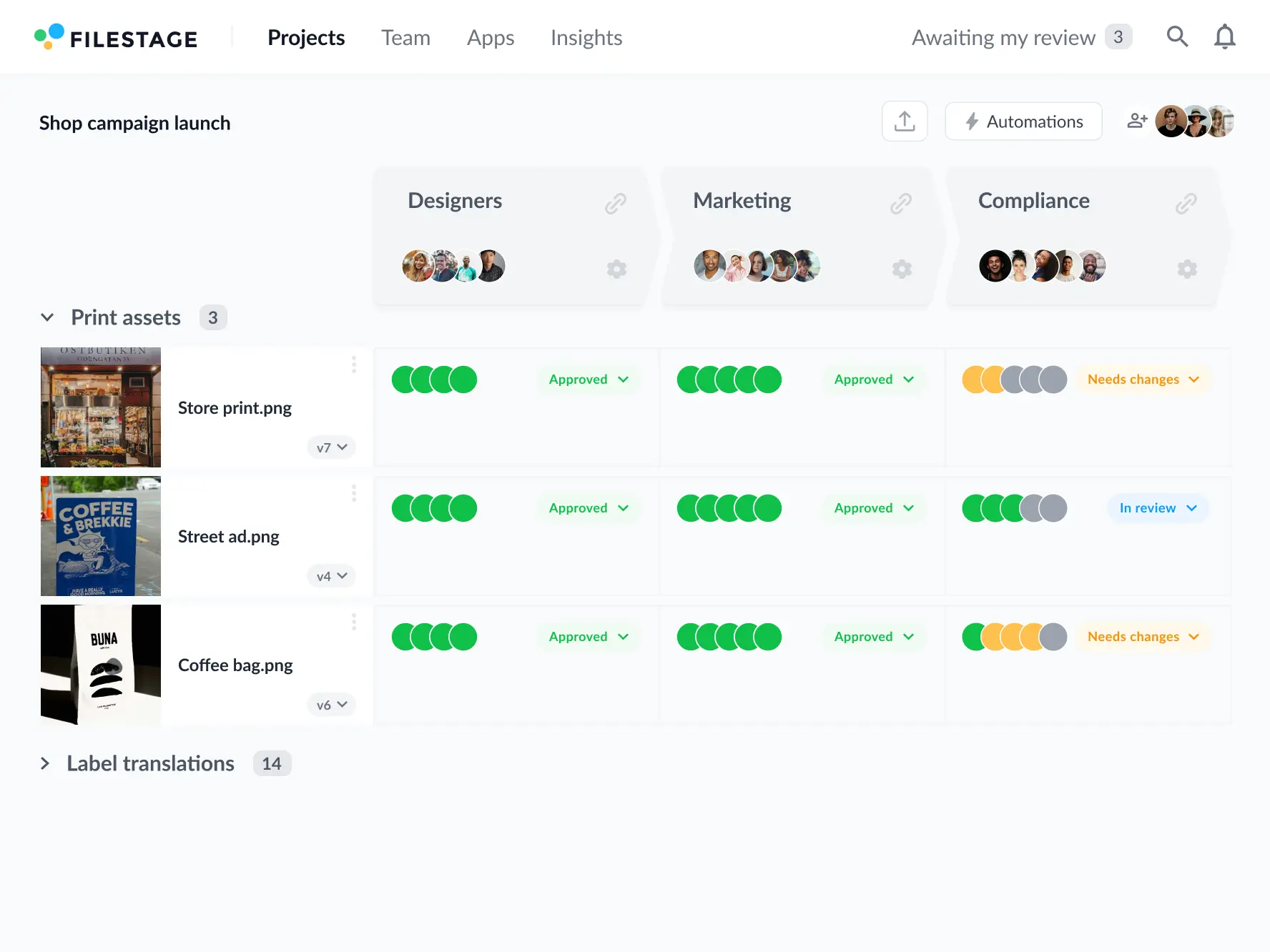
- Create custom reviewer groups to make sure the right people give feedback at the right time
- Get project-level visibility and automate tasks like deadlines and reminders
Extra reading: The artwork approval process + 5 best practices
Less time chasing feedback, more time on creative strategy
Online proofing software can cut review cycles by 30%, freeing up time for high-stakes work. Read our guide to see if it’s the right solution for your team.
Blocker three – Slow feedback loops
Strict regulatory compliance can lead to slow feedback loops in the creative review process.
As Mark Pierce, CEO and founding partner of Wyoming Trust, puts it, “The more regulated an industry, the longer the legal counsel or compliance review process will take.”
With over three decades of professional experience, Pierce is all too familiar with the blockers regulated industries like healthcare, insurance, consumer goods, and banking face at both state and federal levels.
Interestingly, Pierce reminds us that compliance oversight with creative collaboration isn’t just about meeting these external standards.
“Brands need to understand they’re also protecting a company itself. Few organizations have the PR bandwidth, much less the money, to risk not complying with fundamental marketing regulations.”
Jonathan Feniak, General Counsel at LLC Attorney, agrees. Speaking about the legal industry, Feniak had this to say, “The number one hold-up to creative is a strict, mandatory compliance review stage.”
From his experience overseeing the team responsible for these compliance audits, Feniak highlights some important points:
- Technicalities around marketing language, servicing guarantees, and positioning slow the review process down
- Maintaining brand reputation makes the compliance review process even stricter for creative campaigns related to lead generation
These compliance challenges affect a wide range of industries.
I spoke to Logan Mallory, VP of Marketing at Motivosity, an employee Recognition and Rewards platform.

“The primary blocker we’ve faced is the slow feedback loop, often due to regulatory checks and compliance requirements.”
This is common for companies like Logan’s that handle sensitive employee data and need to comply with data privacy regulations like GDPR and CCPA.
And the consequences can be significant.
“I remember a campaign where legal and compliance reviews took so long that by the time we got the green light, the campaign’s relevance had diminished, affecting our engagement metrics negatively.”
How to speed up slow feedback loops
Mallory recommends building a more structured review process with a detailed checklist that outlines specific compliance requirements upfront.
Setting clear deadlines for each stage of the review process is another way to keep creative project management on track.
I asked Brooke Webber, Head of Marketing at Ninja Patches, for her advice on this.
She pointed out that many marketing campaign schedules are planned top-down, which leads to confusion, delays, and burnout.
According to Webber, “The end result is almost always vague or rushed final work.”
She suggests getting creative involved in the direction and ideation of campaign goals at the executive level, so teams have the power to set realistic turnaround timelines.
A tool like Filestage can automate manual tasks like setting deadlines and sending reminders.
Blocker four – Stakeholders looped in at the wrong time
Scattered feedback is one thing. An even bigger issue is dealing with scattered stakeholders during the creative review process.
I spoke to Elisa Montanari, the Head of Organic Growth at Wrike, to learn about her experience.
Wrike is a work management platform, so Elisa and the team know the impact of dispersed communication. For her, the biggest roadblock is not having a way to manage stakeholders properly.
“One of the biggest issues in the creative process is that stakeholders land all over the place inside and, in the case of agencies, outside the organization, and dispersed communications can create real delay-causing bottlenecks.”
Not having a centralized platform to manage creative projects leads to miscommunications and a lot of wasted time.
How to improve stakeholder management
Get the right software. Integrating a work management platform with creative review and approval software allows you to manage and automate the full process easily.

“With so much technology available at our fingertips, it doesn’t make sense to try to manage creative processes in convoluted silos – use automation, maintain centralized assets, and keep it in the cloud for teamwide access from anywhere.”
These kinds of content review tools allow you to properly segment your stakeholders based on your collaboration needs for better communication.
Blocker five – Versioning chaos
Every creative team knows the stress of having your email inbox flooded with feedback on an asset. It can take hours to sort through screenshots and out-of-context comments.
And, unless you monitor your inbox like a military sergeant, you’re likely to miss the odd straggler.
You also leave yourself open to stakeholder feedback coming at the wrong time. For instance, receiving last-minute design feedback during the legal review.
But perhaps most frustrating of all, you usually discover at least one person has reviewed the wrong content version. This is a waste of your time, and if you’re an agency, it can seriously annoy your clients.
Version control is essential for reducing time-wasting during your projects and making sure you release the correct final version of your content. The alternative could lead to compliance breaches and quality issues.
How to sort out your version control issues
A creative feedback management platform with strong version control features is the key here.
Let’s look at an example.
GroupM is a world-class media investment company, responsible for more than $63 billion in annual media investment.
With such large-scale operations, GroupM needed a more effective creative approval process. It had been using email to gather feedback, but the team noticed several issues:
- Miscommunication and missed feedback
- A lot of time spent consolidating stakeholders’ comments
- Creative assets were stored in different places (leading to difficulties managing content versions)
To combat this, GroupM implemented Filestage.
Since then, it has reduced miscommunication in content approvals and reduced its team’s daily email inbox by around 25-30%.

“Filestage has reduced our team’s daily email inbox by roughly 25-30% [so now] we can focus on other important tasks for the day.”
Four best practices to streamline the creative review process
We’ve seen the blockers and the solutions, so let’s finish with a few best practices to streamline the entire review process.

1. Define project guidelines
Start by laying the groundwork:
- Establish review stages based on your visibility needs (who needs to sign off, deadlines, etc.)
- Agree on project requirements up front and put them in writing
- Identify redundancies in your workflows or unnecessary review stages
2. Create custom reviewer groups
Think carefully about the best way to structure your reviewers:
- Segment reviewers based on your collaboration needs and add them to multiple stages if necessary
- Set up sequential and parallel reviews (when appropriate) to speed up project timelines
- Be strategic about when you add reviewers to your project to control what they see and give feedback on
3. Build effective feedback loops
Save yourself hours by creating an efficient feedback system:
- Use a centralized platform to manage content versions and feedback
- Give plenty of context with your feedback requests
- Use annotations to give precise feedback on visual content
4. Regain control of your content versions
Avoid wasting time working off old versions or publishing the wrong content:
- Design a numbering system to differentiate between internal and external versions
- Distinguish between actionable and non-actionable comments
- Use an auto-compare tool to see old and new versions side-by-side
Optimize your entire review process with Filestage
The creative review process has a lot of moving parts, so some bottlenecks are inevitable. Particularly when we consider the strict compliance regulations that organizations need to meet.
Following these best practices and using a robust creative review and approval platform can help. From managing project delivery timelines to handling feedback, you can streamline workflows, reduce errors, and save hours.
If you’re ready to optimize your content review process, get a free seven-day Filestage trial today.
FAQ
What is a creative review?
A creative review is the process of evaluating marketing or design content before it is finalized and published. It ensures that the work meets quality and compliance standards, aligns with brand guidelines, and delivers the right message. The review identifies errors, inconsistencies, or areas for improvement, helping teams deliver their best work possible.
What are the steps of the creative review process?
The creative review process typically includes these five steps:
1. Share the file with stakeholders for review
2. Collect feedback and discuss suggestions to identify improvements and catch errors.
3. Revise the content based on the feedback received.
4. Repeat the review and revision cycle until all stakeholders approve the version.
5. Store or publish the approved version.
Filestage streamlines the creative review process by centralizing all feedback, allowing stakeholders to comment directly on the content, and organizing versions automatically. This avoids long email threads, speeds up approvals, and ensures the final version can be easily exported and saved in your DAM.
Who should be involved in reviewing creative work?
Reviewers usually include marketing managers, designers, copywriters, and sometimes legal or compliance teams, depending on the type of content. Including all relevant stakeholders ensures accuracy, adherence to brand guidelines, and compliance with regulations. Subject matter experts can also be involved for technical or specialized content. Clear role definitions help avoid conflicting feedback and streamline the review process.