TL;DR
- A clear creative approval process helps teams move creative work forward faster
- Involve the right stakeholders early and align on project goals and brand guidelines
- Use a structured approval workflow with clear approval stages to avoid delays
- Collect structured feedback in one place to reduce confusion and rework
- Use a tool like Filestage to manage feedback, track versions, and speed up final approval
Why you need a creative approval process
Did you know that 1 in 10 people canceled their projects last year because the work wasn’t approved in time? Imagine how many great ideas wouldn’t get thrown out of the window if you had a faster creative approval workflow.
A clear creative approval workflow gives teams a structured way to review creative work and move projects forward without confusion.
In most companies, the creative approval process includes several steps where stakeholders review the creative work and provide feedback before the final version is approved.
When that process is clear, teams can align on brand guidelines, project goals, and business objectives while making sure the final creative meets the right quality standards for the target audience.
However, because the creative approval process often involves multiple stakeholders, reviews can quickly become complicated and slow down approvals if the workflow isn’t clearly structured.
Tools like online proofing and creative approval software can make a big difference. In many teams, they can reduce review cycles by up to 30%, helping move projects forward faster.
Follow our seven tips to start speeding up your creative approval process today. And see how design approval software can help you get sign-off even faster.
Ready to get your work signed, sealed, and delivered? Let’s dive in!
Cut feedback and approval time by 30%
92% of files get signed off in just two review rounds.
What is creative approval?
Creative approval is the process of reviewing creative work and getting sign-off from the stakeholders responsible for it.
This typically includes designers, marketers, managers, and sometimes legal or compliance reviewers who evaluate the work before it is published or distributed.
Seven tips to speed up the creative approval process
Creative approvals often slow down when feedback is scattered, decision-makers are unclear, or review steps are poorly organized. A structured workflow helps teams reduce delays and move projects forward faster.
The following tips will help you streamline your approval workflow, reduce review rounds, and get creative sign-off more efficiently.
1. Involve all the right people from the start
The creative review process involves more people than just the creative team. By involving everyone from the beginning and setting clear expectations, you can avoid delays and rework.
In many projects, that also includes brand managers, marketing teams, and other decision makers. Bringing these stakeholders in early helps align everyone on the project objectives, brand standards, and stakeholder expectations before the work moves through the next approval stages.
That’s where an online proofing tool like Filestage pays off.
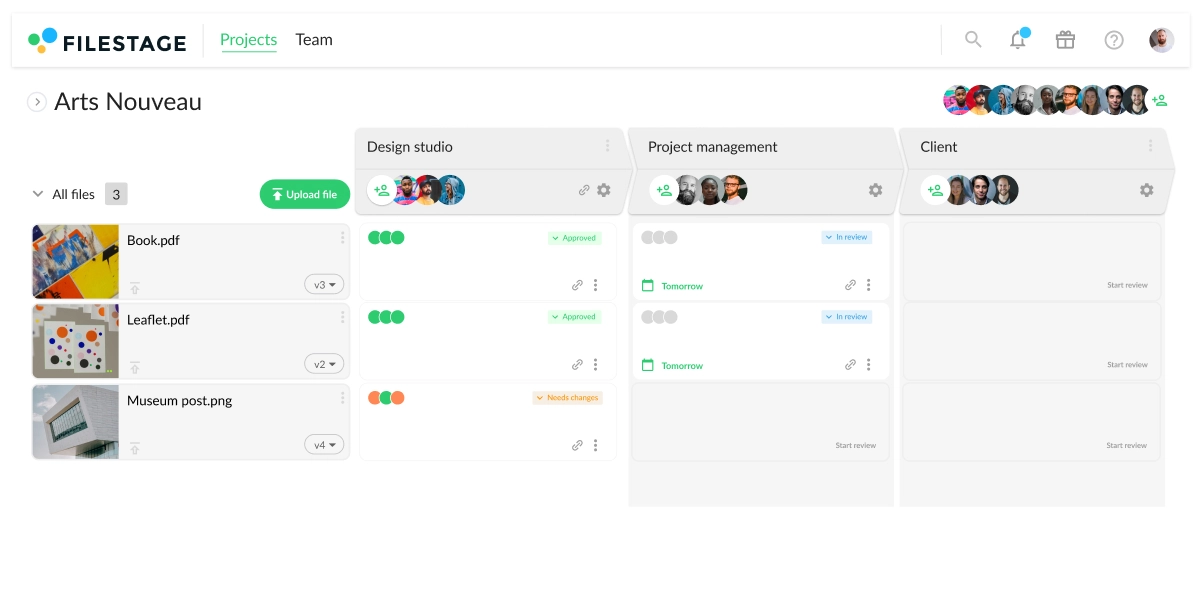
With Filestage, you’ll be able to organize your reviewers into review steps and collect everyone’s feedback and approval on top of the creative.
Here’s how you can organize review steps in Filestage to gather feedback from all stakeholders:
- Creative – for discussing creative execution and style
- Marketing – for checking content is accurate and aligned with your brand strategy
- Legal and compliance – for reviewing any claims that could put the company in hot water
2. Set due dates for feedback (and make sure your reviewers stick to them)
Once you have a deadline for the project, there is almost zero chance you can move it. To make sure you never miss one, we advise you to put due dates for each review step.
And most importantly, make sure that your reviewers stick to them.
By using Filestage as your creative approval software, you’ll be able to set a creative workflow for each review step. This way, you can get approval from the marketing and design department first and from compliance and legal afterward.
Your reviewers will receive reminders as they approach due dates for reviews and you’ll watch your projects successfully move across the finish line.
This is game-changing for creative project managers because it reduces costly delays in your content supply chain.
The best part is that you can save time and reduce errors by automating this kind of repetitive manual task in Filestage. And if you’re looking for more ways to scale up your creative approval process fast, these eight workflow automation examples will help.
3. Get feedback on all your file formats in one place
Collecting feedback from more than one person can quickly become exhausting in any project. But when we talk about creative work, this can especially be true with different file formats and ways of sharing each file.
Sharing all your creative assets with stakeholders in one platform and collecting constructive feedback on top of them will help you establish creative collaboration and get that creative approval faster. It will also speed up content feedback and improve your stakeholder management process.
When feedback is scattered across emails and different project management tools, it’s easy for comments to lose their context. Collecting structured feedback in one place helps teams avoid vague feedback and gives reviewers the relevant context they need to provide better suggestions.
This makes it much easier to manage feedback and keep the creative process moving forward.
Here are all file formats you can share in Filestage with your reviewers for faster approval:
- Documents
- Images
- Videos
- Audio files
- Live websites
- HTML Content
Cut feedback and approval time by 30%
92% of files get signed off in just two review rounds.
4. Tick off comments as you go to minimize review rounds
Can you think of anything more satisfying than ticking off comments and seeing the amount of feedback melt as you go through the file?
By having a clear overview of all resolved and unresolved comments from the feedback, you’ll have a more organized approval process and minimize review rounds. Content automation tools like Filestage make this much easier.
With Filestage, you’ll always clearly see your reviewers’ comments and have the opportunity to tick them as you resolve them. You can also reply to the comments if anything is unclear and make sure that all feedback always gets addressed.
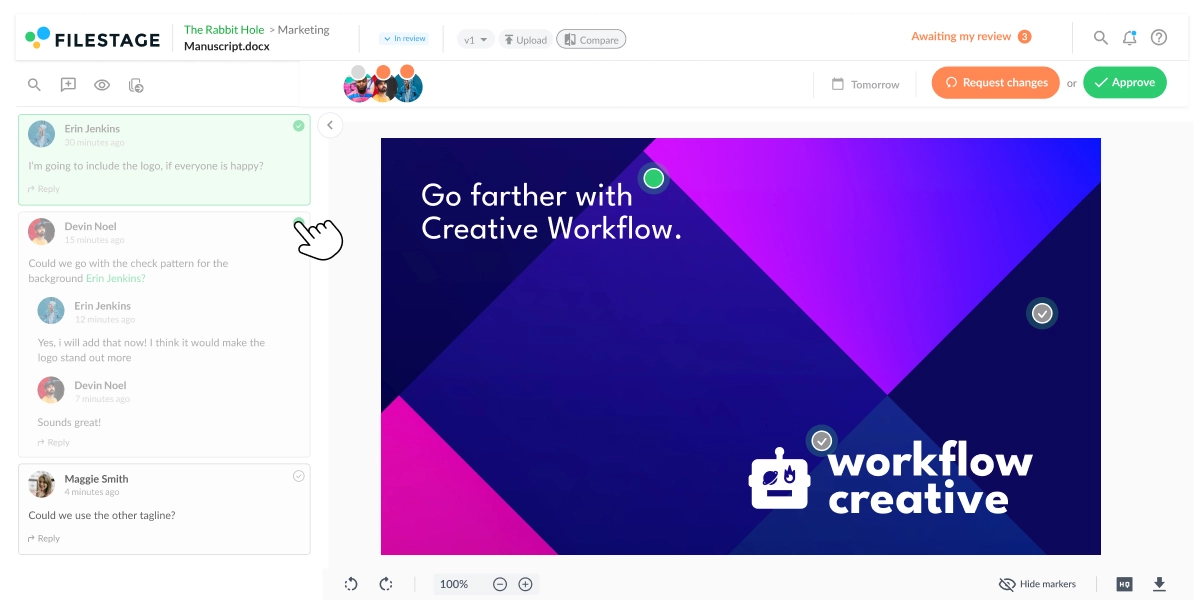
What’s best is that once the comment is resolved, they don’t just disappear, but you have the option to show and hide resolved comments at any time. This makes it easy for you and your reviewers to verify feedback and edits.
5. Keep versions organized so everyone knows which is the latest
Without a dedicated design approval software, one of the biggest issues you’ll face with creative approvals is a lack of document version control.
Tools like Google Docs are great when it comes to fast collaboration. But once everyone with access to the document starts making changes, it becomes difficult to track previous versions. Suddenly, everyone’s the copywriter, and the work turns into a mess.
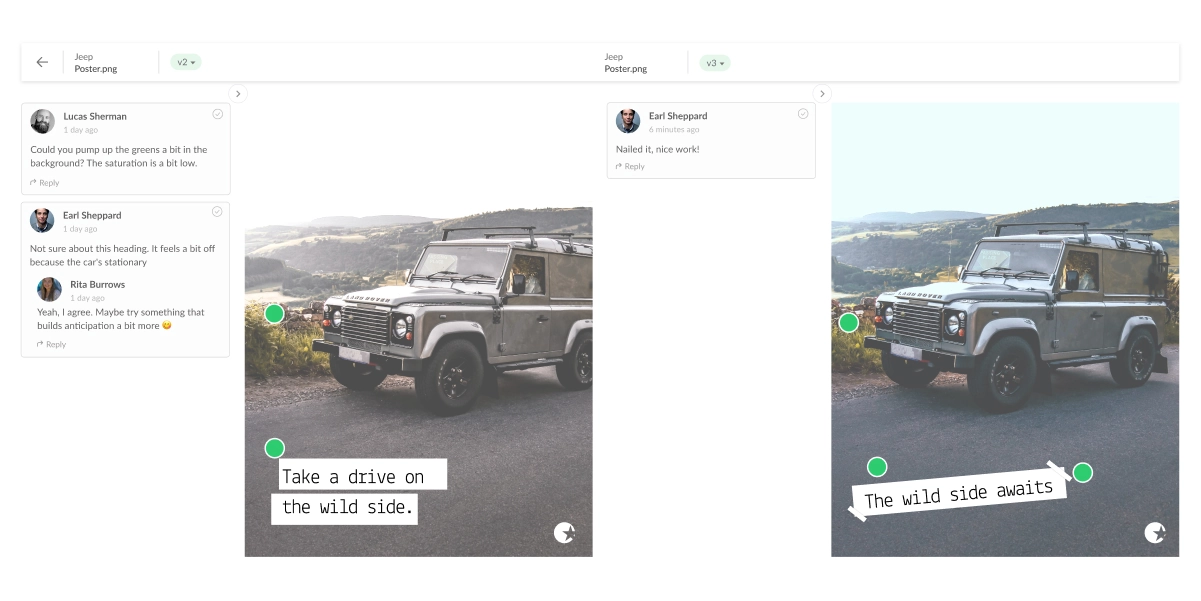
In Filestage, all your file versions are neatly organized in your dashboard. This file versioning makes checking out previous versions and feedback super easy.
Clear version tracking also helps teams identify bottlenecks in their approval workflow and keeps the entire creative workflow process running smoothly.
Here’s how Filestage version control improves your overall creative approval workflow and keeps your approval stages organized:
- Have an overview of constantly evolving files and every edit or resolved comment
- Know exactly where to draw the line between one version and the next
- Avoid having reviewers duplicate your file and make edits directly
- Make sure people don’t waste time giving feedback on the wrong version
6. Make it easy for reviewers to see what’s changed between versions
Understanding someone else’s creative work takes time and focus. That’s why being a reviewer and jumping from your regular tasks to reviewing someone else’s work can be more complex than it seems.
And let’s be honest, when did you last get anything approved the first time of asking?
But having the ability to check previous versions and get up to speed with any changes is a huge help.
Here’s how Filestage makes life easier for creative reviewers:
- Compare two versions side by side, including the comments, making it easy to verify the new version against your previous feedback.
- Click on any comment to jump to that part of the design, so you can review the new version faster.
- Choose which versions and comments you want to compare, even if it’s v1 and v7 – just to see how far you’ve come.
And a happy reviewer means a faster creative approval process for everyone!
7. Let reviewers give approval with a single click
Do you ever find yourself reading a client’s email and wondering, “Do I have your client approval or not?
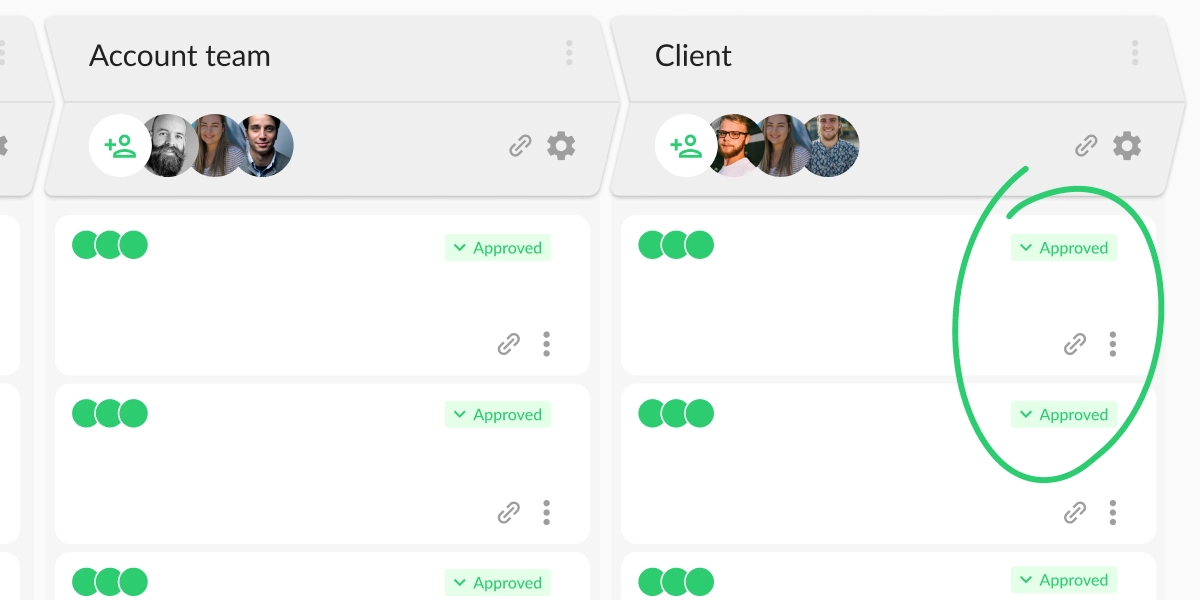
With Filestage approval tracking, you’ll always know when your content has passed all approval stages and has gotten the green light for publishing. At the same time, all reviewers will know what they approved and what still needs work.
Here are three ways approval tracking can help you:
- See which designs are ready to publish and which ones still need work
- Spot which reviewers are slowing things down by taking too long to give feedback
- Keep stakeholders accountable for the content they approve
In Filestage, you’ll see a status indicator for each reviewer in each review step. Here you’ll see whether reviewers approved your content, requested changes, or still need to take a look.
This clear approval status helps you quickly identify when final approval is given and when the work is ready for final sign off.
Need more help in standardizing your artwork approval process? Check out how to create an artwork approval form in six steps!
What is the creative approval process?
A well-organized creative approval process usually involves several review rounds with key stakeholders. Multiple team members need to review it, align their visions, and successfully collaborate to reach the final version and have everyone happy with the work.
Here’s everyone who you should include in each creative approval process:
- your immediate creative team
- other internal team members like marketing and legal departments
- external clients (if there are any)
Once everyone is satisfied with the result you’re all set to post, publish, or print your work with confidence.
How long does it take to get creative approval?
It can take anywhere from a few hours to several months to get creative approval – and it often takes longer in regulated industries like beauty or alcohol.
But by following our tips, like centralizing feedback and involving all the right people from the start, you can significantly cut down your creative approval time. The key to faster creative approval lies in great collaboration, and your creative approval software is here to help your team to make it happen!
And if you’re tempted to cut corners, these cosmetic advertising examples will quickly change your mind.
Final thoughts
To get the best out of your team, you need a fast and efficient creative project management and approval process in place. And for that, you need good team collaboration and a great design approval process to help you along the way.
If you want to give it a try at Filestage and see how it can help you improve your creative approval process, start a free trial →
FAQs
What is creative approval software?
Creative approval software helps teams review creative files, collect feedback, and manage approvals in one place. Instead of chasing comments across email and chat, teams can gather feedback directly on the work and move files through clear approval stages.
If you want to learn more, check out this guide to creative approval software.
Who is involved in the creative approval process?
The creative approval process usually includes the creative team, marketing stakeholders, and sometimes legal or compliance reviewers. In many cases, external clients also take part in the review. Each group typically participates in different approval stages before the work is finalized.
What are common challenges in creative approval?
Creative approvals often slow down when feedback is scattered across tools or when reviewers comment on outdated versions. It can also be unclear who is responsible for the final decision. A structured creative approval workflow helps teams centralize feedback and move projects forward faster.
How can creative teams speed up the approval process?
Creative teams can speed up approvals by involving the right people early, centralizing feedback, and defining clear approval stages. Using creative approval software also helps teams track versions, gather feedback faster, and keep the approval workflow moving.
What is a creative approval workflow?
A creative approval workflow is the structured process teams use to review and approve creative assets before publishing. It usually includes several approval stages where stakeholders review the work, provide feedback, and confirm it meets brand guidelines and project objectives.
Using a clear approval workflow helps teams streamline collaboration, maintain brand consistency, and move creative projects through the review and approval process faster.
How can creative teams manage feedback more effectively?
Creative teams manage feedback best when they collect structured feedback in one place instead of scattered emails or chat. When stakeholders can provide feedback directly on creative assets, it reduces vague feedback and helps teams keep track of approval status throughout the creative workflow process.