
Did you know that it only takes 0.05 seconds for a person to form an opinion about your website? That’s it. Just one-twentieth of a second to judge months (if not years) of your work on visual identity.
That’s why it’s so important to nail every aspect of your branding and make sure it represents everything you wish it would.
But building a strong and, even more importantly, consistent brand is no walk in the park. You need to consider numerous elements, align various stakeholders, and create comprehensive guidelines for everyone else to maintain the look and feel of the brand.
To help you achieve all these goals I’ll walk you through all the important steps you should take when creating and maintaining a cohesive visual identity.
But first, some basics.
Understanding visual identity
There’s no strong visual identity without a good understanding of everything it entails.
A brand’s visual identity is a combination of graphic elements that represent and identify a brand. It’s a crucial aspect of brand identity that helps you drive recognition and differentiate your brand from competitors. Plus, it helps you create lasting impressions on your target audience.
Here everything that falls under your brand’s visual identity:
- Logo
- Color palette
- Typography
- Imagery and iconography
- Brand patterns and textures
- Layout and composition
- Animations and motion graphics
- Packaging design
- Branded collateral
- Digital elements
- Signage and environmental design
- QR codes
Less review rounds, better designs
Get quick and clear feedback right on top of your designs with Filestage.
Six steps for building a strong visual identity
A strong visual identity is the backbone of any memorable brand. It creates consistency across touchpoints, builds recognition, and resonates with your audience.
Here are the six essential steps for crafting a successful visual identity that sets your brand apart.
1. Define your brand’s core values and personality
A solid visual identity starts with understanding your brand’s essence.
Ask yourself:
- What do we stand for?
- What emotions do we want to evoke?
- How do we want our customers to describe us?
By clarifying your mission, vision, and values, you set the foundation for a cohesive style.
Once this is clear, decide on the tone and personality that will guide your designs. Is your brand playful or professional? Bold or understated? These choices will influence everything from your logo to your typography, and make sure every visual reflects your unique identity.
2. Understand your target audience
Your brand exists for your audience, so it’s crucial to create a visual identity that speaks to them. As part of your brand strategy, research their preferences, expectations, and tastes. What colors, imagery, and styles resonate most with them?
For instance, a vibrant palette might appeal to a younger, energetic demographic, while a more muted, elegant design could attract a sophisticated audience. By aligning your visuals with your ideal customer, you’ll build a deeper connection and leave a lasting impression.
3. Involve all important stakeholders
You’ll need everyone involved in your brand’s journey to align if you want to build a strong visual identity.
This means that you need to establish good collaboration with key stakeholders, including:
- Marketing team
- Professional designers
- Leadership
- Product team
Making sure that everyone is on the same page will help you create a unique visual identity that reflects a unified vision and is easier to maintain.
One way to do it is by bringing all your stakeholders together in a single approval platform like Filestage. In Filestage, you can create a dedicated project for your visual identity, invite as many reviewers as you need, and even divide them into separate review groups to keep all the feedback focused.

Once you have everyone’s approvals and a unified visual identity, you can set up a brand consistency AI assistant to maintain consistency across all projects. But more on that later. 👇
Less review rounds, better designs
Get quick and clear feedback right on top of your designs with Filestage.
4. Define a consistent look across all visual elements
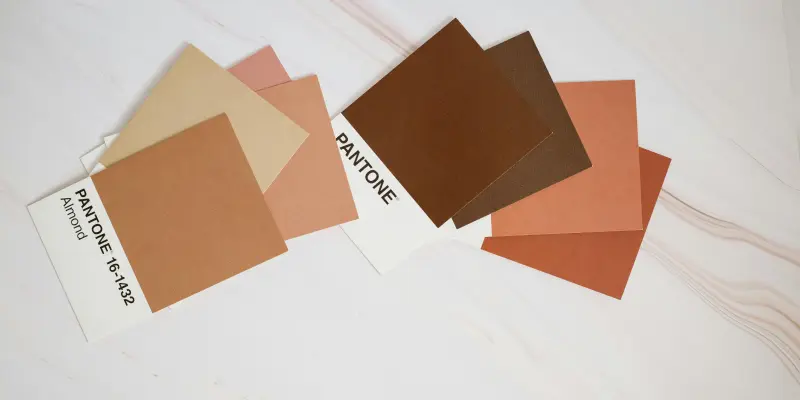
Consistency is the golden rule of a memorable visual identity. Start by choosing a distinctive color palette that represents your brand’s emotions and values. Sticking to a consistent palette can boost brand recognition by an impressive 80%.
Next, establish typography guidelines. Select two or three fonts that reflect your visual language and decide where and how each will be used. For instance, one font for headlines, another for body text, and a third as a decorative option – a handwritten font, for example.
Finally, boost your visual branding with consistent imagery and graphics. Define the style of photos, illustrations, or icons that best represent your brand. Whether it’s bold and minimalistic or intricate and artistic, your imagery should reinforce your identity.
5. Design a memorable logo
Your logo is the centerpiece of your visual identity – the first thing people associate with your brand. A great logo is simple, versatile, and timeless. One important thing to keep in mind is that it should work equally well on a billboard, a social media profile, or a business card.
Think of your logo as the visual summary of your brand’s personality. Does it communicate your values at a glance? If so, you’re on the right track.
Need some inspiration for designing your new logo? Check out our guide on how to establish a solid rebranding strategy.
6. Create a comprehensive brand style guide
A well-documented brand style guide is the glue that holds your visual identity together. Brand guidelines should include everything: your color palette, logo variations, typography, imagery, and layout guidelines.
By sharing the style guide with your team, you’ll make sure you’re consistently communicating your brand values across all touchpoints – whether it’s a website, social media post, or marketing brochure.
A cohesive identity builds trust and recognition, making your brand stand out in a crowded marketplace. And if you’re a small team without a dedicated designer, you may want to invest in an AI graphic design tool to make this process easier.
Check out these 13 best brand guidelines examples to inspire your next style guide.
Maintaining a consistent visual identity with Filestage
Creating a consistent visual identity is one thing, but maintaining it is a whole different story. That’s because, when you’re creating a brand identity, you’re working closely with the team that understands its value and is prioritizing it.
But once you need to spread the word across your entire organization and make sure all departments understand the importance of specific details to maintain brand consistency, everyone starts facing challenges. Even smaller organizations!
Here are the three examples of how Filestage helps you maintain visual consistency:
- Centralized feedback for design reviews
- AI assistant for automated brand consistency checks
- Version control and side-by-side comparisons
Centralized feedback for design reviews
With Filestage, you can upload design files, like logos, brand guidelines, or marketing materials, for centralized review and feedback. This means that you can have all your important stakeholders in one place, contributing to the final design.
Talk about an error-proof method for keeping all your assets on-brand.
AI assistant for automated brand consistency checks
Lately, we’ve seen AI mostly doing the creative part of the job. And the debate about creatives being replaced by technology is booming. But what if you could leave the creative process to humans, and delegate the tiring job related to approvals and consistency checks to AI? Sounds too good to be true?
Well at Filestage, we’re developing just that. Our AI assistants will let you check various aspects of your assets to make sure every element meets the mark.
Here are a couple of examples:
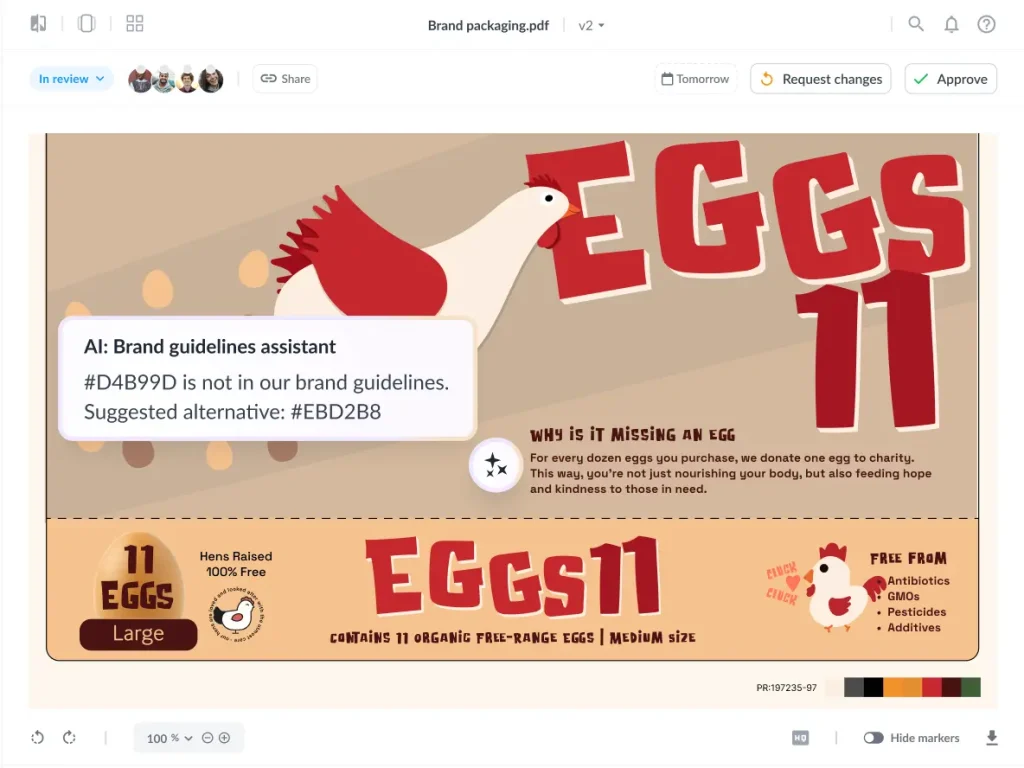
- Highlight any colors that don’t match your brand guidelines, helping to spot subtle mismatches that even the human eye can’t see
- Check that the correct food safety badges have been used on your packaging, so your reviewers can focus on the more artistic parts of the design
Version control and side-by-side comparisons
Detecting small details across various versions of the same file calls for making an error. Luckily, Filestage allows you to keep track of multiple versions of a file in one place.
All you have to do is use the side-by- side feature. This makes it easy to compare previous iterations with the latest designs and make sure that updates improve (or maintain) visual consistency instead of compromising it.
This feature helps your team refine all designs while staying true to the original concept.

Final thoughts
Having a strong visual identity is a big part of your brand. Visual identity plays a huge role in communicating your brand’s values, personality, and purpose to your audience.
I hope this guide helped you get a good feel for how to establish a unique visual identity. If you’d like to check how Filestage can help you maintain brand consistency, try it for free →