Do you remember the episode of Mad Men where Betty Draper stars in a Coca-Cola advertisement? As she’s holding her bottle of Coca-Cola, she asks the producer why there’s never a cap on the bottle.
The answer? A cap implies friction. The producer wanted drinking Coca-Cola to seem like the easiest thing in the world.
It’s this kind of customer-centric thinking that has allowed the brand to maintain its cult following for over 120 years and across 200 countries. Emotionally driven, consistent, and always fresh, Coca-Cola’s marketing strategy has been the secret to its success.
So let’s lift the lid.
In this case study, I’m dissecting the real-world tactics Coca-Cola uses to turn emotional resonance into results.
Who is Coca-Cola’s target audience?
When you’re a monolith brand like Coca-Cola, pretty much everybody is your target audience. And that’s why it relies on a clever marketing segmentation strategy.
The Coca-Cola company uses different products and marketing tactics to target different demographics based on age, location, gender, and income. Here’s a breakdown.
- Age – It targets young people between 10 and 35, and older adults who are diabetic or diet-conscious (promoting Diet Coke and Coke Zero)
- Geographical location – It uses localized marketing tactics to target different cultures and geographical locations across the globe
- Gender – It understands its audience and markets accordingly, eg, women tend to prefer Coke Light, while men prefer Coke Zero
- Psychographic – It uses behavioral segmentation to target consumers looking for happiness, connection, and convenience (you can buy a Coke almost everywhere on earth)
Supercharge your marketing reviews
Share content, get feedback, and manage approvals with Filestage.
What are Coca-Cola’s marketing goals?
Oh, to be a fly on the wall of a Coca-Cola strategy meeting. While we don’t know the exact marketing goals the brand is aiming for, we can deduce some of its core objectives. These include:
- Maintaining brand consideration with advertising, event sponsorships, influencer campaigns, and social media content
- Grow market share with continuous product innovation and tailored local strategies to facilitate international expansion
- Be at the forefront of culture by launching creative campaigns with strong, relevant, and fresh messaging
- Engage emerging audience segments like Gen Z or Gen Alpha with authentic messaging, influencer collaborations, and digital-first strategies
- Improve sustainability scores with initiatives like responsible sourcing, water conservation, and cause marketing
The four P’s of the Coca-Cola marketing strategy (+ a secret extra P)
Now we know who Coca-Cola’s target audience is, let’s get into the four Ps of its marketing strategy.
1. Product
There’s more to the Coca-Cola company than just Coke. It has a portfolio of 30 billion-dollar brands, including Sprite, Fanta, and Minute Maid. While they contribute a significant share of the profits, Coke remains the cornerstone brand.
Clever product diversification allows the Coca-Cola company to appeal to new trends and tastes, keeping the brand relevant.
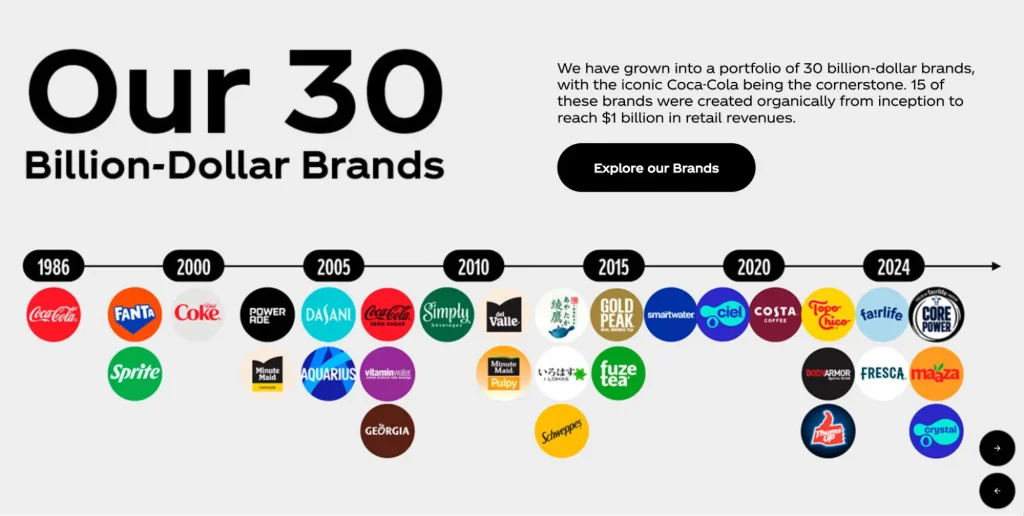
Source: The Coca-Cola company
2. Pricing
Coca-Cola kept its pricing the same (five cents) for almost 73 years. But with the competition snapping at its heels, it had to rethink its pricing strategy to keep up. Overall, Coca-Cola’s pricing strategy is consistent, never rising or dropping significantly.
3. Place
The Coca-Cola company has a vast distribution network that operates across six regions: North America, South America, Africa, Europe, the Pacific, and Eurasia.
It also has an extensive reverse supply chain network that collects leftover glass bottles to reuse. This saves the company money and resources.
One of the biggest secrets behind Coca-Cola’s marketing strategy is balancing global brand consistency with targeted, local marketing. We can see this in how the brand adapts campaigns and products to suit local cultures. For instance, Coca-Cola is sweeter in Asian markets because that segment has a sweeter tooth.
Another great example is the “Share a Coke” campaign, which includes personalized bottles with local names and languages.

Source: Coca-Cola store
4. Promotion
Coca-Cola reportedly spends upwards of $4 million a year to promote its brand. So, let’s take a look at some of its most used promotional marketing strategies.
- Content storytelling across digital platforms like Meta, YouTube, and X
- Sponsorship deals with high-profile events like its new three-year partnership with the Premier League
- Celebrity endorsements with influencers who align with its brand values – Coca-Cola has worked with everyone from Marilyn Monroe to Elvis Presley to LeBron James
5. Packaging
Back in 1915 (yes, that’s how old this brand is), Coca-Cola had a copycat problem. The competition was imitating the brand, and it decided that enough was enough.
So, the Coca-Cola Company gave a glass manufacturer from Indiana a big challenge: design a bottle so distinctive that it could be “recognized in the dark or when shattered on the ground”.
In other words, make the bottle so unmistakably Coca-Cola that consumers don’t even need to see a label to know what brand it is.
The designer, Earl R. Dean, accepted the challenge and created the iconic “hobble skirt” bottle. The design is apparently inspired by the curves of a cacao pod. Either way, it became the brand’s visual signature and a piece of pop culture.
Coca-Cola’s branding strategy
Coca-Cola’s brand strategy is based on emotional appeal. Creative campaigns like “Open Happiness” reinforce the brand’s fun and celebratory message.
And when it comes to branding and visual identity, I truly don’t believe anyone does it better. The red and white logo is iconic, the script font is easily recognizable, the bottle design is a pop culture artifact, and the global branding is consistent.
All of these assets tie into its emotional positioning as a symbol of joy.
The three marketing channels Coca-Cola prioritizes
When it comes to omnichannel marketing, Coca-Cola has got it down to a fine art. But even the biggest brands in the world need to prioritize channels that align with their goals.
Here are Coca-Cola is very active on these three channels.
1. TV ads
Television advertising is still a major channel for Coca-Cola for two reasons:
- It gives the brand mass reach
- It allows it to play into its strength – emotional storytelling
That’s why you’ll always see the iconic red and while logo during major events like the Super Bowl, the Olympics, or seasonal campaigns.
The most obvious example is the “Holidays are Coming” ad spots.
Got you thirsty for more? Check out our list of the best Coca-Cola ads.
2. Out-of-Home (OOH) advertising
You can go almost anywhere in the world, and you’ll see the Coca-Cola logo in the wild. Why? Because the brand dominates visual spaces, showing up on billboards, vending machines, bus ads, and print.
Despite being an expensive form of advertising, outdoor marketing is effective. Especially for big players like Coca-Cola with instantly recognizable brand assets.

Source: adsoftheworld
3. Experiential marketing
Coca-Cola’s marketing strategy is all about building deep emotional ties with its audience. And one way it achieves this is with experiential marketing plays like branded pop-ups, Christmas truck tours, and the World of Coca-Cola in Atlanta.
Experiential marketing is the perfect channel for creating lasting brand memories and turning customers into fans.
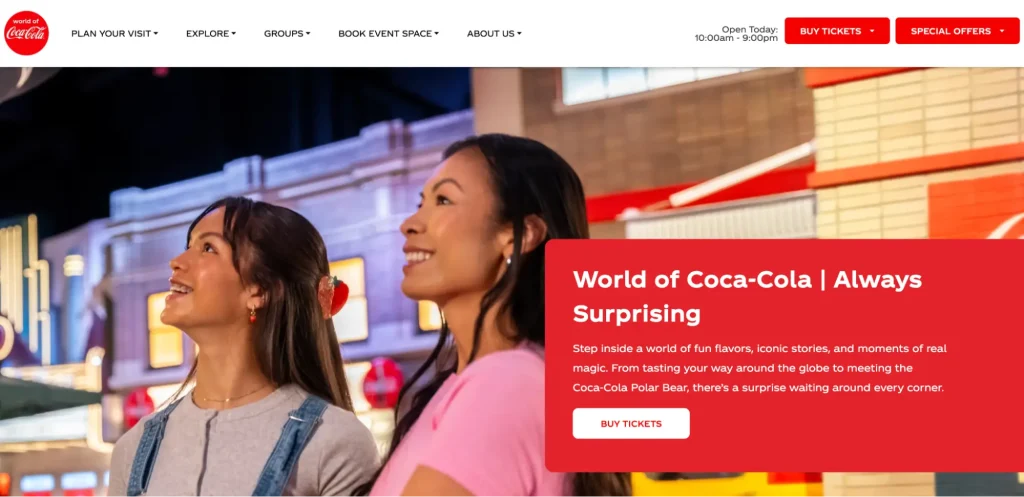
Source: World of Coca-Cola
Steal Coca-Cola’s marketing strategy
Your brand may not have Coca-Cola’s budget, resources, or legacy, but there are still some tricks you can steal to become more memorable to your audience. Here are some actionable plays to borrow from the Coke playbook.
1. Know your audience
The Coca-Cola company invests in deep market research to understand its customers’ preferences, behaviors, and demographics. It also uses this to keep track of emerging trends.
And the more you can understand your customers, the better you can tailor your messaging and offers (like Coca-Cola does).
2. Build a consistent brand
You don’t need a custom-designed bottle or font to build a strong visual identity. But you do need to be consistent. Once you have developed a visual identity that aligns with your core values, make sure every touchpoint fits with your brand story.
Maksym Zakharko collaborated on a project to promote the Coca-Cola app for Android as part of a regional campaign in Eastern Europe. He also worked on a DOOH campaign for Coca-Cola, launched in Poland. I asked him what he learned from the experiences.
Despite the strict controls, Maksym says working with Coca-Cola’s brand book was a fantastic creative experience.

“It demonstrated how creative freedom can still flourish within a clearly defined framework and reaffirmed the importance of structure in brand storytelling.”
3. Balance brand consistency with creative risk
When you have an impeccable brand governance process in place, you can afford to take some creative risks. That’s how Coca-Cola has stayed relevant for over a century. It knows when to take risks.
You can steal this strategy by coming up with bold ideas within a clear brand framework. This gives enough room for creative freedom while making sure every campaign asset reinforces your core identity.
Alex Cornici has collaborated closely with the Coca-Cola marketing team in the past. One of the standout lessons for him was how to strike that balance between creative risks and brand consistency.

“In one project, for instance, we worked on an ad that blended traditional Coca-Cola imagery with modern, digital art techniques. It was a dance between keeping it recognizable, but also fresh and engaging. Their team was super open to new ideas but always mindful of how it aligns with their broader brand message.”
4. Choose clarity over cleverness
Have you ever noticed that Coca-Cola’s most successful campaigns are actually very simple? It never overcomplicates its message. Instead, it focuses on hitting us right in the feels.
Josiah Roche worked on a regional Coca-Cola campaign through JRR Marketing, targeting Gen Z across Asia Pacific. He points out just how difficult it is to make things simple.

“Every campaign starts from one core emotion, usually joy or belonging, and the creative stays tightly aligned. So nothing gets overcomplicated. I once pitched a multi-layered concept involving influencers and cross-platform storytelling. It was shut down quickly. Their global lead said, ‘If someone has to decode it, we’ve already failed.’ That line stuck with me. Because clarity always wins over cleverness.”
Coca-Cola builds campaigns around universal truths and identity marketing, so people can see themselves in the product.
Josiah says that’s one of the brand’s biggest strengths, “That’s where Coca-Cola really excels. Everything feels light, but it’s built on layers of strategy. It’s engineered to feel human.”
5. Sell a feeling, not a product
Like Coca-Cola, the best way to get your audience to connect with your brand and remember you is to anchor your messaging in core emotions. That could be joy, belonging, or even nostalgia.
Then, make sure every content piece reinforces that emotional connection.
According to Seth Gillen, owner of Sierra Exclusive Marketing, what sets Coke apart is its “emotional architecture” approach. It doesn’t sell a drink, it sells moments and feelings.
And he believes this unified emotional experience is what builds the kind of brand loyalty that makes people choose Coke even when Pepsi is cheaper.

“The key lesson from Coke’s approach is consistency in emotional messaging across all touchpoints. Every piece of content reinforces the same core feeling, whether it’s a Super Bowl ad or a local store display.”
6. Build a meticulous review process
Consistency is one of the building blocks of the Coca-Cola brand. And Maksym Zakharko saw that firsthand while collaborating on campaigns. Here’s what he had to say about the experience.
“Coca-Cola’s meticulous creative process was evident in both projects. Every component, no matter how minor, required the client’s direct approval. Their stringent adherence to brand guidelines, legal copy, visual treatment, and tone of voice helped me better understand the discipline that underpins the brand’s worldwide consistency.”
And the best way to build a structured review process? Invest in online proofing software like Filestage.
Filestage centralizes creative reviews, unifying every feedback comment, asset, and version in one dashboard. That makes it easy for your team to make sure every creative asset is on brand and flawlessly executed.
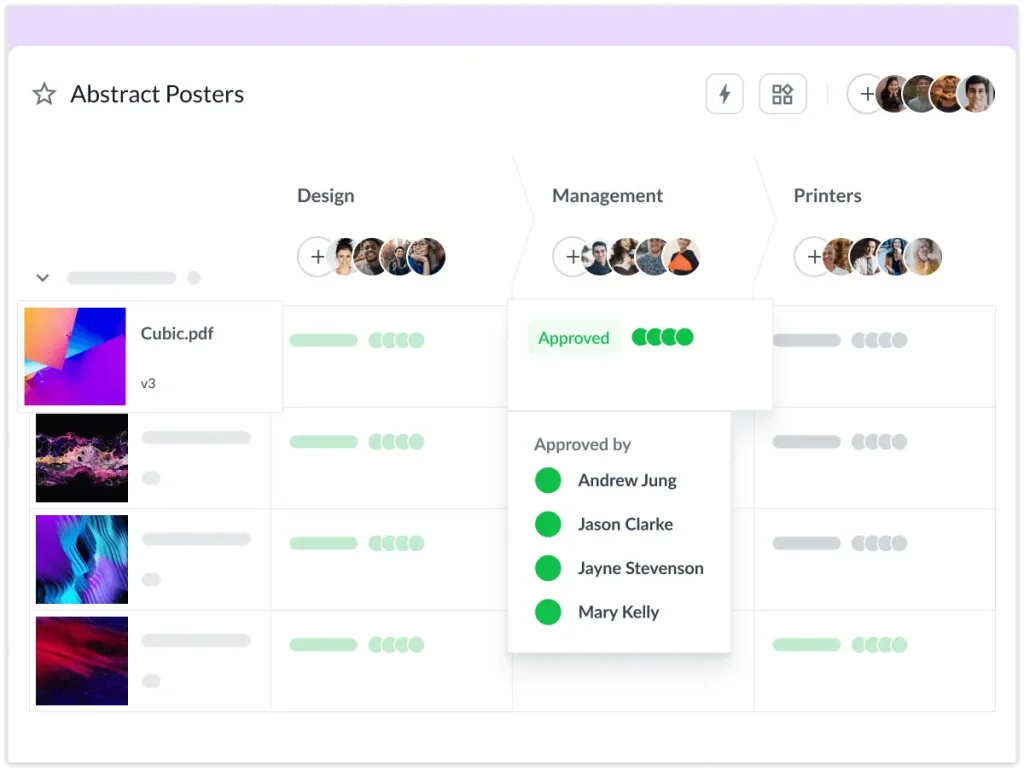
Here’s how your review and approval workflow would look in Filestage:
- Upload assets to the project dashboard
- Set up review groups that align with your workflows
- Invite stakeholders to review the asset by annotating the file directly
- Turn feedback comments into to-do lists for faster execution
- Upload V2 and compare side-by-side to make sure all feedback is executed
- Hit approve
This workflow doesn’t just keep your brand consistent, it also saves you a lot of time.
Filestage is five times faster than email-led reviews, and our customers report saving as much as $400 per asset reviewed on our platform compared to email.

“Filestage has reduced our team’s daily email inbox by roughly 25-30% [so now] we can focus on other important tasks for the day.”
Supercharge your marketing reviews
Share content, get feedback, and manage approvals with Filestage.
Was this a fail in the Coca-Cola marketing strategy?
I’ve mentioned it once or twice already, but Coca-Cola’s “Holidays are Coming” ads are a huge cultural touchpoint. They make us feel nostalgic, excited, (and if you’re like me, horrified that it’s that time of year again).
But in 2024, Coca-Cola made a bold move and tampered with a beloved ad format. Yes, I’m talking about the AI version of the Christmas ad.
Some loved it. Some didn’t notice. And many were horrified. How can a brand built on emotional messaging recreate one of the most-loved campaigns with AI? Either way, it got us talking.
As usual, Coca-Cola was out in front. It anticipated the rise of AI and became one of the first major brands to launch an AI campaign. It took a creative risk without losing the brand’s visual identity.
But I’ll leave you with the bigger implications of this. As more brands use AI to generate campaign assets, the creative review process is more important than ever.
How is your brand getting ahead of this? I recommend investing in Filestage.
You can set up custom workflows to keep every asset consistently on-brand, including a thorough review process for AI content.
Get Coca-Cola level brand consistency with Filestage
Coca-Cola’s marketing strategy helps keep a century-old brand feeling fresh and exciting. And while you may not be able to match it in resources or brand consideration, there’s a lot to learn from its playbook. I hope this case study has given you some ideas on where to start.If brand consistency is one of your big concerns, try reviewing your next creative campaign in Filestage. Start a free trial today.