TL;DR
Digital brand management has evolved from simple file storage into a strategic engine for growth and trust. By centralizing assets in a digital asset management (DAM) platform and integrating dedicated approval tools like Filestage, brands can automate high-volume workflows while maintaining strict human oversight. This combination ensures that every asset, from social media posts to global video campaigns, is instantly discoverable via tagging, fully compliant through downloadable audit reports, and perfectly aligned with your visual identity before it ever reaches the public.
Why digital brand management matters across every channel
From your website and social posts to your marketing emails and digital ads, every piece of marketing content you share shapes how people see your brand. But with so many digital channels and multiple platforms, it is easy for your brand assets and other digital assets to feel scattered or inconsistent, especially when creative teams and marketing teams are creating content in silos.
Recent branding research from 2025 found that companies that maintain brand consistency across channels can see revenue increases of up to about 23 percent, and around two-thirds say consistent branding added 10 to 20 percent growth to their revenue, which is why more teams rely on digital brand management tools, digital asset management platforms, and other leading solutions to maintain brand consistency at scale.
In this guide, I’ll walk you through exactly what digital brand management involves, why it’s so important, and how to put it into practice. You’ll also find some of the best tools to help you keep your brand assets aligned and your content on-brand across every digital channel.
Let’s dive in!
What is digital brand management?

Digital brand management is the process of shaping and controlling how your brand appears and behaves across all digital channels. It’s about making sure every single bit of online activity aligns with your brand’s identity and values.
Digital brand management typically focuses on four key areas:
- Visual identity – includes your logos, fonts, color palette, imagery, and overall design style. It’s what makes your brand instantly recognizable across all platforms.
- Tone of voice and messaging – is the way your brand communicates, from the words you choose to the emotions you evoke. This shapes how people connect with your brand.
- Content strategy – includes what you publish, where you publish it, and why. A strong strategy helps you show up consistently with content that aligns with your brand purpose and your audience’s needs.
- Online reputation – how your brand is perceived in the digital space, from reviews and testimonials to social media mentions and search results. It’s the part of your brand you don’t fully control, but can still manage carefully.
In short, digital brand management is all about consistency. When all the moving parts of your brand work together – visually, verbally, and strategically – you create a cohesive experience that’s easy to recognize and hard to forget.
Why is digital brand management important?

Your brand is one of your most valuable assets. But without the right systems in place, it’s easy for things to slip.
Here’s why digital brand management is essential.
It builds recognition and trust with your audience
People are more likely to remember (and choose) a brand that feels familiar. When your logo, colors, tone, and values show up consistently across all your digital channels, your audience starts to recognize you. That recognition builds trust over time, making customers feel more confident in what you offer and more likely to invest in your products or services.
It keeps your brand aligned across teams and regions
Whether you’re a startup with a small digital marketing team or a global business with dozens of departments, brand consistency can get tricky. Different people create content. Different digital platforms have different requirements. Without a solid digital brand management strategy, it’s easy for things to go off-brand fast.
A clear and accessible brand framework helps everyone stay on the same page – from your sales team and your social media managers to your external partners.
It protects your brand reputation
Online reputations are fragile. Cancel culture is rife. And just one off-brand tweet or tone-deaf email can spread in seconds and damage years of brand-building. Ouch.
With effective digital brand management, you can put the right guidelines in place to avoid these kinds of missteps. You can also monitor the conversation around your brand in real time to catch issues early, respond quickly, and protect your reputation before things spiral.
It boosts efficiency
When your team knows exactly what’s on-brand and where to find approved assets, everything runs more smoothly. There’s less confusion, fewer last-minute edits, and way more headspace for creative thinking. Instead of wasting time fixing inconsistencies or chasing feedback, your team can focus on producing high-quality content that continues to bring your brand story to life.
See how Filestage can speed up your approvals
Enjoy a free, 30 minute consultation with our experts, tailored to your team and use cases.
It enhances the customer experience
From your website and your app to your email campaigns and social posts, every digital interaction should feel like it’s coming from the same brand. That kind of brand governance creates a smoother, more enjoyable customer journey and increases the chance that people will come back for more.
Six digital brand management best practices

Digital brand management isn’t just about making things look good. It’s about building systems that keep your brand consistent, scalable, and ready for anything.
Here are six key strategies to help you do just that:
1. Develop clear brand guidelines
Your brand guidelines are the foundation of everything. They outline how your brand looks, sounds, and feels – from your logo and color palette to your tone of voice, writing style, photography, and more. The clearer your guidelines, the easier it is for your team (and any external partners) to stay on-brand.
Here are my top tips for your brand guidelines:
- Make your guidelines easy to access and user-friendly
- Include real examples, not just rules, so that anyone accessing them can clearly see how to implement them
- Remember that brand guidelines are living documents, so you should update them as your brand evolves
Need inspiration? Check out Starbucks’ brand expression guidelines. They cover everything from logo usage to brand voice, using examples to illustrate each best practice.

Source: Starbucks
2. Align your internal teams
Even the best brand guidelines won’t work if no one knows about them. That’s why education and alignment matter. Everyone involved in creating content or interacting with customers should understand your brand’s identity and feel confident representing it.
That includes:
- Marketing teams – To keep messaging, tone, and visuals consistent
- Designers and content creators – To ensure every asset reflects your brand identity
- Sales and customer service teams – To stay aligned with your brand’s tone and values in every interaction
- Product teams – To reflect your brand across product design and UX
- HR and internal comms – To make sure your brand is lived both internally and externally
To make sure everyone understands the importance of brand consistency, you can run onboarding sessions for new hires, host regular refreshers, or create short video walkthroughs. The clearer you make it, the more brand ownership will feel like a shared responsibility.
3. Create a centralized hub for your brand assets
When your brand assets are scattered across email threads, cloud folders, and hard drives, things get messy – there’s no two ways about it. A digital asset management system (DAM) solves that. It acts as a central hub where everyone can find the latest logos, templates, brand images, and approved copy.
Most DAM systems include features like smart search, version control, and permission settings, so users can easily locate assets, be confident they’re working with the most up-to-date files, and control who has access to what.
Not only does this save time, but it also reduces errors. That means your team always uses the right assets, no matter what they’re working on.
4. Establish a clear review and approval process
Review and approval are a fundamental part of digital brand management. Creating a structured process for reviewing and approving content before it’s published helps prevent inconsistencies and errors from slipping through the cracks.
That’s where tools like Filestage come in.
With Filestage, you can create a clear, collaborative approval workflow so that every piece of content is reviewed and approved by the right people before the public sees it. Plus, it helps you ensure brand compliance for each piece of content that goes live.
How to review content with Filestage
- Sign up for Filestage for free
- Create a project folder, give it a name, and upload files in any format
- Invite reviewers and collaborators, or send them a link to the project
- Let collaborators add feedback and suggestions in the comments
- Upload new file versions as needed, and mark approved when ready
It’s that simple!
See how Filestage can speed up your approvals
Enjoy a free, 30 minute consultation with our experts, tailored to your team and use cases.
5. Regularly audit your digital performance
Even with great processes in place, it’s easy for inconsistencies to creep in over time, especially across large teams or multiple markets. That’s why regular brand audits are a smart habit to get into.
Set a schedule to review key digital touchpoints like your website, social channels, email templates, and ads. Look for off-brand visuals, outdated messaging, or discrepancies in tone. Then flag them for update or replacement.
This ongoing maintenance keeps your brand sharp, aligned, and relevant.
6. Stay flexible as your brand evolves
Brands aren’t static, and your guidelines shouldn’t be either. As your business grows, enters new markets, or refines its positioning, your brand identity may need to evolve too. The key is to make sure those changes are rolled out thoughtfully, with clear communication and documentation so that everyone affected is kept in the loop and up to date.
Top five digital brand management tools
Mastering digital brand management is infinitely easier with the right tools. From organizing your brand assets to streamlining feedback and keeping tabs on your brand’s online presence, the right stack can save time, reduce errors, and protect your brand’s integrity.
Here are some of the most helpful digital brand management tools to support your strategy:
1. Frontify – best for digital brand asset management

Frontify is an all-in-one brand management software that helps teams stay consistent, organized, and on-brand as they grow. It acts as a central hub for all your digital assets – from logos and brand colors to templates and design elements – making it easy for everyone to find what they need, when they need it.
This user-friendly platform also supports the creation of digital brand guidelines, so your rules around tone, visuals, and usage are always clear and accessible to everyone who needs them.
Frontify alternatives
- Bynder
- BrandMaster
- Brandworkz
2. Filestage – best for review and approval workflows

Whether you’re reviewing social graphics, product videos, or presentations, Filestage gives you one central hub to manage feedback and content versions. That helps you stay aligned, speed up approvals, and make sure every piece of content consistently reflects your brand.
Here’s how Filestage helps your brand or agency:
- Customized approval workflows – Make sure every piece of content is reviewed by the right stakeholders at the right time
- Workflow automation – Reduce manual tasks and speed up content reviews
- Project dashboards – Keep track of who you’re still waiting to hear from
- In-context comments – Get clear feedback that shows up in real time
- Version control – Keep assets organized, so that only the most current version is used
- Integrations – Connect Filestage with Dropbox, Google Drive, Slack, Microsoft Teams, and more
- 256-bit SSL file encryption – Securely share files both internally and externally

“We don’t force anyone in the team to use Filestage. Yet, everyone sees its value and is happy to use it.”
See how Filestage can speed up your approvals
Enjoy a free, 30 minute consultation with our experts, tailored to your team and use cases.
3. Notion – best for organizing your brand playbook

Notion is a flexible workspace that helps teams document and share everything from tone of voice guidelines to campaign calendars and brand values. You can use it to create a living brand playbook that evolves with your business. All in one beautifully structured, easy-to-navigate space.
It’s perfect for aligning teams across departments, onboarding new hires, and making sure everyone has access to the knowledge they need to represent your brand with confidence.
Notion alternatives
- Confluence
- Coda
- Slite
4. Adobe Express – best for creating on-brand content quickly
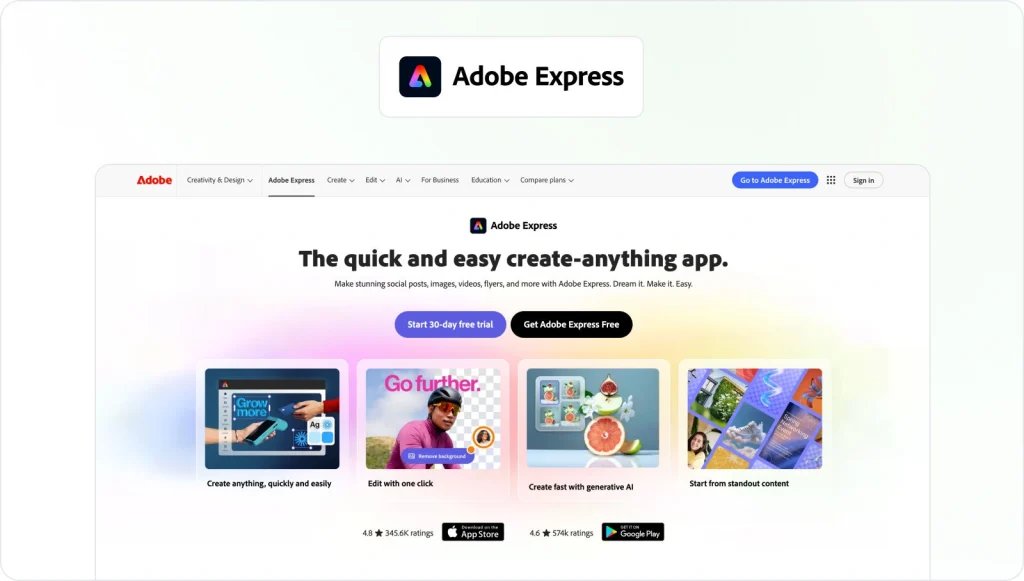
Adobe Express is a lightweight design tool that makes it easy for teams to create professional, on-brand visuals – even without design experience. You can upload your existing brand assets, set up brand kits with your logo, fonts, and colors, and give every design a consistent look and feel.
Whether you’re starting from scratch or working from a shared library, Adobe Express helps you create branded content in a fraction of the time. It’s a great option for fast-moving teams who want to produce high-quality content without relying on a full design team.
Adobe Express alternatives
- Canva
- VistaCreate
- RelayThat
5. Brand24 – best for brand monitoring and online reputation management

Brand24 helps you keep an ear to the ground by tracking online mentions of your brand across websites, blogs, forums, and social media. You’ll get real-time alerts and sentiment insights, so you can respond to feedback quickly, spot potential issues, and protect your brand’s reputation before problems escalate.
Brand24 alternatives
- Mention
- Meltwater
- Sprout Social
Optimize your digital brand management process with Filestage
Digital brand management is essential for building brand loyalty and maintaining a strong, consistent brand identity across all your digital marketing channels. By putting the right tools and processes in place, you can make sure every piece of content reflects your brand at its best and is free of potentially damaging mistakes.
If you’d like to see how Filestage can help you keep all your digital assets on brand, you can start a free trial here.
FAQ
What are the important features you should look for in a digital asset management tool for brands?
The best digital asset management tools for brands make it easy to store, find, and control brand assets in one place. A strong digital brand management tool should offer centralized asset storage, access controls, and version control, plus good search and simple sharing with external partners, so every market works from the same approved files.
What criteria matter most when evaluating digital brand management tools for managing large volumes of digital assets?
For large teams, digital asset management software needs to do much more than basic file storage. Start with robust asset management, including version control, access controls, and rights management. Then look at advanced search capabilities, key features, automated tagging, and taxonomy management so people can actually find brand assets and other digital assets fast.
A user-friendly interface also matters, so creative and marketing teams actually adopt the tool in their daily workflows. Integrations with online proofing tools, content management systems, and other software are essential, since assets often flow into marketing platforms and multiple digital channels. Finally, confirm reporting tools, workflow automation features, and permission settings support your creative operations and strategic growth at scale.
When should a brand invest in a DAM platform instead of relying on shared drives?
If teams keep reusing outdated files or asking where the latest logo lives, shared drives are already costing time. Digital asset management platforms make sense once you have multiple locations, external partners, or frequent campaigns across marketing channels. A centralized platform allows organized asset storage, clear permissions, and consistent asset sharing when distributing digital files. Unlike standard folder structures, these tools eliminate rework by providing version control and definitive ownership, ensuring teams always use the most current file.
How to improve search capabilities in digital brand management tools?
To improve search, replace manual folder-based navigation with a unified taxonomy and automated tagging. A structured taxonomy creates a “shared language” for your brand, categorizing assets by campaign, region, or usage rights so users can filter by attribute rather than guessing a file’s location. By leveraging AI-driven automated tagging, you can attach metadata to rich media and audio files at scale, ensuring they are instantly discoverable upon upload. This combination eliminates “shadow branding” and costly rework, allowing teams to find approved, version-controlled assets in seconds.
How can you run approval workflows with external stakeholders using digital brand management tools?
You can run approval workflows with external stakeholders by integrating your digital brand management tool or DAM with online proofing software like Filestage. Simply upload new files to Filestage to manage the review and approval process, where internal and external stakeholders can leave precise, time-stamped feedback and approve assets in one place. Once the content is approved, the final versions are automatically synced back to your DAM, ensuring only approved assets are stored and shared. This creates a seamless, controlled workflow without relying on email or manual file transfers.