
If you’re a practical and problem-solving people person who thrives in a creative environment, a creative project manager role could be right up your alley.
So whether you’re stepping into this exciting role for the first time or just curious to know more about creative project management, you’re in the right place. Because in this article, you’ll learn the ins and outs of what it’s like to be a creative project manager, including the key responsibilities and how to succeed in the role.
Let’s jump right in.
What is a creative project manager?
In the simplest terms, a creative project manager’s job is to make sure marketing and advertising projects run smoothly from conception through to completion.
They oversee the planning, execution, and delivery of campaigns while meeting deadlines and staying within budget. This means a large part of their day-to-day is spent collaborating with folks in the creative team like art directors, copywriters, graphic designers, photographers, and videographers.
Every creative project management role will look a little different. But the primary goal is to bring order to the creative process through organization, adaptability, and a solution-focused mindset.
What are a creative project manager’s key responsibilities?
One of the best things about being a creative project manager is the variety. You can be sure that once you step into this role, no two days will be the same. Which can make for a rewarding and exciting career.
Here are the six key responsibilities of a creative project manager:
- Managing client relationships
- Project planning and coordination
- Timeline and budget management
- Allocating creative resource
- Cross-team collaboration
- Quality control
Let’s take a closer look at a creative project manager’s responsibilities!
1. Managing client relationships
As a creative project manager, one of your top priorities is to bridge the gap between creatives and clients. This involves acting as the main point of contact for clients, keeping them updated on project progress, addressing their feedback, and making sure their business objectives are met.
Building strong relationships with clients is crucial for understanding their business requirements, so get ready to make the most of those sharp interpersonal skills.
2. Project planning and coordination
Creative project managers also play a key role in planning each marketing project. This could be creating project workflows, defining objectives with clients, and sometimes even writing creative briefs.
Communication and organizational skills will help you thrive as a creative project manager, as you’ll need to coordinate with your creative team to make sure they know their individual role as well as the key objectives they need to achieve for clients.
3. Budget and timeline management
Creative project managers are often responsible for project scope. This involves working with stakeholders to agree on a project budget and making sure the work delivered can be produced within that figure.
Timelines also need to be met, of course. So project managers usually need to create (and enforce) project timelines by breaking the project into smaller tasks.
4. Creative resource allocation
Effective resource allocation ensures that every task is handled by the best-suited person on the project team. Which means creative project managers need to be able to identify the strengths and current workload of each team member to guarantee the highest quality of work.
Sometimes, creative resource allocation can also mean working with freelancers, external agencies or a production team when a project calls for extra expertise.
5. Cross-team collaboration
Creating marketing content demands collaboration across multiple different departments. Which is why creative project managers need to facilitate seamless interaction and cooperation between various creative and non-creative teams.
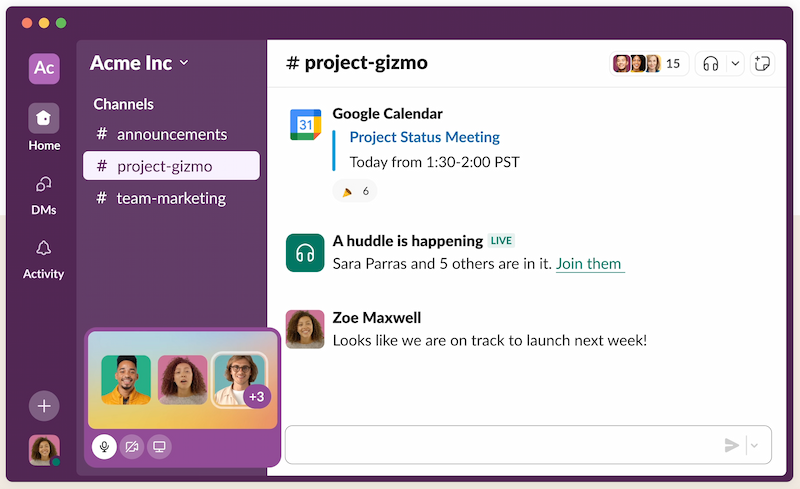
Organizing regular check-ins, sharing project updates, and making sure everyone has access to the tools and information they need will help you create a more collaborative project workflow.
6. Quality control
Creative project management is all about hitting that sweet spot between creativity and structure. So as a creative project manager, it’s your responsibility to establish processes for quality control across projects while allowing for creative expression.
By quality control, I mean setting up a creative review process, managing internal and client feedback, and ensuring that the final deliverables meet (or ideally, exceed) client expectations. This requires a highly organized and detail oriented approach.
See all your project’s feedback in one place
Bring files, versions, feedback, and approvals together with Filestage.
How to be a great creative project manager
Creative project managers play a crucial role in the creation and delivery of impactful work. And while every creative project manager has different strengths and strategies, there are a few key things that will help you succeed in the role.
Here are some of the essential skills and qualities you’ll need to be an exceptional creative project manager.
Hone your leadership skills
Creative project managers need to lead teams from the start of a project through to the very end. They coordinate with team members and plan out the workload, setting deadlines and ensuring that the project is delivered on time while meeting needs of the client.
This means you’ll need to be skilled in both verbal and written communication, along with conflict resolution and effective negotiation skills. What’s more, great creative project managers are able to motivate teammates and energize the creative process.
Be flexible in the face of challenges
The creative industry is fast-paced and ever-changing with new trends, last-minute changes, and unexpected project demands being the norm. So adaptability and flexibility are crucial for a creative project manager.
Being flexible will allow you to pivot strategies and processes to meet evolving project requirements. This is key to keeping your team resilient and capable of delivering relevant and effective solutions, regardless of the challenges that arise.
Deepen your industry knowledge
Understanding your industry is a must if you want to succeed as a creative project manager. By knowing as much as possible about the creative industry, you’ll be able to make informed decisions, communicate with clients and stakeholders, and allocate your team’s resources more effectively.
Staying updated on industry developments also allows you to bring fresh ideas and innovative solutions to your projects, keeping them relevant and competitive.
Be creative
The beauty of being a creative project manager is that you get to put your eye for organization to good use while taking a creative approach to projects.
As a creative project manager, you’ll need to think outside the box in order to make the most of your team’s skills while sticking to budgets and timelines and keeping your clients happy. You might also be expected to share ideas on how to approach and improve creative projects.
All in all, using your creativity will help you support your team and deliver the best work.
Familiarize yourself with project management software
By now, we’ve established that being a creative project manager comes with a lot of different responsibilities and tasks to take care of. Thankfully, there are lots of time-saving creative project management software to help them stay on top of their work.
Want to know the top tools creative project managers use for creative content production?? I got you.
Top three tools for creative project managers
1. Asana — top tool for assigning tasks
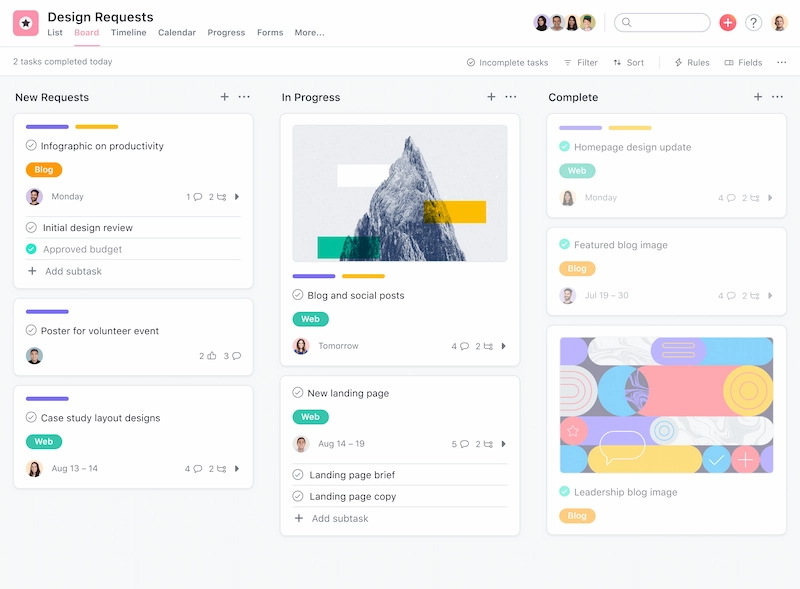
Asana is one of the most popular project management tools out there, designed to help busy teams plan projects of every shape and size.
The tool comes with a range of intuitive features that let you break projects down into smaller tasks and assign roles to the best-suited members of your team. Overall, Asana makes it easy to track task progress and collaborate on projects for more productivity across the board.
2. Filestage — top tool for reviewing creative assets

As a creative project manager, you’ll soon see that project reviews can take up a large chunk of everyone’s time and energy. Which is why so many creative agencies and marketing teams opt for Filestage.
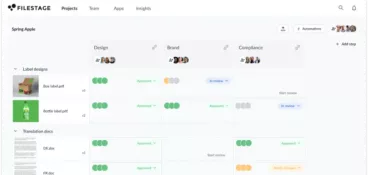
Filestage is an online proofing software that streamlines your creative review process by making it easy to share and review files with teammates and clients alike.
Real-time comments, custom workflows, and documented version control are just a few of our most popular features. The platform supports all the most common file types too, so no matter the project, Filestage puts back-and-forth feedback in the past.
See all your project’s feedback in one place
Bring files, versions, feedback, and approvals together with Filestage.
3. Wrike — top tool for creative collaboration
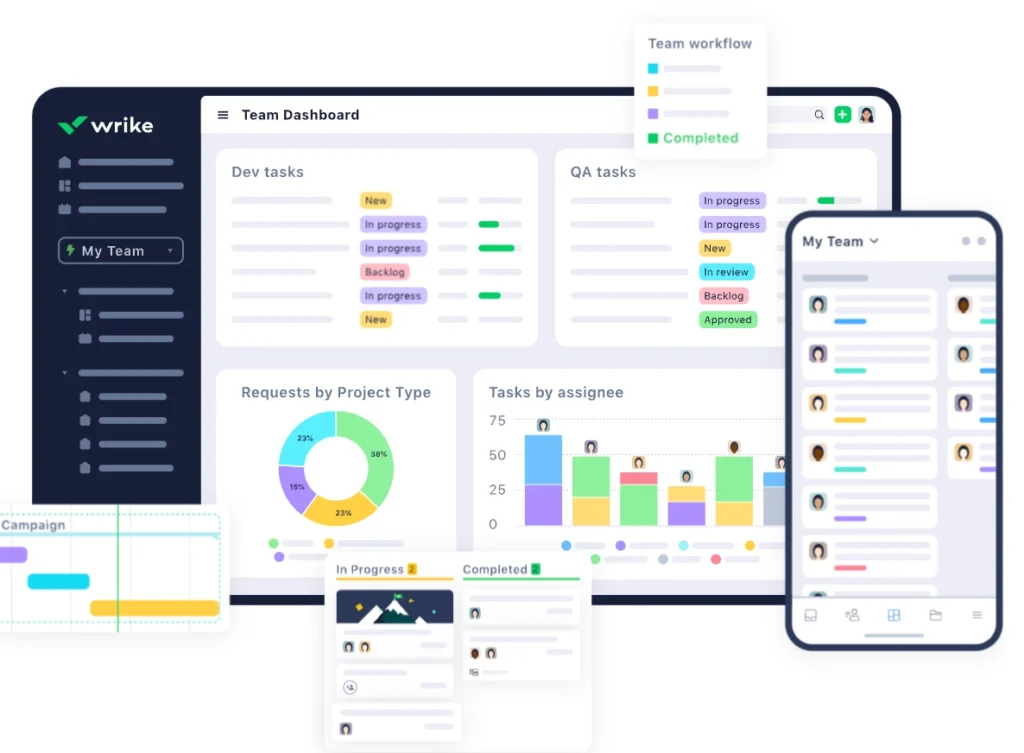
Collaboration is essential when it comes to creating fresh, impactful work quickly. And Wrike is designed to enhance the collaboration process by bringing your teams together in one platform.
With Wrike, you can use built-in templates and Kanban boards to plan, track, and finish tasks as a team. This robust tool is packed with customizable features, making it a great choice for creative project managers who work across multiple departments and large projects.
Final thoughts
Creative project managers are the glue that holds an agency together, helping creative teams make impactful work for their clients.
I hope you’ve enjoyed learning about the creative project management process. And if you’d like to see how Filestage can help you review and approve all your creative projects, start your free trial today.