

If you need a(nother) reason not to leave your brand’s reputation in the hands of AI, this is it. The European Union set a global benchmark for AI compliance, essentially rewriting the rules on how companies manage, disclose, and secure their AI-driven content.
I know that sounds scary, but it’s pretty manageable with the right steps in place. And by the end of this article, you’ll know how the EU AI Act impacts brands and what to do about it.
We’ve also made an article for how the EU AI Act impacts agencies, in case you want to check that out too.
What is the EU AI Act?
The EU AI act is the world’s first regulatory framework for how AI can and can’t be used. It was formally adopted back in March 2024, with most of its rules taking full force in August 2026.
Its goal is pretty straightforward: to make sure AI is used safely and transparently across every industry in the European Union.*
The Act works by classifying AI systems into risk tiers. The higher the risk, the stricter the rules. Healthcare, recruitment, credit scoring, law enforcement, for example, sit at the top with the heaviest regulations. While most marketing tools are categorized as lower risk. Keep reading to see exactly how this plays out for brands.
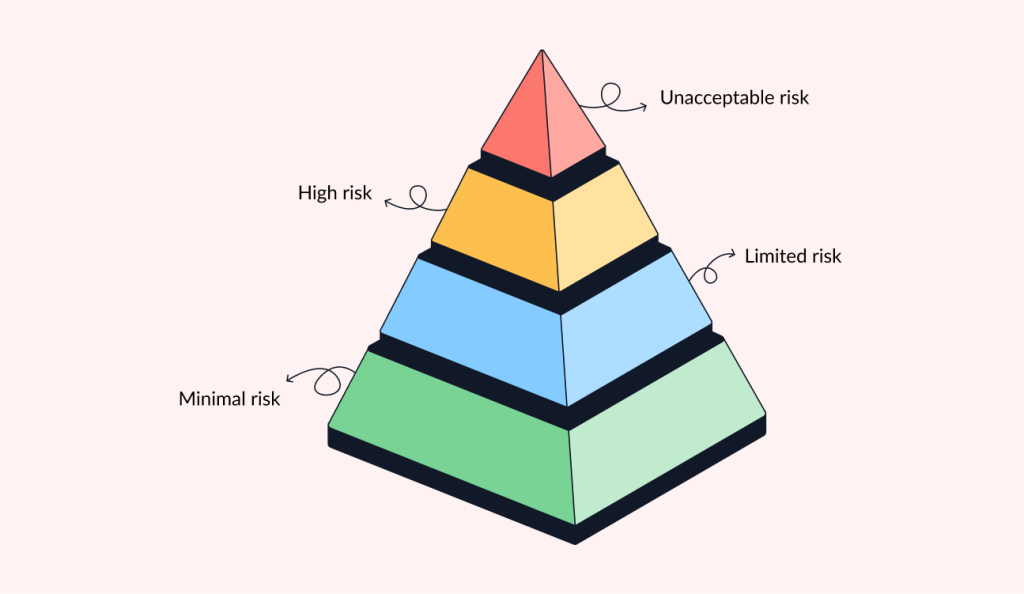
* Important caveat here: The EU AI Act applies to any brand whose campaigns touch EU audiences, regardless of where they’re based.
What does the EU AI act mean for brands?
Most AI-powered marketing tools used to generate ad copy, social posts, product descriptions, images, and videos fall under the Act’s limited or minimal risk category. But there are still rules that need to be followed.
Here’s an overview of what the EU AI Act means for most marketing teams.
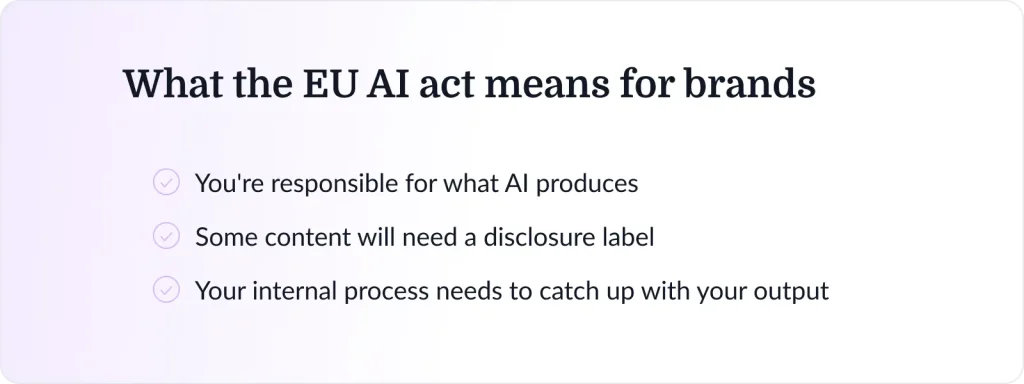
You’re responsible for what AI produces
This isn’t new news. Brands have long been responsible for what they put out into the world, regardless of where it originally came from. But the EU AI Act makes this point loud and clear: If AI generates a false advertising claim, copyright-infringing content, or misleading product information, that falls back on your brand.
In short, if you don’t currently have a human reviewing your AI-created content, now’s the time to fix that.
Some content will need a disclosure label
Under the EU AI Act, AI-generated or AI-manipulated content, like video, audio, and photorealistic images, must be clearly labeled. This is designed to protect consumers from misleading advertising and deepfakes. Given how realistic those videos of grandmas befriending grizzly bears are becoming (just my algorithm?), I’d say a little transparency is no bad thing.
But for brands, the main port of call right now is to build an airtight review process that flags when an AI disclosure is legally required before a campaign goes live.
Unsure whether your content needs a label? Try our checker below to find out.
Disclaimer: Under the EU AI Act, providers handle machine-readable marking (Art. 50(2)). Deployers must add a visible disclosure in two cases: deepfakes — content resembling a real person, object, place, entity, or event in a way that would falsely appear authentic (Art. 50(4); defined in Art. 3(60)) — and AI-generated text on matters of public interest (Art. 50(4)).
Only the text case can be waived, and only with documented human review by someone holding editorial responsibility. Deepfakes have no such waiver. The sole exceptions are law-enforcement authorization or content that’s evidently artistic, creative, satirical, or fictional.
Your internal process needs to catch up with your output
This is the most fundamental change for brand and marketing teams. Under the Act, you need to be able to show how AI is being used internally. That means moving away from ad-hoc AI creation toward documented workflows, clear oversight, and a traceable review process.
For the majority of people in Marketing Land, the EU AI Act won’t necessarily change what we make with AI. It’s more about how we make it and how we prove our processes.
What does the Act mean for different industries?
While the Act applies to businesses across the board, some will definitely feel it more than others. If you work in a regulated industry, here’s a snapshot of what to expect.
Pharma and healthcare brands already operate under strict advertising regulations. The Act raises those stakes, making sure any AI used to generate medical claims, treatment information, or health-related imagery meets the highest standard of regulatory compliance.
Financial services brands need to pay close attention to any AI touching credit decisions, insurance, or investment recommendations – these sit firmly in the Act’s high-risk category. Even AI-generated content promoting financial products carries extra responsibility given existing consumer protection requirements.
Consumer goods brands are generally lower risk, but AI-generated product imagery, packaging visuals, and advertising claims still fall under the disclosure requirements mentioned earlier in this article.
What should brands do now
If you think this Act means you need to stop using AI in your marketing, rest assured, that’s not the case. It just means you need greater oversight of how your brand uses AI to generate content.
To make sure your brand is compliant with the EU AI Act sooner rather than later, start with these three steps.
Audit your current AI use
Before you can document anything, you need to know what you’re working with. Which tools are your team using? For what kind of content? Who approves the output? If you can’t answer those questions off the bat, that’s your starting point.
Establish a review workflow for all content
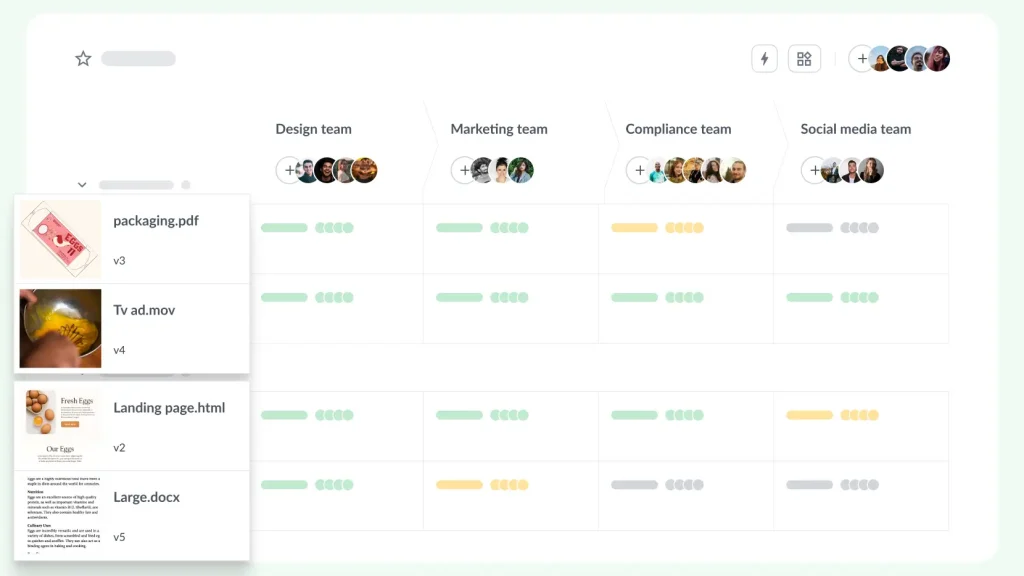
Every piece of content (AI-generated or not) should go through a documented review process before it goes live. That means collecting a clear record of who reviewed it, what feedback was given, and who gave final approval.
This is where Filestage comes. It acts as a review layer that gives brands a transparent, standardized workflow for reviewing and approving any type of content, from documents and designs to videos and live websites – all in one place. Every comment, change, and approval is tracked automatically. So you can prove the work was reviewed, without any clunky processes slowing you down.
Create a disclosure policy
Don’t debate whether a campaign needs an AI label on a case-by-case basis. Instead, set up a clear framework now based on the EU’s specific guidelines.
Navigating regulations like this can be overwhelming, so here’s a quick matrix to help clear things up. Cross-check your content type against how you’re using it to see your likely labeling obligation under Article 50.
EU AI Act risk tier matrix

Low (green): No visible AI label is expected for this combination.
Check (orange): A visible label is only needed if this specific piece depicts a real person or covers a public-interest topic.
High (red): A visible AI label is very likely required, unless the content has been thoroughly reviewed by a human before publishing.
This reference reflects typical use of each content type under EU AI Act Article 50 (Regulation EU 2024/1689). It is general guidance, not legal advice – consult your legal team for specific content.

“With the EU AI Act coming into full force, transparency is no longer optional. Brands that build a clear, traceable review process now will naturally strengthen trust with an increasingly skeptical audience – and save themselves a few legal headaches down the line.”
The bottom line
I hope this article has helped demystify the EU AI Act and its impact for your marketing. The main takeaway is that the Act is asking brands to be able to show how they’re using AI – what gets reviewed, what gets labelled, and who’s accountable for what goes live.
The brands that get this right won’t only be compliant. They’ll produce higher quality, more trustworthy work that drives growth long into the future.
Now that you know which rules apply to you, run through our 8-step EU AI Act checklist to turn them into actual steps for your team.
Disclaimer: I’m not a lawyer, and this isn’t legal advice. Please always check new law requirements with your legal team.