The mid-20th century may have been the Golden Age of print (think Mad Men), but the first record of print advertising dates all the way back to 3,000 BC. Experts found a fragmented papyrus in a self-promotion letter by Haru the Weaver, making this the first example of a print ad.
There’s a reason why this form of advertising has endured for centuries – it’s effective. And here are the stats to prove it:
- 75% of consumers feel special when they receive a print ad
- 82% of consumers trust print advertisements the most when making a buying decision
- 88% of Millennials look at the print ads they receive
Needless to say, print advertising isn’t going anywhere. But it is facing some big changes (and challenges).
Marketers, keep reading to discover five key trends for 2024 and how to apply them to your current strategy for a better ROI.
1. Digital integration of printed and online ads
In a recent interview, we asked the Online Print Coach what big print advertising trends he’s noticed in 2024. His answer confirms a big jump to hybrid or “fusion” advertising.

“One thing I see dominating the print marketing landscape is the coming together of digital and print experiences. Elements like augmented reality and QR codes are bridging the gap in the customer journey between online and offline.”
The Online Print Coach
He cites engagement and data tracking as two of the biggest reasons behind this trend,
“Marketers are using them to enhance engagement and provide valuable data-driven insights into what’s working and what isn’t.”
Interestingly, statistics show that print and email ads combined can generate a 49% increase in sales.
Supercharge your marketing reviews
Share, review, and approve all your content in one place with Filestage.
This trend in action
Every industry – from consumer goods to automotive – is adopting a hybrid advertising approach.
L’Oréal is an excellent example.
It added QR codes to a series of magazine ads it ran in Allure magazine. When readers scanned the QR codes, they were redirected to a mobile-optimized landing page (titled Youth Code).
The page offered readers beauty advice and product information to help them make the right purchase.

Source: QR Code Reviews
And this doesn’t just work for giants like L’Oréal.
Sergey Taver, Head of Marketing at Precision Watches, shares the results his team is seeing from integrating digital and print ads.

“A recent ad in a well-known lifestyle magazine led to a 15% rise in website traffic in just one week. We can reach more people with this hybrid method and still give luxury customers the tactile experience they want. As we change, we focus on personalization and sharing stories to ensure that our print materials connect with our customers, showing we are committed to being real and doing our best.”
Sergey Taver, Head of Marketing at Precision Watches
2. Interactive print ads
Human brains crave dynamic experiences. It’s one of the biggest side effects of the digital era. Traditionally, print ads have been static, which can be unengaging for today’s audiences.
Interactive print technology is changing that.
Marketers are now transforming print materials into engaging and experiential pieces by integrating digital elements like QR codes, NFC tags, and conductive inks. That means consumers can scan print ads to trigger interactive digital experiences like social sharing and interactive quizzes.
This is effective for a number of reasons:
- These ads create multi-sensory experiences – increasing engagement and building deeper connections with your brand
- Consumers spend more time interacting with your ad (becoming active participants) – boosting brand recall
- Hybrid ads are an excellent remedy for digital fatigue while still giving marketers the ability to track ad performance metrics
This trend in action
Peugeot got us to punch a paper ad to trigger tiny airbags. C&A got us to press its magazine ad to trigger a Facebook like. And Carlsberg turned its print advertisement into a beer bottle opener.
But the interactive ad that really got the world talking was this one from Ikea.

Source: Campaigns of the World
In 2018, Ikea ran this ad in Sweden to promote its product (a baby crib).
The ad included a fully working pregnancy test. If the test was positive, it revealed a discount code for the crib.
I originally wrote about this campaign in my round-up of the best print ads of all time.
3. Sustainable printed materials
One of the biggest cons of print advertising design is that it’s less environmentally friendly than digital marketing methods. As the average consumer becomes more eco-conscious, marketers need to prioritize sustainability.
We’ve already seen an upsurgence in sustainable packaging designs, and print ads are following suit.
So, what does that actually look like?
- Eco-friendly materials like recycled paper, soy-based inks, seed papers, seaweed-based materials, etc
- Energy-efficient printing processes
- Responsible production methods
- Targeted campaigns rather than “spray and pray” tactics to reduce print waste
This trend in action
This 2012 print ad campaign by Volkswagen and Ogilvy Cape Town caused quite a stir thanks to its eco-friendly approach.
To promote its range of energy-saving BlueMotion vehicles, Volkswagen released a print ad that made it easy for South African consumers to recycle their magazines.
The ad included a BlueMotion label (and a prepaid postage sticker). All readers had to do was stick the label onto the front cover of the magazine and leave it in their post boxes to be sent to a recycling plant.
For context, there were very few recycling options available in South Africa at that time (meaning 77% of magazines were ending up in landfill sites). The campaign addressed the issue by giving easy access to recycling while promoting Volkswagen’s BlueMotion cars.
The advertisement generated a 9% response rate and won several prestigious awards.
4. Augmented Reality (AR) comes to print advertising
AR is helping marketers bridge the gap between digital and print advertising. We can see AR elements in brochures, national newspapers, and packaging design, creating immersive and interactive experiences to engage consumers.
Some of the most popular examples include interactive product demos, gamified storytelling experiences, and community events. Blending the digital and physical worlds creates a unique and memorable experience for consumers.
And this pays off.
Research shows that experiential marketing generates a 70% higher recall rate and a whopping 333% increase in brand awareness.
This trend in action
Back in 2019, Burger King came up with a genius AR marketing campaign to torch the competition. The brand decided to get literal with its motto, “After all, flamed grilled is always better”.
It integrated a new feature in its app that allowed its Brazilian audience to scan any of its competitors’ ads and burn them using AR. Users had a great (and memorable) time burning Burger King’s competitors and even got a free Whopper for using the AR feature.
5. Personalization
Personalized print ads can offer a 135% increase in response rates. If that isn’t a reason to tailor your print advertisements, I don’t know what it is.
Personalized messages capture your target audience’s attention and resonate with them on a deeper level. All this leads to higher conversion rates.
More marketers are investing in personalization tools like Variable Data Printing (VDP) to customize print advertising materials for different audience segments. These platforms allow you to tweak elements from one printed piece to another without disrupting the entire printing process.
The result is highly customized ad materials (without sacrificing quality or incurring more waste).
This trend in action
Do you remember when Coca-Cola launched its “Share a Coke” campaign with personalized bottles? You could buy your favorite soda with your name on the bottle or buy one for your friends.
Well, that changed the game.
- Sales increased by 2.5%
- Half a million people shared photos of their personalized Coke bottles on social media
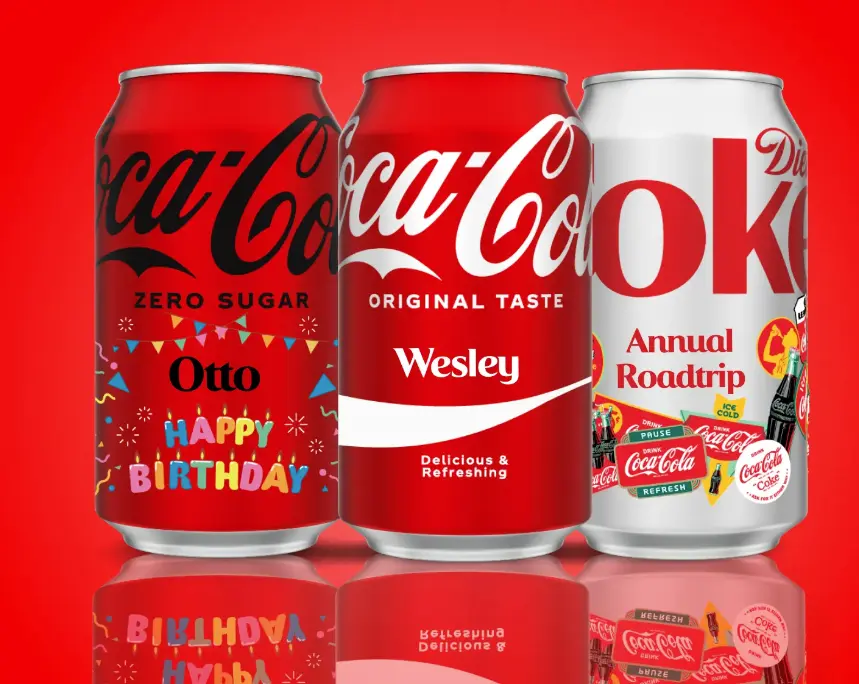
Source: Coca-Cola
Since then, custom print advertising has become a top trend across all industries.
Roman Zrazhevskiy is the Founder of Mira Safety, a leading provider of PPE gear. He’s planning on integrating print and digital ads to create more personalized experiences for his customers.

“We plan to use print ads alongside our online work. For instance, we focus on high-quality, targeted placements in catalogs and magazines specific to your business. When the messaging aligns with our digital efforts, print becomes an extension of our larger brand strategy.”
Roman Zrazhevskiy, Founder of Mira Safety
If you like these examples, be sure to check out my roundup of the top five outdoor marketing trends for 2025.
Three print advertising challenges (and how to overcome them)
Like any marketing strategy, print advertising has its pros and cons. Here are three of the biggest challenges you can expect and how to overcome them.
1. Maintaining brand consistency across multi-channel campaigns
What do the top brands in the world have in common? I’m talking McDonald’s, Coca-Cola, Apple …
The short answer is brand governance.
They each have a strong and cohesive identity across all touchpoints. But, maintaining this consistency is one of the biggest challenges when combining print and digital advertising.
Solution
If your company has a multi-channel marketing strategy, you need strong brand guidelines. These should offer clear and detailed information about everything from tone of voice to color management.
Here are some other best practices to consider:
- Set up a proper creative review process to make sure the messaging, branding, and overall experience align across printed and digital experiences
- All visual elements must be consistent across printed and digital content (this can be tricky as colors can look different on a screen versus on paper)
- Technical planning for different mediums and platforms is a must (e.g., it’s best to avoid using the same artwork for print and digital channels as color profiles differ)
2. Reducing printing errors
Even the most eagle-eyed marketer can miss the odd typo here or there. But when that typo could constitute false advertising, things get tricky.
The downside of print advertising is that it’s harder to rectify errors. Or changes.
Your marketing team needs to pivot your brand strategy regularly to keep up with industry and company changes. All of these updates can be challenging to manage when it comes to print advertisement.
Solution
Your best bet here is artwork proofing software. Let’s take Filestage as an example.
With Filestage, you can manage all digital and print materials from one central hub for faster feedback cycles and more accurate reviews.
Here are just some of the benefits you can expect:
- Centralize all branded assets (print and digital) in an easy-to-use and accessible hub
- Easily locate and update print ad collateral in the case of a change in regulations, pricing, or consumer behavior
- Automate content reviews to reduce approval times by 30%
- Leave in-context feedback and real-time comments on print collateral
- Set up custom reviewer groups to make sure the right stakeholders are involved in the artwork review process
- Manage all content versions, feedback, and comments from one intuitive dashboard (giving you project-level visibility)

Supercharge your marketing reviews
Share, review, and approve all your content in one place with Filestage.
3. Tracking click-through rates and engagement metrics
The pandemic moved most business operations online. This led to a 70% increase in email marketing between 2020 and 2022.
But, many marketers are moving away from email-only marketing campaigns. Why? Well, one reason is that click-through rates dropped by 10% in 2023.
Another reason is the disruption that Apple’s Mail Privacy Protection (MPP) is causing. MPP has made it harder for marketers to track open rates and conduct accurate reporting on email campaigns.
These aren’t the only motivators behind a renewed interest in print advertising, but they definitely play a pivotal role.
Solution
Hybrid campaigns that fuse print and digital advertising seem to be the answer. As digital fatigue grows and email boxes get increasingly inundated, there’s a lot to be said for a well-executed print advertisement.
With the rise of Web2Print (W2P) platforms, it’s easier than ever for marketers to blend digital and print channels.
I’ll finish with a caveat, though.
Just because print advertising is a growing marketing trend, it doesn’t mean it’s right for your business.
Elisa Montanari is the Head of Organic Growth at Wrike, a leading project management tool. She has a word of advice for businesses.
“Print ads can be helpful, though it depends on your product and industry. If you’re dropshipping t-shirts, print ads might not be the best fit, but a business operating locally, like a lawncare business or a law firm, can see a high ROI from print ads.”
She goes on to add,

“If you sell digital products or use a digital platform to sell, don’t ignore print altogether, but prioritize digital channels. Remember that you lose all trackability with print ads, so they’re a bit more risky than PPC and harder to adjust. The best approach is well-rounded—if it makes sense for your business, advertise in print and digitally, adjusting budget allocation as you see the results roll in.”
Elisa Montanari, Head of Organic Growth at Wrike
FAQs
What is print advertising?
Print advertising is a marketing strategy that uses paper materials like newspapers, magazines, direct mail, and billboards to promote a business or service. It’s a tried and tested advertising method that is proven to capture audience attention, build trust, and improve brand recall.
In 2024, print advertising is commonly used in conjunction with digital strategies to appeal to a wider audience. For instance, by adding QR codes to print materials like flyers or magazine ads
What are the most common types of print advertising?
Print advertisements encompass any marketing materials that are produced as a hard copy. The most common examples include:
- Brochures
- Posters and flyers
- POS materials
- Direct mail
- Newspaper
- Magazines
- Billboards
What are the main benefits of print advertising?
Print collateral offers some pretty significant benefits that digital simply can’t replicate. Here are the biggest advantages of print materials:
- Consumers can engage with the physical materials – this builds trust
- Print ads allow you to target specific demographics or geographical locations for a highly personalized experience – this leads to higher response rates
- Consumers spend more time reading printed materials and keep them for an average of 17 days – this increases brand recall
When was the first print advertisement made?
AdAge magazine reported that the first print ad was published in 1704. The ad appeared in the Boston News-Letter and was seeking a buyer for an estate in Long Island.
The first full-time ad copywriter was hired in 1880 by John Wanamaker (a prominent US department store owner).
How can my brand integrate print advertisements with our digital campaigns?
Integrating print advertising into your online advertising campaigns can improve response rates and performance tracking. Here are two ways to link the two mediums:
- After an email campaign – filter your distribution list by recipients who didn’t open your email and send direct mail with a unique QR code or URL
- Send direct mail a week before your email campaign – then follow up with an email
Interestingly, direct mail campaigns can offer open rates of up to 90% (and easy-to-track response rates).
Centralize print advertising workflows with Filestage
As consumer behaviors shift, marketers need to stay on top of the latest print advertising trends like sustainable materials, hybrid campaigns, and highly personalized ads.
The best way to keep up with rapid changes is by implementing robust artwork approval software like Filestage. With all your branded assets in one central hub, you can streamline content reviews and cut approval time by 30%. Start your free seven-day trial now.