
A Marketer’s guide to the EU AI Act
Learn everything you need to scale AI content production without second-guessing compliance.

What the Act means for your team
The EU AI Act is the world’s first regulation around how AI systems can and can’t be used.
The Act works on a risk-based system, and most marketing and content activity falls into the Limited and Minimal risk tiers with lighter obligations.
Learn more about the EU AI Act for brands.
3 things the Act asks brands to do
If your AI content reaches audiences in the EU, here are the three most important things you need to do.
1. Know which content needs a label
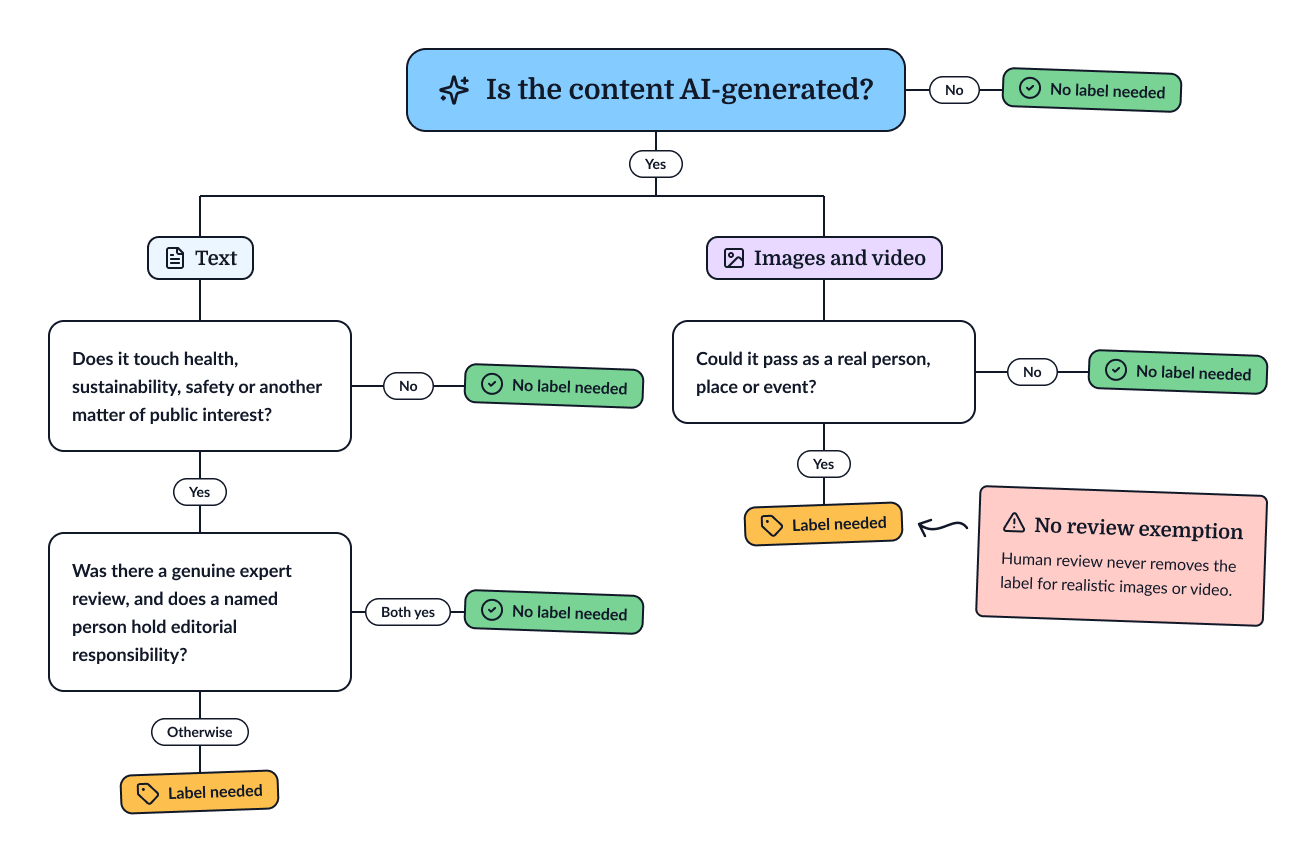
Text
Below is a quick breakdown of how the EU AI Act applies to text and visual content. Check out our EU compliance checklist for a deeper dive.
If you use AI to create copy for health claims, safety-related content, or anything else of public interest, it needs a label unless it’s been thoroughly reviewed by someone qualified, and a named person has editorial responsibility.
Images and video
If an AI-generated image or video could pass as a real person, place, or event, it needs a label. This AI marketing compliance rule applies no matter the topic or whether it went through human review.
2. Document everything
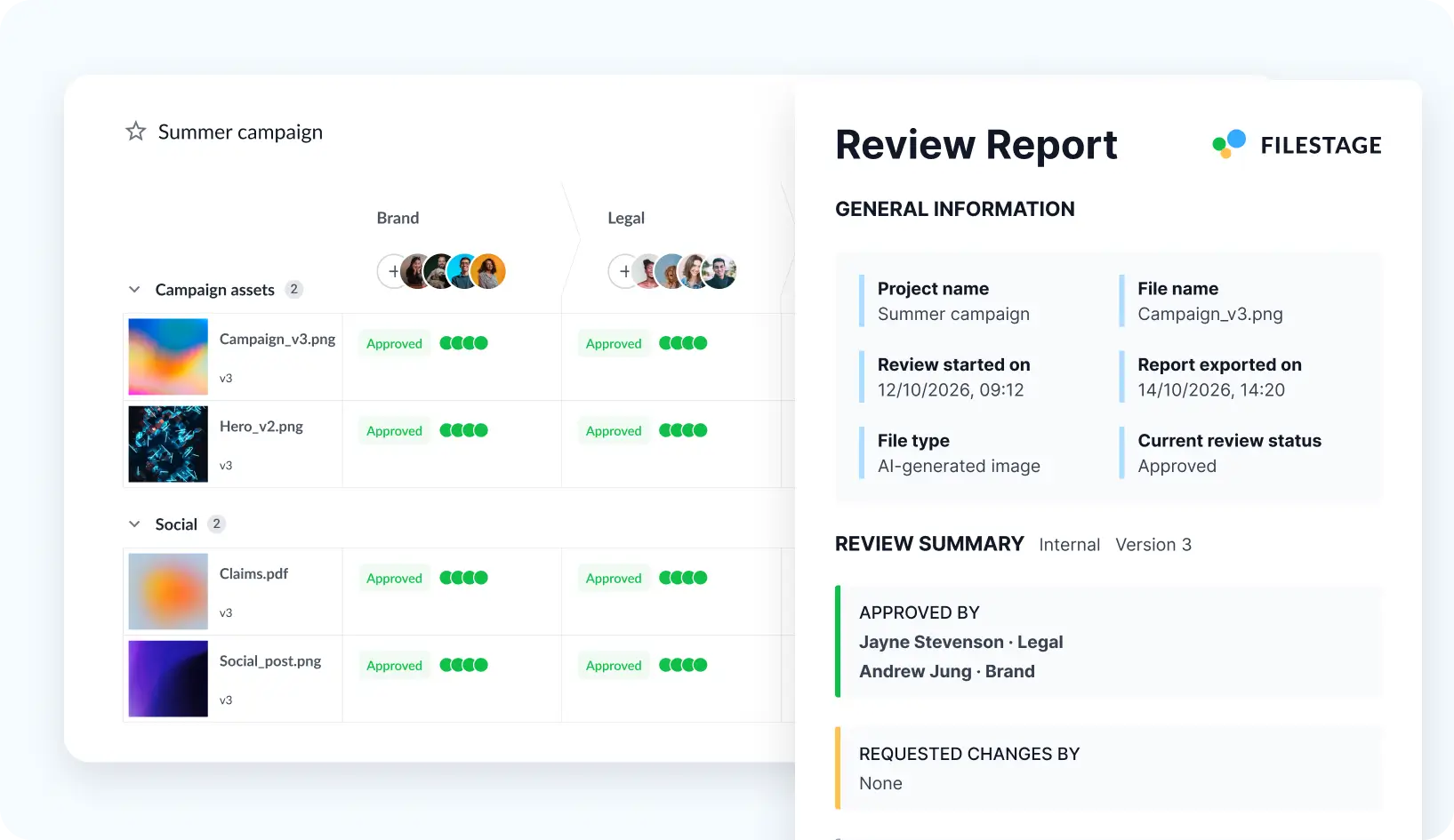
Keep a clear audit trail of what was AI-generated, which tool created it, who reviewed it and when, what they flagged, and who holds editorial responsibility.
3. Use real human oversight
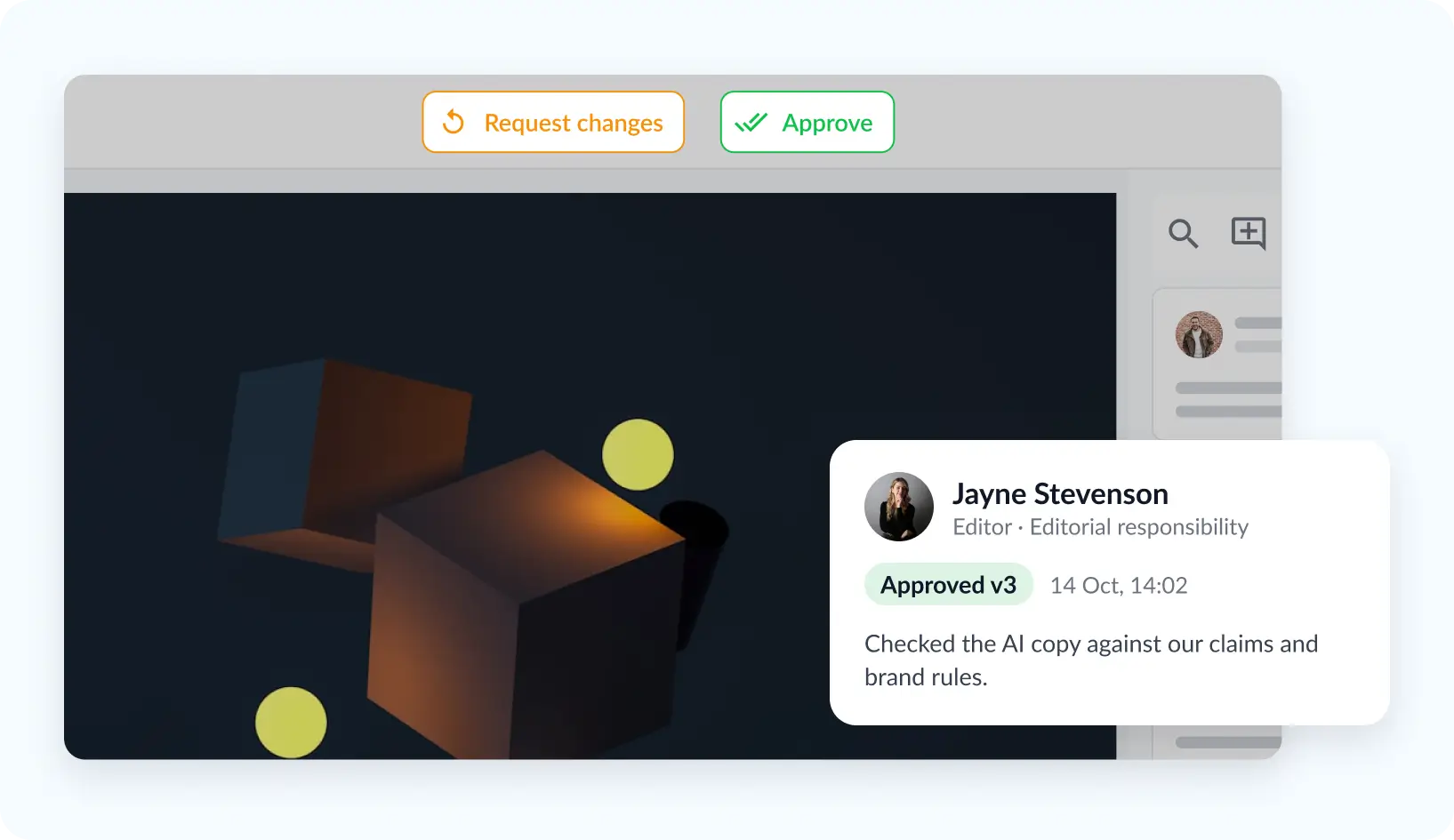
For AI-generated text specifically, you need a review by someone with the expertise to check the content, and a named person holding editorial responsibility. That’s the heart of content governance under the EU AI Act.
- Key features
Protect your brand’s reputation with Filestage
Automate compliance with an AI content governance platform that slots right into the workflow your team already uses.
- Every asset carries a record of what happened to the content before it went live
- Works for one file or a hundred, so scaling AI use doesn't mean extra admin

- Every comment, revision, and approval is logged and timestamped as it happens
- Every audit trail is exportable, so you can hand it to legal or a regulator instantly

- A named reviewer on your team makes the final call, so nothing goes out unchecked
- Every decision is logged, including who reviewed it, when, and what they flagged
- How it works
Approve compliant AI content in 4 simple steps



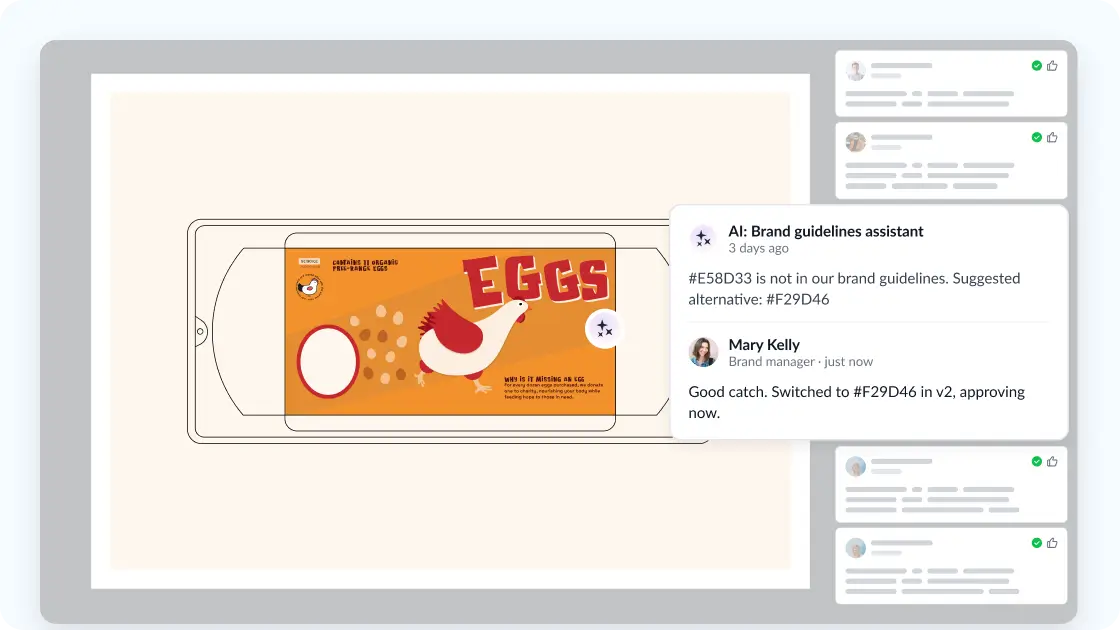
- Review Agents
Check every AI asset against your rules before a human even looks
- Checks files against your brand guidelines and compliance standards
- Automatically enforces language rules across projects
Learn more about Review Agents →

- Confirms every element including certification marks, allergen icons, and brand logos
- Frees human review time for real creative feedback

- Scans QR and barcodes for broken links and unreadable data before review
- Flags issues on packaging and product designs before they go to print

- Automatically scans packaging designs for regulatory requirements
- Flags compliance issues before they reach a human reviewer
- This agent is in early access

- Write your own review criteria as a prompt, or start from a ready-made ruleset
- Your rules are applied automatically to every review

FAQ
Do I need to label AI-generated text?
Not always. Ordinary marketing copy (ads, product descriptions) falls outside this entirely. For text that touches health, sustainability, safety, or another matter of public interest, it must be labeled unless a genuine human review and a named person or entity holds editorial responsibility for the publication. A quick approval click doesn’t meet that bar on its own. Images and video work differently.
What counts as a deepfake versus another AI-generated image?
Targets AI-generated or manipulated content that resembles a real person, place, or event closely enough to look authentic. A generic AI-generated product graphic isn’t in the same category as a synthetic image of a real person. And unlike text, there’s no review exemption here: even genuine review doesn’t remove the labeling duty for a deepfake-style image or video.
When does the EU AI Act actually take effect?
2 August 2026 for the core transparency obligations, with generative AI tools already on the market before that date getting until 2 December 2026 to add machine-readable marking. Learn more about how the EU AI Act impacts agencies.
What happens if our brand doesn't comply?
Enforcement sits with national market surveillance authorities, and penalties can run up to €15M or 3% of global turnover for extreme content violations.
- Disclaimer: This page is for general information, not legal advice. Talk to your legal team about how the EU AI Act applies to your specific content.