

Full disclosure: I was dreading writing this article. As a copywriter, the constant conversation around AI stealing my job has become tiresome (and rather insulting).
I’m not the only one with concerns.
More than 75% of consumers worry about the impact of AI on our ability to trust information online.
As the CEO and Co-Founder of CogBias AI, Toly Shilman, put it,

“With the advent of ChatGPT, more people than ever are suffering from Automation Bias. This is when we blindly trust what AI tells us.”
If the recent “ChatGPT is Bullshit” research is anything to go by, this could cause serious problems.
24% of business owners are also feeling the squeeze as AI starts to impact website traffic.
Despite all this, there are excellent marketers out there using AI in exciting ways. Keep reading for seven AI content marketing strategies for human-led content.
1. By-pass the blank page
Now, my personal view is that the blank page is a sacred part of the creative process and should never be bypassed. But I understand not everyone sees it that way.
AI has disrupted content marketing, and demand is higher than ever (if you’re a marketer or agency worker, I’m sure you’re already painfully aware of this). That means there’s no time for creative block.
So, I asked the managing authority of AI Insider Tips, Ryan Doser, how he uses AI throughout the content production process.

“From my experience running a marketing agency and creating content for AI Insider Tips, I’ve found that AI works best for ideation, first drafts, and editing rather than final production.”
How Doser uses AI tools in an agency setting
This is Doser’s five-step workflow:
Step one – Ideation
Use Claude Pro and ChatGPT Plus to brainstorm content ideas and create initial outlines (establishing a framework for the content).

Step two – Creating the first draft
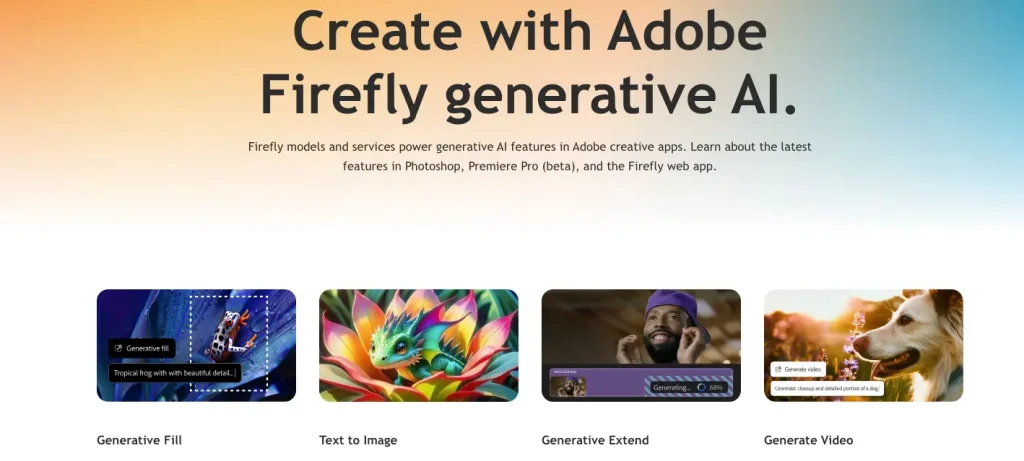
Get ChatGPT to generate the first draft of written content. Next, use tools like DALL-E 3, Midjourney, and Adobe FireFly to build initial versions of visual content.
Step three – Refining the content
Ask ChatGPT Plus to review written drafts for factual accuracy, structure, and clarity. Then, use advanced AI image models (Midjourney and Adobe FireFly) to enhance the visual assets.

Step four – Review and approve
Use custom GPTs, Claude Projects, or online proofing software to review the final draft of the content, checking for:
- Repetition and generic phrasing
- Inconsistencies in brand voice
- Alignment with messaging goals
- Incorrect use of sources

Step five – Human polishing
Have a human expert review AI content to make sure it aligns with the content strategy and that it has emotional appeal. That includes adding “human touches” to make the AI content relatable and authentic.
Doser’s tips for successful AI content creation
Doser points out that this process may look different depending on the industry.
“The truth is, if you’re in higher-stake industries like finance, medical, or legal, human oversight is a necessity. But for lower-stake industries, AI should be used more while humans focus on adding brand voice and human polishing during review.”
His final tip is to treat AI as a work assistant, letting it handle top-of-funnel content while you hone in on messaging, strategy, and emotional resonance.
Need help picking the right AI content creation tool? Check out our list of the best AI marketing tools.
4 AI investments that can save your brand 1,000+ hours
Discover why experts are focusing on process optimization instead of using AI for creative tasks.
2. Augment the content creation process
I can spot fully AI-generated content a mile off. And I won’t read it. Why would I when I could just go directly to the source? The bottom line is that humans want to read human-led content.
Kraig Kleeman pretty much sums up my thoughts on the matter,

“AI can organize my campaign reports and kick out a first draft faster than I can pour a coffee, but let’s be real – robots still can’t write with soul. The magic only happens when tech works alongside the human touch.”
Google has also cracked down on AI content and we’re seeing a rise in companies adding a stamp to confirm their content is produced by a human.
So, that’s a pretty solid case against AI content creation. But we have to be realistic here. If you’re a busy marketer or a one-person creative team, you may not have a choice but to enlist the help of an AI assistant.
How to use AI to create human-led content
Good news! Laura Richards FCIPR, has a genius process to use AI without losing the human touch. She recently wrote a full SME-led article using AI (that passed the checkers).
Here’s her ten-step workflow:
- Provide ChatGPT with a transcript of your client talking about their area of expertise
- Upload a presentation (provided by your client) about the same topic
- Prompt ChatGPT to create a plan for a blog post based on the transcript and slides
- Give feedback on the plan e.g. remove sections or tweak others
- Ask ChatGPT for a second version but adjust the temperature, frequency penalty, and presence penalty settings to prompt a more creative response*
- Tell ChatGPT to display the plans side-by-side so you can compare and take your favorite parts of each version
- Prompt ChatGPT to create a third draft of the plan with the winning version and use a CSV file of keyword research (she downloads hers from AnswerThePublic) to optimize the article
- Use a highly specific prompt to ask ChatGPT to write the content
- Double-check the accuracy of quotes to make sure AI hasn’t hallucinated
- Manually edit the article and incorporate any stakeholder feedback
*If you’re new to AI settings, here’s a breakdown courtesy of ChatGPT.

Laura’s tips for success
For starters, Laura recommends avoiding “naïve” prompts.
What struck me about her process is how she provides AI with a hierarchy to follow, formatting instructions, and detailed TOV guidelines.
Not opting for the default settings and being clear on specific words to avoid helps her get a human-centric output.
Importantly, Laura’s clients know she uses AI to augment the writing process. She always gets permission to use the source materials first.

“This approach is win-win. I am able to create high-quality content based on my clients’ expert knowledge, without spending hours researching a very technical topic. My client gets authentic, SEO content that works with their budget.”
3. Hand over the heavy lifting
Kiran Shahid is a freelance content writer for B2B SaaS companies. After months of experimentation, she recently shared how she gets Claude AI to do the grunt work for her.
Interestingly, Kiran recently ran a LinkedIn poll asking 188 content managers where they draw the line with AI.
55% said they’re comfortable with limited AI usage, like creating outlines or editing. 26% said it depends on the project.
Kiran’s AI writing advice
Here are four of my favorite suggestions from Kiran:
- Feed it research papers and ask it to pick out stats that back up your argument (suggesting where to add each one)
- Share a draft and ask AI to naturally include your SEO keywords (setting guidelines on how to space them)
- Ask AI to suggest natural spots to add internal links – genius!
- Use AI to review your draft and flag places that need a stronger supporting argument

“These techniques helped me write 2x more content while keeping my voice authentic and human. The best part? I’m spending more time on the creative parts of writing that I actually enjoy.”
4. Make content reviews more accurate
The rise of AI content has led to a significant symptom: the review process needs to be even more comprehensive.
Brands and agencies churn out more content across multiple channels, and each piece needs approval. That has become incredibly time-consuming.
I see a lot of value in using AI as a support tool during the creative review process.
As Kleeman points out, the review process for AI content can be more complex.
“AI content can look polished, but it still lacks psychological depth. That’s why we’ve added more layers to our review process.”
The content review process is your last chance to make sure you have added the necessary AI disclosures (a legal requirement under new regulations like the EU AI Act).
How to automate content reviews
Your best bet is to find the right tool. AI-assisted online proofing platforms like Filestage can spot:
- Branding inconsistencies in color or image styles
- Typos and issues with language structure
- Composition errors
- Discrepancies between versions
The AI review assistant will automatically flag issues that go against your brand guidelines.

Before you head off on an AI automation frenzy, here’s a word of warning from Rodo H Orellana, the co-founder of Rocketvan.io.

“Before you automate, it’s wise to master manual processes first. When processes are refined and clear, you’ll know exactly what can be automated or enhanced by AI. It also prevents amplifying existing errors and ensures that technology truly boosts efficiency, not complexity.”
My two cents? AI excels at spotting patterns and taking over repetitive tasks. So, AI-assisted reviews just make sense. They also free up more time for brands and agencies to work on the human stuff like strategy.
Even then, I don’t think AI can completely replace the human eye or understand the nuances of emotional resonance.
5. Personalization (and why Ben Affleck should be a content marketer)
I’ve been doing content for almost a decade, and this may be one of the strangest sentences I’ve typed. But here goes.
Ben Affleck should be a content marketer.
In a recent interview on the impact of AI in the film industry, Affleck inadvertently told us marketers some home truths.
He argues, “AI can write you excellent, imitative verse that sounds Elizabethan. It cannot write you Shakespeare.”
Why? It currently doesn’t have the taste to discern and construct like humans. Right now, it’s simply cross-pollinating things that exist. It’s not creating anything new.
Affleck points out that AI will disintermediate the more laborious, less creative, and most costly aspects of filmmaking. As a result, he believes this will lower the barrier to entry and allow more voices to be heard.
But my biggest takeaway from this interview is his case for personalization.
He argues the biggest impact AI will have in the film industry will be in production speed and personalization. You’ll get two seasons of your favorite show a year instead of one. Or perhaps, in the not-so-distant future, you’ll request your own episode of your favorite show with the ending you want.
Could there be a version of Friends where Ross and Rachel never had that break? Be still, my Millennial heart.
Content marketing will likely see a similar trend.
How to use AI personalization in content marketing
Even the biggest AI skeptic (me) can’t argue that it has pretty impressive personalization opportunities for marketers.
Here are some common AI content marketing use cases:
- AI business forecasting tools to predict sales, expenses, profit, and industry trends
- Customer segmentation and data collection for targeted ads
- AI-driven keyword and backlink research
- Chatbots for a better customer experience and multi-lingual support (like JP Morgan Chase Bank’s AI platform, Persado)

6. Fail faster and more frequently
The conversation around AI overtaking human creativity irks me. My biggest concern is that too many people now use GenAI as a shortcut to bunny-hop the creative thinking process. I think that’s a mistake.
The magic is in the process.
Justin Barnes, Executive Creative Director at Versus, has a different view on AI and creativity. He sees it as an exciting creative tool to empower artists rather than disrupt their craft.
Versus is a creative production studio and recently used OpenAI’s Sora platform to work on its first fully GenAI project (premiered at Tribeca).

AI isn’t about shortcutting creativity, but enabling artists to infuse more of their voice into every step of the storytelling process.”
How AI can be a catalyst for human creativity
While I may not match Justin’s enthusiasm for the subject, I do agree with many of his thoughts. In particular, his assertion that a strong creative voice takes years to construct.
“The creative voice emerges through time, practice, and hands-on experience. AI doesn’t replace that journey. It enhances it, allowing for rapid experimentation that sharpens the trial-and-error process.”
Justin sees Adobe’s new AI releases as a thrilling new playground for creatives and not something to be feared.
I remain against outsourcing creative thinking, but I can definitely get on board with using AI to speed up the trial-and-error process.
For more on artificial intelligence and creativity, check out our Impact of AI report.
4 AI investments that can save your brand 1,000+ hours
Discover why experts are focusing on process optimization instead of using AI for creative tasks.
7. Argue with AI
If, like me, you still don’t buy that GenAI is capable of original content, you’ll like this one.
Brilliant SaaS marketer, Brendan Hufford, recently shared some excellent advice for marketers. He recommends doing the opposite of what AI suggests.

“Since their database is based on everything that’s already been written on a topic (or at least a lot of it)…We can win by NOT doing what it says.”
Hufford argues that if you want to create forgettable content, write what ChatGPT tells you to write about. But if you want to create interesting content that your ICP actually wants to share, write the opposite.
His “Argue with AI” strategy has two steps:
1. Look it up in ChatGPT
2. Do the opposite
He had me at “argue”.
AI content marketing FAQs
What are the best AI content tools for marketers?
It can be tough to choose the best AI content creation tools for your marketing team. So, here are some essential AI productivity tools to add to your tech arsenal:
- AI writing tools like Jasper help your team produce blogs quicker
- Social media management tools like Buffer have AI assistants to help you create channel-specific social media posts
- AI video generators like Runway are perfect for creating video content if you don’t have a professional editor
- Tools like OpenAI’s Dall-E 3 or AI graphic design platforms make image generation fast and accessible
- AI-powered online proofing tools like Filestage speed up content reviews by automatically flagging errors
How can I speed up AI content creation without sacrificing quality?
In the right hands, AI tools can help you create high-quality marketing content faster. Here are three ways to incorporate a content creation tool into your workflow.
- Use LLMs like Claude or Google Gemini as a sparring partner to come up with content ideas
- Feed GenAI customer data and ask it to create personas for your target audience
- Ask AI to analyze your content strategy and suggest improvements
A final word on AI content creation
I never thought I’d be quoting Ben Affleck in an article about AI content marketing, but here we are. As Affleck points out, AI has become an impressive craftsman that can imitate and learn techniques. But it’s just cross-pollinating things that already exist. It still lacks the consistency, control, and quality of human work.
That said, these marketers are finding creative ways to use AI without simply copying and pasting from your LLM of choice. In the right hands, AI can actually make marketing content stronger.
I hope the conversation around AI replacing marketers and creatives will become extinct in 2025. Instead, we should be talking about how to regulate AI so it’s safe, ethical, and accessible for everyone.