Having worked with dozens of clients over the years, I’ve come to learn that managing client expectations is absolutely essential. When you set the tone from the very start, you pave the way for stronger relationships, smoother workflows, and, let’s be honest, a much happier work life!
With that in mind, I’ve pulled together my top tips, tools, and templates to help you manage your clients’ expectations with confidence – and keep your projects running like clockwork.
Let’s dive in!
Why is managing client expectations important?
Managing client expectations is key to building strong, long-lasting client relationships. When expectations are clear from the start, you keep everyone on the same page, avoiding confusion, conflict, and unnecessary stress.
It helps clients feel confident and in control, knowing exactly what to expect and when. And it creates a smoother process for your team, allowing you to deliver great work without fear of disappointment.
Happy customers, happy you!
Is poor communication losing you time (and accounts)?
See how top agencies cut feedback costs and roll out campaigns 30% faster with our client feedback tool.
Seven tips for managing client expectations
Let’s start with seven actionable tips to help you manage expectations.
1. Define goals from day one
Great client management starts on day one. Begin relationships with new clients on the right foot by defining and agreeing on goals from the very start. By setting out these goals, you have a clear benchmark for measuring project success, which helps with managing client expectations early.
Here are some questions to ask when defining project goals:
- What problem are we trying to solve?
- What specific metrics or KPIs should we track?
- Are there any hard deadlines we need to meet?
- How does this project align with the client’s business goals on a broader scale?
These goals should directly reflect your clients’ expectations.And by getting them laid out from the start, both you and your client know exactly what’s expected, which helps prevent misunderstandings or unreasonable expectations later on.
2. Create a detailed scope of work
Another top tip for managing client expectations is to start with a detailed scope of work. This helps set clear project boundaries from the start, preventing scope creep and unreasonable expectations down the line.
Take time to outline exactly what’s included in the scope, from deliverables to timelines. Then,get it signed off by the client so that you’re all in agreement.
If new requests come in outside of the documented scope, you can explain that this will affect deadlines and budgets. This way you’ll keep client expectations clear and protect your team’s valuable time and resources.
3. Set out a clear project roadmap
Once you’ve defined goals and your scope of work, set out a roadmap that shows how the project will progress from start to finish. Your roadmap should include major milestones, deadlines, and deliverables at every step. That way you manage customer expectations and give them something to refer to throughout the project.
Make sure you’re realistic about deadlines and include buffer time for unforeseen delays. If you don’t allow enough time for tasks, you’re shooting yourself in the foot by setting unrealistic client expectations that will ultimately end in disappointment.
It’s a great idea to use a project management tool to keep your project roadmap visible and easy to follow. I’ve got recommendations for you a bit later on in this article. 👇
4. Communicate regularly and transparently
Good communication is one of the most important aspects when it comes to managing client expectations. It builds trust, keeps projects on track, and keeps clients in the loop. Agree upfront about how often you’ll communicate, and make sure you stick to the agreed schedule.
Here are a few ways to stay in touch:
- Daily status updates – Send a summary of what you’ve done, what’s coming next, and any issues
- Weekly check-ins – Schedule a regular call or meeting to allow time for successful client relationship building and to talk through any questions or challenges
- Project dashboards – Use a shared project tracker or dashboard for real-time updates
Regular communication keeps the client feeling informed and involved, with no room for confusion.
5. Create a robust feedback and approval process
A clear client approval process is essential for managing client expectations because it keeps things clear, creates transparency, and holds people accountable at every stage of a project.
By clearly communicating how and when feedback should be provided, your clients will know exactly what’s expected of them. This minimizes confusion and makes sure everyone is aligned on their roles and responsibilities.
Here’s how to create a robust feedback and approval process.
Make reviews easy and centralized
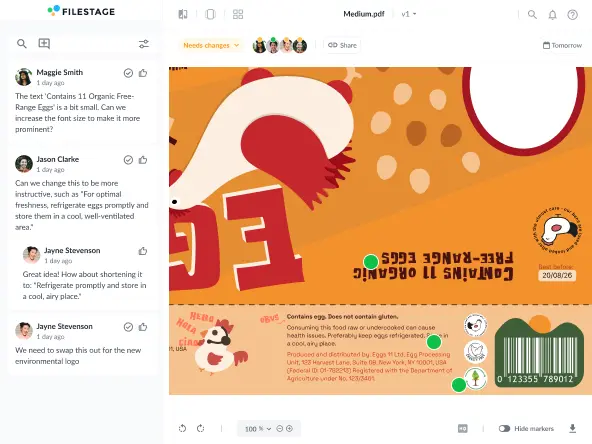
Using a centralized platform like Filestage organizes all client feedback in one place, avoiding scattered communication across emails, Slack messages, and random phone calls. This reduces the risk of miscommunication, lost input, or conflicting feedback.
Set clear deadlines
Setting clear deadlines for customer feedback keeps projects moving on schedule. When clients know exactly when feedback is needed, they’re more likely to respond on time, keeping approvals on track. Filestage makes this even easier by sending automated reminders, helping you stay on schedule without constant chasing.
Encourage honest feedback
Encouraging honest feedback early on reduces the chances of misaligned expectations later down the line. A structured process makes sure that misunderstandings are caught and resolved before they escalate into anything bigger. Crisis averted!
Keep track of approvals
Tracking approvals creates a visible record of all decisions and sign-offs which protects both parties from potential disputes. With Filestage, every decision is automatically documented.
Clients can see that their feedback has been actioned, and teams can continue to work confidently without having to second-guess anything.
Is poor communication losing you time (and accounts)?
See how top agencies cut feedback costs and roll out campaigns 30% faster with our client feedback tool.
6. Be proactive in identifying challenges
No matter how organized you are, it’s a fact of life that things don’t always go to plan. Whether it’s a technical difficulty, a resource issue, or an unexpected setback, be proactive in identifying potential problems.
You can do that by addressing them early and offering solutions. This demonstrates to the client that you’re both professional and trustworthy – and it shows they can rely on you to meet their expectations.
From my experience, clients appreciate honest communication far more than excuses or radio silence. And by dealing with any challenges the moment they arise (or ideally, even earlier), you show you’re committed to the project’s success.
7. Under-promise and over-deliver
Here’s a great trick to have up your sleeve – set yourself up for success by setting realistic expectations that you can comfortably meet. And even exceed!
That way, you not only reduce stress for your team but also create opportunities to impress your client when you manage to over-deliver on deadlines and deliverables.
For example, if you know a task will take a week, give yourself a few days’ leeway and set the deadline for ten days. When you deliver the work early, your client will see you as proactive and reliable. It’s a simple but powerful way to manage, meet, and exceed expectations.
When you consistently exceed expectations, clients will feel they’re getting exceptional value from you.This will in turn strengthen their confidence in your partnership and boost your chances of retention.
Four tools to help you manage client expectations
Software is your best friend when it comes to managing client expectations. It’ll do a lot of the heavy lifting for you when it comes to communicating, collaborating, and keeping organized.
Here are four of the best tools to have in your arsenal.
1. Filestage
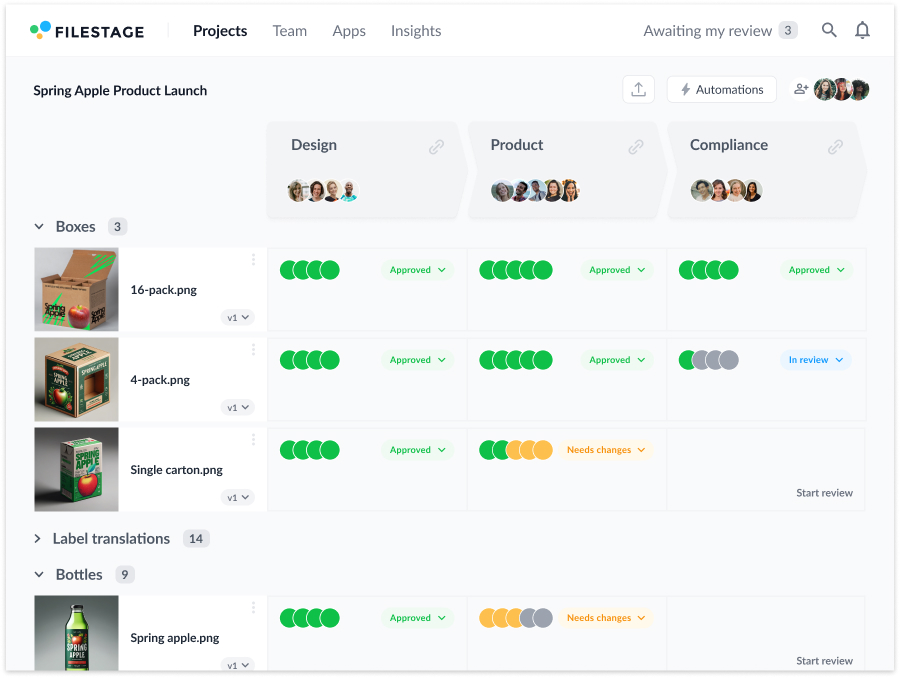
First up, there’s Filestage. Filestage is a client feedback tool that centralizes client feedback and approval, streamlines revisions, and tracks approvals. Clients can easily review all file types in one place, making the process seamless for everyone involved.
You can set deadlines to make sure everyone knows what’s expected of them and when. And you can clearly see who’s approved what and who you’re still waiting to hear from.
By making the entire process transparent, clients always know their role in the process, helping to align expectations and avoid any delays or surprises.
Is poor communication losing you time (and accounts)?
See how top agencies cut feedback costs and roll out campaigns 30% faster with our client feedback tool.
2. Asana
Project management tools like Asana provide transparency into project timelines, tasks, and progress. With the help of these tools, clients can view task statuses and understand where the project stands. This transparency helps to manage client expectations by giving them a clear understanding of what’s been completed, what’s in progress, and what’s coming next.
By keeping them informed, it reduces uncertainty and the risk of misaligned assumptions.
3. Slack
Communication tools like Slack are a must-have for managing client expectations. They make it easy to communicate clearly and transparently, allowing for real-time updates and quick responses to client queries.
By keeping everything in one place, all discussions are easily accessible, and clients can refer back to them whenever they need to. This level of organization and transparency builds trust and reduces the chances of misunderstandings.
4. Google Workspace
An all-in-one workspace and collaboration platform like Google Workspace is your best friend when it comes to client management. It provides a centralized space for storing all collaborative documents, and allows shared access to all project plans, timelines, and deliverables.
This transparency keeps everyone aligned and up to date every step of the way.
Google Workspace’s collaboration features, including real-time editing and commenting, make it easy to work with your clients throughout the project. And when they feel involved throughout, you’re less likely to have to deal with misaligned expectations down the line.
Five templates to help you manage client expectations
Managing client expectations is much easier when you have the right words ready to go. Here are five handy templated sentences that you can copy and paste to your clients. They’ll help you address common challenges, prevent conflict, and boost customer satisfaction.
1. Dealing with scope changes
If your client requests changes to the agreed scope of work, it’s important to set expectations about how this will impact timelines and budgets. Use this to guide the conversation:
“If you need to make changes to the scope or deliverables, we’re happy to accommodate. Let’s schedule a quick chat to discuss how this might impact timelines and budgets.”
2. Tackling scope creep
If your client keeps trying to sneak extra tasks or review rounds in without a discussion, it’s time to address scope creep tactfully. Try this:
“We’re excited about your new ideas! To incorporate them, we’ll need to adjust the project scope. Let’s review how these changes might impact the timeline and budget before moving forward.”
3. Addressing challenges
Spotted a potential roadblock? Don’t fret – the most important thing is to be transparent, as this shows the client you’re professional and not afraid to rise to the occasion. Here’s how to frame the conversation to show them you’re solutions-oriented:
“We noticed a potential challenge with [specific issue]. Here’s our suggested solution – what do you think?”
4. Dealing with delays
If your client is taking too long to respond and provide feedback, it’s important to let them know that this will impact the rest of the timeline. Instead of pointing the finger too sharply, make it a shared responsibility by keeping the tone collaborative. Use this:
“To keep us on track, we’ll need your feedback by [specific date]. If there are any issues meeting this deadline, let us know as soon as possible so we can adjust the timeline together.”
5. Managing unrealistic deadlines
Is the client asking too much from you in too short a timeframe? Make it clear that meeting that deadline would involve shifting priorities – something’s got to give! Here’s a sentence to help you navigate this scenario:
“Based on the current scope, the earliest we could deliver is [realistic date]. We could speed things up by focusing on [specific priority] first – how does that sound?”
Final thoughts
And there you have it, 16 tried-and-tested tips, tools, and templates to help you manage, meet, and exceed client expectations! By setting expectations early, communicating regularly, and staying proactive, you pave the way for stronger relationships, smoother workflows, and happier customers.
If you’d like to see for yourself how Filestage can simplify client review and approval, start a free trial today →