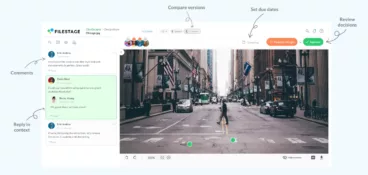

At some point, every marketing or agency team needs to get creative feedback and issue a request for approval. And without a proper process in place, a simple request for approval can take weeks, even months, to get signed off.
In this guide, we’ll explore common types of requests for approval and easy ways to get the green light quicker. You’ll also get eight different project approval forms that you can copy and reuse today.
So, let’s dive in.
What is a request for approval?
A request for approval is a formal process in which you ask a senior team member for their approval. This could be a project manager, the head of a department, or even an external client. It’s a common part of the creative review process for marketing teams and agencies, who need to get a final sign-off before an asset goes live.
A request for approval is used in a wide variety of cases, including:
- Requesting approval for a proposal
- Seeking permission to finalize a complete task or project
- Asking for a deadline extension
- Seeking a budget adjustment
- Creating a new asset, e.g. a social post or a marketing campaign
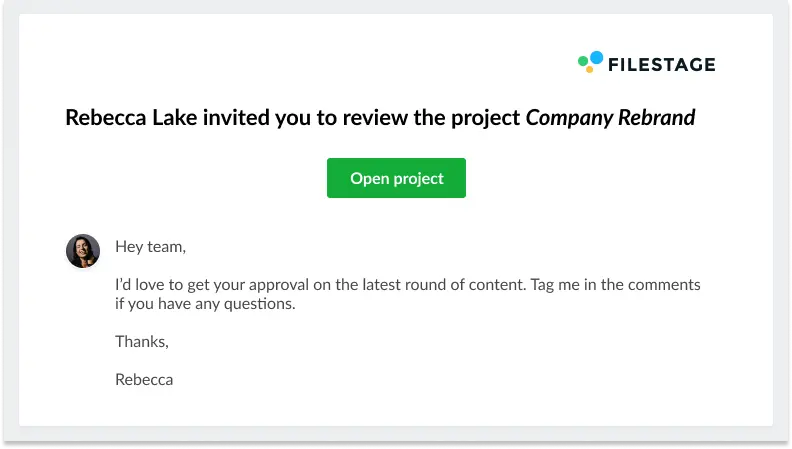
Why is it important to request approval?
Requesting approval is a fundamental business process. By implementing this process, you can achieve more consistency, accuracy, and quality across your projects, while being able to more effectively oversee the work of your team members.
The benefits of asking your team to request approval for tasks, projects, and proposals include:
- Fostering an environment of collaboration
- Providing them with useful feedback, which they can utilize to deliver better results next time
- Keeping everyone in the team on the same page
- Minimizing the risk of errors
- Avoiding major revisions and changes at the end of projects, which would otherwise put your team under significant time pressures
- Enabling you to complete projects more efficiently and on time
- Achieving more consistency across creative projects, particularly regarding brand guidelines
- Allowing you to manage budgets, proposals, and workflows more thoroughly
How to write an email or letter to request approval
Submitting a request for approval is a formal process, which is centralized and consistent across all team members and managers in a company.
You could request approval in one of three ways:
- Send a formal email request for approval
- Submit a formal request for approval form
- Share the formal request through an approval platform like Filestage
The benefits of using approval request emails and document approval tools are making the request official and documented, which can be used as evidence later down the line.
You can also use an AI email writer to create the approval request email or provide a template you can tweak and tailor to your situation.
Although using a platform may seem to take longer at first, it actually allows you to achieve faster and more efficient turnaround once the whole team gets familiar with it.
Five steps to follow when submitting a request for approval

When submitting a request for approval, we’d recommend that you follow these standard steps:
1. Choose your communication channel
Decide how you’re going to send the project approval form, either via chat messenger, via email, or through a feedback tool like Filestage. Your choice should largely depend on the formality, importance, and scope of the request.
For instance, if the request needs more explanation, an email or a shared letter on Filestage would be the best option. Messaging apps, like Slack, are better for short messages to be answered quickly.
Another option is to create request forms and approval forms using time-saving tools like Asana or Google Forms, giving your team a clear template to follow each time.
2. Give plenty of context
Leave space for context in your project approval form template. This is so you can share any background information, data, or predictions to outline why it’s important to get the approval.
3. Add the file you need approval on
This could be either a Word document containing a proposal, a video, or a PDF or JPEG containing the completed asset, for example.
4. Communicate deadlines
Tell them when you need the approval (or notice of any amendments). Or, even better – set a due date within the tool so that the reviewer will get automatic reminders about the deadline.
5. Give clear next steps
Make sure your request for approval outlines the next steps clearly, so everyone knows what to do next. Then thank them in advance, and sign off with your name. You may also wish to provide your contact details if required.
Less time chasing feedback, more time on creative strategy
Online proofing software can cut review cycles by 30%, freeing up time for high-stakes work. Read our guide to see if it’s the right solution for your team.
Six best practices for approval request message format
The goal of your request for approval is to provide a clear message that outlines exactly what the approver needs to do, why they need to do it, and when they need to do it. When crafting a request for approval, take the following best practices into consideration:
- Be clear and concise – Flowery words and overstating the purpose are not productive
- Communicate your intent – Craft your subject line well to communicate the intent of the email
- Know your audience – Write your email request for approval with your audience in mind
- Make it readable – Break up long requests into smaller sections with headers and bullet points
- Show the “why” – Describe the positive impact this request would have if approved
- Put your best argument forward – You may be competing with other project teams for limited resources
Top tip: Online proofing tools can help you save time on reviews by centralizing all creative feedback and approval statuses in one dashboard. Let’s take a closer look at how to manage approvals for creative work in Filestage.
Eight types of approvals every marketing project manager needs to obtain (incl. request for approval templates)
Project managers in agencies and companies of all kinds have a longstanding, committed relationship to requests for approval. That is especially the case if the nature of their projects is complex and requires a significant amount of company resources.
For any team member or project manager whose typical day includes requests for approval, templates are a great way to start with a request outline and customize it to their needs.
The more streamlined your request for approval writing process becomes, the more comfortable you’ll become asking for approval and advocating for yourself and your team.
A well-crafted request based on a consistent template will do just that, and it will provide a familiar, easy-to-read format for the reviewers.
Situation #1: Project proposal needs approval
Project proposals may need approval both internally and externally. While the specific language may change slightly depending on the recipient, this project approval template is a great place to start.
Project approval template for email
Hi [Name],
Our team has been hard at work envisioning the ideal [insert project] for your [insert organization]. We would like to request your approval for our project proposal so we can continue innovating!
For the past two weeks, we’ve spent a great deal of time investigating the myriad ways to approach this project, and to identify the ideal solution. We’ve come up with a really exciting project and we hope you’ll share our enthusiasm as we look forward.
Here is a brief summary of our proposal including the scope, budget, and objective:
[Insert Relevant Data]
Here are a few aspects of the proposal we are most excited about accomplishing. We hope these highlights accurately demonstrate the goal and vision of our project to you:
[Insert proposal highlights here]
Please let us know if there is any other information you need regarding our proposal to help you make your decision.
Thanks,
[Your Name]
Situation #2: Project manager needs to ask his supervisor for approval for hiring more freelancers
For this situation, a project manager needs an internal approval from a manager to release funds for hiring outside help. The focus of the email should be on justifying the need for a freelancer. Since it’s likely that the additional help hasn’t been planned, your argument should be convincing.
The style of this email may not need to be formal. But, make sure you’re reading your audience appropriately. Be sure to include things like the current workload of your team members and the gaps in production that should be overcome, as part of your justification.
Request for approval email template
Hi [Name],
I’m writing to request approval to hire a freelancer to help with the increased workload on Project _________. As you’re aware, our team has been working on [project] for the last [no. of days/months/etc.]. We are currently in ________ phase of the project. We’ve come across shortages in personnel due to unexpected increased workload as a result of _____________.
Reasons we have fell on increased workload include the following:
______
______
______
Hiring a freelancer to perform __________ work will remove an anticipated delay in project deliverables by _________ days. Furthermore, a freelancer will assist in work we are not able to perform because of __________.
If you need any other information to help inform your decision, please let me know.
Thank you,
[Your Name]
Situation #3: Project takes longer than expected and the budget needs to be adjusted
Either internal or external stakeholders may be addressed with this request for approval. And depending on whether you’re talking to the client or internally, you should always adjust your language.
When requesting an adjustment in the budget, your language should be specific. Detail the exact circumstances around why the project was delayed.
Project timeline and budget adjustments are a common thing. But the better you justify the reason for the adjustment, the higher chances you’ll have to get the approval that you need.
Request for approval email template
Hi [Name],
I’m writing to request approval to adjust the budget on Project ______due to a delay in our timeline. As you’re aware, our team has been working on [project] for the last [no. of days/months/etc.]. Our team has been hard at work and completely invested in creating an excellent __________ for _____________. We are currently in ________ phase of the project, and we’re excited to approach the next deliverable. However, we’ve encountered unexpected delays in our deliverables due to the following circumstances:
__________
__________
__________
An adjustment of the budget will result in the following positive outcomes:
______
______
______
We are fully invested in staying on track for the remainder of this project. It has been our pleasure to create this _____________ for ______________.
If you need any other information to help inform your decision, please let me know.
Thank you,
[Your Name]
Situation #4: You’re about to miss a deadline and the project needs adjustment
This situation is a little less sticky than a budget adjustment. However, you should still provide a clear and convincing justification to reassure your approver, whether internal or external. Your missed deadline may affect subsequent deadlines, so being truthful and transparent is the key.
Explain the circumstances surrounding the delay, and what would the extension do for the project’s quality. Reiterate your commitment to sticking to the project timeline, and communicate your understanding of the importance of doing so.
Request for approval email template
Hi [Name],
I’m writing to request approval to extend the deadline on Project ______due to a delay in our forecasted timeline. As you’re aware, our team has been working on [project] for the last [no. of days/months/etc.]. Our team has been hard at work and completely invested in creating an excellent __________ for _____________. We are currently in ________ phase of the project, and we’re excited to approach the next deliverable. However, we’ve encountered unexpected delays in our deliverables due to the following circumstances:
__________
__________
__________
An adjustment of the deadline will result in the following positive outcomes:
______
______
______
We are fully invested in staying on track for the remainder of this project. It has been our pleasure to create this _____________ for ______________.
If you need any other information to help inform your decision, please let me know.
Thank you,
[Your Name]
Situation #5: Requesting feedback and approval for a particular project deliverable (for example, video, graphic, or PDF)
Feedback and approval for a particular project deliverable is a much more routine process than requesting adjustments of time or budget. Because of that, your language can be more standardized.
And, you can present the information in a more structured way that reflects the project management approach you’re using.
Here’s everything you can include in this type of approval request:
- Project name
- Phase completed
- Next phase
- Deliverable
- Tracking ID (if using one)
- Deliverable due date
- Acceptance criteria
You can consider presenting this in table format or another format that flows best with how your company usually does these things
Request for approval email template
Dear [Name]I’m excited to inform you that we’ve completed phase ______ of project _________. We request your feedback and approval for this video project deliverable. Please see the following details for further background:
Project Title:_______________________________________
Project Start Date:__________________________________
Project Due Date:___________________________________
Project Sponsor:____________________________________
Project Manager:___________________________________
Project Contact Info:_________________________________
Team Members:____________________________________
Name & Tracking Number (if relevant) of Deliverable: _______________________
Deliverable Format: _______________________
Deliverable Due Date: _______________________
Current Phase: _______________________
Description of Deliverable:_______________________
_______________________
_______________________
_______________________
Acceptance Criteria: _______________________
Required Action: _______________________
Approver: _______________________
Approved? YES / NO
Feedback: _______________________
_______________________
_______________________
_______________________
Additional Comments: _______________________
_______________________
_______________________
Best
[Your Name]
Situation #6: Project scope has been changed and needs some adjustment
Getting approval for changing the scope of the project should be straightforward if it’s coming from the client. In this case, a simple and clear explanation of the inquiries and how they change the project scope is all that you need.
On the other hand, if this causes subsequent changes in budget and timeline, then you should offer more exploration of the situation. Otherwise, the purpose of this approval is to make sure all stakeholders are informed about changing the scope of the project, and that everyone supports it.
Request for approval email template
Hi [Name],I’m writing to request approval to change the scope of Project ______due to a new inquiries regarding ________________________ of the project. As you’re aware, our team has been working on [project] for the last [no. of days/months/etc.]. Our team has been hard at work and completely invested in creating an excellent __________ for _____________. We are currently in ________ phase of the project, and we’re excited to approach the next deliverable.
The current scope of Project ______________ is defined as follows:
_______________________
_______________________
_______________________
_______________________
The new scope of Project ____________________ will be defined as follows:
_______________________
_______________________
_______________________
_______________________
Impact of the change in scope on the project:
_______________________
_______________________
_______________________
_______________________
It has been our pleasure to create this _____________ for ______________.
If you need any other information to help inform your decision, please let me know.
Thank you,
[Your Name]
Situation #7: Project milestone is completed and needs approval
Depending on the structure of your project, your project milestones can take different shapes and forms. But regardless of what the milestone looks like, you should always keep your language standardized.
Within this approval request, include data such as project name, phase completed, next phase, deliverable, tracking ID (if using one), deliverable due date, acceptance criteria, etc.
Request for approval email template
Dear [Name] I’m excited to inform you that we’ve completed milestone ______ of project _________. We request your feedback and approval for this milestone. Please see the following details for further background:
Project Title:_______________________________________
Project Start Date:__________________________________
Project Due Date:___________________________________
Project Sponsor:____________________________________
Project Manager:___________________________________
Project Contact Info:_________________________________
Team Members:____________________________________
Name & Tracking Number (if relevant) of Milestone: ______________________
Included Deliverables:
Deliverable #1: _____________________________
Deliverable #2: _____________________________
Deliverable #3: _____________________________
Deliverable #4: _____________________________
Deliverable #5: _____________________________
Milestone Due Date: _______________________
Current Phase: _______________________
Description of Milestone: _______________________
_______________________
_______________________
_______________________
Acceptance Criteria: _______________________
Required Action: _______________________
Approver: _______________________
Approved? YES / NO
Feedback: _______________________
_______________________
_______________________
_______________________
Additional Comments: _______________________
_______________________
_______________________
Best
[Your Name]
Situation #8: Entire project is completed and you’re asking for feedback and approval
This is perhaps the most comprehensive form of approval request compared to past examples. While you won’t need to relive the entire project in the content of your email body, you’ll need to provide enough information to give your reader a clear idea of the project’s journey from start to finish.
Depending on your firm’s organizational structure, you may need to submit a more formal project approval form. If your agency is smaller, you may simply ask for approval and attach a link to the project site or original project proposal.
Approval email template
Project Title:_______________________________________Project Start Date:__________________________________
Project Due Date:___________________________________
Actual Project Completion Date:________________________
Project Sponsor:____________________________________
Project Manager:___________________________________
Project Contact Info:_________________________________
Team Members:____________________________________
Project Phase #1:_______________________
No. of Milestones in Phase:_______________
Phase Completion Date:____________________
Milestone #1: ___________________________
Name & Tracking Number (if relevant) of Milestone: ___________________
Description of Milestone: _______________________
_______________________
_______________________
_______________________
Included Deliverables:
Deliverable #1: _____________________________
Deliverable #2: _____________________________
Deliverable #3: _____________________________
Deliverable #4: _____________________________
Deliverable #5: _____________________________
Milestone Approval Date:_______________________________________________
Milestone #2: ___________________________
Name & Tracking Number (if relevant) of Milestone: ___________________
Description of Milestone:_____________________________________________
_______________________
_______________________
_______________________
Included Deliverables:
Deliverable #1: _____________________________
Deliverable #2: _____________________________
Deliverable #3: _____________________________
Deliverable #4: _____________________________
Deliverable #5: _____________________________
Milestone Approval Date: _______________________
Milestone #3: ___________________________
Name & Tracking Number (if relevant) of Milestone: ___________________
Description of Milestone: _______________________
_______________________
_______________________
_______________________
Included Deliverables:
Deliverable #1: _____________________________
Deliverable #2: _____________________________
Deliverable #3: _____________________________
Deliverable #4: _____________________________
Deliverable #5: _____________________________
Milestone Approval Date: _______________________
Project Phase #2:_______________________
No. of Milestones in Phase:_______________
Phase Completion Date:_________________
Milestone #1: ___________________________
Name & Tracking Number (if relevant) of Milestone: ___________________
Description of Milestone: _______________________
_______________________
_______________________
_______________________
Included Deliverables:
Deliverable #1: _____________________________
Deliverable #2: _____________________________
Deliverable #3: _____________________________
Deliverable #4: _____________________________
Deliverable #5: _____________________________
Milestone Approval Date: _______________________
Milestone #2: ___________________________
Name & Tracking Number (if relevant) of Milestone: ___________________
Description of Milestone: _______________________
_______________________
_______________________
_______________________
Included Deliverables:
Deliverable #1: _____________________________
Deliverable #2: _____________________________
Deliverable #3: _____________________________
Deliverable #4: _____________________________
Deliverable #5: _____________________________
Milestone Approval Date: _______________________
Milestone #3: ___________________________
Name & Tracking Number (if relevant) of Milestone: ___________________
Description of Milestone: _______________________
_______________________
_______________________
_______________________
Included Deliverables:
Deliverable #1: _____________________________
Deliverable #2: _____________________________
Deliverable #3: _____________________________
Deliverable #4: _____________________________
Deliverable #5: _____________________________
Milestone Approval Date: _______________________
Project Phase #3:_______________________
No. of Milestones in Phase:_______________
Phase Completion Date:________________-
Milestone #1: ___________________________
Name & Tracking Number (if relevant) of Milestone: ___________________
Description of Milestone:_____________________________________________
_______________________
_______________________
_______________________
Included Deliverables:
Deliverable #1: _____________________________
Deliverable #2: _____________________________
Deliverable #3: _____________________________
Deliverable #4: _____________________________
Deliverable #5: _____________________________
Milestone Approval Date: _______________________
Milestone #2: ___________________________
Name & Tracking Number (if relevant) of Milestone: ___________________
Description of Milestone: _______________________
_______________________
_______________________
_______________________
Included Deliverables:
Deliverable #1: _____________________________
Deliverable #2: _____________________________
Deliverable #3: _____________________________
Deliverable #4: _____________________________
Deliverable #5: _____________________________
Milestone Approval Date: _______________________
Milestone #3: ___________________________
Name & Tracking Number (if relevant) of Milestone: ___________________
Description of Milestone: _______________________
_______________________
_______________________
_______________________
Included Deliverables:
Deliverable #1: _____________________________
Deliverable #2: _____________________________
Deliverable #3: _____________________________
Deliverable #4: _____________________________
Deliverable #5: _____________________________
Milestone Approval Date: _______________________
Approver: _______________________
Approved?: YES / NO
Approval Date: _________________________
Feedback: _______________________
_______________________
_______________________
_______________________
Additional Comments: _______________________
_______________________
_______________________
How to manage requests for approval in Filestage
The best way to speed up approval requests and reduce the risk of marketing materials getting published without the right stakeholder sign-off? Implementing Filestage.
Here’s a step-by-step guide to getting creative approvals in Filestage.
Step one – Create a project and upload your file
The first step is to create a project in your Filestage dashboard and upload the content you need reviewed (for instance, video, PDF, image, audio, or even a live website).

Step two – Set up your review steps
In Filestage, you can create clear review steps where reviewers will be invited to give feedback and approve assets. This allows you to make sure that the right people approve assets at the right stage of the process.
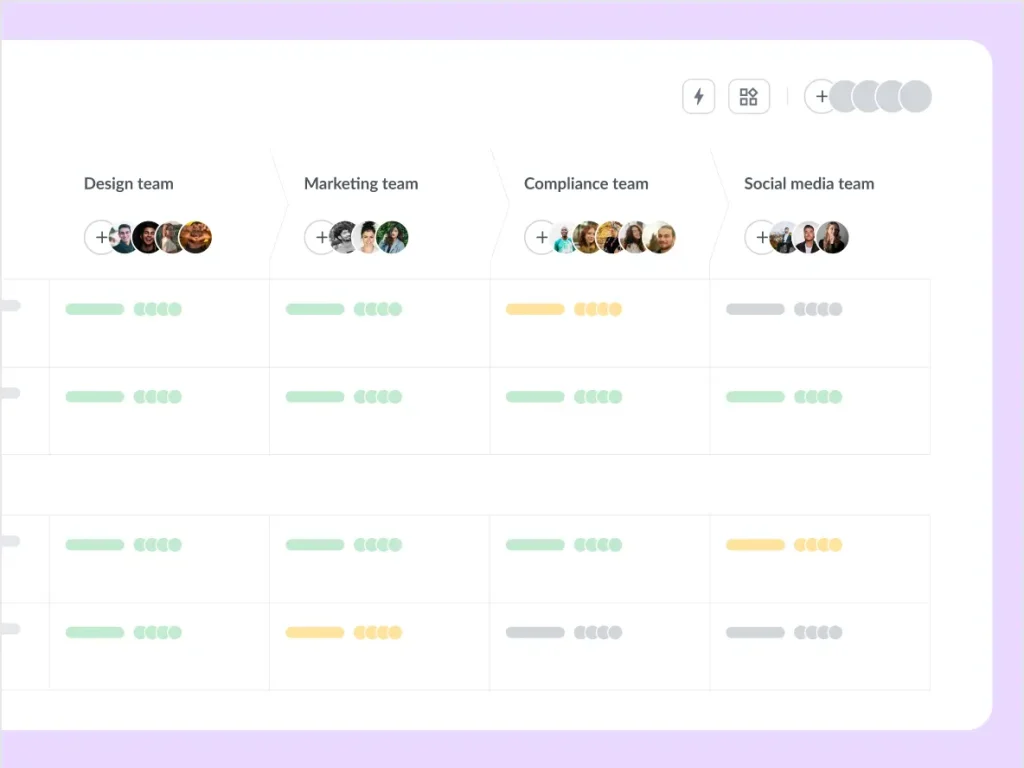
You can structure your process by creating different steps for each group of stakeholders (e.g., marketing team, legal, clients). Then you can set due dates and approval requirements for each step, so you know exactly who needs to sign off before moving on.

Step three – Invite reviewers
Now that you have set up your approval process, the next step is to add reviewers by email or share a secure review link. They don’t need an account to comment or approve, which keeps the process friction-free.
You can leave a personalized message when you invite reviewers, outlining your expectations and any other relevant information they should consider when approving the asset. This is particularly useful if you want different review groups to focus on specific areas during the approval process. For instance, the Compliance team only needs to focus on whether the content meets industry regulations and standards like FDA.

Step four – Collect feedback
Unless you’re really lucky, your reviewers will probably have some creative feedback before approving your marketing assets. That could be anything from feedback on the design to compliance feedback from the Legal team.
With Filestage, all your reviewers can comment directly on files with markers, annotations, and time stamps. That makes it much faster to collect, consolidate, and act on the feedback. Thanks to the annotations, it also saves time on follow-up questions to clarify requested changes or conflicting comments. You’ll see all feedback in one dashboard instead of scattered across emails, making it easier to address.

Step five – Request approval
When each reviewer has checked the content, they have two options in Filestage: Approve or Request Changes. If someone requests changes, the file stays in review until you upload a new version.
You can easily see who has approved each asset (and who hasn’t) in the project dashboard, making it quick and easy to nudge stakeholders who are creating blockers.

Step six – Upload new asset version
If reviewers request changes before approval, you can easily turn their feedback into an actionable to-do list to speed up the execution process. Once it’s ready, you simply drag and drop the updated file into the project. Filestage will stack all of the previous versions so you can easily access them to compare and check that all changes have been made before approving.
The smart compare feature stacks the latest versions side-by-side to make comparing asset versions as fast as possible.

Step seven – Track the approval status of each asset
In your Filestage dashboard, you can see the following information at a glance:
- Who has approved
- Who has requested changes
- Who is still pending
Then you can set up automated reminders to nudge any stakeholders who haven’t responded.

Step eight – Move to the next approval step
Once all reviewers in a step approve the asset, the file moves forward automatically. At the final step, you’ll have a clear record that all stakeholders signed off. Having every approval logged provides you with a detailed audit trail in case of an internal or external investigation.
Want to know more? Here’s a 60-second overview of Filestage.
Manage approvals in Filestage
Whether you’re a large firm invested in large-scale projects with multiple stakeholders, or a small-scale startup with a cohesive design team, formulating a clear, well-articulated request can mean the difference between approval and project delay.
Using an approval form template can help you streamline the approval process and keep the red tape down to a minimum.
If you want to see first-hand how Filestage can become your go-to software for a faster approval process, make sure to start a free trial →