So you reached the point where you’re in desperate need of automating your marketing efforts to help scale your business. But everywhere you look, articles are butchering the word “efficiency” without giving you actual information on when and where it’s best to use marketing automation.
For starters, let’s just say that marketing automation is no longer the future but rather an actual reality that every team needs to, at least, consider implementing. Our recent AI report even suggests that 83% of marketers think AI will boost their productivity.
And they’re not wrong. Teams that are already leveraging various forms of automation are reporting higher customer satisfaction, improved collaboration among teams, and higher revenue.
But not every team needs to automate the same processes. That’s why I created a roundup of the four most common use cases for marketing automation to help you find the optimal solution for your team.
Plus, I cover everything from implementation to benefits, and useful AI productivity tools for each use case. So stick around if you’re interested!
But first, some basics.
What is AI marketing automation?
There are quite a lot of misconceptions about what AI is, its role in marketing campaigns, and even everything that’s considered marketing automation. So here’s the real truth.
AI marketing automation refers to the use of technology to eliminate manual work and streamline marketing operations. More specifically, marketing automation helps your team send targeted emails, speed up review and approval processes, segment your audiences, and even track customer interactions.
Originally, not all marketing automation was AI driven. If you’re looking to send automated email sequences, this process doesn’t have to be driven by AI. But if you want to personalize those sequences by triggering them after certain customer interactions, AI can really speed things up.
Basically, AI is helping improve the accuracy and efficiency of marketing automation by allowing you to personalize automated actions.
Supercharge your marketing reviews
Share, review, and approve all your content in one place with Filestage.
Four use cases for implementing AI-powered marketing automation
Every team has unique needs and preferences when it comes to automating their digital marketing operations. But there are some challenges most marketing teams face.
Here are the four most common use cases for implementing AI automation powered by machine learning as part of your marketing processes.
1. Personalized email campaigns
Most businesses rely on email campaigns to sell products or maintain long-lasting relationships with their customers. This shouldn’t be surprising considering that, in 2023, email was the most effective channel for driving sales – with over half of consumers purchasing a product directly because of an email they received.
But this couldn’t have been achieved without customer data and AI-driven content marketing automation. By creating automated email sequences specifically tailored to each audience segment, you can deliver highly-personalized content to your customers. And this will maximize your chances of conversion.
Here are some factors you can take into account when creating your automated email marketing sequence:
- Purchase history – Suggest similar products to all customers that purchased a product from a certain category. For example, you can offer a matching sports top to a customer who previously bought leggings from the same product line.
- Browsing behavior – Offer relevant products based on which pages the person visited in the past. For example, you can offer trips to Asia to all visitors who check out blogs promoting Asian destinations.
- Demographic information – Provide location-specific offers or discounts depending on specific events. For example, you can promote special discounts around Thanksgiving to all US contacts.
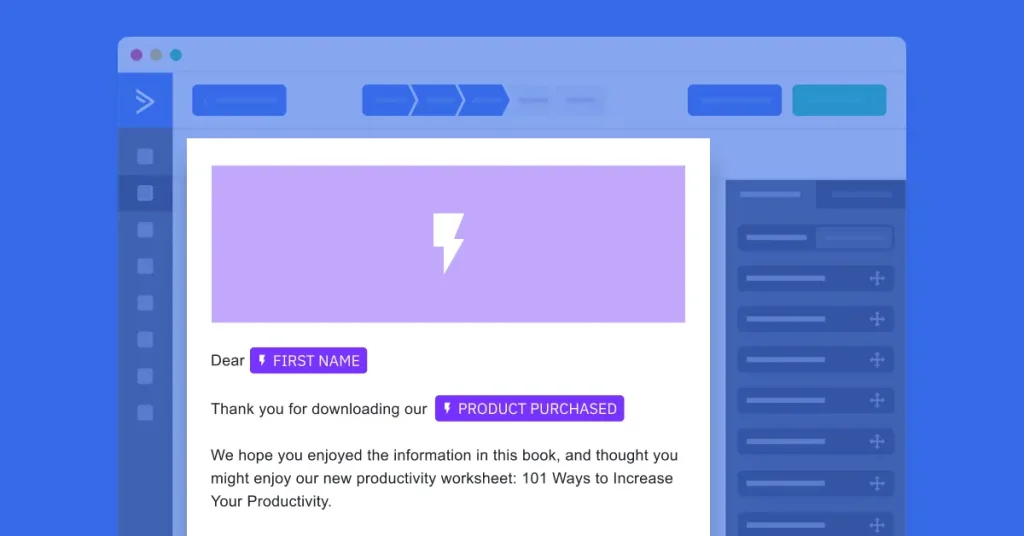
Then you can trigger emails based on specific actions like signing up for a newsletter, abandoning a cart, or browsing specific products.
By delivering relevant content at scale, you’ll improve open and click-through rates, increase engagement, and improve customer retention!
Useful tools
Marketing automation is just words on a page without the right AI marketing tools.
Here’s a list of the three most useful email marketing automation tools for different company sizes:
- Salesforce – Best for large enterprises looking for advanced automation options, including Journey Builder, which allows your marketing team to set up highly-personalized, multi-step customer journeys. It also uses AI-driven insights from Salesforce’s Einstein AI to optimize engagement with predictive content recommendations.
- Customer.io – A flexible automation tool for mid-sized companies with visual and code-friendly workflow builder, allowing your marketing team to create complex, multi-step automation journeys with ease. With features like A/B testing, branching paths, and conditional logic, Customer.io makes it easy to tailor campaigns to specific customer actions or milestones.
- ActiveCampaign – Best for small startups with the ability to create simple to complex automation workflows that can handle everything from lead scoring to abandoned cart reminders. You can also benefit from its AI copywriting tools for sending personalized emails based on segment criteria.
We’ve rounded up our favorite digital marketing apps, if you need more inspiration for your wishlist.
2. Automated review and approval process
Did you know that almost half of marketers mention that marketing automation helped their team establish a common business funnel? And one major area in this is creating automated review and approval processes.
With a bunch of marketing assets having to get reviewed and approved by several stakeholders before they’re ready for publishing, it’s important to have a streamlined approval process in place. To avoid going back and forth between reviewers and the creative team, and risking human error, you can automate a number of manual processes.
Useful tools
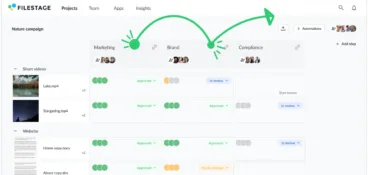
For example, by implementing a dedicated review and approval platform like Filestage, you can upload your documents into one tool and invite as many people to review your documents in one place.
From there on, you can streamline the process by setting up a series of AI-powered automated actions designed to speed up and improve the quality of your process.
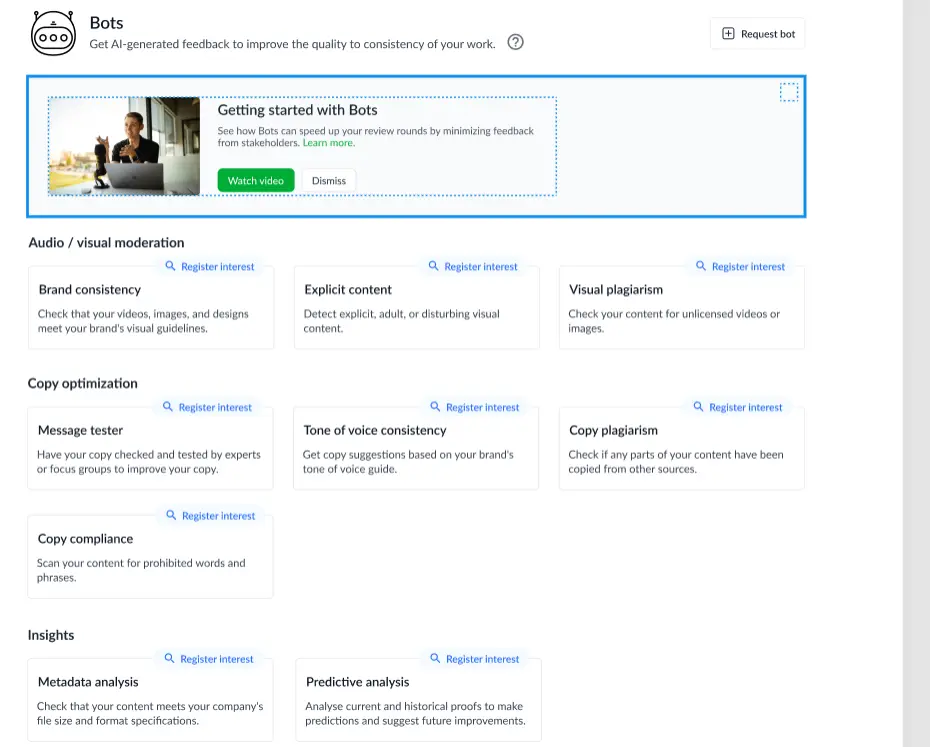
Here are the ways you can leverage AI review assistants to optimize your review process in Filestage:
- Identifying forbidden words – Give the AI assistant a list of words to look out for (e.g. “guarantee”), then it will add comments any time those words appear in your content.
- Fixing grammar issues – Create a prompt detailing specific elements of your house writing style, like the correct type of dash or usage of the Oxford comma. Then the AI assistant will highlight any grammar issues that break these rules.
- Checking for disclaimers – Set up a compliance assistant that scans your text (e.g. packaging) for specific claims that require a disclaimer. Then the AI will add a comment if the disclaimer can’t be found and it will suggest the right one to include.
On top of that, you can combine AI features with automations for an even more streamlined review process for AI generated content. For example, if the AI assistant doesn’t find any issues, it will immediately move the file to the next stage of the review process.
Supercharge your marketing reviews
Share, review, and approve all your content in one place with Filestage.
3. Social media management and automated posting
Being regularly present on social media is something every business should strive for. Social media improves brand visibility, increases engagement with potential customers, and can even help you close more deals.
But wherever each business dives into the world of social media, they quickly realize this takes much more effort than they originally planned. Luckily, implementing artificial intelligence and automation is a fantastic way to speed up social media efforts and eliminate a majority of manual work.
You can use marketing automation tools for AI content creation, scheduling posts across platforms, or getting recommendations on optimal engagement times. Plus, AI can monitor comments and interactions with your audience and trigger alerts for high-priority interactions.
This way you can avoid spending days working on your social media posts, scheduling them, and monitoring your channels while always staying in the loop about important matters.
Useful tools
Here are the three best social media marketing tools for different use cases:
- Hootsuite – The tool uses AI to optimize social media marketing workflows, making it easier for businesses to manage multiple platforms efficiently. Its AI-driven analytics provide actionable insights into engagement trends and audience behavior, helping you refine your marketing strategies.
- Buffer – The tool uses AI to simplify social media scheduling and maximize post performance. Its AI-driven optimal timing feature identifies the best times to publish content, which makes sure posts are more likely to reach and engage target audiences.
- Sprout Social – Sprout Social uses AI for advanced social listening and sentiment analysis to help your business to track and interpret brand mentions, keywords, and customer sentiment across platforms. These AI tools for business also identify trends and emerging topics, helping marketers stay ahead of the curve.
4. Cross-selling and upselling recommendations
Did you know that upselling leads to a revenue increase of 10-30% on average? But setting up successful up-selling channels requires forward thinking.
And one powerful way to go about this is to deliver targeted cross-sell and upsell offers based on customer behavior and purchase history. And for that you’ll need AI!
Automated AI systems can analyze your customer’s past purchases and browsing behavior and help you recommend complementary or upgraded products. These suggestions can be shown on the website, sent through email, or even used in retargeting ads.
One great example is Amazon and its AI-powered system. The system constantly analyzes a customer’s purchase history, browsing patterns, items in their cart, and even items they have looked at without buying.
That way, when a customer purchases a DSLR camera, for instance, Amazon’s AI system immediately identifies this purchase and suggests items frequently bought with that camera, like lenses, tripods, and memory cards.
This cross-selling strategy maximizes the initial purchase value by encouraging the customer to buy complementary accessories.
Useful tools
- Dynamic Yield – Ideal for e-commerce sites looking to increase average order value through on-site personalized recommendations. Dynamic Yield’s AI-driven platform segments users based on browsing history, purchase behavior, and real-time interactions, and auto-generates personalized recommendations.
- Salesforce Marketing Cloud – Perfect for enterprises with established customer bases, looking to boost engagement and sales through consistent, cross-channel upselling. Salesforce’s AI, known as Einstein, predicts customer behavior and preferences, which allows you to create personalized product recommendations across channels.
- Nosto – Great for small-to-medium e-commerce businesses looking for a straightforward tool to increase average order value through in-cart and on-site recommendations. Nosto provides various recommendation types, including “Frequently bought together” and “You might also like” options. These can be displayed on product, cart, and checkout pages.

FAQs about AI marketing automation
What is AI automation in marketing?
AI marketing automation uses artificial intelligence to streamline different marketing-related tasks and processes. AI uses machine learning and predictive analytics to put repetitive tasks on autopilot and scale personalization.
Some common use cases include:
- Automating content scheduling for social media
- Using AI data to personalize and optimize campaign performance
- Putting content review and approvals on autopilot
- Leveraging AI data analytics to offer cross-selling and upselling recommendations
Will marketing be automated by AI?
There’s no doubt that AI marketing automation is more than a passing trend. Almost every team now uses AI marketing tools to automate manual workflows and make smarter decisions.
That said, I think human oversight will remain essential for most marketing automation tools. The good news is that with artificial intelligence handling the repetitive manual tasks, marketing teams will have more bandwidth to focus on high-impact work. I’m talking marketing strategies, messaging, and building connections with the target audience.
I asked AI to see if it agrees. Here’s what it said:
“Marketers will increasingly shift from execution-focused roles to strategic oversight as AI handles technical details”.
How is AI used in marketing?
AI marketing tools are changing how we approach marketing. These are the biggest use cases for AI tools right now:
- Personalization – AI algorithms allow marketers to offer highly personalized customer experiences eg. Netflix uses AI to recommend relevant content to its viewers
- Automation – AI marketing tools take over the heavy lifting by putting manual tasks on autopilot eg. Filestage uses AI-assisted reviews to speed up content approvals and improve accuracy
- Creation – AI tools can speed up the process of coming up with content ideas, creating images, and writing copy eg. Canva’s AI suite can create images based on your text prompt
- Customer service – AI chatbots and assistants improve the customer experience and offer real-time support or product recommendations
Final thoughts
I hope this guide has demystified some key use cases for implementing AI into your marketing strategies. Because one thing is certain, once you leverage AI marketing automation, you’ll quickly see how much it can help you with attracting and closing more customers with less manual work involved.
And if you’d like to see first-hand how Filestage can completely transform and automate your marketing review and approval process, sign up for a free trial today!