

TL;DR
Communication tools give teams a central hub for internal communication, external updates, and knowledge sharing. The best stacks combine instant messaging, video conferencing, file sharing, and project management to keep everyone aligned. When tools support both real-time and async communication, they cut back-and-forth and help remote and in-office teams stay on the same page. Used well, they streamline collaboration, improve employee engagement, and make project progress easier to track.
Why communication tools matter for modern teams
Marketing teams must maintain constant communication to collaborate effectively. This means sending messages, requesting feedback and updates, sharing and approving files, and managing stakeholders.
Having the right corporate communication tools is vital. And the stakes are high: recent workplace research shows that companies using strong internal communication tools are 3.5 times more likely to achieve better outcomes than those that don’t.
Are you ready to explore the best communication tools for marketing teams? Let’s review the best tools for each category outlined above.
Overview of 30 communication tools sorted by category
We have sorted all 30 tools in this list based on these categories and use cases:
- Instant messaging tools
- Video conferencing tools
- Content review and proofing tools
- Document collaboration tools
- Project management tools
- Social intranet and internal communication tools
- Knowledge center tools
- File sharing tools
- Note-taking tools
- Survey tools
Instant messaging tools
In recent years, a wide range of internal communication tools have popped up to help teams chat and collaborate, wherever they are. They’re more immediate than email, but less intrusive than phone calls – and most will integrate with your project management and customer support tools.
Marketers use group chats to ask questions, share information, and maintain open lines of communication. There are a number of instant messaging platforms vying for your attention – which one deserves it?
Troop Messenger

Troop Messenger is a team communication tool that enables office teams to collaborate by sharing work conversations.
It enables teams to reach faster decisions through instant messaging, audio and video calls, video conferencing, screen sharing, remote control, and more features.
Key Features
- Allows teams to track all work interactions within shared spaces/groups.
- Retrieves contacts and data faster with its advanced data filters.
- Supports a wide range of integrations, including Google Drive, Dropbox, Mailtrim, and more.
Troop Messenger is used by project management teams of all sizes. Additionally, it has been used by various government and Defense organizations worldwide. New subscribers can try its 7-day Enterprise trial plan to explore the features.
Chanty
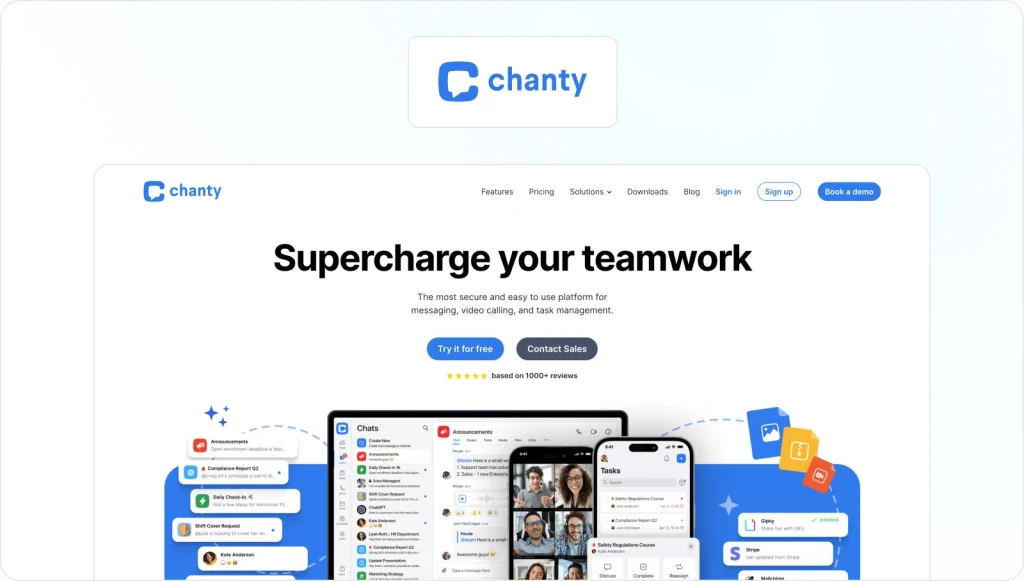
Chanty is an AI-powered team chat tool for teams that empowers marketers to get more done together. It centralizes your shared team knowledge in one location, so all your marketers’ important project information is just a click away.
Key features
- Engage in text, voice messages, and video chat
- Share screenshots, files, links, and tasks between members
- Connect with a number of apps
- Organize all team activity and content in one space
Chanty makes it easy for new remote workers and teams to get started. The interface is slick, and all features are organized logically, making it easy for busy marketing professionals to organize their thoughts and tasks.
Slack
Slack has emerged as one of the dominant instant messaging platforms for companies worldwide. The task management tool occupies a unique space that bridges email and instant internal communication, enabling marketers to work smarter and keep their conversations better organized.
Key features
- Coordinate your integrations with countless other marketing tools
- Effortlessly organize your communications across channels and spaces
- Use mentions and tags to communicate with your team
- Can be accessed on mobile phones
Slack offers a range of pricing options so every marketing team can find a package that’s right for them. The free version of Slack is also quite robust and lets you retain a large number of messages before automatically deleting older ones.
Microsoft Teams

Microsoft Teams is a collaborative communication tool that brings together a range of features to help marketers communicate more effectively, both within and outside their department.
Key features
- Robust workplace chat
- Reliable video meetings
- File storage and sharing
- Integration with a number of other platforms and Microsoft products
Microsoft Teams is a scalable platform suitable for marketing teams of any size. It currently integrates with Microsoft Office 365 products, making it an attractive choice for businesses that have already subscribed to the service.
Video conferencing tools
Video conferencing has become an important part of modern business, especially as remote work has increased. In fact, 94% of companies say that video conferencing increases productivity and eliminates the need for in-person meetings.
This high-quality team communication tool with great collaboration features gives marketers the ability to establish visual connections with internal and external colleagues, which lets them push their projects forward.
Google Meet

Google Meet is a fast, convenient online video conferencing tool fully integrated with G Suite. This means it’s easy for marketers to join a video conference call, connect, and quickly schedule internal communications with internal and external colleagues, even on mobile devices.
Key features
- Create and join video conferences easily
- Screen sharing
- Make high-fidelity video and audio calls
- Take advantage of this popular solution’s adoption of G Suite
Google Meet is the ideal solution for small businesses and large marketing teams that already use G Suite. Marketers can use this video conferencing option to schedule Calendar events seamlessly and send video call invitations.
Zoom
Zoom is a leading video and web conferencing tool that has firmly cemented itself as a popular choice among marketers.
This video conferencing tool offers robust collaboration features that enable marketing teams to communicate internally and externally and coordinate webinars.
Key features
- Use a single app for voice, video conferences, voicemail, and messaging
- Record a video call
- Screen sharing
- Host webinars for marketing events and town hall meetings
- File sharing and messaging across platforms
Zoom delivers a consistent enterprise experience for team communication. It’s most often used by medium and large businesses for video calls. Its affordable and straightforward pricing makes it a simple tool choice for many marketers.
Whereby

Whereby is a flexible video communication tool that offers browser-based video meetings. The tool doesn’t require downloads or logins for guests, removing barriers to entry and layers of complexity.
Key features
- A number of different pricing options
- An API for additional flexibility
- Join with a single click and create custom links
Bills itself as the ideal solution for medium-sized marketing teams that need to collaborate via video calls with internal and external partners across distances. Mobile support and room for up to 50 participants make this an attractive and robust solution.
Content review and proofing tools
Content review and approval tools can help marketing teams to accelerate the overall review process, boost transparency, and collect actionable feedback. They bring order to chaos by helping them master the otherwise complex content review process. Here are some of the best tools on the market.
Filestage
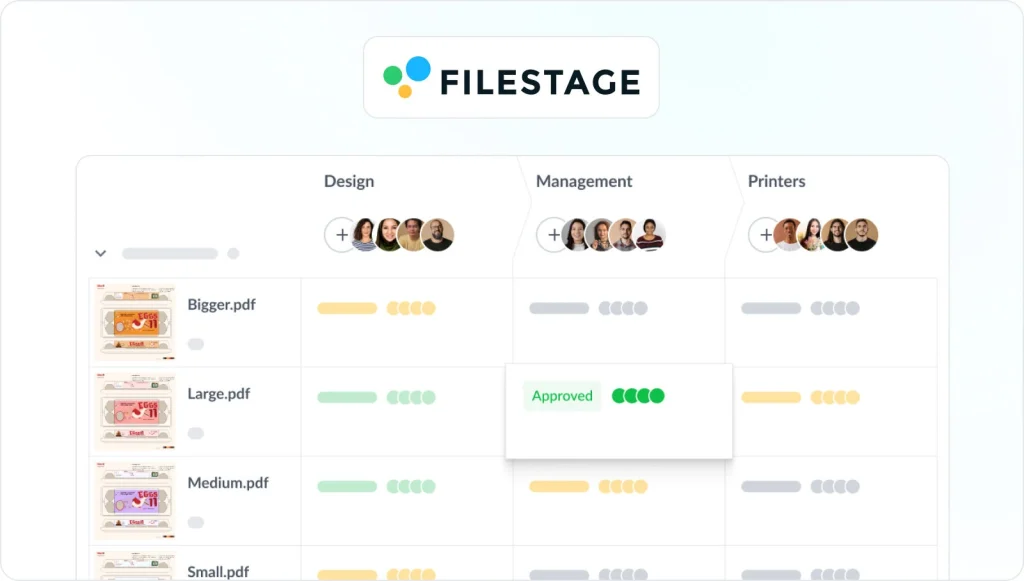
Filestage is an online proofing platform that makes the review and approval process for marketing and creative teams easy, fast, and stress-free. Using this tool, marketing teams can share, review, and discuss their content in real time, increase transparency, and meet all project deadlines.
Key features
- Add comments/ annotations directly on files
- Manage all your files in one central location
- Reviewers can use the tool without having to log in
- Collaborate with ease and in real time
- Secure time-stamped and documented approvals
Filestage is the best tool for busy marketing teams that need to collaborate on their work with internal and external stakeholders. This intuitive, easy-to-use platform makes it a breeze for creative marketers to collect actionable feedback and move projects forward.

Before Filestage, our review process was pretty chaotic. Feedback came flying in from all directions – emails, Slack, PowerPoint decks, even WhatsApp (yes, really). It felt like one’s entire role was just to track down comments, consolidate input, and try to maintain a smooth workflow.
Supercharge your project communication
Share, review, and approve all your content in one place with Filestage.
Approval Studio

Approval Studio is online proofing software that enables marketing teams to collaborate on their designs. This review tool simplifies the approval process and increases marketing team productivity.
Key features
- Track all activities in real time
- Generate comprehensive proofing reports that summarize approval activity
- Join multiple teams, using a single profile
Approval Studio is used by marketing teams that need to expedite the review and approval process for their designs, track team member activity, and increase transparency across the project.
ReviewStudio

ReviewStudio is online proofing software that gives marketing teams control over the review and approval process. The tool offers a range of features that keep content at the center of the discussion, making the review process faster and easier to manage.
Key features
- Centralize your review and approval discussions
- Track your revisions and perform task management
- Markup and comment on a range of file types
- Perform independent and live review sessions on content
Approval Studio is designed for agencies, marketing teams, and production studios that need a platform to coordinate content review and approval.
Document collaboration tools
The rise of remote work has increased the need for high-quality document collaboration tools to streamline work management. These internal collaboration tools help remote teams view and edit work documents without sending multiple emails or making multiple phone calls on the same subject.
Team members can brainstorm ideas, solve problems faster, increase productivity, and build a stronger sense of community by using document collaboration tools.
Filestage
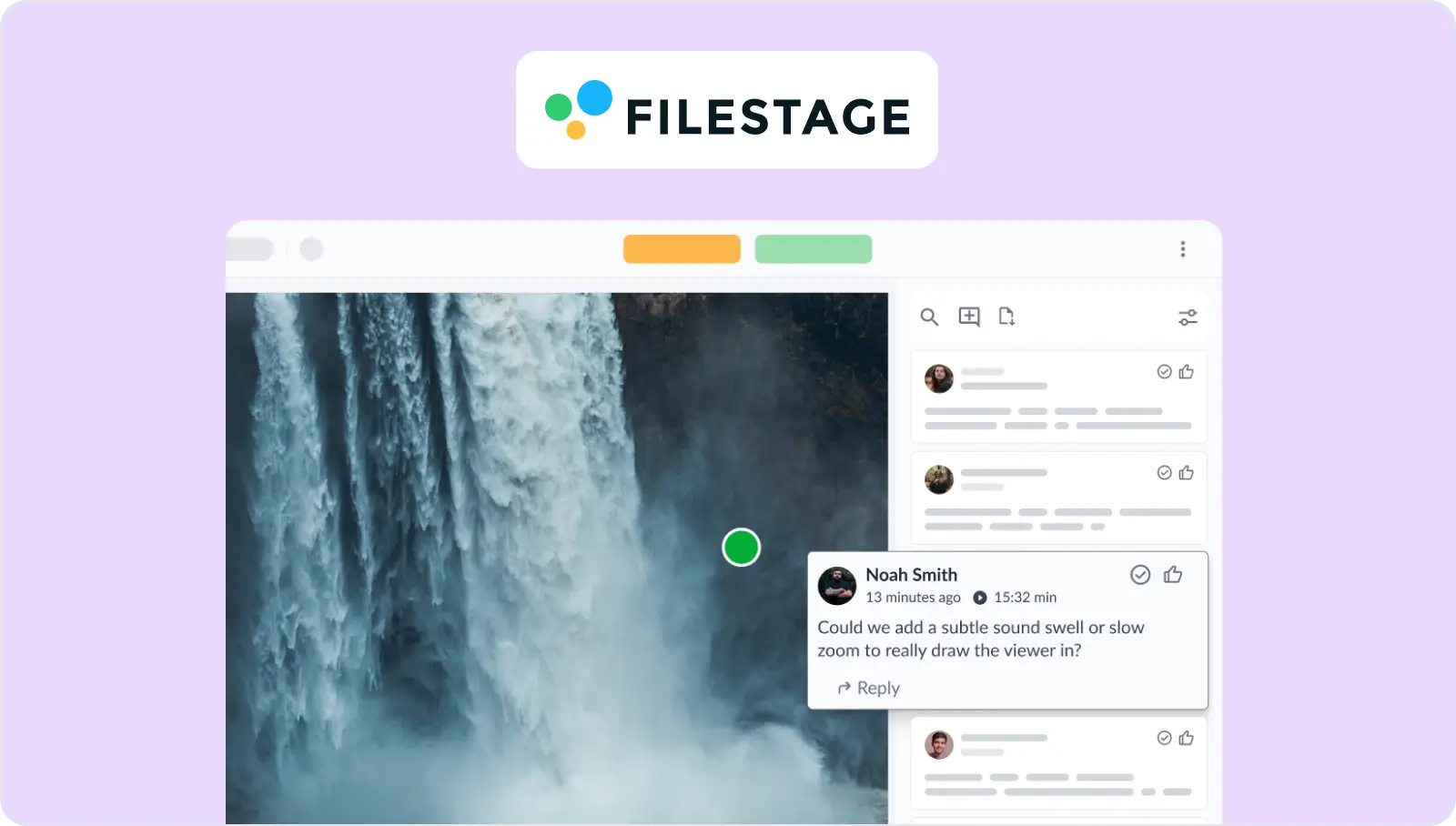
Filestage makes it easy for marketing teams to share, review, and leave comments on PDFs and other document types. Since all your documents are in one place, reviewers can discuss changes with one another. This accelerates review rounds and helps you meet your deadlines.
Reviewers leave their comments directly on the document with full context. This avoids misunderstandings and makes revisions easier for the editor.
Key features
- Side-by-side version comparison
- Leave comments and annotations in the document
- Automated version control
- Set up a clear approval process
- Collaborate on files in real time
- Automated updates and reminders
Since Filestage is intuitive and easy to use, users and reviewers can get started in minutes without training.
Google Workspace

Google Workspace includes several communication tools, with Google Docs as the tool for document collaboration.
It is an all-in-one document collaboration tool that lets you access, review, edit, comment on, and provide feedback on documents. Reviewers can track changes and add notes to documents, which accelerates the approval process. There’s a reason why this is one of the leading business communication tools.
Key features
- Cloud storage
- File sharing
- Easy access with a Google account
- Document creation
- Real-time editing and commenting
- File saving in multiple formats
- Different access settings (view, comment, editing mode)
Small businesses would benefit significantly from Google Docs because it is free, easy to use, and offers 15 GB of cloud storage. For larger teams, managing sharing permissions can be challenging, and you may need to upgrade to a paid version of the tool.
Project management tools
Project management tools enable marketing teams to coordinate complex projects, identify dependencies, and ensure everyone is on the same page.
They are used to craft elegant project timelines and distribute tasks across your team so nothing falls through the cracks. Here are some of the standout project management tools.
Asana
Asana is a powerful – and immensely popular – project management tool. Its work management platform empowers marketing teams worldwide to stay focused on a diverse set of goals, projects, and daily tasks.
Key features
- Plan and structure your projects in logical ways
- Assign tasks, set priorities, and deadlines
- Follow your projects and tasks to completion
- Uncover dependencies using Gantt charts
Asana is used by marketing teams of all sizes. With a range of pricing options available, it can be adjusted as required. This popular team management platform has already been adopted by some of the world’s largest businesses.
nTask

nTask is a robust team collaboration platform that keeps everyone in one loop for projects. The tool offers a wide range of features to ensure smooth internal and external communication across tasks and projects, enabling the team to get more done and meet deadlines.
Key Features
- Task comments and file sharing
- Project planning, task assignment, and project tracking
- Create dependencies using Gantt charts
- Set status, due dates, and priorities
- Create and manage to-do lists
nTask is used by teams of any size, over a wide range of industries. Used by more than 100,000 teams across the globe. It offers a forever-free plan for team collaboration, with paid features available. The platform is easy to use and adapt, making it a suitable option for big teams.
Trello

Trello is a project management platform that emphasizes fun and flexibility. The tool offers a wide range of features that ensure marketing teams collaborate more effectively and work more productively together.
Key features
- Organize tasks across boards, lists, and cards
- Prioritize projects with tags and labels
- Integrate with a host of other marketing platforms
Trello is used by countless marketing teams worldwide. Its intuitive system makes Trello easy to adapt to and get started with. This makes it a popular choice for agile marketing teams.
Nifty

Nifty is a communication tool designed to make project management as simple and enjoyable as possible. The tool acts as a central hub, where marketers can manage projects and share timelines, deliverables, and workloads with one another effortlessly.
Key features
- Set goals and timelines for your projects quickly
- Collaborate on tasks with a high level of detail
- Share knowledge and project data
- Create collaborative documents and notes
Nifty is used by marketing teams of all sizes to enhance project communication and delivery times. The platform places a strong emphasis on usability and clarity, making it a great option for fast-moving teams.
Social intranet and internal communication tools
Larger businesses often need to invest in a larger intranet and a unified internal communication platform.
This communication software can be used to dispense important updates and inspire conversation on social media. Here’s a look at the best options that are loved by marketing teams.
Staffbase
Staffbase is an internal communication tool that enables managers to reach all employees with instant notifications. The platform offers a native mobile app that can be branded, fostering a sense of connection across the entire team.
Key features
- Ensure interactive global business communication using smartphones
- Communicate anytime and anywhere
- Integrate with a host of other platforms
Staffbase is a great tool for larger businesses that want to create a sense of culture and belonging within their teams. These team communication tools empower marketing teams to share important updates and celebrate successes.
Jostle
Jostle is a cloud-based intranet solution that delivers next-generation intranet features. This great combination of advantages boosts employee engagement and harmonizes internal communication.
This is the tool you need to clear up clutter, deliver fresh content, and to bring order to chaos.
Key features
- Take advantage of its powerful search function to find everything you need across your organization
- Make voice and video calls with just a click
- Add logos and branding to make your company shine
Jostle is an enterprise solution that is suitable for teams of all sizes. Marketing departments can also use this tool as an internal marketing channel to celebrate internal developments.
Beekeeper
Beekeeper is a workplace team communication tool that marketers can use for internal communication within their department and across the business.
Marketing managers can also use this tool to increase employee engagement and retention and manage customer support teams.
Key features
- Use mobile messaging that gets rid of miscommunication
- Use in-depth analytics to improve your productivity
- Empower employees by giving them access to information and systems
Staffbase empowers businesses of all sizes by connecting departments and professionals across locations and languages. This easy-to-use mobile platform also enables marketers to communicate on the move.
Knowledge center tools
Knowledge helps marketing teams with internal communications and enables them to communicate internally and externally. These communication tools make it easy to create, maintain, and share clear documentation that delivers unambiguous messaging to different groups.
Tasks such as sharing best practices and processes across departments to improve task management, or communicating product information to customers.
Helpjuice

Helpjuice is a powerful knowledge base software that’s easy for marketers to use. Marketing teams around the world already use this tool to scale their customer support offering. The tool also encourages more cohesive internal collaboration.
Key features
- Chatbots and live chat functionality
- Tailored onboarding and activation messages
- Real-time support tools
Marketing teams in both public and private organizations make the most of Helpjuice to circulate accurate and updated information to their internal and external audiences. The tool also does a great job of driving growth at every stage of the customer lifecycle.
Confluence
Confluence is a knowledge base platform from Atlassian. Marketers around the world rely on its quality platform to document important internal and external information. The platform can be easily configured to make articles public or private.
Key features
- Collaborate in workspaces, with simple permission management
- Create, collaborate, and organize work in one place
- Make the most of templates to drive efficiency and consistency
This knowledge base tool is generally most useful for marketing departments within SaaS companies that already use Atlassian products, such as Jira and Bitbucket. Tech-savvy marketers can use this tool to their advantage.
Zendesk
Zendesk primarily offers CRM software, but the Zendesk Guide component also serves as a self-service knowledge base. This smart tool for knowledge bases empowers marketing teams to continuously improve their content and deliver it to customers.
Key features
- Configure a responsive and branded help center simply
- Make the most of its WYSIWYG editor to configure and import content
- Ensure that your content is automatically search-engine-optimized
Zendesk Guide is used by marketing teams seeking to improve their self-service offerings. This tool is particularly useful for SaaS businesses with complex products or services that require client-side configuration.
File sharing tools
Marketers often need to share large files to move projects forward. Those files may need to be shared internally or sent to external collaborators and agencies.
Whatever your needs, here are some of the best file-sharing tools for the job.
WeTransfer
WeTransfer enables marketers to send large files worldwide in minutes. This team communication tool makes the process as simple and fast as possible, requiring only the basic information from marketers. The free version of this communication software also has generous file-size limits.
Key features
- Send and receive 20 GB per transfer
- Create Pro pages
- Deliver work with branded communications
WeTransfer has quickly become a very popular file transfer tool for marketers worldwide. The power of this unified communications platform lies in its simplicity, which makes it quick and easy for marketers to securely share their marketing collateral.
Dropbox
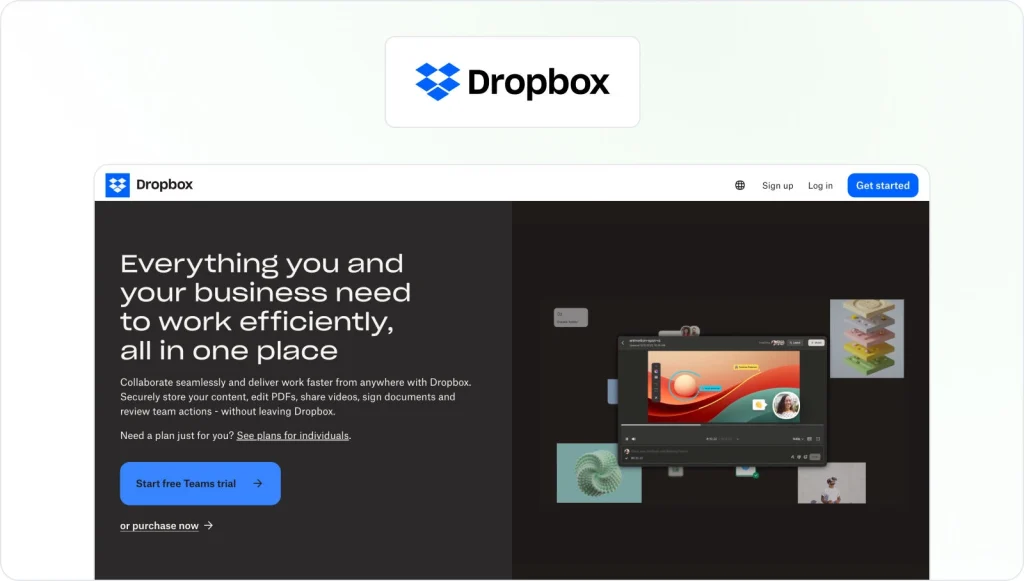
Dropbox has emerged as a leading platform for file transfers and cloud storage. The platform now bills itself as a smart workplace – a team communication tool that brings content together in one place and empowers marketers to cut through the clutter and find the content they need.
Key features
- Organize and share traditional files, cloud content, and more, in one location
- Remain focused, thanks to its personalized suggestions
- Coordinate your team and push your projects forward
Dropbox is used by marketing teams, both large and small. The tool is particularly useful for larger, remote marketing teams that need to communicate file updates and require strict version control.
Note-taking tools
Marketing teams often have to share great ideas with one another. Whether it’s a great new content idea or an outline for a new campaign, they’ll need to rely on good note-taking tools.
These team communication tools are great for internal communications as they make it easy for marketers to share their notes among their team and to get their ideas heard.
Evernote
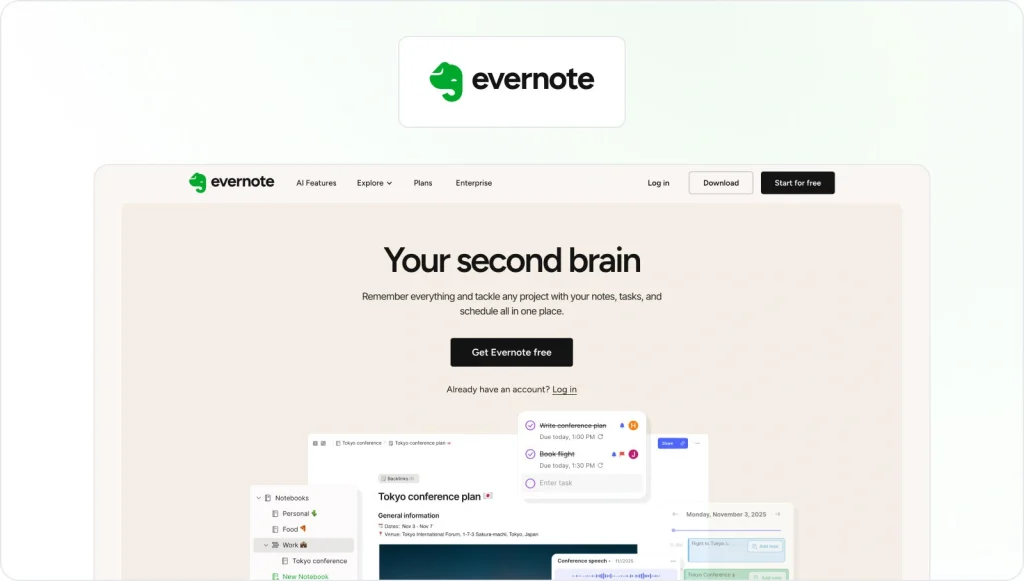
Evernote is a leader in the note-taking space. Forward-thinking marketers use this tool to streamline internal communication and easily keep notes and share ideas. The tool emphasizes clarity and usability to ensure no great idea falls through the cracks.
Key features
- Take voice notes, snap pictures, and scribble ideas
- Use reminders to keep track of tasks and deadlines
- Manage all types of ideas, from big projects to personal moments
Evernote is used by busy marketers who need to track multiple ideas simultaneously. The tool’s excellent cloud functionality is also appreciated by marketers who are always on the move between platforms.
Notion

Notion bills itself as an all-in-one workspace, where marketers can write, plan, collaborate, and organize their content in one single location. The tool combines four ambitious tools into one, enabling marketers to take notes, share knowledge, create tasks, and maintain spreadsheets.
Key features
- Create and share notes quickly
- Build a strong knowledge base and organize it into workspaces
- Share tasks and projects quickly with your team
The tool has a broad scope and is used just as much by individual marketers as by teams. Used to its full potential, the tool can go a long way toward helping marketers organize their thoughts and communicate their ideas internally.
Slite

Slite is a note-taking app, blended with a knowledge base tool. The platform bills itself as the simplest way for teams to structure their documentation. Indeed, this tool helps marketing teams organize knowledge, documentation, notes, and onboarding content clearly.
Key features
- Organize and share notes quickly, within a clean structure
- Save time when creating content with templates
- Integrate the app with your current tech stack
Slite is a great tool for fast-growing marketing teams and small businesses that need a centralized space to store, organize, and share internal content. Its logical content structure also inspires clear communication.
Survey tools
Marketers use survey tools to elicit customer and prospect feedback on their preferences and feelings. These popular business tools provide useful data-driven insights for marketing teams. Here are some of the best survey tools on the market.
SurveyMonkey

SurveyMonkey is a powerful, intuitive survey tool that provides marketers with the answers they need. The tool is secure and easy to manage, enabling marketers to collect actionable data from survey respondents worldwide.
Key features
- Create attractive and branded surveys quickly
- Share those surveys rapidly and easily with a single link
- Collect and export responses in order to guide decisions
SurveyMonkey has quickly established itself as a global leader in survey tools. The unified communication platform is used by Fortune 500 companies and smaller businesses alike and offers multiple pricing options.
Typeform
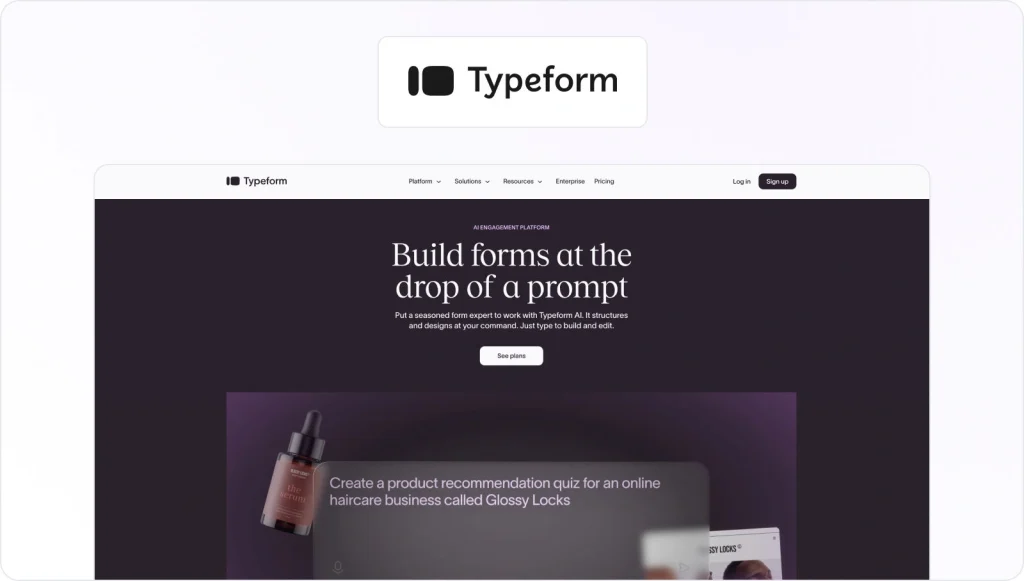
Typeform bills itself as the future of forms and surveys, placing a strong focus on creating more human interactions. The platform makes it simple to create beautiful, conversational forms that prompt more responses faster.
Key features
- Create forms, surveys, quizzes, and more
- Incorporate different types of media
- Integrate with key platforms to collect and collate data
Typeform is used by conversational marketers and small businesses to create survey experiences that reflect their personalities. This survey tool is renowned for its beautiful forms, making it a frequent choice for design-focused marketers.
Google Forms
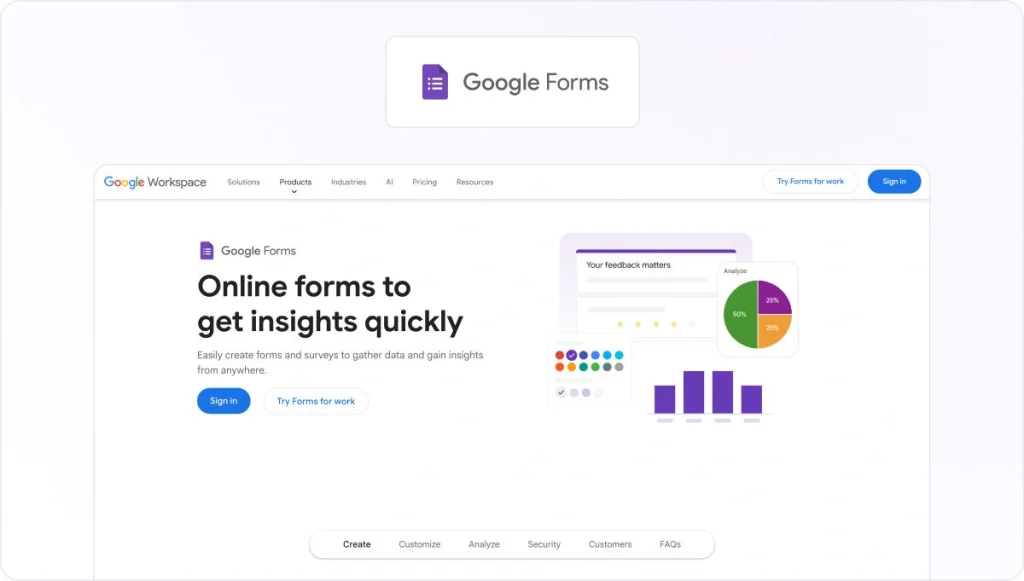
Google Forms is a simple online survey tool integrated with G Suite. The application makes it easy for marketers to collect surveys in style by adding their own branding and choosing from a curated set of themes.
Key features
- Choose from a large set of curated themes
- Incorporate your own branding
- Collect and sort through data in an intuitive way
Given that Google Forms is part of G Suite, it’s generally a great choice for marketing teams already integrated into the ecosystem. The tool is often used by marketers and small businesses that need to quickly create new surveys.
Closing thoughts
As you can see, there are lots of useful communication tools out there that can make your team’s life easier. Before you commit to any tool, you should be clear about your current bottlenecks and missing workflows.
This will help you identify the mandatory features that your next communication tool should have. Now you can start creating a list of tools that offer these features and start testing them with a free trial.
FAQ
1. What are communication tools?
Communication tools help people share information, make decisions, and stay aligned at work. They include internal communication tools (like team chat, instant messaging, video conferencing, file sharing, project management, and knowledge base platforms) and tools that support external communication with customers and partners. Together, these tools form your communication hub – a centralized hub where your team can share files, discuss work, track engagement, and keep project progress visible without relying on endless email chains or meetings in the same room.
2. How do I choose the right communication tools for my team?
Start by mapping your current communication strategies and channels: where conversations happen, who’s involved, and which workflows drive the most back-and-forth. Then look for tools that:
– Cover your core needs: team communication, task management, project collaboration, file sharing, and knowledge sharing.
– Integrate cleanly with your existing tech stack – for example, Google Workspace (Google Docs, Google Drive, Google Calendar, Google Chat, Google Meet), Microsoft 365 (Microsoft Outlook, Microsoft Teams, Microsoft SharePoint), and CRM or HR tools that store employee data.
– Offer robust collaboration features such as screen sharing, video and audio calls, comments, and @mentions to support both real-time and asynchronous communication.
– Works well for remote and hybrid teams, with reliable mobile apps and a user-friendly interface.
– Provide flexible pricing: a free, useful plan to get started, plus paid plans you can grow into as usage and team size increase.
Aim for a small, well-connected set of team communication tools rather than many disconnected apps. A tighter stack usually makes employee communication and business communication easier to manage.
3. Where does Filestage fit among communication tools?
Filestage is a review and approval software that streamlines file collaboration. While tools like Slack, Microsoft Teams, and email handle everyday team chat and direct messages, Filestage gives you a central space to:
– Share files (videos, designs, documents, and more) with internal and external stakeholders
– Collect precise, in-context feedback instead of scattered comments across different channels
– Set up transparent review workflows with clear version history
– Get timestamped approvals on files
In other words, Filestage sits alongside your project management tool, cloud storage (such as Google Drive), and chat apps as the platform for feedback and review rounds. It replaces back-and-forth email communication, keeps people on the same page about what needs to change, and helps teams and stakeholders reach approvals faster.
4. How can teams measure the impact of their communication tools?
To understand whether your communication tools are working, connect them to real outcomes:
– For internal comms, assess how quickly projects move through your workflow: project cycle times, number of handoffs, how often tasks are blocked waiting for responses, and how clearly project progress is visible.
– Track employee engagement with your tools: logins to your employee app, participation in group chat and 1-to-1 conversations, responses to company updates, and usage of your knowledge base.
– Measure how well tools support remote teams and cross-functional work: fewer status meetings, less time spent searching for files, and fewer miscommunications across different channels.
For external communication, connect tools to outcomes such as faster response times, improved customer experience, and smoother collaboration with your sales team and partners.
Over time, the right mix of communication tools and workflow automation should reduce manual, routine tasks and make effective communication feel like a built-in part of your daily work rather than a separate chore.
5. What’s the difference between internal and external communication tools?
Internal communication tools are for conversations inside your organization. Think team chat (Slack, Microsoft Teams), video calls (Google Meet, Zoom), project management tools, company intranets, knowledge bases, file sharing and storage (Google Workspace, Dropbox), and content review platforms like Filestage.
Together, they help teams share updates, recognize employees, keep an accurate people directory, and collaborate smoothly across locations and time zones.
External communication tools are for conversations with people outside your organization — customers, prospects, and partners. This includes email platforms, social media tools, webinar and event software, survey tools, and customer support channels. They shape how your brand appears in the market and how people experience your company.
Both sets of tools work together: external tools handle what you say to the outside world, while internal tools keep your teams aligned, informed, and organized so every campaign, message, and project is backed by clear, consistent communication.
6. What makes a great internal communications tool for project-based teams?
The best internal communication tools make it easy for teams to share updates, ask questions, and make decisions without creating more noise. Strong tools combine communication features (such as chat, comments, and @mentions) with project management features (such as tasks, timelines, and status updates) so conversations stay close to the work. In practice, that means one communications tool where teams can see what’s happening, why it matters, and what they need to do next.