

Somewhere in your company there’s a spreadsheet that lists who has to approve what. One person maintains it, usually in their own time, and it went out of date about three months ago. For a lot of teams, that spreadsheet is the content governance system.
It holds up until the volume arrives. More channels, more contributors, more AI-assisted drafts, and the same two people reviewing all of it. Small gaps turn into content chaos, with inconsistent messaging going out and no record of who signed off.
Gartner predicts that by 2028, half of organizations will adopt a zero-trust posture for data governance as unverified AI-generated content spreads. The right content governance platform is how enterprise teams claw that control back.
This article looks at the nine best content governance tools to weigh up in 2026.
What is content governance software?
Content governance software is a platform that helps teams manage how content gets created, versioned, reviewed, approved, and published. It applies brand and editorial rules alongside regulatory requirements, using role-based workflows and a complete audit trail. This way, the right people sign off before anything goes live and every change stays on record.
Why does this matter now? AI has pushed content creation past the point where manual review can keep up, and distributed teams have blurred who owns what. In a regulated industry, a single compliance slip can trigger real fines. A clear content governance model gives you the structure to scale your content strategy across the whole content lifecycle without losing control of quality or accuracy, including for AI content governance.
How we evaluated these content governance tools
We weighted these tools against the criteria that separate a real content governance framework from a shared folder and good intentions. Here’s what we looked at:
- Review and approval workflow depth, including staged rounds, defined roles, deadlines, and escalations
- Audit trail and version control, so there’s a record of who changed and approved what
- Brand and editorial enforcement through guidelines, templates, or automated checks
- Security and compliance fit, from access controls and single sign-on (SSO) to certifications and regulatory compliance
- Integrations with your content management systems, Microsoft 365, Google Workspace, Adobe, and Salesforce
- Pricing transparency and value for the governance capabilities on offer
- Ease of adoption for non-technical team members and reviewers
We used Filestage ourselves and assessed the other eight from product documentation, live demos, and verified reviews on G2 and Capterra. Where a tool’s strength or limitation comes from user reviews rather than our own testing, we say so.
Note: Filestage is our product. We’ve included it because it fits the use cases described, and held it to the same honest treatment of limitations as every other tool.
Quick comparison of the best content governance platforms
Here’s how the nine enterprise content governance platforms compare at a glance, before we get into each one in detail.
| Tool | Best for | Primary governance strength | Starting price |
| Filestage | Content review, approval, and compliance workflows | Structured review rounds with a full approval audit trail | $199/month |
| Markup AI (formerly Acrolinx) | Enterprise style and regulatory content alignment | Agent-based brand and terminology enforcement across content | Custom / quote-based |
| Aprimo | Content operations and DAM governance | Governed content operations across planning and assets | Custom / quote-based |
| Templafy | Document and template governance at scale | On-brand document creation inside Office | $40/user per month |
| Bynder | Asset management and brand governance | Central asset library with rights management | Custom / quote-based |
| Siteimprove | Website content quality and accessibility | Automated quality and accessibility checks | Custom / quote-based |
| Writer | AI brand voice and generative content control | Brand-safe generative AI with enforcement | Custom / quote-based |
| Frontify | Brand asset and guideline governance | Living brand guidelines tied to assets | Custom / quote-based |
| Contentful | Headless CMS content governance | Structured content with role-based publishing | $300/month |
The 9 best content governance tools
Below are the top content governance tools for enterprises, each mapped to the use case it handles best.
1. Filestage – best for content review and approval workflows

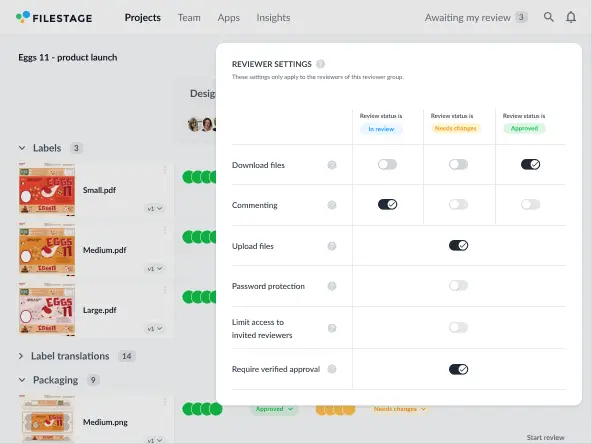
Filestage is a review and approval platform built around getting content signed off cleanly. You upload a file, invite reviewers into defined groups, and collect feedback pinned directly to the video, document, or web page, with every version tracked and every approval logged.
Why we chose it
We use Filestage daily, so this one is hands-on rather than assessed. What stands out is how little friction it adds. Reviewers don’t need an account to comment, and each file’s approval status is visible at a glance, which turns a messy email thread into an auditable content review process.
Pros
- Staged review rounds with separate reviewer groups and deadlines
- Version control that keeps every iteration and its feedback together
- Automated reminders and approval workflows across every project
- Review Agents on the Business plan that flag issues before human review
Cons
- It’s built for review and approval, not asset storage, so teams needing a full asset library will pair it with a dedicated tool
Pricing
Filestage has a free plan with one active project, two reviewer groups, and unlimited reviewers. Paid plans start at $199/month for Starter and $329/month for Business, which adds Review Agents and other features. Enterprise is custom priced.
Deliver compliant content with confidence
Set up a consistent and compliant marketing review and approval process with Filestage.
2. Markup AI – best for enterprise style and regulatory content alignment
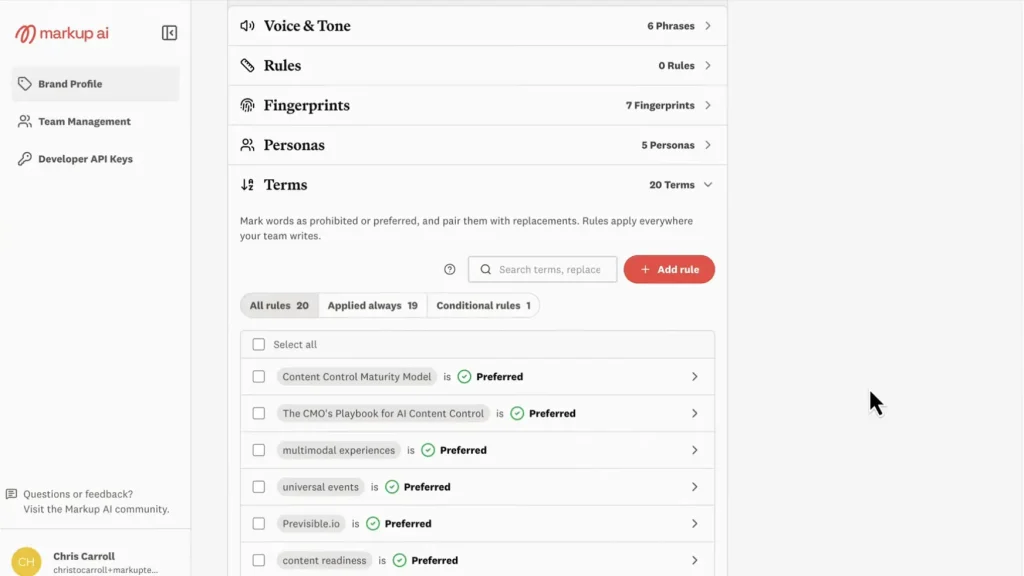
Markup AI (formerly Acrolinx) is an AI content governance platform built around Content Guardian Agents that scan, score, and rewrite content against your brand, style, terminology, and compliance rules. Its API-first design drops those guardrails straight into your LLMs and publishing workflows, so checks run before anything leaves the writer’s screen.
Why we chose it
Markup AI stands out for enforcing editorial guidelines at enterprise scale. Reviewers of Acrolinx, its former incarnation, consistently praised its brand and terminology control, and the agent model now extends that to AI-generated content by scoring and rewriting output before it ships. For global teams that need to maintain high quality content and consistent messaging across languages, manual style policing doesn’t scale.
Pros
- Brand Voice Agent that turns your style guides into enforceable guardrails
- Terminology Agent for brand, product, industry, and compliance terminology
- Compliance Guardian Agents that act as an automated control layer
- Analytics that show where your content misses quality standards
Cons
- Several of the newer Guardian Agents, including the AI Visibility and Integrity agents, are still in beta and subject to change, and full enterprise features sit behind a custom quote
Pricing
Markup AI runs a 30-day free trial capped at 1,000,000 tokens per month, then Custom quote-based pricing for teams. No standard dollar price is published.
3. Aprimo – best for enterprise content operations and DAM governance
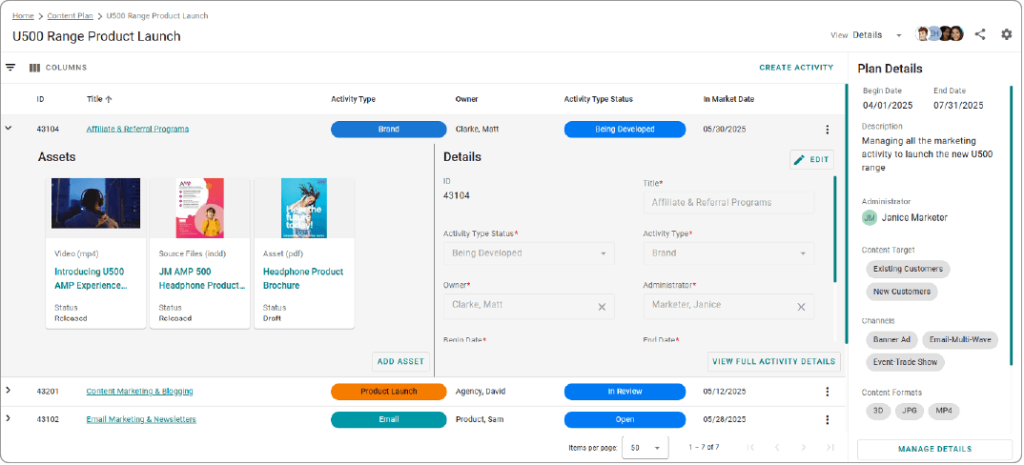
Aprimo is a content operations platform that combines planning, asset management, workflow, and budgeting in one place. It’s built for large marketing teams that need to govern how content moves from brief to publication across the whole content lifecycle.
Why we chose it
Aprimo suits enterprises that want their content governance model to cover operations, not just review. Reviewers highlight its workflow automation and digital asset management (DAM) as standouts, with role-based permissions keeping content assets controlled at scale.
Pros
- DAM with governed access and metadata management
- Configurable workflows across planning and production
- AI modules for tagging and content intelligence
- Budget and spend tracking tied to campaigns
Cons
- Verified reviewers note Aprimo needs internal support headcount to run well, and implementation is a significant project
Pricing
Custom / quote-based. Aprimo builds every contract as a custom quote, scaled to the modules and user count you need.
4. Templafy — best for document and template governance at scale
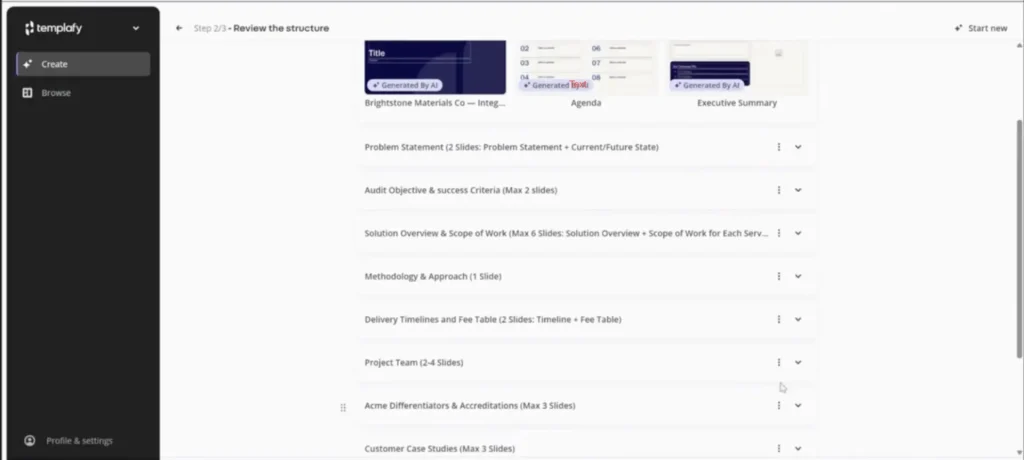
Templafy centralizes document creation and enforces brand compliance across Word, PowerPoint, and Excel. It sits inside the Office apps your team already uses, so on-brand templates and approved content are always one click away.
Why we chose it
For enterprise content management focused on documents, Templafy is hard to beat. We rate it for regulated firms in finance and law, where every pitch has to stay on-brand. Reviewers also praise how it removes manual processes from formatting.
Pros
- Centralized, governed template library inside Office
- Automated brand and disclaimer enforcement on documents
- Dynamic content that pulls approved assets and data
- Integration with Microsoft 365 and common CRMs
Cons
- Reviewers say it’s overkill for small teams, and setup is an implementation project rather than a quick install
Pricing
Templafy has a free Individual plan for one seat. There’s a Team plan at $40/user per month, which covers up to 25 seats with a $400 monthly minimum and a 30-day free trial. Enterprise pricing is custom.
5. Bynder — best for digital asset management and brand governance

Bynder is a digital asset management platform that keeps every brand asset on-brand and easy to find. It centralizes files, enforces usage rights, and gives distributed teams a single source of truth for approved content.
Why we chose it
Bynder makes sense when your governance problem is asset sprawl. Reviewers rate its AI-powered search and auto-tagging highly, and its rights management takes the strain out of maintaining brand integrity when hundreds of people touch the same library.
Pros
- Central asset library with SSO and granular permissions
- Digital rights management to control asset usage
- AI auto-tagging and search across large libraries
- Brand guideline hosting alongside the assets
Cons
- Pricing is quote-only, and per-seat plus module costs can escalate quickly for growing teams
Pricing
Custom / quote-based. Bynder doesn’t publish rates, and pricing scales with seats, storage, and the modules you add.
6. Siteimprove — best for website content quality and accessibility governance

Siteimprove governs the content that lives on your website. It runs automated checks for quality, accessibility, and SEO across every page, so broken links and WCAG failures get caught before they drag down your site’s performance
Why we chose it
We chose Siteimprove for teams whose governance scope is the public website. Reviewers value its accessibility auditing in particular, which matters for organizations with legal accessibility obligations across thousands of web pages.
Pros
- Automated content quality and broken-link checks
- Accessibility auditing against Web Content Accessibility Guidelines (WCAG) standards
- SEO and analytics across the full site
- Policy checks for on-brand, compliant web content
Cons
- It governs website content specifically, so it won’t replace a broader content operations or approval platform
Pricing
Custom / quote-based. Siteimprove prices by page count and modules and publishes no standard rate on its website.
7. Writer — best for AI brand voice and generative content control

Writer is an enterprise generative AI platform that keeps AI-assisted content creation on-brand and compliant. Its Knowledge Graph grounds output in your own data, and built-in enforcement checks generated copy against your style and terminology before it ships.
Why we chose it
As AI content governance becomes a real category, Writer is the option built for it from the ground up. Reviewers in regulated sectors point to its governance and agentic workflows as the reason they adopt it over general-purpose AI tools.
Pros
- Brand and style enforcement on AI-generated content
- Knowledge Graph that grounds output in approved sources
- Prebuilt agents for repeatable content workflows
- Terminology and compliance guardrails
Cons
- The lineup jumps from a capped Starter tier to custom Enterprise, with the deeper governance features gated to the top tier
Pricing
Writer publishes no pricing. The Starter plan caps you at five users and comes with a 14-day free trial, and Enterprise is custom priced.
8. Frontify — best for brand asset and guideline governance
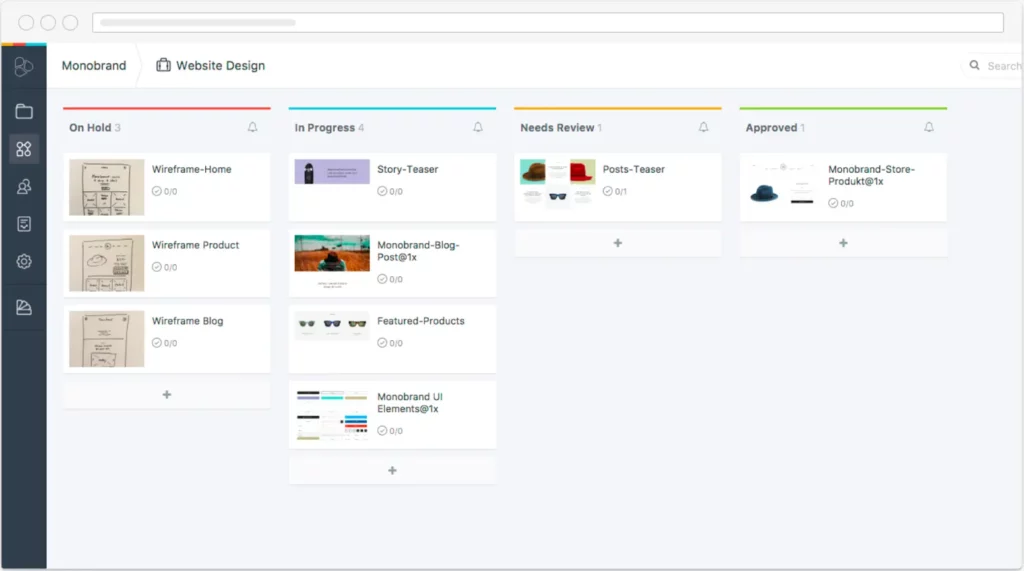
Frontify combines living brand guidelines with digital asset management, so your brand rules and the assets that follow them live in one connected place. It’s built so it ensures brand consistency across every team that creates content.
Why we chose it
Frontify works best for brand-led governance. Reviewers praise how its guidelines stay linked to real assets and templates, which keeps a consistent brand image across distributed marketing teams without constant policing.
Pros
- Living brand guidelines tied directly to assets
- DAM with templates and collaboration built in
- Permissions that control who can use what
- Integrations with common creative and content tools
Cons
- Frontify uses monthly-active-user (MAU) pricing with no public rate card, which makes budgeting during campaign spikes unpredictable
Pricing
Custom / quote-based. Frontify prices on MAU and publishes no standard rates.
9. Contentful — best for headless CMS content governance
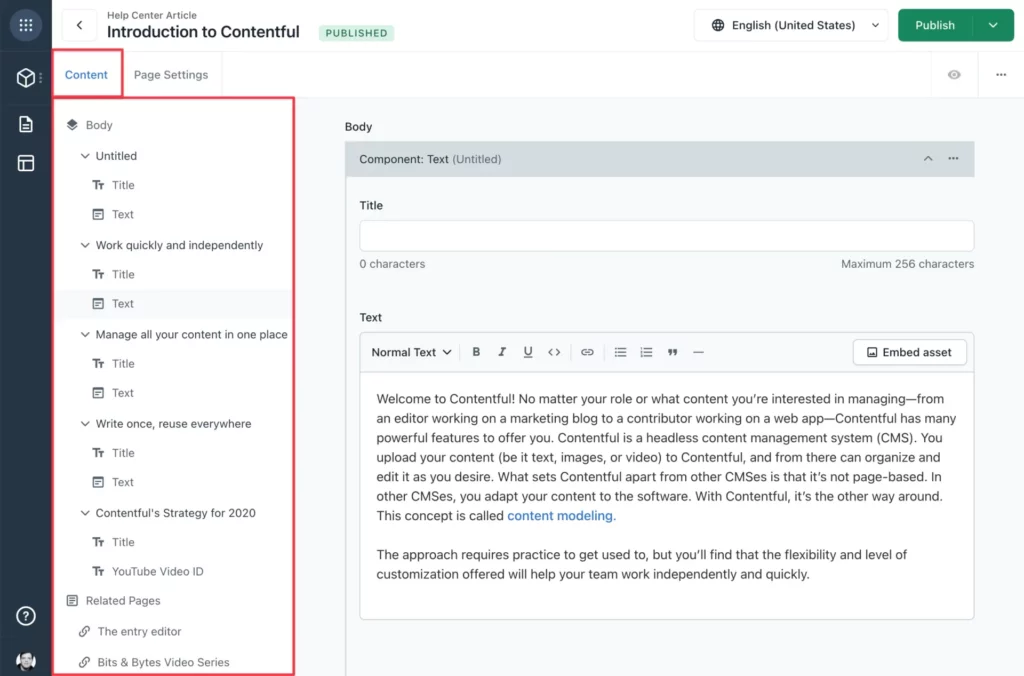
Contentful is a headless content management system for structured content published across digital channels. It uses access controls and workflow rules to determine who can make changes and when content gets published, keeping governance built into the process.
Why we chose it
We chose Contentful for teams that govern content at the CMS layer. Reviewers value its structured content model and API-first approach, which lets one governed source feed many channels without duplicating work.
Pros
- Structured content modeling for reuse across channels
- Role-based permissions and publishing workflows
- API-first delivery to any front end
- Governance and compliance features on higher tiers
Cons
- It’s developer-oriented, and the jump from the free tier to paid plans is steep with few options in between
Pricing
A Free plan for learning and exploring the platform covers up to 10 users and two roles. The Lite plan costs $300/month and is aimed at small businesses with a single project. Enterprise pricing is custom.
Deliver compliant content with confidence
Set up a consistent and compliant marketing review an approval process with Filestage.
The content governance maturity model: which stage is your team in?
Before you shop for a tool, you first need to work out where your governance sits today. Most teams recognize themselves in one of four stages of a content governance model, and knowing your stage tells you what to buy.
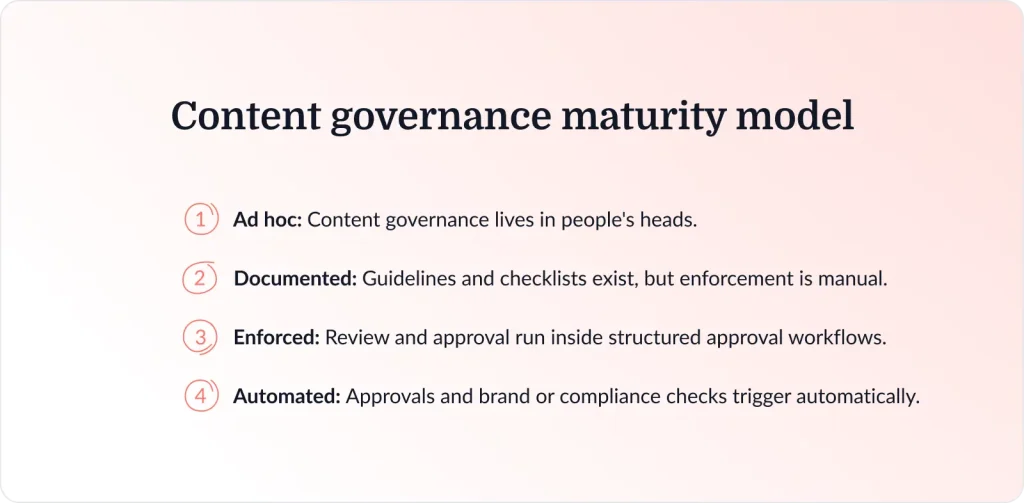
- Ad hoc: Content governance lives in people’s heads. Feedback happens over email and chat, with no version control and no record of who approved what.
- Documented: Guidelines and checklists exist, but enforcement is manual and easy to skip under deadline pressure, so quality drifts.
- Enforced: Review and approval run inside structured approval workflows with clear roles and responsibilities, so nothing publishes without the right sign-off.
- Automated: Approvals, routing, audit trails, and brand or compliance checks trigger automatically, and content governance scales as you increase content production.
Most teams are stuck at stage two. A written content governance plan gets you to stage three, but software is what moves you to stage four. For enterprise content governance in regulated sectors like finance and healthcare, operating in stage four isn’t optional.
This is where a robust content governance framework backed by a platform like Filestage does the heavy lifting, turning your review, approval, and audit trail into something that runs by default. An effective content governance model doesn’t just document standards for publishing content, it enforces them.
How to choose the right content governance platform
There’s no single best tool here, only the best fit for where your governance breaks. The lenses below help you translate your content governance model and content strategy into the right platform for your team.
Choose based on content type and volume
If your team pushes out social media posts, web pages, product pages, and campaign assets at high volume, prioritize workflow speed and asset management over heavy compliance features.
Bynder and Aprimo suit large asset libraries, while Contentful fits structured content published across many channels. Match the platform to how much you create content and where it goes for each target audience, since a blog-led content strategy governs differently from a regulated product catalog.
Choose based on compliance and industry requirements
In regulated industries, compliance and audit trails outrank everything. Look for role-based access controls, SSO, certifications, and a defensible audit trail that match your regulatory requirements, plus a content governance process that stands up to scrutiny.
Filestage and Markup AI both hold up here, with Filestage owning the approval process and Markup AI enforcing regulatory language. This is the tier where you implement content governance as a control rather than a guideline.
Choose based on team structure and workflows
Think about who touches content and how. If you need to define roles and clear ownership across your content team, marketing team, legal, and brand, a strong content governance strategy backed by structured content workflows matters more than raw features.
Filestage and Templafy both make it easy for non-technical team members and subject matter experts to review without training. Bring your content strategists in early and map your content creation process end to end, so everyone stays aligned on shared business goals rather than duplicating work across separate project management tools.
Frequently asked questions
What features should enterprise content governance tools have?
At a minimum, look for staged approval workflows, version control, role-based access controls, and an audit trail. Strong enterprise content governance tools go further and slot into your wider content governance framework. They add brand and editorial enforcement, map governance policies to your compliance requirements, and integrate with the content management systems you already run, so the governance capabilities fit the way your team works.
How does a content governance platform support compliance and audit trails?
It records every action, who edited, who approved, and when, so you can prove regulatory compliance if a regulator or your legal team asks. Automated compliance tools flag issues before content ships, and a centralized governance model keeps standards consistent so you maintain compliance as volume grows. This is where marketing compliance in regulated sectors earns its keep.
Is there a free content governance platform?
Yes, partly. Filestage offers a free plan with one active project and two reviewer groups. Contentful, a content management software built around structured content, has a free tier for small projects. Templafy and Markup AI also include free entry plans, though both are capped. Most enterprise content governance platforms are quote-based, so free options run out once you need real scale and enterprise-grade access controls.
Final thoughts
At the end of the day, governance software is only as good as the workflow it enforces. If review and approval are where your content process stalls, and compliance sign-off keeps slipping, that’s the gap Filestage was built to close.
Start your free trial of Filestage and see how much faster clean sign-off can be.