

A brand governance framework turns brand standards into a system people follow. With 80% of marketers using AI for content creation, more brand assets reach more channels than any team can check by hand. If you lead brand or marketing teams across markets or agencies, here’s how to build a brand governance framework, from ownership to measurement.
What is a brand governance framework?
A brand governance framework is the operating model that decides how your brand rules get applied, checked, and maintained. Brand strategy and brand vision set direction, and brand guidelines describe the look and voice.
Your brand governance framework should cover people, processes, training, and tools, from decision ownership to spotting problems early.
Scale is what makes brand governance important. One brand manager can keep a consistent brand across a few marketing channels, but not across distributed teams and agencies.
Our guide to brand governance explains why it matters. This one shows you how to implement brand governance.
What should a brand governance framework include?

Brand governance frameworks help maintain brand consistency across teams by breaking the job into five core components.
In practice, brand governance includes brand guidelines, approval workflows, and asset management, tied together so your company’s brand identity stays protected day to day.
Brand standards, guardrails, and governance levels
Start with the brand standards you already have, then add rules for using them. Guardrails spell out which brand elements are locked (your logo, core visual identity, and legal claims), what teams can adapt, like tone on social or local imagery, and what they can do independently.
That clarity lets distributed teams maintain consistency and protect brand integrity without asking permission for everything. Governance levels then match oversight to risk, so high-visibility brand materials get extra checks and routine posts don’t. You’ll set those levels in step three.
Roles and decision rights
Decision rights define who can create, review, change, approve, and publish brand materials.
In a typical brand governance model, brand managers own the standards as part of wider brand management, while marketing and creative teams produce the work. Legal or compliance checks regulated claims. Regional teams and agencies adapt brand assets for local markets.
Include the sales team too, since they often adapt decks and brand materials for their own pitches.
Review and approval workflows for brand compliance
Approval workflows define who needs to approve content and when, from first draft to sign-off. They name the reviewers for each content type, the order they review in, who gives final approval, and where disputes go when two stakeholders disagree.
Escalation paths tell reviewers who has the final say when their feedback conflicts, which keeps brand compliance decisions consistent. Effective brand governance helps prevent compliance issues and reduces rework, so getting this part right is worth the effort.

Deliver compliant content with confidence
Set up a consistent and compliant marketing review process with Filestage.
Brand enablement
Brand governance frameworks include training and resources for employees, and enablement is where they live. That means onboarding, templates, and approved assets stored where people can find them, usually in a digital asset management system or similar brand management tools with clear asset governance rules.
Done well, it stops your brand team from turning into the brand police. Good asset management keeps approved brand assets in one place, so team members and external partners always work from the current versions.
Measuring brand governance success
Measurement shows where your brand governance works and where people work around it. Track asset adoption rates to measure brand governance success, alongside compliance incidents, exception requests, and approval bottlenecks.
Asset usage data tells you which templates and files teams rely on. Recurring problems usually point to an unclear guideline or a broken process rather than careless people.
How to create a brand governance framework in six steps
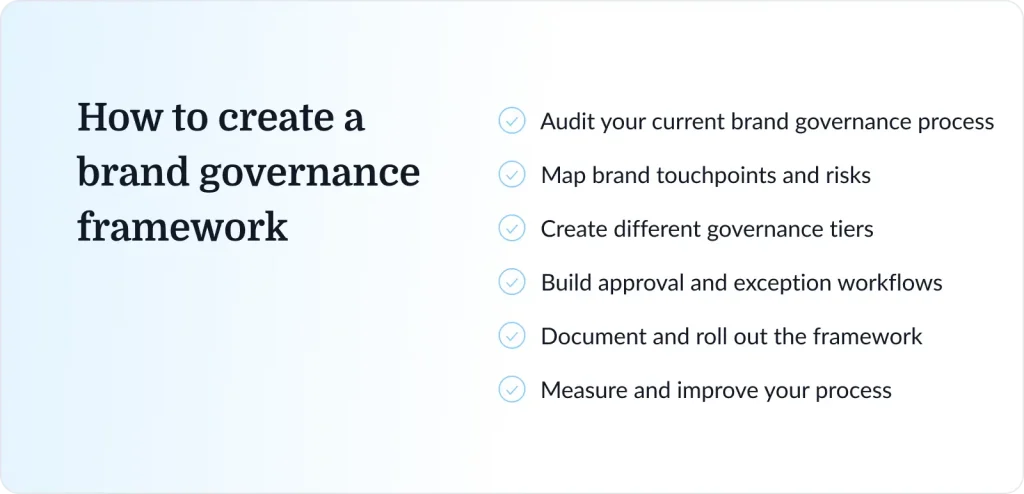
These six steps take you from scattered brand identity guidelines to a working brand governance process. Treat them as a sequence, since each step feeds the next.
1. Audit your current brand governance process
Before you design anything, map what already exists. List your current guidelines, templates, brand elements, and brand assets, plus every team member who creates, reviews, or approves brand materials. Check they still match your brand strategy. Then look for recurring problems:
- Nobody clearly owns a touchpoint
- Outdated brand assets still circulate
- Reviewers give conflicting feedback
- Content goes live without approval
Talk to the people doing the work, not only brand teams. Repeat this audit regularly to catch brand inconsistencies and early signs of brand dilution.
2. Map brand touchpoints and risks
Next, list everywhere your branding efforts reach across channels, markets, teams, and partners. That includes paid ads, packaging, sales decks, email, and any marketing materials agencies produce for you.
Then score each touchpoint for risk. Ask how visible it is, whether it carries regulatory claims, what a mistake would cost in money or brand integrity, and how closely it ties to your business objectives.
Regulated industries like pharma and food, where brand governance matters most, will rank far more touchpoints as high risk.
Our marketing compliance checklist is a useful cross-check for compliance risks at this stage.
3. Create governance tiers for different marketing campaigns and content
Applying the same controls to everything slows marketing campaigns down and trains marketing teams to skip the process. Brand governance tiers fix that by matching oversight to risk.
| Governance tier | Example | Rules |
| Low | Organic social post using approved template | Self-service within guardrails |
| Medium | Paid campaign creative | Brand or marketing approval |
| High | Packaging, regulated claims, major campaign | Brand and legal or compliance approval |
Most content should sit in the low tier, where an approved template keeps it on brand. If everything ends up high, your guardrails aren’t doing their job. AI-generated content often needs extra rules within each tier, which our guide to AI content governance covers in depth.
4. Build review, approval, and exception workflows
Now turn your brand governance tiers into workflows. For each tier, define:
- Reviewers and the order they review in
- Deadlines, plus escalation rules for missed ones
- Version control, so everyone comments on the latest file
- What counts as final approval
- How exceptions are requested, approved, and documented
Exceptions deserve their own process, because someone will need to bend a rule eventually.
Approvals are hard to keep on schedule when they run through email threads and reminders sent by hand. A review and approval platform like Filestage turns your brand governance process into a repeatable workflow. You can assign different reviewers to each review step, use automations to start the next step as soon as the previous one is approved, and keep every comment and decision attached to the right version.
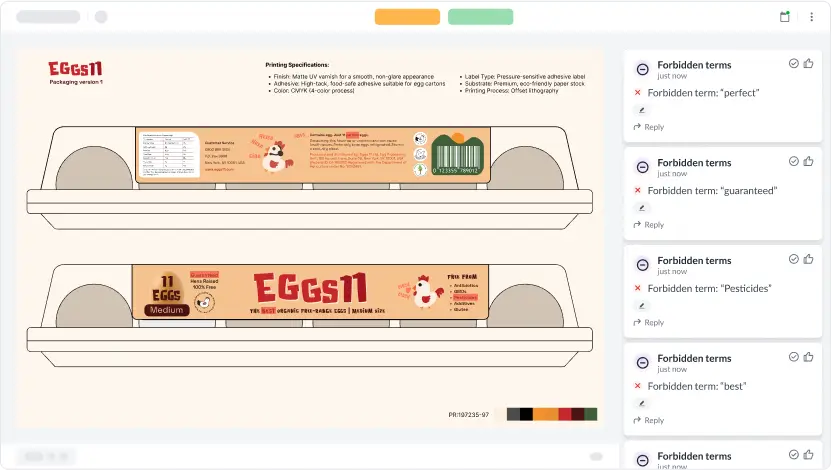
Our Review Agents run automated checks before your reviewers open the file. They flag missing logos, forbidden terms, and spelling mistakes, so your team spends review time on real decisions, not typos.
5. Document and roll out the framework
Write your brand governance guidelines up as something people will actually use. A one-page summary of tiers and owners, a simple decision flowchart, and links to your brand identity guidelines will do far more.
Then train everyone who produces brand materials, including agencies and freelancers. Training employees on your brand guidelines is what turns a document into consistent, compliant work, so treat education as essential.
Build it into onboarding so new marketing team members learn the brand governance process in their first week, and give internal and external teams one place to ask questions. Empowering teams to self-serve is how you implement brand governance without adding headcount.
6. Measure and improve your brand governance process
Review how your brand governance framework performs every quarter. Useful signals include:
- Recurring compliance issues by team or channel
- Average approval time per tier
- Exception volume and the reasons behind it
- Asset adoption rates for approved templates and brand assets
- Stakeholder satisfaction among reviewers and requesters
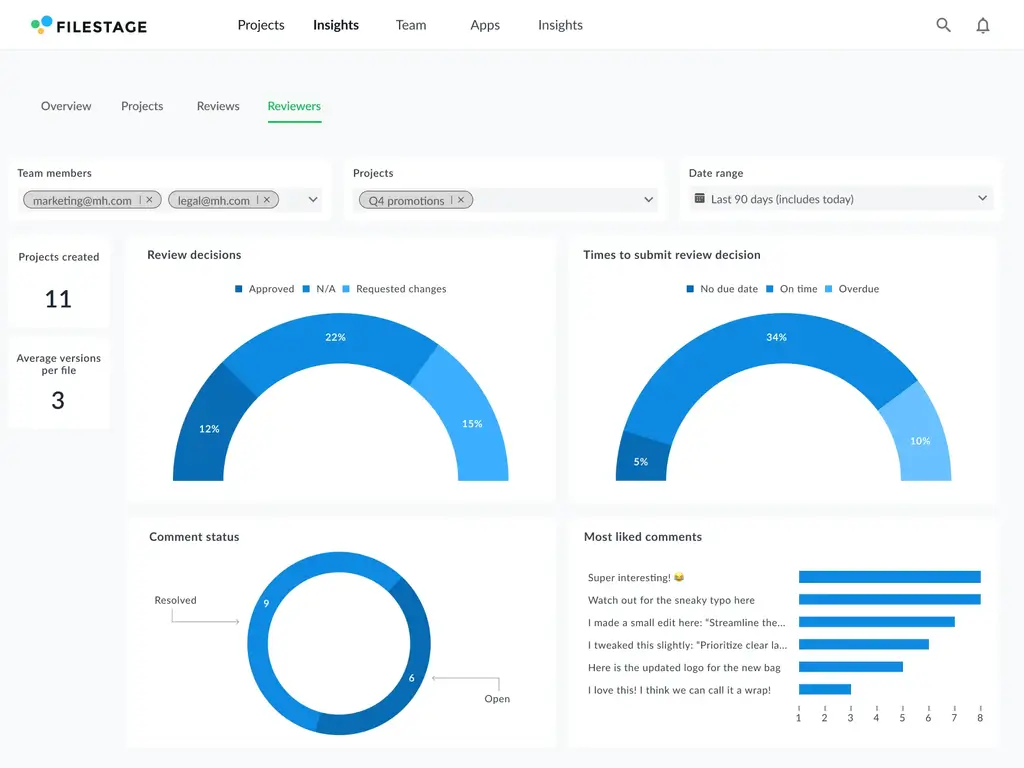
Campaign speed matters as much as brand consistency. If approvals keep getting slower, your tiers are probably too strict. Dedicated [brand governance tools] can pull these signals together and set them against wider brand performance data, so you spend less time assembling reports.
Brand governance framework checklist for brand consistency
Use this checklist to find the gaps that make it harder to keep your brand consistent. Mark each check as done, in progress, or missing.
| Area | Check | Status |
| Standards | Are current brand standards documented and accessible? | |
| Guardrails | Is it clear what can and can’t be changed? | |
| Governance tiers | Does each major content type have an appropriate level of oversight? | |
| Ownership | Is responsibility clear for important brand touchpoints? | |
| Approvals | Is it clear who reviews and gives final approval? | |
| Exceptions | Is there a documented process for deviations from normal standards? | |
| Resources | Can teams easily find approved templates and assets? | |
| Enablement | Are employees, agencies, and partners appropriately trained? | |
| Measurement | Are recurring issues, exceptions, and approval bottlenecks tracked? | |
| Maintenance | Is someone responsible for reviewing and updating the framework? |
Put your brand governance framework into action with Filestage
A documented framework is only the first step. Effective brand governance happens once the framework shapes how content gets reviewed and approved every day.
Filestage gives that part of the job a structured home. You can set up review steps for each governance tier, keep all feedback on the file itself, and see at a glance which brand assets are approved, in review, or waiting on changes. Every decision stays documented, so you always know who approved what and when.
Filestage works alongside your brand guidelines and other brand management tools, helping you keep every asset consistent. To see how it can simplify brand governance for your team, start your free trial.
FAQ
Who is responsible for a brand governance framework?
Strong brand governance needs one named owner accountable for the framework itself, usually a head of brand management or a brand operations lead. Brand managers and leads from marketing, creative, legal, and regional teams back them up as a steering group. That group maintains the rules and settles disputes, while everyday brand governance is shared by everyone who creates brand materials.
How often should you review a brand governance framework?
Review performance data every quarter and run a full framework review once a year. Also revisit your brand governance strategy after any major change, such as a rebrand, a move into new markets, a new regulation like the EU AI Act, or adding AI tools to content production. If you wait for problems to pile up, the framework is already out of date.
What is the difference between a brand governance framework and brand guidelines?
Brand guidelines define your brand identity, from visual standards like logo and color to verbal standards like tone and brand messaging.
A brand governance framework is the operating model around them, covering ownership, approvals, exceptions, and measurement. It works alongside your wider content governance to keep every asset on brand.
How do you measure the effectiveness of your brand governance framework?
Track four signals: compliance incidents, approval time by content tier, exception requests, and adoption of approved assets. Add a short survey of reviewers and requesters twice a year. Falling incidents alongside steady or faster campaign speed point to effective brand governance. Rising exceptions usually mean a guideline needs updating.