
Your organization probably holds more digital assets than any one person can track. Without governance, the library drifts. Wrong versions ship, off-brand files reach customers, duplicates multiply, and rights problems surface after publication.
Digital asset governance is the framework that keeps your digital assets organized, compliant, consistent, and on-brand across their lifecycle. Gartner frames a DAM’s core purpose as governing digital assets so they stay available and useful across the organization.
This guide is for marketing and creative professionals responsible for managing digital assets. Below is a working definition and a framework you can apply.
What is digital asset governance?
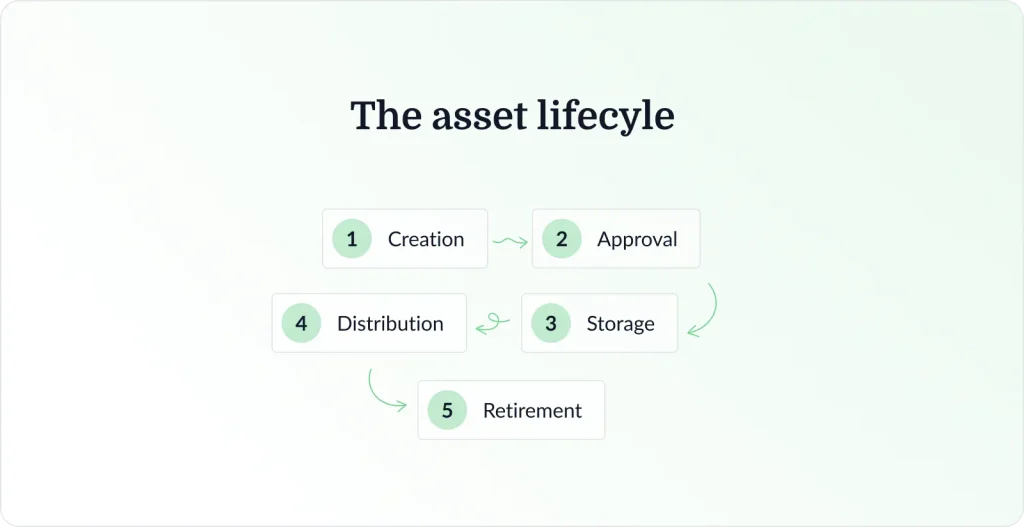
Digital asset governance is a set of policies for managing digital files. It includes roles and processes that control how digital assets are created, approved, stored, distributed, and retired. It also defines who owns each asset and what has to happen before it goes live.
Good governance spans people, process, and policy across the whole content lifecycle.
- People set clear ownership.
- Process defines how work moves from request to publication.
- Policy documents the standards everyone follows, from the first draft of a piece of digital content through to its retirement.
Written governance policies turn tribal knowledge into something a new hire can follow.
Digital asset governance vs. digital asset management (DAM)
These two terms get used interchangeably, and the difference matters.
- DAM is the system. Digital asset management software stores, organizes, and serves your files. A DAM platform will manage assets without ever judging them.
- Governance is the rulebook. Digital asset management governance decides what goes into the DAM system, who can do what once digital assets are there, and when something gets retired.
A DAM without governance can easily drift into disorder. The platform will happily store 40 versions of the same logo, because nothing in the software decides which is correct. DAM management is the discipline that makes that call.
Why digital asset governance matters
Effective DAM governance is the difference between a DAM that saves time and one that becomes another place to lose things. It pays off in five places.
- Brand consistency across channels. Standardized visual elements keep a cohesive brand image wherever your work appears. When everyone pulls approved brand assets from one governed source, the logo, palette, and messaging stay aligned across multiple channels rather than drifting region by region. That’s what makes customer experience feel like one company.
- Findability and reuse. Consistent metadata standards make assets easily accessible to the people who need them. Organizations stop recreating work that already exists and create content faster, which is where most of the efficiency gain in any DAM program comes from.
- Lower compliance and rights risk. DAM governance tracks licensing terms, usage rights, expiration dates, and territory limits, so unauthorized use gets caught before it becomes a legal problem.
- Stronger version control. A governed library makes the current approved version obvious. Nobody ships last quarter’s pricing sheet because it was the first result in search.
- Better cross-team collaboration. Creative teams, marketing, legal, and agency partners work from the same rules and the same source. Handoffs stop depending on who remembers what, and a consistent user experience across your digital channels follows from that.
The key components of a digital asset governance framework
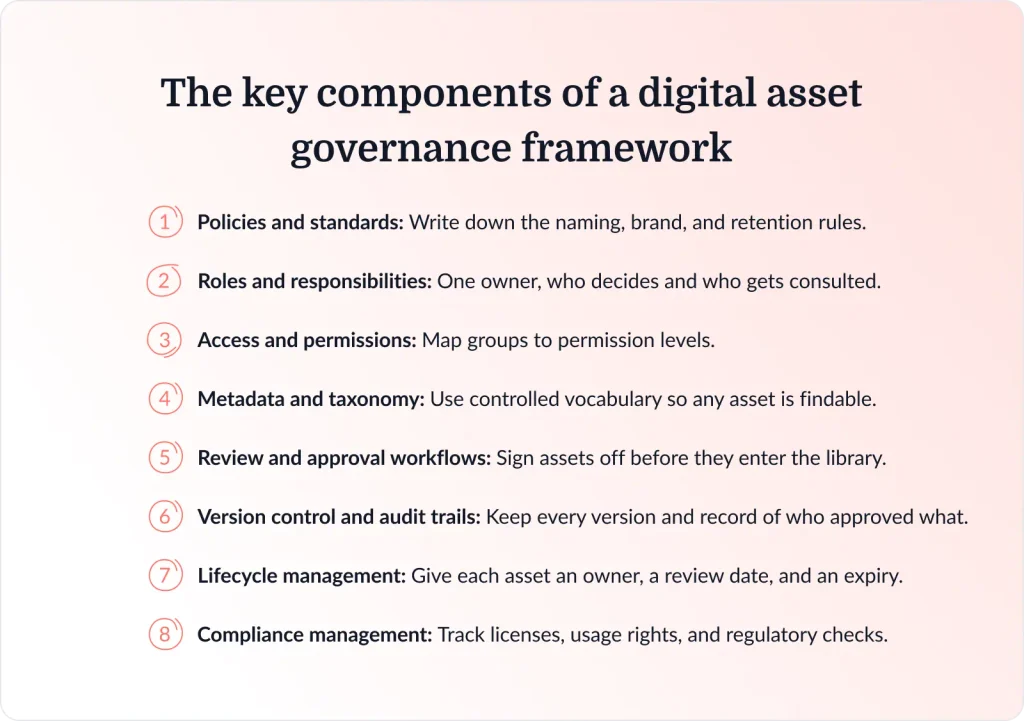
A DAM governance structure rests on eight components. Each one answers a question your team is otherwise answering ad hoc.
1. Policies and standards
Start with what gets written down. File naming conventions, folder and taxonomy structure, brand and usage guidelines, and retention rules all belong here, documented somewhere people can find them.
It’s best to keep the rules light enough to follow. Governance policies that run to 40 pages get ignored, and DAM policies nobody reads are worse than none because they create false confidence. Treat it as a living document that gets revised as your needs change, and record the best practices your team learns along the way.
2. Roles and responsibilities
Someone, usually a DAM manager or a brand lead, has to own this.
Around that owner sits your DAM team and the various stakeholders who care about the outcome: brand, legal and compliance, creative, and IT. Define who decides and who gets consulted, because DAM governance stalls when every change needs consensus. You also need leadership to buy in, since a DAM program without executive backing loses to whatever is more urgent that quarter.
3. Access and permissions
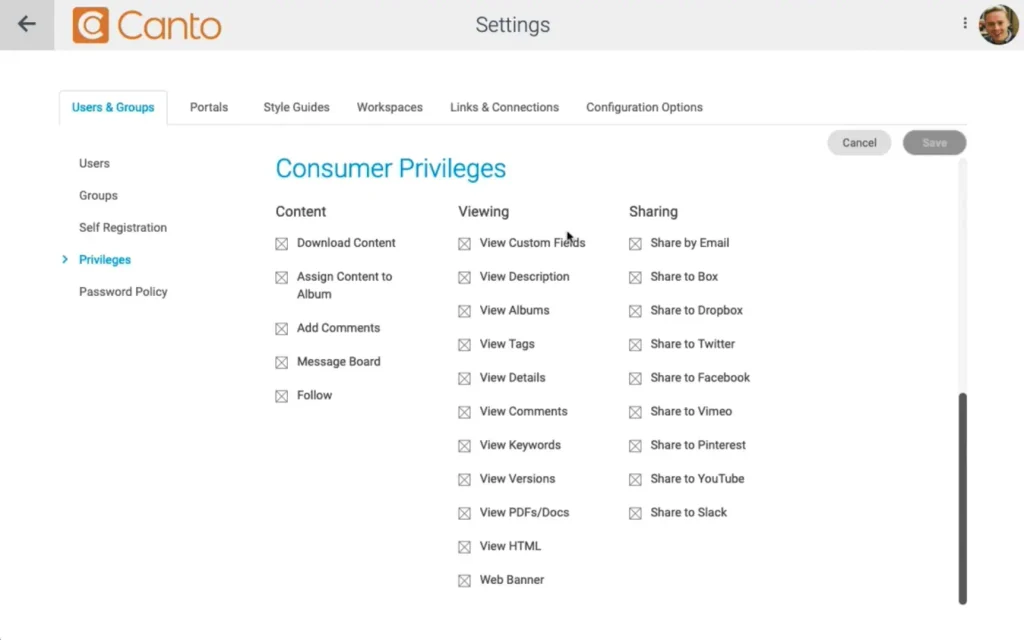
Access rules decide who can view, edit, approve, and distribute assets. Role-based permissions protect intellectual property.
Map user groups to permission levels rather than managing individuals. Most organizations end up with a small set: DAM admins with full control, contributors who upload and edit, reviewers who approve, and end users who download approved assets only.
External agencies and freelancers need their own group with time-limited access. User management also has to include a process for removing user accounts when people leave.
4. Metadata and taxonomy
Metadata is what makes a DAM searchable rather than a folder tree with better branding. Metadata management sets the standards: which fields are required and who applies them.
Use a controlled vocabulary so your product images don’t get filed as “packshot” by one uploader and “hero image” by the next. Consistent tagging is what lets someone find specific assets in seconds instead of asking in Slack.
5. Review and approval workflows
Most DAM governance attention goes to digital assets already sitting in the library. The bigger risk is how they got there in the first place.
An asset that reaches the DAM unapproved is a DAM governance failure that storage rules can’t fix. A structured approval workflow puts defined reviewers, clear sign-off, deadlines, and an escalation path around every asset before it enters circulation, so off-brand or non-compliant work never becomes something you have to recall later.
This is where most DAM systems are thin. They handle storage and permissions well, but structured review is a different capability. Tools like Filestage sit in this layer, collecting feedback on the file itself and holding digital assets until the right people have signed off.
If you’re mapping out how this stage should run, our guide to the content review process covers it in more depth.


“Filestage makes things easy. All the files and versions are in the same place. The clients really appreciate the ease of use and being able to have a clear overview of their projects.”
Sarah Chen, Medical Director at Publicis Health
Supercharge your marketing reviews
Share, review, and approve all your content in one place with Filestage.
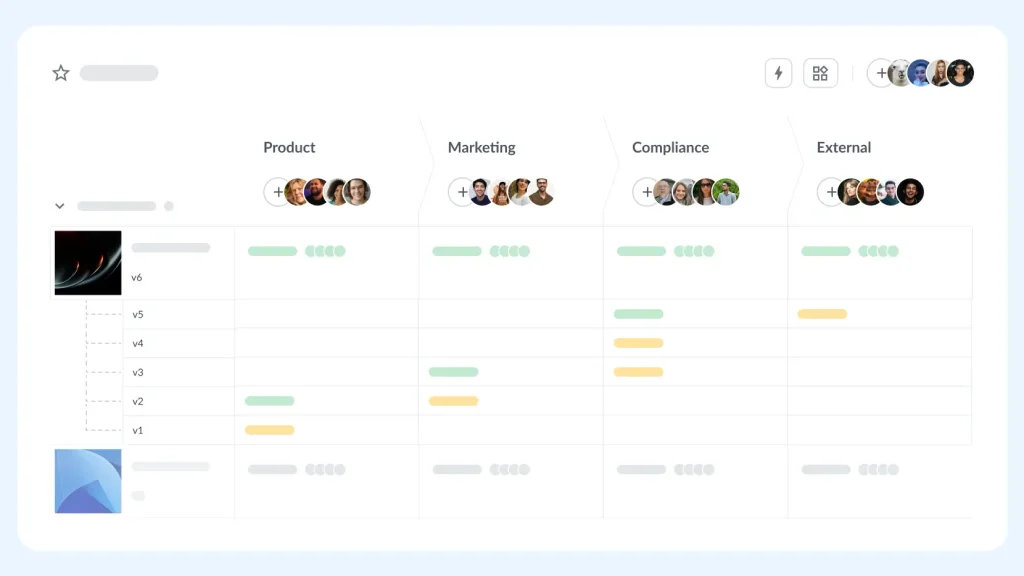
6. Version control and audit trails
A governed system keeps every version and a timestamped record of who reviewed, changed, approved, and published each asset.
That record does two jobs. Day to day, it means the current approved version is never in doubt. When something goes wrong, it tells you exactly where the breakdown happened rather than leaving you to reconstruct it from email. For regulated organizations, that audit trail is the evidence you produce when a regulator asks who cleared a claim.
The same principles apply to your files more broadly, which we cover in document version control best practices.
7. Asset lifecycle management
Digital assets have a shelf life. Asset lifecycle management governs the whole arc, from asset creation and ingestion through active use, then archiving and retirement.
Set expiry dates on assets with a licensing limit or a campaign end date. Schedule an archive pass so superseded work leaves the active DAM system. New assets should enter with an owner and a review date attached, not just a filename.
9. Compliance and rights management
Rights management tracks what you’re allowed to do with each file, including who holds copyright, which license applies, when usage rights expire, and which territories are covered.
Layer your regulatory obligations on top. Data protection rules cover any asset holding personal data, which is where asset governance meets wider data governance, and industry regulators add requirements beyond general legal compliance. Governance makes sure these checks happen as part of the workflow rather than as a scramble before launch.
This overlaps closely with wider marketing compliance work, and for anything involving AI-generated material, our guide to content governance under the EU AI Act covers the provenance and disclosure side.
How to build a digital asset governance plan (step by step)
Here’s how to turn those components into a DAM governance plan your team will use.
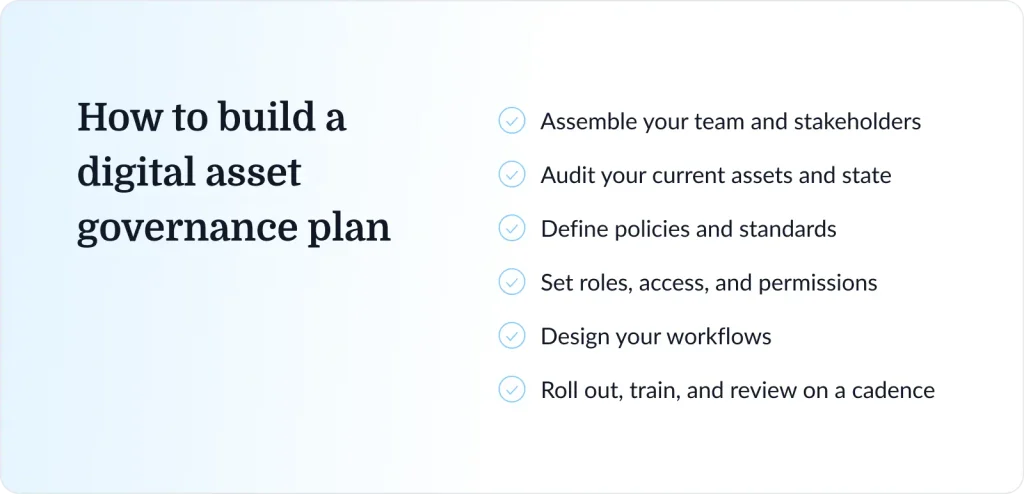
1. Assemble your team and stakeholders
Name the owner first, and tie the plan to business goals so it exists for a reason beyond tidiness. Then bring in the relevant stakeholders: brand, legal and compliance, creative, and operations.
Be explicit about who is accountable and who is merely consulted. Many organizations skip this step and end up with a DAM governance plan nobody feels responsible for.
2. Audit your current assets and state
Before writing any rules, find out what you’re governing. Take stock of what exists, what’s duplicated, what’s off-brand, and what’s expired.
Regular audits identify duplicate assets and expose where metadata has gone inconsistent. The audit also tells you which pain points to solve first, which keeps your DAM organized around real problems.
3. Define policies and standards
Document naming conventions, taxonomy, metadata fields, brand guidelines, and retention rules. Write them for the person who has to follow them at the end of a deadline day.
DAM governance fails when the rules are heavier than the problem. So, if a policy takes longer to follow than to work around, people will just work around it.
4. Set roles, access, and permissions
Map your user groups to permission levels and decide how new users get onboarded. Agree how external access works and who approves it.
Set a cadence for reviewing user groups and user accounts, because permissions granted for one campaign have a habit of outliving it.
5. Design your workflows, including review and approval
Define how assets move from creation through review, approval, versioning, publication, and eventual archiving. Write the path down, including who reviews at each stage and what happens when someone doesn’t respond.
Build structured sign-off into that path so nothing publishes without approval, and make sure every change is traceable back to a person and a date. Most DAM rollouts underinvest here, and it decides whether the rest of your DAM governance holds. If you’re introducing new workflows, do a pilot run with one team before rolling them out.
6. Roll out, train, and review on a cadence
Document everything, then train people properly. Giving training at launch and again for new joiners is what turns a policy document into behavior.
Open feedback loops immediately, and address user feedback rather than collecting it. Schedule a DAM governance check-in every six months to review what’s working and adjust rules that aren’t landing, including any technical upgrades that are due.
DAM governance is an ongoing process, and the DAM platform provides guardrails while people decide whether to use them. That cadence is what maintains communication between the DAM team and end users, and it’s the difference between short-term compliance and long term success.
Common digital asset governance mistakes to avoid
Most DAM governance failures look the same across organizations.
- Assuming the DAM platform enforces governance on its own, when software stores what you give it and decides nothing
- No clear owner, so decisions stall and standards erode quietly
- Rules so restrictive that people build shadow libraries in Drive to get work done
- Setting the DAM governance plan and forgetting it, with no review cadence
- Ignoring the review and approval stage, so unapproved digital assets enter the library and inherit false authority
That last one undoes the rest. Proper governance of what’s already stored means little if anything can get in, so effective governance closes that gap first.
Digital asset governance for regulated industries
In healthcare, pharma, and financial services, DAM governance is a regulatory obligation rather than an efficiency project.
These organizations need documented sign-off such as medical, legal, and regulatory (MLR review), airtight version control, defined reviewer roles, and a complete audit trail showing who approved what and when. Noncompliance carries real financial and legal consequences, so the evidence has to exist before anyone asks for it.
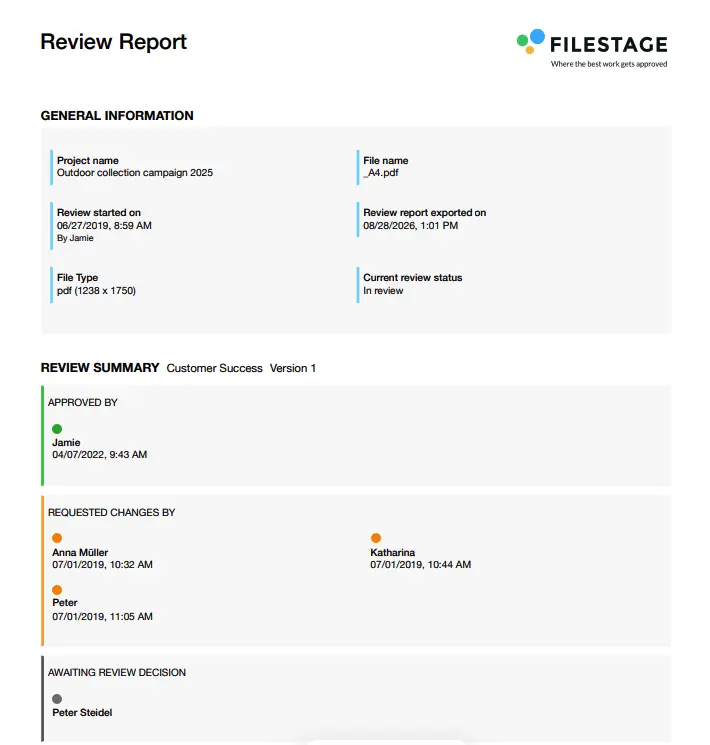
Most DAM solutions cover storage and permissions well. Structured, auditable review and approval is a distinct capability, and it’s the category Filestage sits in. Regulated organizations typically run both, using the DAM as the system of record and a review tool as the gate in front of it.
Tools that support digital asset governance
DAM governance is people and process first. Tools are what make the rules hold when volume rises.
Two categories matter here.
- A digital asset management system handles storage, metadata, permissions, and distribution, giving you one governed home for creative assets.
- Review and approval tools handle the layer before that, running structured sign-off, version control, approval records, and the audit trail that proves an asset was cleared.
They complement each other rather than compete. Your DAM investment answers where approved work lives. Your review tool answers how work becomes approved.
If you’re evaluating the storage side, our roundups of brand asset management software and media asset management platforms are a good place to start, and content governance software covers the wider governance category.
Final thoughts
A DAM gives you somewhere to put your digital assets. DAM governance is what makes it trustworthy a year later. Start with clear ownership and rules people can follow, then put a real approval gate in front of it.
Start your free trial of Filestage and see how structured review fits into your DAM governance plan.
Frequently asked questions
Who is responsible for digital asset governance?
One named owner, usually a DAM manager or marketing operations lead, should be accountable. Most organizations pair that owner with DAM admins who handle day-to-day user management. DAM governance without a single accountable owner tends to drift, because shared responsibility means nobody chases problems.
Do small teams need digital asset governance?
Yes, though it should be proportionate. A team of six doesn’t need a formal committee, but it does need agreed naming and a clear answer to who approves work before it ships. The pain lands later, when someone leaves and takes the filing logic with them. Match the weight of your rules to your business needs.
How often should you review a digital asset governance plan?
Every six months works for most organizations, with an additional review after any major change such as a rebrand or a shift in regulation. Treat the DAM governance plan as something you revise as market trends and team structures change.
How do review and approval workflows fit into governance?
They’re the gate. Digital asset management governance sets the standards, and the approval workflow is where those standards get applied to a specific piece of work before it enters circulation. Without that step, your governance only describes what should have happened. See our guide to content governance for the wider picture.