

TL;DR
Marketing has moved from occasional campaigns to always-on, multi-channel activity, and manual spreadsheets just can’t keep up. Marketing workflow software helps marketing teams organize campaigns, automate repetitive tasks, and keep everyone on the same page across channels and tools.
This article compares 12 marketing workflow software tools, with an explanation of why each made the list, what they’re best suited for, and how to choose between them based on your team’s specific workflow needs.
Why modern marketing teams need workflow software in 2026
In this day and age, it’s become unthinkable to be successful in your marketing efforts without a whole set of tools helping you organize your activities and improve efficiency.
We are far from the Mad Men days. What used to be a yearly poster is now a daily content production whirlwind. Marketing teams are active on a wide range of digital channels, regularly publishing content to capture the audience’s attention.
And it’s more important than ever to adopt marketing workflow tools to help you optimize your team’s efforts while maintaining the high quality of your work. Recent 2025 research from Sprout Social found that nearly two-thirds (63%) of marketing teams feel bogged down by manual tasks, leaving less time for high-impact work.
To give you a comprehensive roundup of the marketing workflow software options available and help you make the right decision for your team, we’ve gathered 12 of the best marketing workflow tools in one place, along with their key features and pricing options.
The tools aren’t ranked by power or comprehensiveness; each leads in a specific area, and the right pick depends on what your team actually needs.
How we evaluated these tools
We selected these 12 marketing workflow tools based on five criteria:
- The strength and flexibility of their workflow management and automation features, specifically whether the tool can handle the kind of multi-step, multi-stakeholder processes that modern marketing teams run.
- Ease of use: a tool your team won’t actually adopt isn’t doing anyone any favors.
- Integration depth with the marketing tools most teams already rely on, from CRMs and file storage to communication platforms.
- Pricing relative to the value on offer, including whether a meaningful free plan or trial is available.
- Fit for marketing-specific use cases. Not just generic project management, but campaign planning, content review, social media workflows, and creative production.
One note on transparency: Filestage is our own product. We’ve applied the same evaluation criteria to it as to every other tool on this list, and it’s included because of what it does well for marketing teams, not because we make it.
Quick comparison: 12 best marketing workflow software tools
| Tool | Best for | Free plan | Starting price | Key differentiator |
|---|---|---|---|---|
| Trello | Visual task management | Yes | $5/user per month | Intuitive kanban boards with a near-zero learning curve |
| Filestage | Content review and approval | Yes | $199/month | In-context, asset-level feedback with structured approval steps |
| Asana | Complex campaign management | Yes | $10.99/user per month | Dependency tracking across multi-stage marketing campaigns |
| monday.com | Customizable marketing workflows | Yes | $9/seat per month | Highly visual dashboards with drag-and-drop automation |
| Wrike | Mid-to-large marketing teams | Yes | $10/user per month | Gantt charts with built-in document proofing |
| Airtable | Data-driven content teams | Yes | $20/seat per month | Spreadsheet-database hybrid for content tracking |
| Notion | All-in-one team workspace | Yes | $10/user per month | Combines docs, wikis, and project boards in one place |
| HubSpot | Marketing automation and CRM | Limited free tools | $800/month | Full-stack marketing automation with native CRM |
| Sprout Social | Social media management | 30-day trial | $199/seat per month | Deep social analytics and multi-channel scheduling |
| CoSchedule | Content calendar management | Free calendar | $19/month | Purpose-built marketing calendar with social automation |
| Basecamp | Simple team collaboration | 30-day trial | $15/user per month | All-in-one simplicity with flat-fee unlimited-user pricing |
| Workfront | Enterprise marketing operations | No | Custom pricing | Deep Adobe Creative Cloud integration for creative teams |
1. Trello – best for visual task management
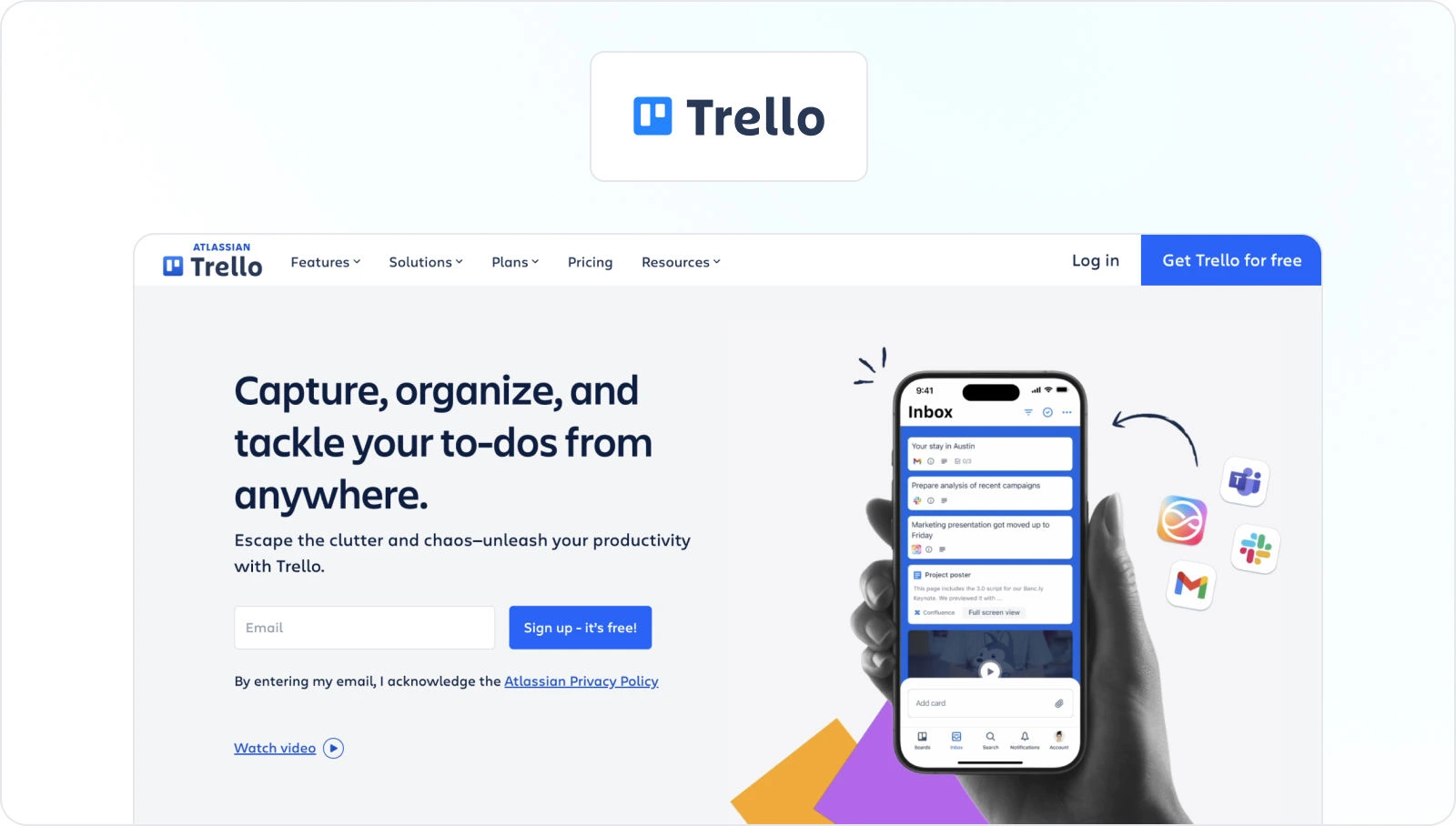
Trello is a valuable asset in the realm of marketing workflow management. This intuitive marketing workflow software offers marketing teams a streamlined and visually engaging platform to plan, execute, and track their campaigns with precision and efficiency.
Its popularity among marketers is rooted in its simple yet highly effective interface, which is organized into boards, lists, and cards, mirroring the dynamic nature of marketing projects. Trello promotes collaboration by enabling team members to assign tasks, set deadlines, and attach files directly to project cards.
Why we picked Trello
Trello earns its place on this list because of its near-zero learning curve and its intuitive visual interface. For marketing teams juggling multiple campaigns and content types, the ability to see everything on a board at a glance is really handy. It’s not the most powerful option here, but for teams that need straightforward task and campaign tracking without complex setup, it’s hard to beat.
Key features
- Boards, lists, and cards for organizing campaigns, tasks, and content by stage or priority
- Due dates and reminders to keep marketing projects on schedule and team members accountable
- Powerful integrations with Google Drive, Slack, and Zapier to connect your existing marketing tools
Pricing
Trello offers four different pricing plans, including:
- Free plan with unlimited personal boards, cards, and lists
- Standard plan (for $5/user per month) that includes all the features of the Free plan, plus unlimited boards, custom fields, and more
- Premium plan (for $10/user per month) that includes all the features of the Standard plan, plus AI, workspace-level templates, and more
- Enterprise plan designed for large organizations (for $17.50/user per month)
2. Filestage – best for content review and approval workflows

Filestage is a unique marketing workflow management software that allows you and your team members to collaborate on campaign content and marketing assets entirely online. It streamlines and automates your campaign review and approval processes, providing one centralized place for you to share files, collect and discuss feedback, and keep your projects moving forward.

“Before Filestage, our review process was pretty chaotic. Feedback came flying in from all directions – emails, Slack, PowerPoint decks, even WhatsApp (yes, really). It felt like one’s entire role was just to track down comments, consolidate input, and try to maintain a smooth workflow.”
Unlike other marketing workflow tools, Filestage doesn’t require installation, and your stakeholders (both internal and external) can review and approve without creating an account.
Why we picked Filestage
Filestage is purpose-built for one of the most friction-heavy parts of the marketing process: getting content reviewed and approved. Unlike general project management tools, it centralizes feedback directly on the asset, with in-context annotations, structured review steps, and version history that make it easy to track exactly what’s been signed off and by whom. For teams producing high volumes of marketing content, it’s a significant upgrade from email-based approval workflows.
Key features
- In-context comments and visual annotations for clear, asset-level feedback on marketing content
- Review steps and approval workflows to ensure files are signed off by the right stakeholders at the right stage
- Version history and project dashboards for full visibility across all your active campaigns
- Integration with popular tools like Dropbox, Google Drive, Slack, Microsoft Teams, and more
- AES 256-bit encryption for secure file sharing
Pricing
Filestage offers different pricing plans, including:
- Free plan with one active project, two reviewer groups, and unlimited reviewers
- Starter plan – starts at $199/month and includes unlimited projects and files, plus features like compare versions and due dates
- Business plan – starts at $329/month and includes Review Agents, project templates, and automations
- Enterprise plan – custom pricing (contact sales), includes advanced security and reporting features
Supercharge your review process
Share content, get feedback, and manage approvals with Filestage.
3. Asana – best for campaign management workflows

Asana is a powerhouse when it comes to optimizing marketing workflows, and it’s also one of our favorite process tools in the Filestage team. This robust project management platform is designed to help marketing teams plan, execute, and oversee their campaigns with remarkable efficiency.
Asana excels at facilitating collaboration, offering an intuitive interface for task management, project planning, and progress tracking. This visual workflow tool is particularly valuable for marketing teams that are looking to streamline their operations and improve overall productivity.
Why we picked Asana
Asana stands out for its ability to handle complex marketing workflows. Dependency tracking is what separates it from simpler task managers: you can define which tasks need to be completed before others can begin, which is invaluable for multi-stage campaign planning. Combined with its timeline view and automation features, it’s a strong choice for marketing operations teams managing cross-functional campaigns with multiple stakeholders.
Key features
- Task management with dependency tracking to sequence campaign steps and avoid bottlenecks
- Project timelines and customizable boards for planning campaigns from brief to launch
- Automation to reduce manual effort on repetitive workflow tasks and status updates
Pricing
Asana offers four pricing plans:
- Basic – free for up to 15 users and includes basic task management and collaboration features, with limited storage and integrations.
- Premium – starting at $10.99/user per month
- Business – starting at $24.99/user per month
- Enterprise – designed for larger teams and offers custom solutions and support
4. monday.com – best for customizable workflows
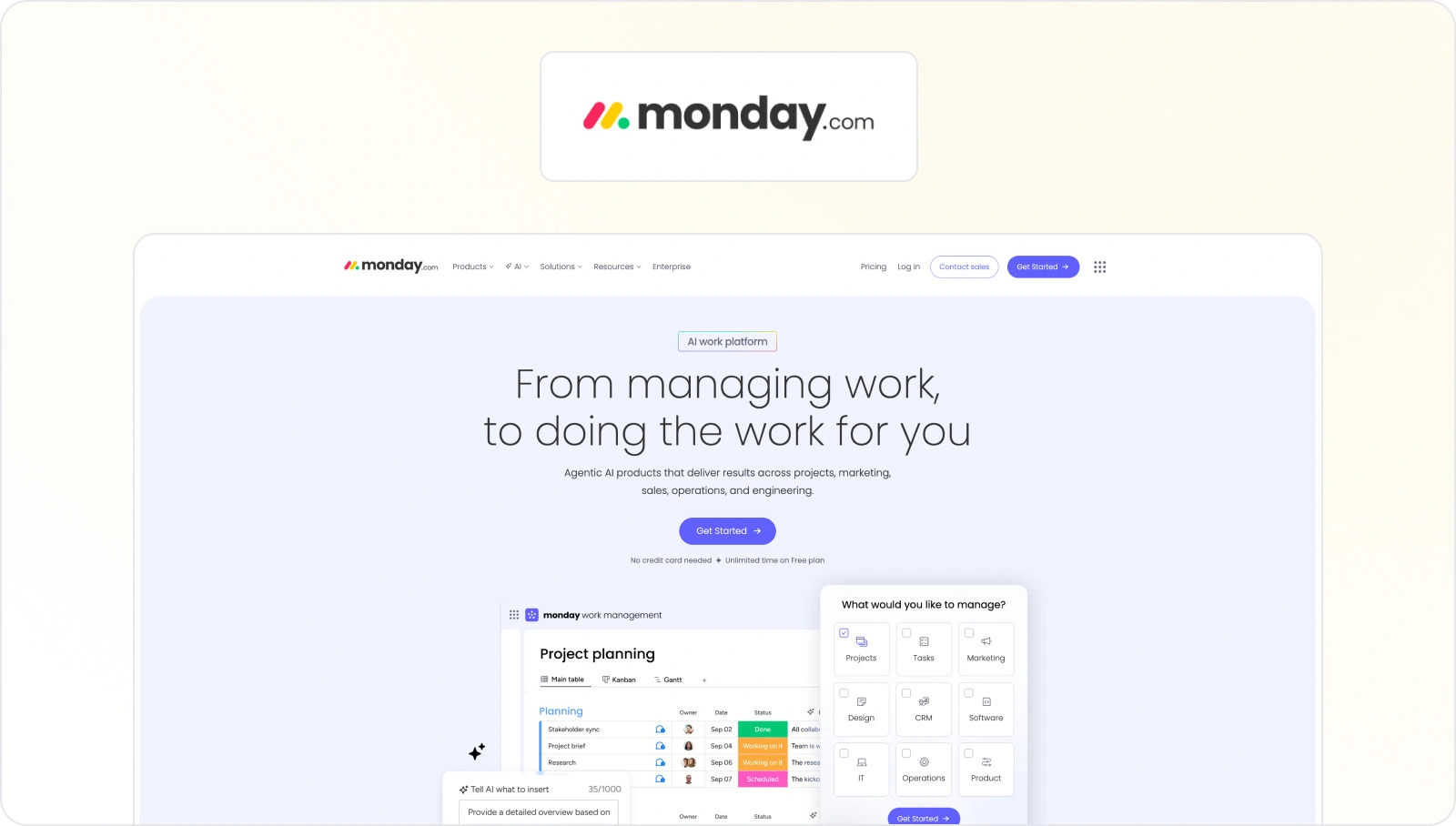
monday.com is a versatile and highly customizable work operating system that serves as a powerful ally for marketing teams seeking to streamline their workflows. With its user-friendly interface and extensive set of features, monday.com empowers marketing professionals to efficiently plan, execute, and manage their campaigns and projects. It offers a visually engaging platform that can adapt to various marketing needs, making it a valuable asset for teams striving for enhanced collaboration and productivity.
Why we picked monday.com
monday.com’s flexibility is its defining quality. Marketing teams can shape the platform to match their specific campaign processes rather than adapting their processes to fit the tool. Its visual dashboards provide real-time campaign visibility, and its automation features handle the repetitive status updates and notifications that otherwise eat into productive time. It’s accessible for smaller teams at $9/seat per month, while scaling well to larger marketing operations.
Key features
- Customizable boards and workflows designed around your specific marketing processes
- Automation to handle notifications, status updates, and repetitive workflow tasks
- Visual dashboards and reporting for real-time campaign performance visibility
Pricing
monday.com offers several pricing plans:
- Free plan – free forever
- Basic plan – starting at $9/seat per month
- Standard plan – starting at $12/seat per month
- Pro plan – starting at $19/seat per month
- Enterprise plan – custom pricing with additional support, and security features
5. Wrike – best for mid-to-large marketing teams
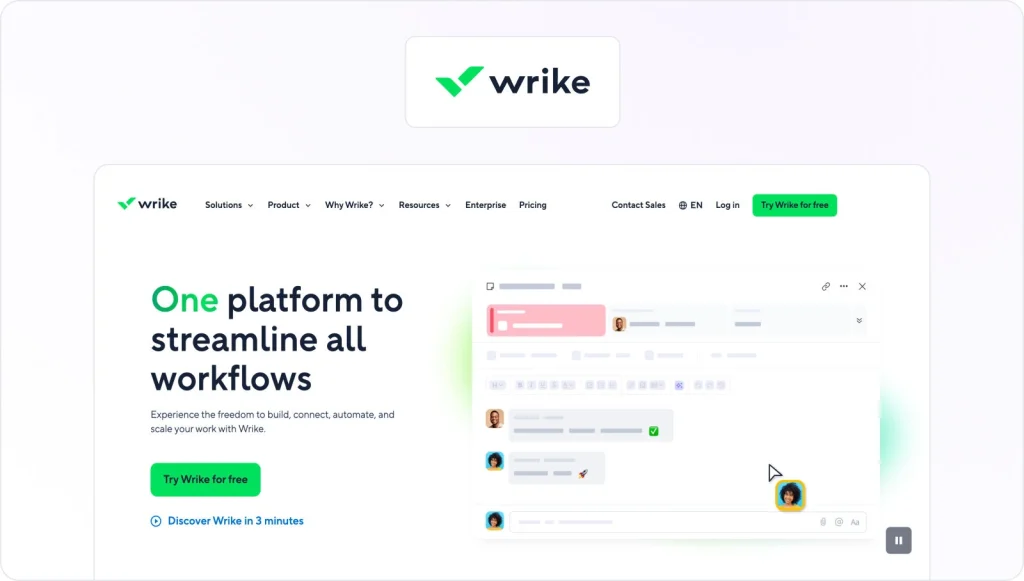
Wrike is a comprehensive project management and collaboration tool that significantly enhances marketing workflow efficiency. Designed to meet the intricate demands of marketing campaigns, Wrike enables teams to plan, execute, and oversee marketing initiatives with precision.
Its versatile platform empowers marketing professionals to optimize their strategies, improve team collaboration, and meet campaign deadlines effectively. Wrike’s robust set of features and integrations makes it a valuable asset for marketing teams striving for success in a dynamic and fast-paced industry.
Why we picked Wrike
Wrike earns its place for marketing teams that need both project management depth and content collaboration in one tool. Its Gantt chart functionality makes it easier to visualize campaign timelines and dependencies at a glance, while built-in document proofing reduces the need for a separate review tool. It’s particularly well-suited to marketing departments running multiple simultaneous campaigns with clear delivery deadlines.
Key features
- Interactive Gantt charts for campaign timeline visualization and dependency management
- Document sharing and proofing for real-time content collaboration and review
- Custom workflow templates to standardize and repeat successful campaign processes
Pricing
Wrike offers several pricing plans:
- For larger or more complex work needs, Enterprise and Pinnacle plans are available with custom pricing
- Free plan for teams getting started
- Team plan starting at $10/user per month
- Business plan starting at $25/user per month
6. Airtable – best for data-driven content teams

Airtable is a highly adaptable and user-friendly marketing workflow management software that plays a vital role in optimizing marketing workflows. Combining the simplicity of a spreadsheet with the power of a database, Airtable helps marketing teams seamlessly organize, track, and collaborate on a wide range of tasks and projects.
This versatile marketing workflow software caters to the diverse needs of marketing professionals, allowing them to create content calendars, manage campaigns, and maintain data-driven decision processes.
Airtable’s unique blend of flexibility and functionality makes it a valuable asset for marketing teams who are looking to streamline their operations and enhance productivity.
Why we picked Airtable
Airtable fills a gap that neither pure spreadsheets nor traditional project management tools cover well: managing large volumes of marketing data alongside the tasks associated with it. Content calendars, asset libraries, and campaign trackers all benefit from its hybrid spreadsheet-database model. It’s a particularly strong fit for content-heavy marketing teams and anyone running data-driven campaigns that need flexible, queryable records alongside their workflow.
Key features
- Customizable templates for marketing tasks, content calendars, and campaign tracking
- Grid and calendar views for visualizing content schedules and editorial plans
- Automation to handle repetitive campaign tasks and keep processes consistent
Pricing
Airtable offers four different pricing packages, including:
- Free plan for individuals or very small teams just getting started
- Team plan starting at $20/seat per month billed annually
- Business plan, starting at $45/seat per month billed annually
- Enterprise Scale plan with custom pricing for organizations that need more advanced governance and administration
7. Notion – best for all-in-one team workspaces

Notion is a versatile all-in-one workspace that empowers marketing teams to transform their workflow management and collaboration processes. With its adaptable structure and rich feature set, Notion is a valuable addition for marketing professionals seeking to streamline their operations.
This marketing workflow tool functions as a centralized hub where teams can plan, execute, and track marketing campaigns and projects efficiently. Notion’s flexibility allows it to serve as a content calendar, project management tool, and knowledge base, making it a versatile marketing workflow solution for the ever-evolving needs of marketing teams.
Its intuitive interface and customizable templates promote effective collaboration, allowing marketers to work together seamlessly and deliver impactful results.
Why we picked Notion
Notion earns its place for teams that are drowning in tools rather than lacking them. Where Asana and monday.com are built purely for project execution, Notion doubles as a knowledge base, brief repository, and content calendar, meaning it can replace two or three tools rather than adding another one. It works best for smaller teams with straightforward workflows who need structure without the overhead of a dedicated project management platform.
Key features
- Customizable workspaces, databases, and templates tailored to your marketing projects
- Task lists, kanban boards, and calendars for campaign management and deadline tracking
- Knowledge base functionality for storing briefs, brand guidelines, and marketing documentation
Pricing
- Notion offers a Free plan for individuals to organize personal projects and life.
- The Plus plan costs $10/member per month for small teams and professionals who need to work together.
- The Business plan starts at $20/member per month for growing businesses that want to streamline teamwork.
- The Enterprise plan has custom pricing for organizations that need extra scalability, control, and security.
8. HubSpot – best for marketing automation and CRM workflows

HubSpot is a comprehensive marketing automation software that plays a pivotal role in transforming marketing workflows. Designed with marketers in mind, HubSpot offers an integrated suite of tools to streamline and optimize every aspect of your marketing campaigns. It’s one of the most popular campaign management tools on the market.
Its all-in-one approach simplifies lead generation, content management, email marketing, and analytics, making it a powerful solution for marketing professionals looking to build a powerful marketing workflow that drives growth and engagement. HubSpot’s user-friendly interface empowers teams to plan, execute, and monitor their strategies with ease, while its robust analytics and reporting capabilities facilitate data-driven decision-making.
In a fast-paced digital landscape, HubSpot empowers marketing teams to stay agile, automate repetitive tasks, nurture leads effectively, and ultimately achieve their marketing goals.
Why we picked HubSpot
HubSpot earns its place for marketing teams that want to close the gap between internal workflow management and outbound campaign execution. Its marketing automation, CRM integration, and analytics capabilities mean your team can plan, execute, and measure campaigns from a single platform. The trade-off is cost: at $800/month for the Professional plan, it’s a significant investment, and best suited to teams that need a complete marketing platform rather than a standalone workflow organizer.
Key features
- Marketing automation for personalized workflows, audience segmentation, and lead nurturing at scale
- CRM integration that creates a unified view of contacts, leads, and customer data across your team
- Analytics and reporting dashboards for tracking campaign performance and ROI
Pricing
HubSpot Marketing Hub offers two different pricing plans:
- Professional plan – starting at $800/month
- Enterprise plan – starting at $3,600/month
9. Sprout Social – best for social media management workflows

Sprout Social is a valuable marketing workflow automation tool for marketing professionals looking to optimize their social media management. As a robust social media management platform, it helps your marketing team to efficiently plan, execute, and analyze social media campaigns.
Sprout Social offers a centralized hub for managing social media content, scheduling posts, engaging with audiences, and measuring performance.
Its intuitive interface makes it easy to coordinate social media efforts across various platforms and enhance your brand’s visibility and engagement. With Sprout Social, your team can streamline your social media workflows, collaborate effectively, and gain valuable insights to refine all strategies.
Why we picked Sprout Social
Sprout Social is the strongest dedicated social media management tool on this list. Where other tools treat social media as one channel among many, Sprout is built specifically for teams whose primary focus is social. The combination of publishing, engagement tracking, analytics, and content approval workflows in one platform makes it especially valuable for brands managing social media across multiple channels with multiple team members involved in the process.
Key features
- Multi-channel social publishing and scheduling for a consistent brand presence across platforms
- Analytics and in-depth reporting for tracking social media performance and demonstrating ROI
- Content approval workflows and shared content calendars for effective team collaboration
Pricing
- Standard plan – $199/seat per month
- Professional plan – $299/seat per month
- Advanced plan – $399/seat per month
- Enterprise plan – custom pricing
10. CoSchedule – best for content calendar management

CoSchedule is a dedicated content marketing calendar and social media marketing automation software that significantly streamlines marketing workflows. The tool is designed to meet the specific needs of content marketers, and it serves as a central hub for planning, executing, and managing content marketing campaigns with precision and efficiency.
CoSchedule empowers marketing teams to create content calendars, schedule and automate social media posts, and collaborate seamlessly. With its user-friendly interface and array of features, it helps marketers stay organized, save time, and improve content consistency and visibility.
CoSchedule’s robust capabilities make it an essential companion for marketing professionals aiming to drive engagement and deliver high-quality content to their audiences.
Why we picked CoSchedule
CoSchedule does what general project management tools don’t: it puts the content calendar at the center of everything. For marketing teams that need to plan and visualize their content output across blog, email, and social in one place, it’s more purpose-built than Trello or Asana. The social automation features also save time on publishing, making it a practical choice for content marketing teams looking to streamline their operations around a central calendar.
Key features
- Visual content calendar for planning, organizing, and maintaining a consistent publishing schedule
- Social media automation for scheduling and publishing posts across platforms
- Team collaboration features including task assignments, comments, and content approval workflows, enhancing teamwork and content quality
Pricing
- Free Calendar – For individuals looking for basic social publishing
- Social Calendar – $19/month, designed for individuals and teams looking for limitless social publishing
- Agency Calendar – $59/month, designed for agencies needing calendars for each of their clients
- Content calendar – With custom pricing, designed for teams that want all of their content and social on one calendar
- Marketing Suite – With custom pricing, for marketing teams looking to coordinate their marketing process, projects, and teams
11. Basecamp – best for simple team collaboration
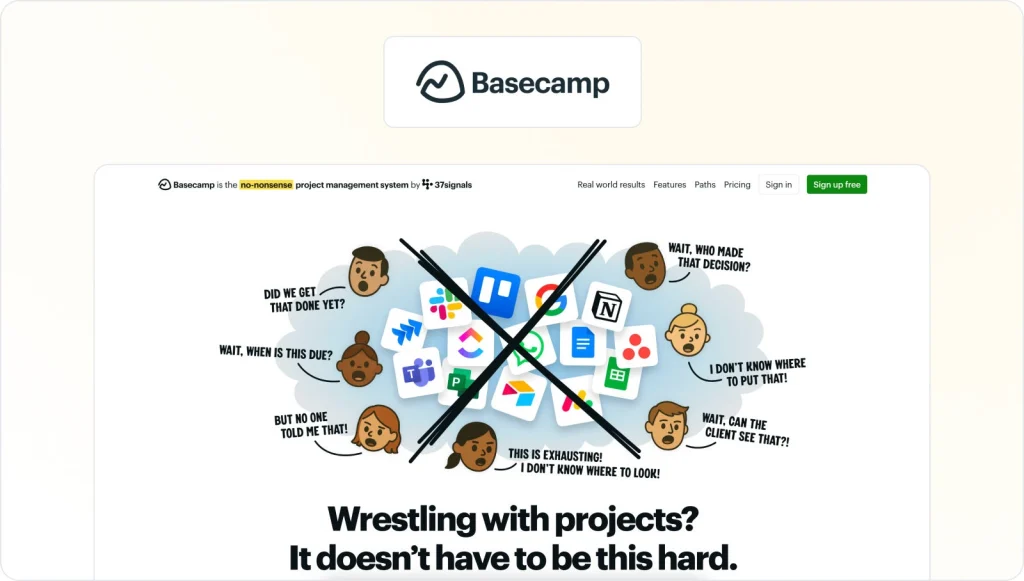
Basecamp is a versatile project management and team collaboration tool that has proven invaluable for marketing professionals looking to enhance their workflow efficiency. It serves as a centralized platform for marketing teams to plan, execute, and oversee campaigns and projects seamlessly.
Basecamp’s user-friendly interface simplifies task management, document sharing, and communication, making it an excellent choice for marketing teams with multiple stakeholders. With its focus on simplicity and clarity, Basecamp helps marketing professionals stay organized, collaborate effectively, and meet project deadlines with ease.
Its collaborative features promote transparency, ensuring all team members are on the same page and contributing to successful marketing initiatives.
Why we picked Basecamp
Basecamp earns its place because of its simplicity and its pricing model. At $299/month for unlimited users on the Pro Unlimited plan, it’s one of the most cost-effective options for growing marketing teams that don’t want to pay per seat as headcount grows. Its feature set won’t suit teams with complex workflow or automation needs, but for straightforward campaign coordination, task management, and team communication, it delivers what most marketing teams actually need without unnecessary complexity.
Key features
- To-do lists with task assignments and deadlines for clear campaign ownership
- Message boards for team communication, announcements, and campaign updates
- Project templates for recurring marketing tasks and campaigns
Pricing
- Basecamp plan – for $15/user per month and ideal for freelancers, startups, or smaller teams
- Basecamp Pro Unlimited – for $299/month billed annually for unlimited users, designed for growing businesses, larger groups, and companies that want the best
12. Workfront – best for enterprise marketing operations

Workfront, now part of Adobe Experience Cloud, is a robust work management platform that plays a pivotal role in optimizing marketing workflows. Tailored to meet the complex demands of marketing teams, Workfront empowers professionals to efficiently plan and execute marketing campaigns and creative projects.
The platform offers a comprehensive suite of features, from task management and project tracking to resource allocation and reporting. Its user-friendly interface and automation capabilities make it an invaluable asset for marketing professionals striving for enhanced collaboration, productivity, and visibility across their projects.
Workfront’s ability to align teams, streamline processes, and deliver results on time and within budget is crucial in the fast-paced and competitive field of marketing.
Why we picked Workfront
Workfront is built for enterprise marketing operations that go beyond what standard project management tools can handle. Its strength lies in resource management and workflow automation at scale, and its deep integration with Adobe tools makes it a natural fit for organizations already invested in the Adobe ecosystem. Custom pricing reflects its positioning as a genuine enterprise platform, so it’s best evaluated by teams with established marketing operations and dedicated resources to configure and roll out a complex tool.
Key features
- Project and task management with resource allocation for large, cross-functional marketing teams
- Customizable automated workflows tailored to complex creative production and campaign processes
- Integration with Adobe Experience Cloud for seamless management of creative assets and marketing workflows, enhancing its capabilities and adaptability within the marketing tech stack
Pricing
Workfront offers three plans with custom pricing options to meet every team’s work management needs.
Which marketing workflow software is right for your use case?
The best tool on this list depends on where your team’s biggest workflow challenges are. Here’s how to match the right platform to your specific marketing workflow needs.
Campaign and project management
If your challenge is keeping complex marketing campaigns on track across multiple team members, deadlines, and dependencies, you need a tool with robust project management features, timeline views, and task tracking.
Best for this: Asana, monday.com, Wrike
Asana’s dependency tracking makes it the strongest choice for multi-stage campaigns where tasks must happen in sequence. monday.com’s visual dashboards give marketing teams real-time campaign visibility in a format that’s easy to act on. Wrike adds Gantt chart functionality for teams managing strict delivery timelines across multiple simultaneous campaigns.
Content review and approval
If your team produces high volumes of marketing assets and spends too much time chasing feedback and approvals over email, you need a purpose-built content approval workflow tool that centralizes feedback on the actual files. For a deeper look at your options, check out our guide to the best content workflow software.
Best for this: Filestage, Wrike
Filestage is the dedicated choice, with in-context annotations, structured reviewer groups, and version history that keep every approval traceable. Wrike’s document proofing offers a solid built-in option for teams already using it for project management.
Social media management
If your team’s workflow centers on social media publishing, scheduling, engagement, and analytics, a dedicated social media tool will serve you better than a general project management platform.
Best for this: Sprout Social, CoSchedule, HubSpot
Sprout Social leads for teams managing multiple channels with multi-person approval workflows and a focus on analytics. CoSchedule suits content marketing teams that want their social calendar integrated with their broader content plan in one view. HubSpot works for teams that want social management as part of a wider marketing automation and CRM platform.
Brand asset and creative production management
If your challenge is managing the production of large volumes of creative assets across internal teams, agencies, and stakeholders, you need a tool with resource management, creative workflow automation, and content distribution capabilities.
Best for this: Workfront, Airtable, monday.com
Workfront is the enterprise choice, particularly for organizations using Adobe Creative Cloud across their creative production process. Airtable’s flexible database structure makes it well-suited to managing large content libraries and asset tracking at scale. monday.com’s customizable workflows work well for teams coordinating creative production across multiple campaigns simultaneously.
All-in-one knowledge and workflow management
If your team needs a single place for project management, campaign briefs, brand guidelines, and team documentation, without adding another specialized tool to the stack, an all-in-one workspace is the right approach.
Best for this: Notion, Basecamp, Trello
Notion’s combination of docs, databases, and project boards makes it the most flexible choice for teams that want one tool to do several jobs. Basecamp suits teams that want simple collaboration without a steep learning curve or per-user pricing that scales uncomfortably as the team grows. Trello works for marketing teams that primarily need visual task tracking for their campaigns and don’t require complex automation.
Final thoughts
Finding the right marketing workflow management tool for your team can be a difficult task. And it’s important to take all important factors into the equation when deciding on your next tool. Hopefully, this comprehensive list of marketing workflow software options gives you a good understanding of the landscape and simplifies the decision for you.
If you’d like to see how Filestage can help you build strong marketing workflows, make sure to try it for free →
FAQ
1. What is marketing workflow software?
Marketing workflow software helps teams plan, execute, and track marketing activities and campaigns in a structured way. Instead of juggling docs, spreadsheets, and communication apps, you use one or more workflow management tools to organize tasks, assign owners, automate steps, and track progress across campaigns, channels, and assets.
2. What is the best workflow software for marketing teams in 2026?
There’s no single “best software for marketing workflow” because every team’s stack and processes are different. Many marketing teams combine a project management tool with specialized apps for social media, marketing automation, and marketing approvals (for example, Filestage for content review). The best workflow management software for your team will match your campaign complexity, team size, channels, and reporting needs.
3. How is marketing workflow software different from marketing automation platforms?
Marketing workflow management software focuses on organizing internal work: task management, project timelines, approval workflows, and collaboration features for your marketing team.
Marketing automation software focuses more on external campaigns, including email marketing, lead nurturing, and customer data flows across multiple channels. Most mature teams use both: workflow software to manage campaigns internally and marketing automation platforms to execute them at scale.
w software to manage campaigns internally and marketing automation platforms to execute them at scale.
4. What features should I look for in marketing workflow management software?
Look for an intuitive interface, flexible workflow templates, and precise task tracking to make it easy to assign tasks, automate routine steps, and see who’s doing what.
Good marketing workflow software should support automated workflows (or at least basic task automation), integrate with your core marketing tools (such as social media marketing apps, file storage, and communication apps), and provide strong reporting capabilities. This allows you to see how campaigns are performing and where manual effort is slowing things down.
If you handle a lot of content, tools that support structured marketing approvals (such as Filestage for review and sign-off) can make a big difference, too.
5. Is there free marketing workflow software for smaller teams?
Yes. Several tools in the article offer a free plan or free calendar, which is ideal if you’re just getting started with marketing workflows. Free plans usually limit things like users, projects, or automation features, but they’re enough to manage basic workflows, organize content calendars, and test whether a tool fits your marketing processes.
As your campaigns become more complex and you need multi-step workflows, AI tools, or advanced automation features, you can move to paid plans or custom pricing.