
TL;DR
Content quality assurance is the process that helps teams publish content they can stand behind. It brings structure to how content is reviewed, checked, and approved before it goes live. Instead of relying on last-minute proofreading or individual judgment, content QA turns quality into a repeatable part of the workflow.
This guide explains what content quality assurance really means, how a practical content QA process works, and how to apply clear QA checklists across different asset types. It also looks at where AI can support content QA and how teams use tools like Filestage to make quality checks part of everyday work.
Intro
The global content marketing industry is projected to reach $1.95 trillion by 2032. As content marketing teams publish at a higher pace and across more channels in the digital age, manual checks can slip through the cracks. That pressure makes quality easy to compromise, especially when reviews happen late or across scattered tools.
Content quality assurance brings order to that chaos. It gives teams a clear way to review content and catch errors early so they can confirm that each asset is ready to publish.
Unlike a basic content review, which often relies on individual judgment, content QA introduces shared standards and a repeatable, clear process. When quality checks are built into the workflow, teams spend less time fixing mistakes and more time creating content that supports real business goals.
In this article, I break down the full content QA process so your marketing team can publish assets with confidence.
Why content QA matters for trust, compliance, and efficiency
Content quality assurance matters because content does real work. It shapes how people perceive your brand and how much they trust your claims. If all goes well, they’re more likely to take the next step. If not, well, they’ll simply walk away. When quality slips, even small issues can undermine that trust. Inconsistent messaging, unclear wording, or factual inaccuracies are signs of carelessness, especially to a repeat audience.
QA also plays a critical role in managing risk. Many marketing teams operate under growing regulatory pressure, whether that be from advertising standards or platform rules, or even from internal brand policies. In sectors like consumer packaged goods (CPG) and pharma, mistakes can carry legal consequences, not just reputational ones. A structured content QA process supports marketing compliance by making checks explicit, documented, and repeatable instead of informal or rushed.
Efficiency is another reason high-quality content QA matters. Poor quality creates hidden costs. Missed errors trigger last-minute fixes and extra review rounds which, in turn, lead to delayed launches. QA shifts those corrections earlier in the process, where they’re cheaper and faster to resolve. Over time, teams spend less energy correcting errors and more time producing content that not just performs and converts, but also supports wider business success.
Supercharge your review process
Share content, get feedback, and manage approvals with Filestage.
The five stages of the content quality assurance process
A content quality assurance process works best when it runs alongside the content creation process, not after it. While the exact setup varies by team, most effective content quality assurance frameworks follow the same five stages.
Stage one: Define quality standards upfront
First things first, every content QA process starts with clear standards. These include:
- Brand guidelines
- Tone rules
- Legal requirements
- Accessibility expectations
- Technical standards
Without this foundation, reviews can easily become subjective and inconsistent. Clear guidelines give reviewers something concrete to check against and help creators understand what “good” looks like before they start writing.
Stage two: Create content with QA in mind
Content quality assurance is less about slowing down creation and more about reducing avoidable errors early. When creators work from documented standards, approved reference material, and historical data, many issues never appear. Reviewing existing content can also help your team maintain consistency and avoid repeating past mistakes.
This stage sets a clear baseline so content reflects your brand voice and supports the goals behind the work. Plus, having guardrails can often inspire creativity.
Stage three: Run a structured review
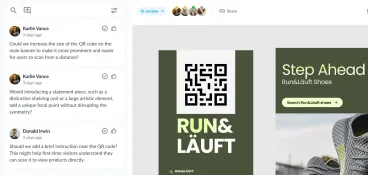
A structured content QA process makes sure that every asset goes through the same checks. This is even more important now that most marketing teams are using AI in the content creation process. With a structured AI content review process, you make sure that the right stakeholders review and add human judgment that automated tools simply cannot replace. Reviewers should focus on clarity first, then confirm that the content is accurate and appropriate for its target audience.
A clear creative review process keeps feedback focused and prevents vague comments from derailing progress.

Stage four: Control quality and manage approvals
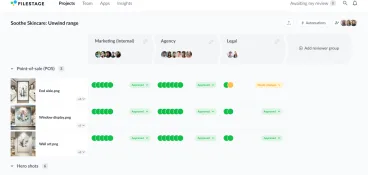
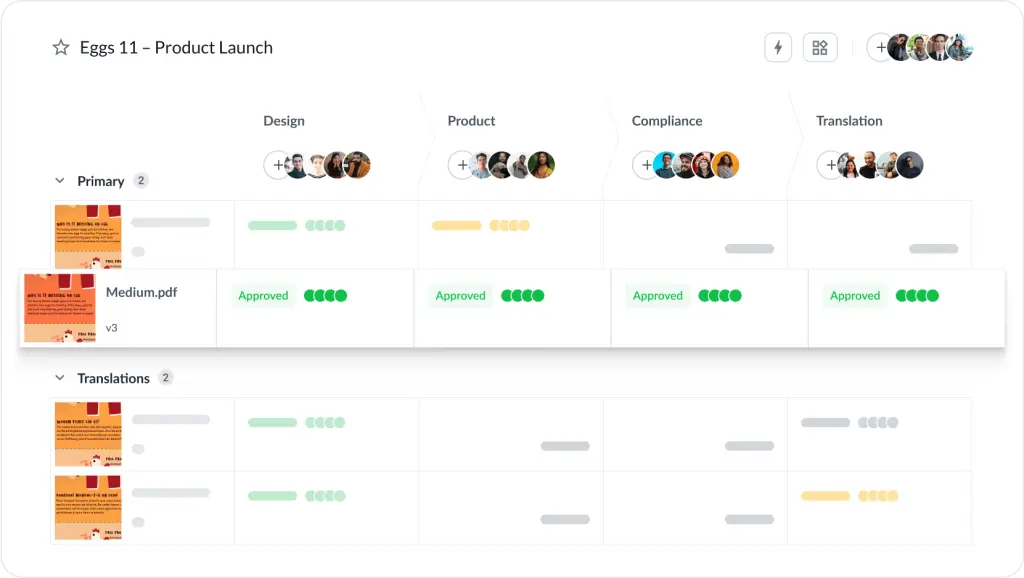
At this stage, your team can use a defined content QA checklist to work through comments and confirm that required changes have been made. This is where a dedicated content review tool is worth its weight in gold. Why? Because you can keep content files, feedback, and approval decisions in one place.
Filestage is a great example. It supports this stage by centralizing the full content QA process, tracking versions, and making approval status visible. That structure reduces missed errors and avoids reviewing outdated files.
Stage five: Release, measure, and improve
Content QA doesn’t end once your content goes live. The next step is for your team to review how content performs and examine user feedback to spot recurring quality issues. Those insights feed back into the process, helping you adjust and improve content standards. Incorporating feedback loops also helps identify areas for improvement in future QA content workflows and overall quality.
When each of these stages works together as a system, content quality assurance becomes repeatable instead of reactive. It fits naturally into modern content workflows rather than being treated as a final hurdle.
The content QA checklist (for any asset)
A content QA checklist should be something reviewers can actually use while they work. It gives structure to the review process and reduces reliance on memory or personal preference. Without that shared reference, QA feedback often ends up scattered across emails and project management tools.
The checklist below is designed to work across formats, from blogs and landing pages to ads, emails, and packaging copy.
Accuracy and clarity
Before approving the asset, confirm the following:
- Names, dates, prices, statistics, and product details have been checked against reliable sources or internal documentation.
- Claims are supportable and aligned with approved messaging. Anything vague or exaggerated has been revised or removed.
- The message is consistent throughout the asset, with no contradictions between headline, body copy, CTAs, or visuals.
- The terminology is appropriate for the target audience, with specialist terms explained where needed.
- Any references to regulations, certifications, or data are current and still valid.
Language and tone of voice
During the language review, check that:
- Spelling, grammar, and punctuation have been reviewed using grammar and style checkers, followed by a human pass.
- Tone matches the brand voice guidelines and feels appropriate for the context.
- Perspective remains consistent throughout the asset.
- High-risk or banned phrases have been flagged and approved where necessary.
- Language is inclusive and suitable for all intended regions.
- Sentence structure supports clarity and readability.
- A human editor confirms tone, intent, and nuance before approval.
Brand, style, and structure
To confirm brand alignment, verify that:
- Product names, brand terms, and capitalization follow brand guidelines exactly.
- Visual elements meet brand standards and rules for logo use, color, and typography.
- The structure is scannable and easy to follow.
- Messaging reflects current positioning rather than outdated narratives.
- Third-party brands or logos are used in line with agreed terms.
Legal and compliance essentials
Before sign-off, make sure that:
- Required disclaimers and footnotes are present and formatted correctly.
- Claims comply with applicable regulations and internal policies, including any platform-specific rules.
- Sensitive topics have been reviewed by the right stakeholders, such as legal or compliance teams.
- Usage rights for images, fonts, and third-party content have been confirmed.
Technical quality and UX
As a final check, confirm that:
- All links work and point to the intended destination.
- CTAs are clear and lead to the correct next step.
- Formatting displays correctly across devices or platforms.
- Tracking or analytics requirements have been tested where applicable.
- Files meet the required format, size, and resolution standards.
Supercharge your review process
Share content, get feedback, and manage approvals with Filestage.
How AI can support content quality assurance
On its own, AI has no sense of what “good” looks like for your brand. But when it’s connected to a defined content QA checklist or prompt, it becomes far more useful.
So how does this work in practice?
Let’s look at a few use specific uses cases. Here are some ways marketing teams use Filestage’s Review Agents for AI content QAs:
- Review Agents automatically review articles and reports to check for spelling, grammar, tone consistency, and broken links – flagging any issues for human checks
- Agents review packaging designs to check for forbidden terms, missing disclaimers, or required visual elements

Your team can use out-of-the-box or custom Review Agents, trained on your brand guidelines and industry regulations to speed up and improve your content quality assurance process.
Personally, I think that AI is especially valuable earlier in the review process. It catches routine issues before human review begins, which reduces repetitive tasks and helps reviewers focus on judgment calls. That’s particularly important when teams are managing a growing volume of AI-generated content and need a clear review process to keep quality consistent.
One thing’s for sure, AI does have limits. It cannot replace human review for context, strategy, or complex compliance decisions (not yet, anyway). But, when used correctly, AI can support your content QA by enforcing standards consistently and at scale.
How to implement content QA into your existing workflow
The good news is that implementing content quality assurance and AI content review into your existing workflow doesn’t require rebuilding your entire process. The goal is to introduce structure where quality decisions already happen, then make those checks repeatable.
Here’s how to go about it.
Step one: Start by turning standards into a checklist
Document what “ready to publish” means for your team. Pull from brand guidelines, legal requirements, accessibility expectations, and technical standards. The key is to keep the checklist focused on checks reviewers can actually verify rather than abstract principles.
Step two: Map a simple review flow
Next you’ll want to define who reviews content at each stage and what they’re responsible for checking. A typical setup moves from creator to peer review, then to brand or legal review, and finally to approval. Keep ownership clear so content feedback doesn’t overlap or stall.
Step three: Attach the checklist to the work
Instead of storing QA rules in a document, connect them directly to files or review stages. Review platforms like Filestage allow you to centralize content, comments, and approvals, while attaching the right checklist to each asset type. This keeps quality checks visible during review rather than implied.
Step four: Add AI where it helps
Run AI checks automatically on upload to catch routine issues early. I’d recommend being really specific about what you want AI to catch, for instance, having one Review Agent to flag grammar mistakes and a separate one for brand voice. This reduces manual effort and gives reviewers more time to focus on complex decisions.
Step five: Measure and refine
Track how many issues are caught, how long approvals take, and where errors keep appearing. Use that insight to adjust your checklist and improve future reviews.
Content quality assurance: turning process into practice
In practice, content quality assurance works best when it’s treated as an ongoing process rather than a final checkpoint. By starting with clear standards and a practical content QA checklist, your team creates a shared baseline for review so content aligns with expectations as output increases. From there, embedding those checks into everyday workflows removes the need for last-minute fixes and reduces reliance on individual effort.
As volume grows, AI can support this process by handling routine checks early, which frees reviewers to focus on judgment and context. Implementing the right approval software can help you create a fast, efficient workflow that scales. With a platform like Filestage, you can easily centralize reviews, QA checks, and sign-offs, rather than managing them across disconnected tools.
Ultimately, this approach makes high-quality content QA easier to sustain as teams scale and publishing demands continue to rise.
FAQ
1. What is content quality assurance?
Content quality assurance is the process of checking whether content meets defined quality standards before it’s published. It covers accuracy, clarity, brand alignment, compliance, and technical readiness.
Unlike a simple proofread, content QA looks at the full context in which content appears and how it supports business goals. The aim is to make standards consistent across the entire content lifecycle, not dependent on individual reviewers.
2. How is content QA different from content moderation QA?
Content QA focuses on readiness to publish. It checks whether content is accurate, on brand, compliant, and technically sound before release. Content moderation QA, by contrast, is usually concerned with enforcing platform rules and safety policies, often handled by a QA content moderator after content is live. Moderation tends to deal with what’s allowed, while content QA focuses on what’s fit for purpose.
3. What’s the easiest way to start using a content QA checklist in my team?
Start small by using a single checklist, like the one outlined in this article, as your baseline. Adapt it to your existing brand rules, legal requirements, and technical expectations. Apply it consistently to one content type so the team builds confidence using it during reviews.
Once the checklist feels natural, extend it to other assets and connect it to your review workflow. Tools like Filestage can help by attaching checklists directly to files and review stages, which keeps quality checks visible without adding extra process.
4. What are the four types of quality assurance?
Quality assurance theory usually describes four approaches, all of which apply to content.
Preventive QA focuses on avoiding issues before content is created. This includes brand guidelines, style guides, and clear standards that shape work upfront.
Detective QA happens during review. Content QA checklists, peer reviews, and automated checks help catch issues before publication.
Corrective QA addresses problems once they’re found. For content teams, this means fixing errors and adjusting guidelines or workflows to prevent repeat issues.
Assessment QA evaluates whether the QA process itself is working. This can involve audits, compliance reviews, or performance analysis of published content.
Effective content quality assurance combines all four approaches rather than relying on a single final check.